Mexico City is not a city you can shortlist honestly in ten bullet points. It holds one of the great archaeology museums of the world, an Aztec temple excavated in the middle of the financial district, a lake system farmed since before the conquest, two thousand years of murals, and a food culture that runs from a five-peso quesadilla to a tasting menu with a six-month waiting list. The useful question is not “what are the best things to do in Mexico City” but “which of these belong in my three, five or seven days, and in what order.”
This guide is built to answer that. It groups the city’s attractions by where they are and how long they take, explains the booking and opening rules that actually trip people up, and is explicit about what each choice costs. Where a subject deserves its own full treatment — Teotihuacan logistics, Casa Azul tickets, the museum comparison — we summarise it here and go deeper in a dedicated guide.
The short answer
If you have three days and want the defensible core, do this: the Centro Histórico on foot (Zócalo, Templo Mayor, the Rivera murals inside the Palacio Nacional, Bellas Artes); the Museo Nacional de Antropología plus Chapultepec Castle in one long day in the park; and Coyoacán with the Casa Azul. Add Teotihuacan as a fourth day and Xochimilco as a fifth. Everything else — the markets, Roma and Condesa, lucha libre, the mezcalerías, the Basílica de Guadalupe, UNAM — is a matter of taste, and this guide explains who each one actually suits.
Two rules will save you more grief than any shortlist. Almost every major museum and archaeological site in the city closes on Mondays. And since 1 January 2026, Sunday free entry at INAH sites applies only to Mexican nationals and legal residents — if you are visiting on a tourist permit, Sunday is now a normal paying day and a very crowded one. Plan around both.
How this shortlist was chosen
There is no shortage of “50 things to do in CDMX” lists. The problem with most of them is that they mix a two-hour museum with a full-day excursion, quote a price from three years ago, and never tell you that the thing is shut on the day you were planning to go.
Everything in this guide had to clear four tests:
- It survives a day of ordinary logistics. If a place is only reachable by a two-hour taxi ride each way, it belongs in a day-trip guide, not a city shortlist.
- Its access rules are checkable. Hours, price and booking method come from the venue, the institute that runs it, or the city government — not from an aggregator.
- It gives you something you cannot get elsewhere. Mexico City has a lot of good restaurants; it has exactly one Templo Mayor.
- It groups sensibly with its neighbours. Attractions are listed by district, because that is how you will actually visit them.
On prices and hours: every figure below was checked against the operating institution on 17 September 2026 and is given in Mexican pesos (MXN). Mexico City’s cultural institutions revise their tariffs in January, and 2026 brought an unusually large increase at federal sites, so treat any figure older than a few months with suspicion — including ours. The verification date sits at the bottom of this page, and we recheck price-sensitive entries monthly.
Five decisions to make before you pick anything
1. How many days you actually have on the ground
Count arrival and departure days as halves. A flight landing at Mexico City International Airport (MEX) at 14:00 does not give you an afternoon of sightseeing once you have cleared immigration, found a taxi and reached Roma Sur. Three full days is the realistic minimum for the core; five is where the city stops feeling rushed; seven lets you add a proper day trip and still have an afternoon to do nothing in a park.
2. Where you sleep, because it decides what is easy
Mexico City is enormous — the metropolitan area runs to more than 20 million people — and a badly chosen base turns every day into an hour of traffic. Roma Norte, Condesa and Juárez put you within walking distance of good food and a short ride from both the Centro and Chapultepec, which is why most first-time visitors end up there. The Centro Histórico itself is unbeatable for the archaeological and colonial sites and much quieter at night than its daytime crowds suggest. Polanco is comfortable, expensive and slightly removed from the interesting mess. Coyoacán is lovely and a long way south of everything else.
3. The altitude, which is not a myth
The city sits at roughly 2,240 metres (about 7,350 feet). That is high enough to leave visitors from sea level short of breath on staircases and prone to a dull headache for the first day or two, and high enough that alcohol and dehydration hit noticeably harder. It is not high enough to make serious altitude illness likely in healthy travellers — the usual threshold for that is above 2,400 metres — but the practical consequence is the same either way: make your first day the easy one. Walk a neighbourhood, eat well, drink more water than feels necessary, and save the day you climb a pyramid for day three. If you have a heart or lung condition, discuss the trip with your own doctor before you book.
4. Which day of the week each thing falls on
This matters more in Mexico City than in most capitals, and it is the single most common way an itinerary goes wrong.
| Day | What is closed or different |
|---|---|
| Monday | Museo Nacional de Antropología, Templo Mayor, Chapultepec Castle, Museo Frida Kahlo, Palacio Nacional, Museo del Palacio de Bellas Artes and most other museums are closed. Teotihuacan stays open. Markets, parks, churches, the Basílica and the Torre Latinoamericana viewing deck stay open. |
| Tuesday | Lucha libre at Arena México (evening). Museo Jumex is free. |
| Wednesday | Ballet Folklórico performances at Bellas Artes on many Wednesday evenings. Casa Azul opens an hour later than usual. |
| Thursday | Casa Azul stays open late. A good evening for the Centro, which empties after the office exodus. |
| Friday | Lucha libre’s biggest night. Restaurant bookings become essential. |
| Saturday | The Bazaar Sábado in San Ángel. Everything busy. |
| Sunday | Paseo de la Reforma closes to cars for cyclists until early afternoon. Free entry at INAH sites for Mexican nationals and residents only, which makes them extremely crowded. The Museo del Palacio de Bellas Artes is free to everyone. Xochimilco is at its liveliest and its most chaotic. |
5. Whether you are booking anything at all
Very little in Mexico City requires advance booking. Three things genuinely do: the Museo Frida Kahlo, which sells no tickets at the door at all; Ballet Folklórico and anything else ticketed at Bellas Artes; and the handful of restaurants that release tables months ahead. Everything else you can decide on the morning.
What the main attractions cost in 2026
A word on the two-tier pricing you will see everywhere. Sites run by the Instituto Nacional de Antropología e Historia (INAH) — the anthropology museum, Templo Mayor, Chapultepec Castle, Teotihuacan — charge Mexican nationals and foreign residents half what they charge visitors. That gap widened sharply on 1 January 2026, when a reform to the Federal Rights Law took the top-category ticket from 96 to 210 pesos. It is not a scam and it is not negotiable; bring your passport if you want to argue you are a resident.
| Attraction | Visitor price (MXN) | Hours | Notes |
|---|---|---|---|
| Museo Nacional de Antropología | 210 | Tue–Sun 09:00–18:00 | 105 for nationals/residents. Free Sun for nationals/residents only |
| Templo Mayor + museum | 210 | Tue–Sun 09:00–17:00 | Same INAH tier and rules |
| Chapultepec Castle | 210 | Tue–Sun 09:00–17:00 | Same INAH tier and rules |
| Teotihuacan | 210 | Daily 09:00–17:00 | Site museums close 16:30. Open Mondays |
| Palacio Nacional (Rivera murals) | Free | Tue–Sun 09:00–17:00 | Photo ID required for over-18s; security screening |
| Museo Frida Kahlo (Casa Azul) | 320 | Tue–Sun, closed Mon | Online only. Includes Museo Anahuacalli |
| Museo del Palacio de Bellas Artes | ~90 | Tue–Sun 10:00–18:00 | Vestibule free. Free to all on Sundays |
| Torre Latinoamericana viewing deck | 220 | Daily 09:00–22:00 | Open when the museums are not |
| Museo Soumaya | Free | Daily, typically 10:30–18:30 | No ticket, no booking |
| Xochimilco trajinera | 750 per hour | Boats from 08:00 | Official rate per boat, up to 18 people |
Students, teachers, under-13s, over-60s with INAPAM credentials and visitors with disabilities enter INAH sites free on production of valid documentation — and this exemption is not restricted by nationality in the way the Sunday rule is.
The Centro Histórico: two thousand years in twenty blocks
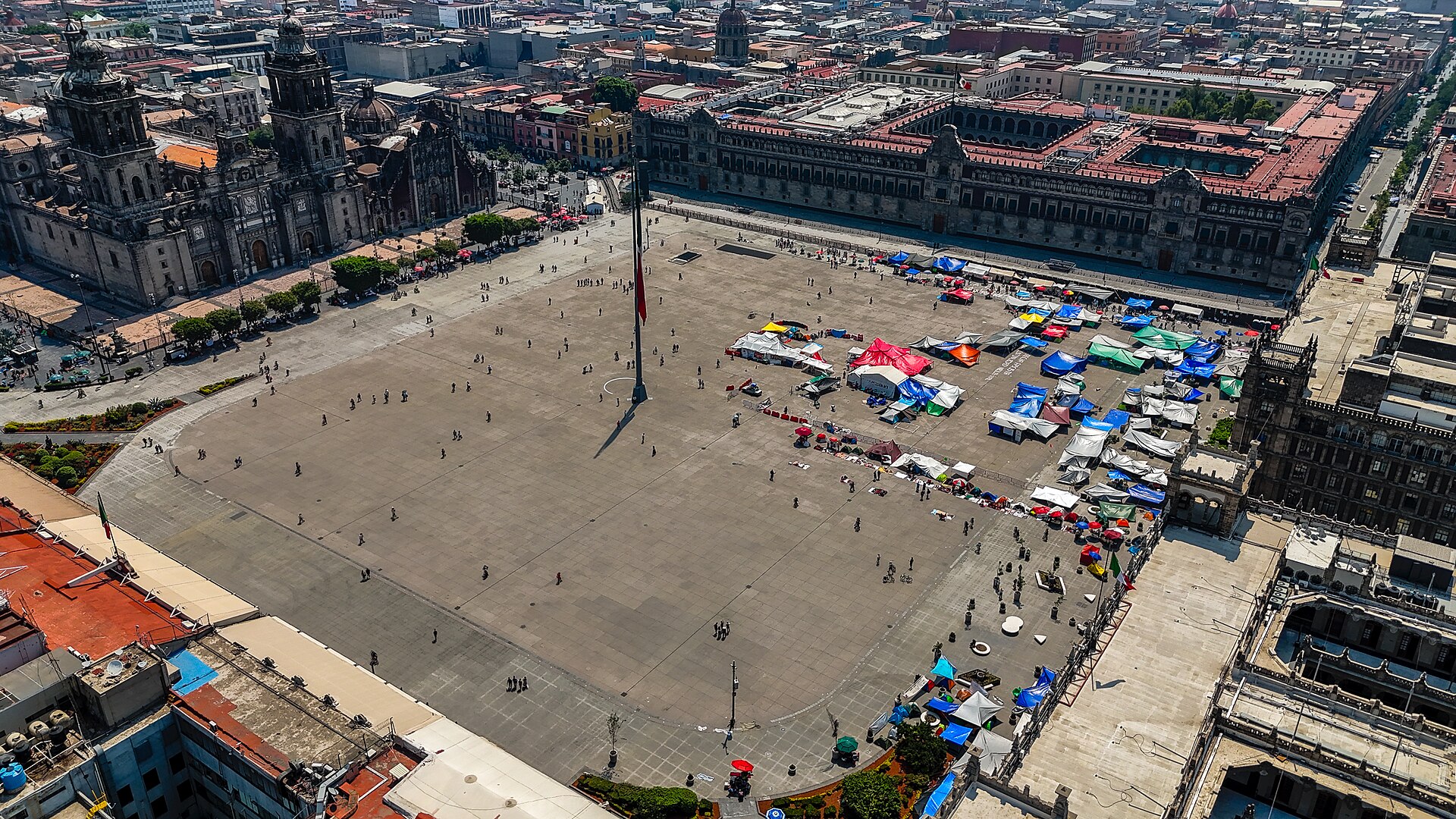
Nowhere else in the Americas stacks its history quite this literally. The Zócalo sits on top of the ceremonial heart of Tenochtitlan; the cathedral was built from the stones of the temples it replaced; the National Palace stands on the site of Moctezuma’s residence. You can see all of it in a single day on foot, and the walking distances are short — the whole core fits inside about a kilometre square.
The Zócalo and the Metropolitan Cathedral
Formally the Plaza de la Constitución, the Zócalo is one of the largest city squares in the world and functions as the country’s civic stage: flag ceremonies at dawn and dusk, protest camps, free concerts, Day of the Dead installations, and on any given afternoon a few hundred people simply crossing it. The Metropolitan Cathedral on its north side took nearly 250 years to build, which is why its façade slides from Renaissance at the base to Baroque and neoclassical above. Entry is free; the bell tower can usually be visited for a small fee. Look at the floor as you walk in — the whole structure has been sinking unevenly into the old lakebed for centuries, and the compensation engineering is visible.
Time needed: 45 minutes for the square and cathedral together, longer if something is happening.
Templo Mayor
In 1978 electricity workers digging behind the cathedral hit a carved stone disc eight feet across. It turned out to be a monolith of the goddess Coyolxauhqui, and it sat at the foot of the main Mexica temple. The excavation that followed removed a city block and exposed the layered pyramid underneath — seven construction phases, each built over the last.
The site walkway is exposed, so take a hat. The museum at the end is the point: the Coyolxauhqui stone, the eagle warrior, the offerings recovered from the temple’s foundation caches. Give it two hours. If you visit only one archaeological site inside the city, this is it — and it pairs naturally with the anthropology museum, which supplies the wider context.
Palacio Nacional and the Diego Rivera murals
Rivera spent more than two decades, on and off between 1929 and 1951, painting the main staircase and the first-floor corridor of the National Palace with a history of Mexico from the Mesoamerican world to his own political present. It is the single most ambitious mural cycle in the country and it is free to enter.
The catch is access. It is a working seat of government, so adults must present official photo identification — a passport is the obvious one for visitors — and you pass through a security screening that excludes large backpacks, tripods, food and drink. Opening is Tuesday to Sunday, roughly 09:00 to 17:00, and the palace closes on public holidays and occasionally at short notice for state business. Free guided tours run in Spanish and English, most reliably on weekend mornings. Because it can shut without warning, do not make it the last thing on your last day.
Palacio de Bellas Artes
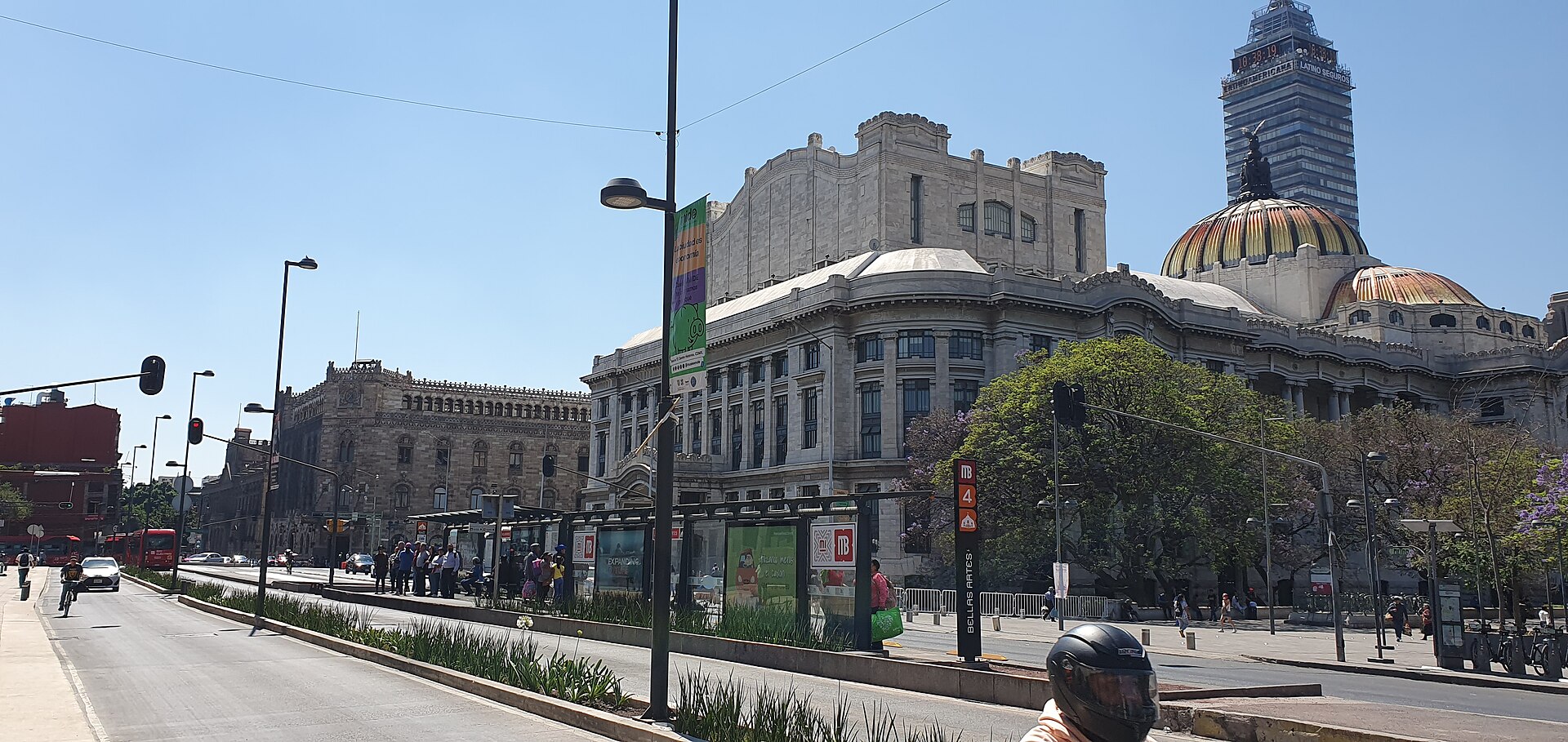
The white marble opera house with the orange and yellow dome was begun in 1904 under Porfirio Díaz and finished in 1934, which is why the outside is Italianate and the inside is emphatic Art Deco. The building is doing the same slow sink as the cathedral; the steps down from street level to the entrance were not in the original plan.
You can walk into the vestibule for nothing. The Museo del Palacio de Bellas Artes upstairs — about 90 pesos, Tuesday to Sunday 10:00 to 18:00, free to everyone on Sundays — holds seventeen murals, including Rivera’s Man, Controller of the Universe, the reconstruction of the Rockefeller Center fresco that was destroyed in New York for including Lenin. Orozco and Siqueiros are on the same floors. If you have any interest at all in Mexican muralism, this room and the Palacio Nacional staircase are the two you cannot skip.
For an evening, the Ballet Folklórico de México de Amalia Hernández has performed here for over seventy years, typically on Wednesday and Sunday evenings with a Sunday morning matinée. Tickets run from roughly 300 pesos in the upper gallery to around 1,000 on the main floor, and they sell out. Schedules shift, so check the venue’s current listings rather than a blog’s.
Torre Latinoamericana
Across the road from Bellas Artes, the 1956 tower was the tallest building in Latin America when it opened and, more impressively, the first major skyscraper built on seismically active ground — it has survived every significant earthquake since, including 1957, 1985 and 2017. The public viewing deck on the 44th floor costs about 220 pesos for adults and 170 for children aged four to eleven, and it is open daily from 09:00 to 22:00.
Two reasons to care: it is the best orientation exercise in the city, because from up there the geography finally makes sense — the mountains ringing the valley, Chapultepec’s green mass to the west, the grid running off to the horizon in every direction. And it is open on Mondays and late into the evening, which makes it the obvious rescue plan when the museums are shut. Go for the hour before sunset if the air is clear.
The rest of the Centro, in order of how much time you have
- Palacio Postal — the working main post office from 1907, a gilded Italianate confection with a marble staircase and bronze balustrades. Free, takes five minutes, and it is directly across the street from Bellas Artes.
- Museo Nacional de Arte (MUNAL) — Mexican painting from the colonial period to the mid-twentieth century, in a spectacular former government building on Plaza Manuel Tolsá. Quiet, underrated, rarely crowded.
- Casa de los Azulejos — an eighteenth-century palace clad entirely in blue-and-white Puebla tiles, now a Sanborns restaurant. Walk in, look up at the Orozco mural on the staircase, leave.
- Museo Mural Diego Rivera — built around a single work, Dream of a Sunday Afternoon in the Alameda Central, which Rivera painted for a hotel that the 1985 earthquake destroyed. The mural was moved here. Small, cheap, and a good half-hour.
- Alameda Central — the oldest public park in the Americas, laid out in 1592, and the natural place to sit down between all of the above.
- Plaza Garibaldi — mariachi bands for hire, four blocks north. Best treated as an evening in its own right rather than a daytime stop; it is livelier and safer with a crowd, and the surrounding streets are worth a taxi rather than a wander.
Chapultepec: the museums, the castle and the forest
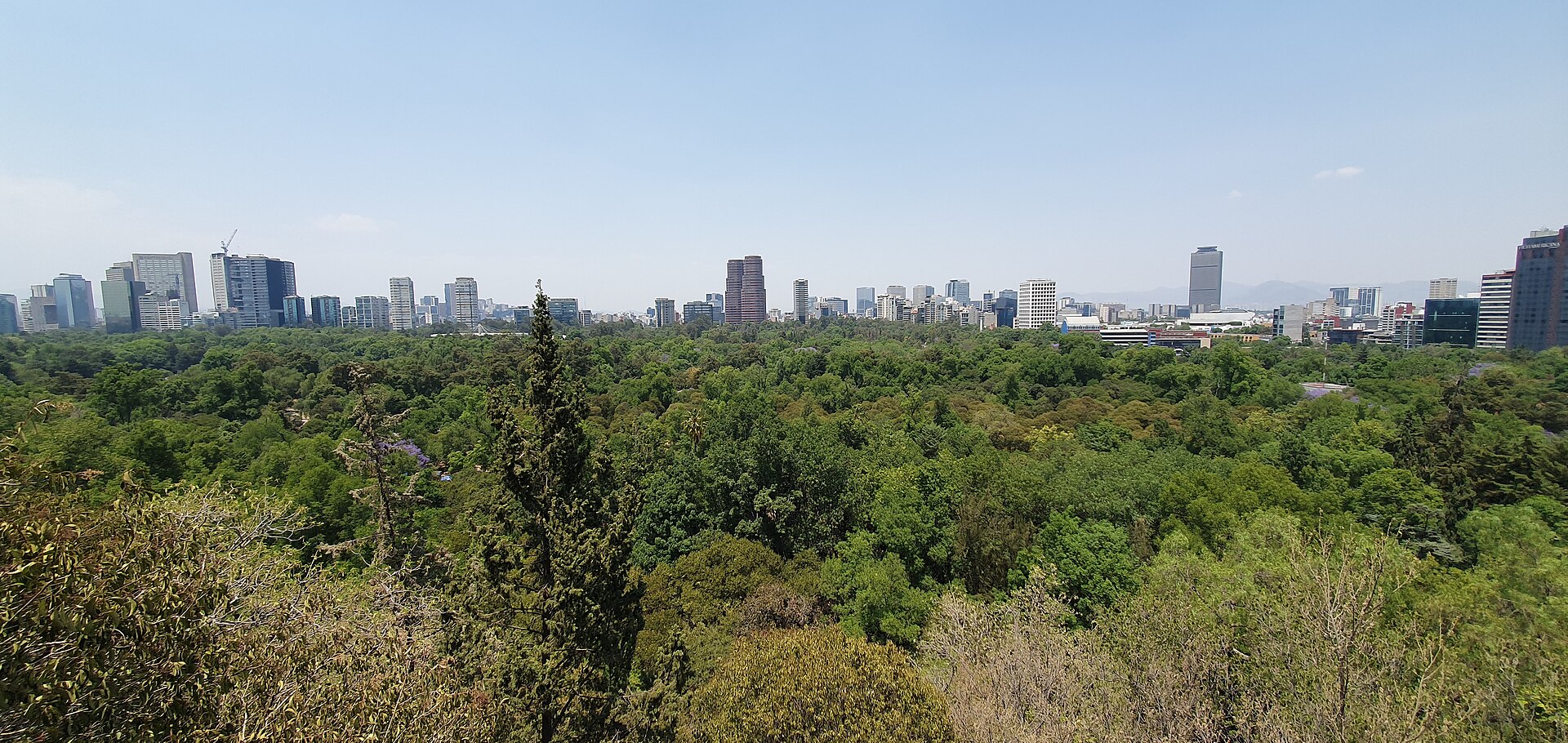
Bosque de Chapultepec is roughly twice the size of New York’s Central Park and contains, among other things, the national anthropology and history museums, two modern art museums, a zoo, a botanical garden, a lake, a castle on a hill and, since a major expansion completed across 2023 and 2024, a fourth section reachable by cable car. You cannot do it in a morning. Decide what you came for.
Museo Nacional de Antropología
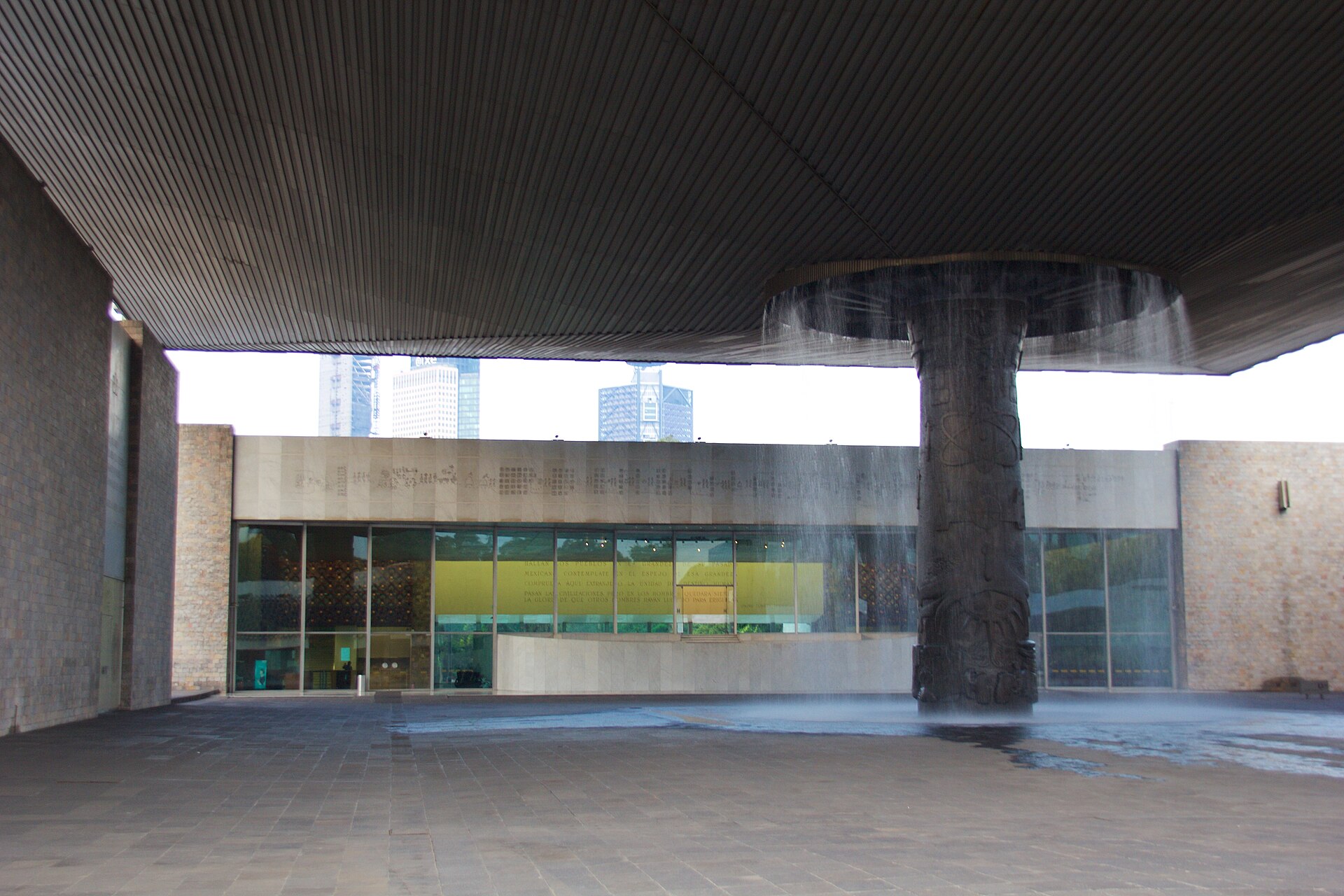
If you do one thing in Mexico City, do this. Pedro Ramírez Vázquez’s 1964 building is a masterpiece in its own right — the courtyard is roofed by El Paraguas, a single carved column supporting a vast concrete canopy with water falling from its rim — and it holds twenty-two permanent galleries covering the Mesoamerican cultures and the living indigenous peoples of Mexico. The Mexica hall has the Piedra del Sol, the so-called Aztec calendar stone. The Maya hall has the reconstruction of Pakal’s tomb from Palenque. The Teotihuacan hall is the reason to come before you visit the pyramids rather than after.
Practical: 210 pesos for visitors, 105 for nationals and residents, Tuesday to Sunday 09:00 to 18:00, closed Mondays. Under-13s, students and teachers with valid ID, over-60s with INAPAM and visitors with disabilities enter free.
How to survive it: the ground floor alone is several kilometres of walking, and the upper floor is an entire second museum of ethnography. Nobody sees it all properly in one visit. Pick three or four halls, do them slowly, and accept that you are walking past things. Arrive at opening if you want the Mexica hall to yourself. There is a café, but the better plan is to break for lunch in Polanco, ten minutes away, and come back.
Chapultepec Castle
The only castle in the Americas to have housed actual sovereigns — Maximilian and Carlota, briefly and disastrously, in the 1860s — sits on a hill that was a sacred site long before the Spanish arrived. It later became the presidential residence and then a military academy, which is why the hill is also where the Niños Héroes died defending it in 1847, a story every Mexican schoolchild knows.
Today it is the Museo Nacional de Historia: period rooms with the imperial furniture still in place, Siqueiros and O’Gorman murals, a carriage collection, and terraces with a gardened view straight down Paseo de la Reforma. Same INAH pricing and the same Tuesday-to-Sunday, 09:00-to-17:00 rule. Budget two hours plus the walk up — it is a genuine hill, and at this altitude that is not nothing. There is a shuttle for those who need it.
The rest of the park
- Museo Tamayo and the Museo de Arte Moderno — both in the first section, both modest in size and both worth an hour if modern and contemporary art is your thing. The MAM holds Frida Kahlo’s The Two Fridas.
- Zoológico de Chapultepec — free, and home to one of the few giant panda groups outside China. Fine with children, skippable otherwise.
- Second, third and fourth sections — the expanded park added the elevated Calzada Flotante walkway, the Cencalli centre on maize and food culture in the old Molino del Rey, and a large new cultural district out west. Cablebús Line 3, opened in September 2024, links the sections by cable car for seven pesos. This is where locals go and tourists mostly do not.
- Museo Soumaya and Museo Jumex — not in the park but a short ride north in Plaza Carso, Polanco. Soumaya’s silver-skinned building holds Carlos Slim’s collection, including a large group of Rodin bronzes, and admission is free every day it opens. Jumex, across the plaza, is the better contemporary programme and is free on Tuesdays. Two very good museums and one of them costs nothing; pair them with the anthropology museum only if you have the stamina.
Coyoacán and the south
Coyoacán was a separate town until the city swallowed it, and it still behaves like one: cobbles, low colonial houses, two adjoining plazas with a fountain of coyotes in the middle, and a covered market that has been feeding the neighbourhood since long before anyone came for Frida. It is about 40 minutes south of the Centro. Give it a full day and combine it with the Casa Azul.
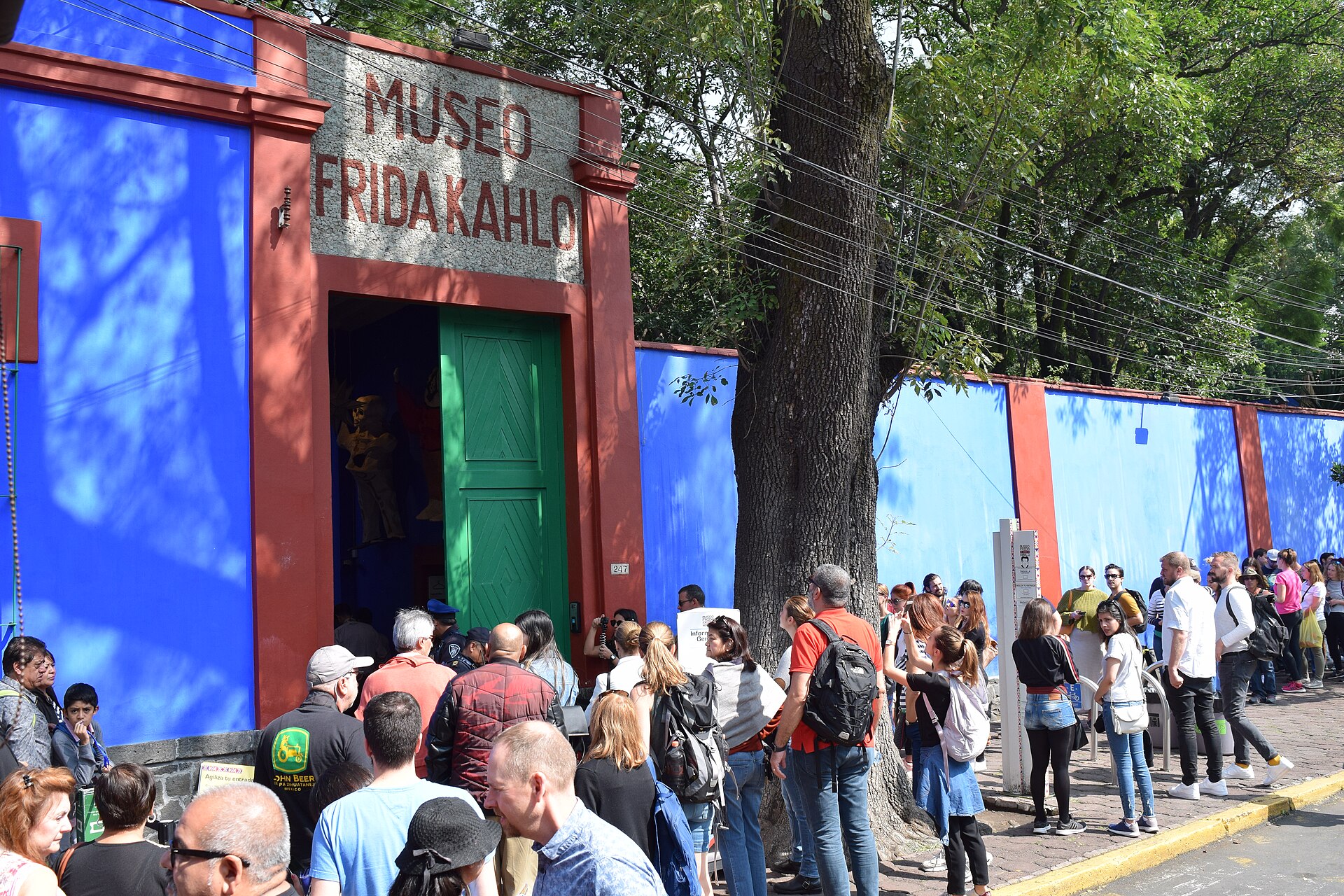
Museo Frida Kahlo (La Casa Azul)
Kahlo was born in this house, lived most of her life in it, shared it with Rivera, and died in it. It opened as a museum in 1958 and it remains a house rather than a gallery — the kitchen, the studio with the wheelchair at the easel, the day bed with the mirror fixed above it, the corsets and the prosthetic leg in the basement display. It is small, it is intensely personal, and it is the single hardest ticket in Mexico City.
The rules, which are strict and non-negotiable:
- There is no ticket office. The museum states plainly that it does not sell at the door. Buy online, in advance, from the museum’s own ticketing site.
- General admission is 320 pesos; Mexican residents with ID pay 160, students and teachers 60, seniors and children aged 6–12 pay 30, and under-6s and visitors with disabilities enter free.
- Closed Mondays. Tuesday 10:00–18:00, Wednesday 11:00–18:00, Thursday 10:00–21:00, Friday to Sunday 10:00–18:00.
- Your ticket also admits you to the Museo Diego Rivera-Anahuacalli, the volcanic-stone pyramid Rivera built to house his pre-Hispanic collection, about twenty minutes further south. Most visitors do not realise this and skip it. It is extraordinary and nearly empty.
If tickets are gone for your dates — and in high season they go weeks out — Coyoacán is still worth the trip, and the Museo Casa de León Trotsky four streets away is the obvious substitute: Trotsky lived there after Kahlo and Rivera hosted him, and he was assassinated in the study, which is preserved as it was.
Around Coyoacán
The Mercado de Coyoacán is where to eat: tostadas piled absurdly high at the counters in the middle, and the churro and ice-cream stands around the edge. The twin plazas — Jardín Centenario and Jardín Hidalgo — fill up on weekend afternoons with buskers, book stalls and an artisan market that is better than most. The sixteenth-century Parroquia de San Juan Bautista anchors the second square.
Further out, the Ciudad Universitaria campus of UNAM is a UNESCO World Heritage Site for its mid-century architecture — O’Gorman’s mosaic-covered Central Library is the famous image, and the Espacio Escultórico, a ring of concrete forms set in a lava field, is the one that stays with you. It is free, open and enormous. San Ángel, west of Coyoacán, has cobbled lanes, the Museo Casa Estudio Diego Rivera y Frida Kahlo — the two linked modernist studios Juan O’Gorman built for them — and the Bazaar Sábado craft market on Saturdays.
Xochimilco
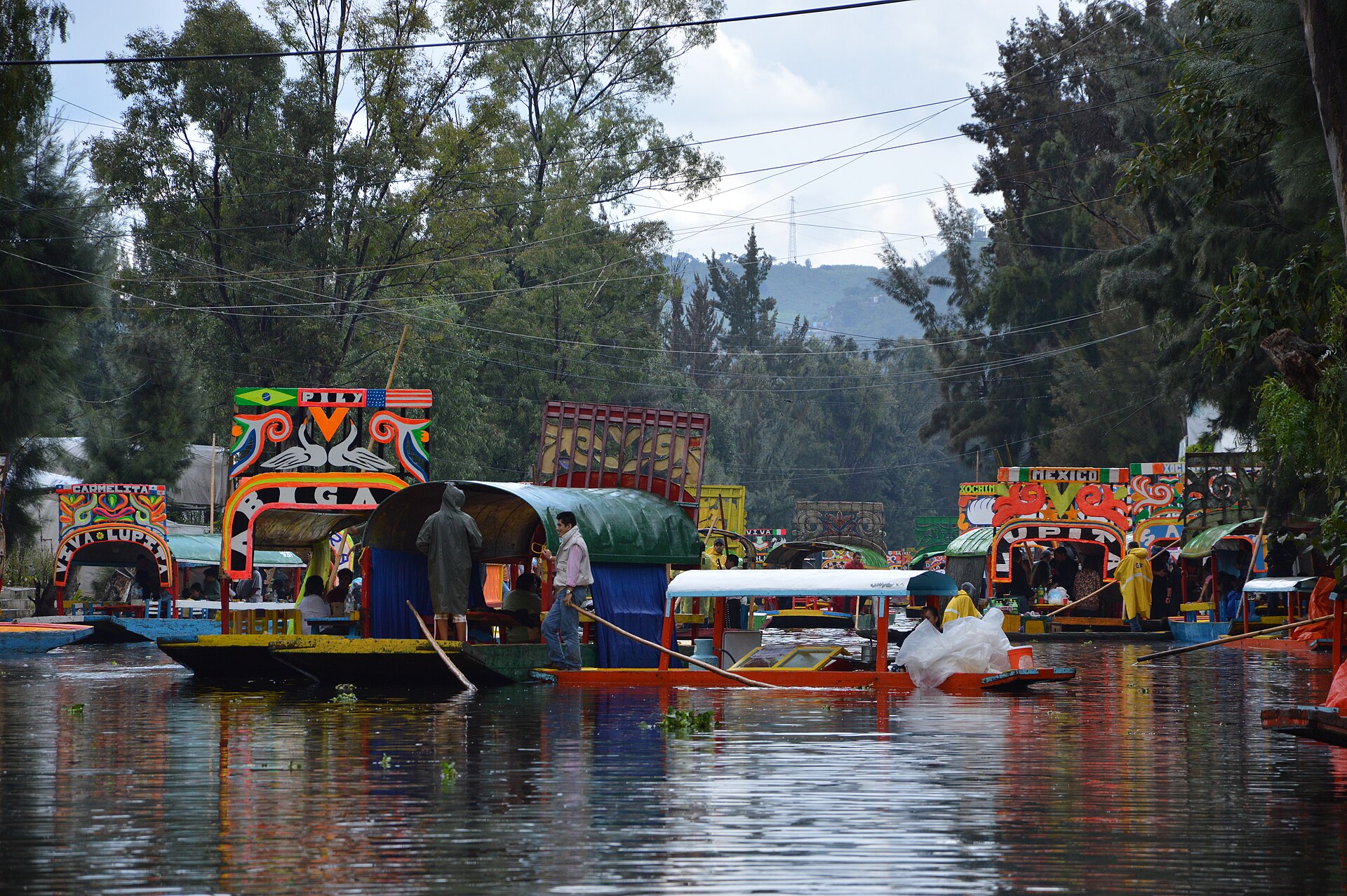
The canals in the far south are the surviving fragment of the lake system that covered the valley floor, and the chinampas alongside them — raised beds built up from lake mud between stakes — are still farmed. Together with the Centro Histórico, Xochimilco carries Mexico City’s UNESCO World Heritage listing. What you actually do there is hire a trajinera, a flat-bottomed punt painted in colours that do not exist in nature, and spend a couple of hours being poled along the water while boats selling beer, elotes and mariachi services pull alongside.
It is either delightful or a floating stag party, depending entirely on when you go. Weekday mornings are quiet and genuinely beautiful. Sunday afternoon is a party. Both are legitimate; know which one you booked.
The thing to get right is the price. The Xochimilco borough sets an official tariff of 750 pesos per hour per boat for 2026 — not per person. A trajinera takes up to about eighteen people at that same rate, so a couple pays the same as a group of twelve. Touts at the embarcaderos routinely quote per person, or quote in dollars, or add a compulsory “guide”. The official rate is posted at the landings; ask to see it. There are around eleven authorised embarcaderos; Nativitas is the busiest and most commercial, Cuemanco quieter and closer to the working chinampas and the ecological park. Boats generally run from 08:00 to 18:00.
Add-ons are negotiated separately and before you board: mariachis charge per song, food boats charge per plate. Bring cash in small notes. Nothing on the water takes cards.
Teotihuacan
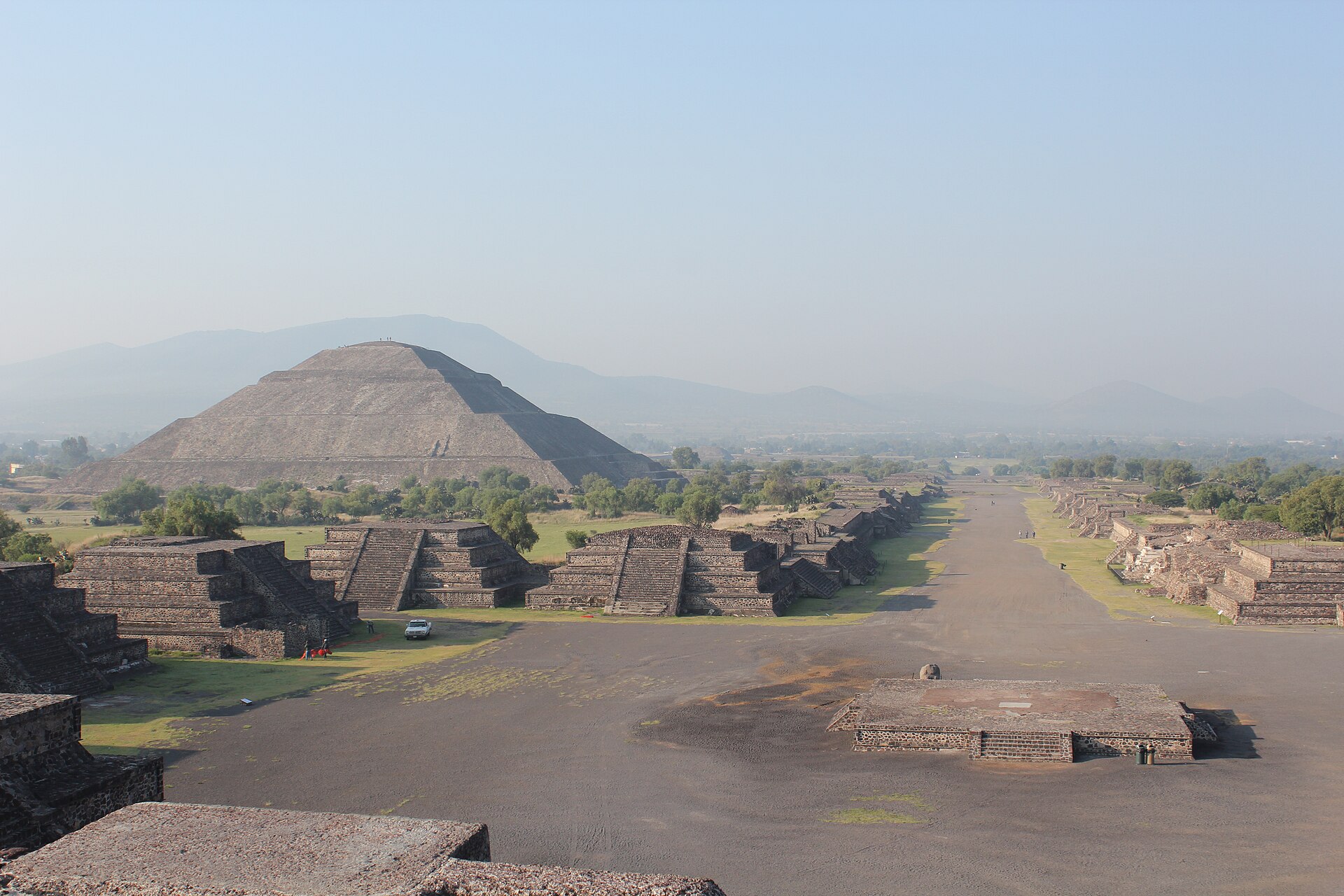
An hour northeast of the city stand the remains of a metropolis that at its height around 400 CE held perhaps 100,000 people and was one of the largest cities on earth. We do not know what its inhabitants called it or what language they spoke. The Mexica found it already ruined and abandoned centuries later, named it Teotihuacan — roughly, the place where the gods were made — and treated it as sacred. The names of the monuments are theirs, not the builders’.
What you walk is the Avenue of the Dead, two and a half kilometres of processional axis, with the Pyramid of the Sun halfway along and the Pyramid of the Moon closing the north end. The Temple of the Feathered Serpent at the south end is smaller and has the best surviving sculpture. The Palacio de Quetzalpapálotl and the Tepantitla compound hold the murals, which is where the colour that has vanished from the stone actually survives.
Practical: open daily 09:00 to 17:00 — including Mondays, which is exactly why it is the right thing to do on a Monday. Site museums and temporary exhibitions close at 16:30. Admission is 210 pesos for visitors and 105 for nationals and residents, sold at the site’s own ticket windows and through INAH’s official channel. Access to the upper levels of the main pyramids has been restricted in recent years for conservation reasons and the rules change; do not build your day around climbing one, and check the current position before you go.
Getting there: buses run from Terminal del Norte roughly every fifteen to twenty minutes and take about an hour; they are cheap, frequent and perfectly straightforward. An organised tour costs several times more and usually bundles a shopping stop you did not ask for, but it removes the transfers. A private driver splits the difference. Hot-air balloon flights over the site launch at dawn and are booked separately from site admission — they land before the archaeological zone opens.
Go early. The site has almost no shade, sits at a similar altitude to the city, and by noon the walking is genuinely punishing. Hat, sunscreen, water, proper shoes. Five gates ring the site; gate 1 at the south end lets you walk the avenue in the direction it was designed to be walked.
One note of judgement rather than fact: Teotihuacan is in the State of Mexico, outside the capital, and both the site and the road to it have had isolated security incidents reported in the past. That is an argument for going during opening hours, sticking to the marked zone and using established transport — not for staying away. Our safety guide handles the wider question properly.
Neighbourhoods worth a day of just walking
Some of the best hours you will spend here involve no ticket at all. These are the districts where the walking is the activity.
- Roma Norte — early-twentieth-century mansions, jacarandas, Plaza Río de Janeiro and Plaza Luis Cabrera, and the densest concentration of good small restaurants, coffee and bookshops in the city. Badly damaged in the 1985 earthquake, gentrified hard since about 2015, and currently the neighbourhood most argued about by the people who live in it.
- Condesa — Art Deco apartment blocks around two parks, Parque México and Parque España, laid out on the oval of a former racetrack, which is why the street plan curves. Dogs everywhere. The best place in the city to run out of plans and not mind.
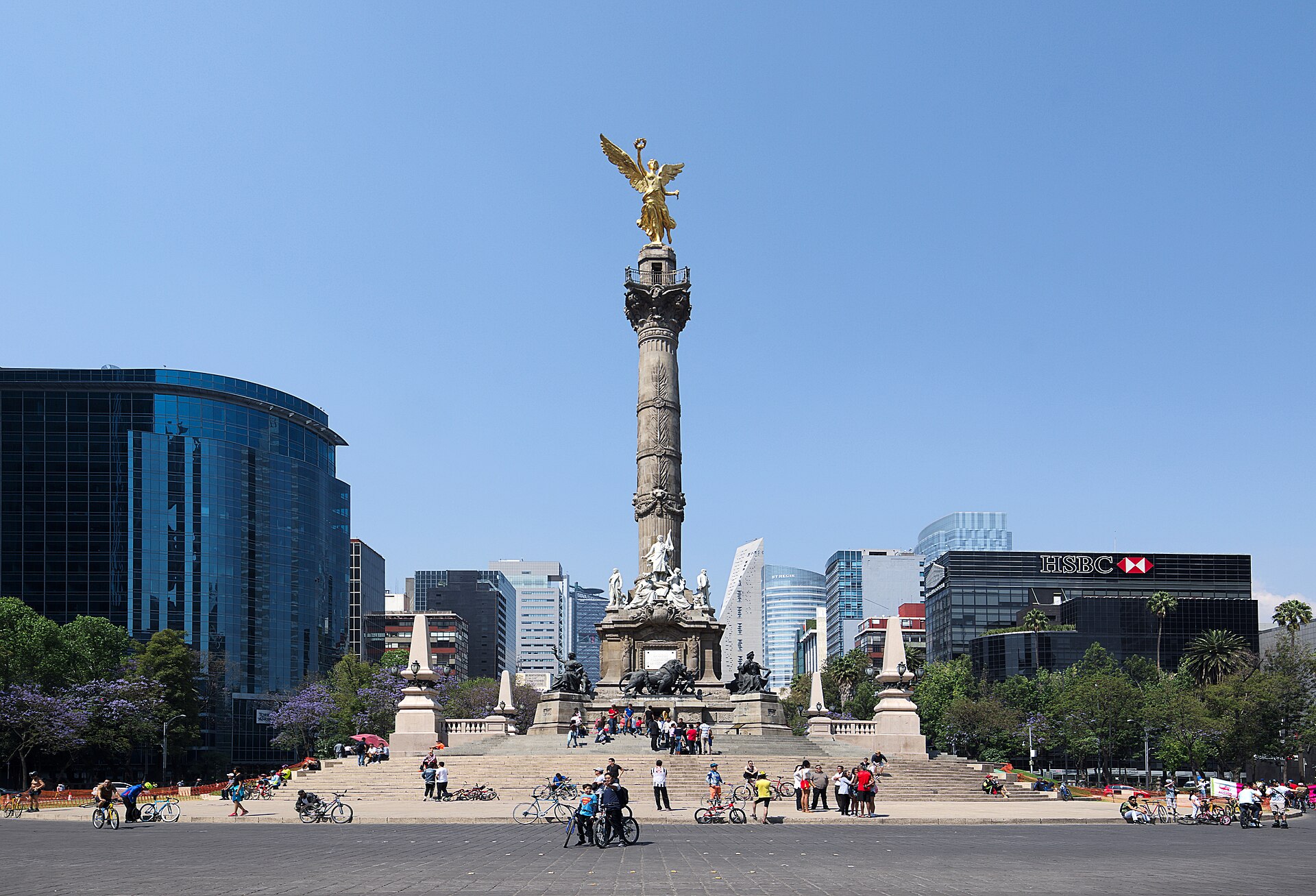
- Juárez and the Zona Rosa — between Reforma and Roma, with the Ángel de la Independencia at the top. Juárez has quietly become one of the better eating districts; the Zona Rosa is the city’s long-standing LGBTQ+ nightlife quarter and also holds a substantial Korean community and its restaurants.
- Polanco — the expensive one. Avenida Presidente Masaryk for luxury retail, Parque Lincoln, and several of the restaurants that put the city on international lists. Also the base for the anthropology museum and Plaza Carso.
- San Rafael and Santa María la Ribera — older, cheaper, less polished, and increasingly interesting. Santa María has the Kiosco Morisco, a Moorish-revival pavilion built for the 1884 New Orleans World’s Fair and shipped home afterwards.
One fixed point worth building a Sunday morning around: Paseo de la Reforma closes to traffic most Sunday mornings until early afternoon, and the city’s main avenue fills with cyclists, runners and families. Bicycles can be hired from Ecobici docking stations or from the free loan points set up along the route. It is the single best free thing to do in Mexico City and almost no visitor knows about it.
Eating as an activity in itself
You can construct a perfectly good week here in which food is the itinerary and everything else is what you do between meals. A few structural things are worth knowing before you start.
The markets are the anchor. Mercado de San Juan for ingredients and the strange end of the protein spectrum; Mercado de Medellín for the Latin American diaspora — Colombian, Cuban, Venezuelan groceries and counters; Mercado de Coyoacán for tostadas; Mercado de La Merced for sheer scale, which is overwhelming and best visited in the morning with a guide if you want to understand what you are looking at. Every market has a ring of fondas serving a fixed-price comida corrida — soup, rice, a main, agua fresca — for less than the price of a coffee in Polanco.
Street food is a schedule, not a place. Tamales and atole in the early morning from a corner steamer. Tacos de guisado at lunch. Tacos al pastor from evening onward, carved off the vertical spit — a Lebanese technique adapted in Puebla in the twentieth century, which is why it looks like shawarma. Quesadillas and huaraches at the comal all day. The standard advice about busy stalls with high turnover is sound; so is starting gently on your first day while your system adjusts to the altitude and everything else.
At the other end, Mexico City has a serious fine-dining scene, and the best-known rooms release tables one to three months ahead and fill them within hours. If that matters to you, book before you book your flights. If it does not, you will eat extremely well for very little without ever making a reservation.
Drinks: pulque, the fermented maguey drink, survives in a handful of old pulquerías; mezcal has its own bars across Roma, Juárez and the Centro; and the historic cantinas of the Centro Histórico — some over a century old — are a genuinely different evening from a cocktail bar.
Evenings
- Lucha libre at Arena México. The home of CMLL, the oldest professional wrestling promotion in the world, running regular cards on Friday evenings at 20:30, Sunday at 17:00 and Tuesday at 19:30. It is theatre, it is loud, the crowd does half the work, and it is one of the few things in this guide that is genuinely unlike anything at home. Cheap seats are cheap. Buy at the box office or online, and check the current card — schedules shift around special events.
- Ballet Folklórico at Bellas Artes. Regional dances from across Mexico, live orchestra, in the Art Deco theatre with the Tiffany glass curtain. Book ahead.
- Plaza Garibaldi. Mariachi bands standing around waiting to be hired, which is exactly as odd and as charming as it sounds. Go with people, go after dark, take a taxi both ways.
- Rooftops. The bars along the south side of the Zócalo look straight across at the cathedral, and several around Bellas Artes and the Alameda do the same for the dome. Drinks cost double what they do at street level and the view is worth it once.
- Late nights concentrate in Roma, Condesa, Juárez and the Zona Rosa. Mexico City runs late; nothing much happens before 22:00.
Free and nearly free
An unusually large share of the best of Mexico City costs nothing:
- The Rivera murals in the Palacio Nacional — free, all of them, every open day.
- Museo Soumaya, free daily; Museo Jumex, free on Tuesdays.
- The Museo del Palacio de Bellas Artes on Sundays, free to everyone regardless of nationality.
- Bosque de Chapultepec and the zoo. Alameda Central. Parque México.
- The UNAM campus, its library mosaics and the Espacio Escultórico.
- The Basílica de Guadalupe, the most visited Catholic shrine in the Americas, open daily from early morning to around 21:00. The old basilica leans visibly; the new one from 1976 holds the image itself, with a moving walkway underneath so the queue keeps moving.
- The Palacio Postal, the Casa de los Azulejos, the Metropolitan Cathedral.
- Sunday morning on Reforma, with a free loan bicycle.
Getting between all of it
Transport is cheap to the point of absurdity and this changes how you plan. As of 2026, the Metro costs 5 pesos a journey regardless of distance; Metrobús, the bus rapid transit running in dedicated lanes, costs 6 pesos, except Line 4 to the airport terminals at 30; Cablebús cable cars cost 7. All of them use the same rechargeable Movilidad Integrada card, which you buy and top up at station machines.
Practical notes. The Metro is fast and extensive but seriously crowded at rush hour, and the front carriages on many lines are reserved for women and children at peak times — this is enforced and signposted. Metrobús Line 4 connects the Centro Histórico directly to both airport terminals, which is the cheapest airport transfer that exists, though it is awkward with large luggage. Ride-hailing apps work well, are inexpensive by North American or European standards, and are the sensible default at night. Street taxis hailed at random are the one option we would steer you away from; use an app or an authorised rank.
Ecobici, the city bike share, has a visitor-friendly short-term option and dense docking across Roma, Condesa, Juárez, Polanco and the Centro. Traffic is assertive but the protected lanes on Reforma and elsewhere are real.
Budget generously for travel time. Distances that look short on a map take forty minutes at 18:00. The single most useful scheduling habit here is to do one district per half-day and not bounce across the city between bookings.
Three routes that actually work
These are grouped by geography rather than by theme, which is the only way an itinerary survives contact with the city. Each assumes a start around 09:00.
Route A — Centro Histórico on foot (any day except Monday)
| Time | Stop | Why now |
|---|---|---|
| 09:00 | Templo Mayor | Opens at 09:00 and the walkway is unbearable later |
| 11:00 | Metropolitan Cathedral and the Zócalo | Two minutes away; free |
| 12:00 | Palacio Nacional | Bring your passport for the security check |
| 13:30 | Lunch in the Centro | A cantina or the counters at Mercado San Juan |
| 15:00 | Casa de los Azulejos and Palacio Postal | Five minutes each, both free |
| 15:45 | Museo del Palacio de Bellas Artes | Closes at 18:00; free on Sundays |
| 17:30 | Torre Latinoamericana | Open until 22:00 — the flexible slot |
Route B — Chapultepec and Polanco (any day except Monday)
| Time | Stop | Why now |
|---|---|---|
| 09:00 | Museo Nacional de Antropología | Arrive at opening; pick three halls, not twenty-two |
| 12:30 | Lunch in Polanco | Ten minutes north, and you will need the break |
| 14:00 | Chapultepec Castle | Last entry well before the 17:00 close; allow for the hill |
| 16:30 | Museo Tamayo or the lake | Depending on how much walking is left in you |
| Evening | Museo Soumaya | Free, open late-ish, and five minutes from Polanco dinner |
Route C — Coyoacán and the south (Tuesday to Sunday, ticket already bought)
| Time | Stop | Why now |
|---|---|---|
| 09:30 | Museo Frida Kahlo | Earliest slot you could book; it only gets busier |
| 11:30 | Jardín Centenario and Jardín Hidalgo | Coffee, the coyote fountain, the parish church |
| 13:00 | Mercado de Coyoacán | Tostadas, then churros |
| 14:30 | Museo Casa de León Trotsky | Four streets away and usually quiet |
| 16:00 | Museo Anahuacalli | Already included in your Casa Azul ticket |
Keep Teotihuacan and Xochimilco as their own whole days. Both are an hour out and back, and both are spoiled by hurrying.
Mistakes worth not making
- Arriving at the Casa Azul without a ticket. There is no box office. People still do this daily and are turned away.
- Booking museums for a Monday. Teotihuacan, the Torre Latinoamericana, the markets, the Basílica and the parks are your Monday. Everything else is shut.
- Assuming Sunday is still free. It is, for Mexican nationals and residents. Since January 2026 it is not for visitors on a tourist permit, and it is the most crowded day of the week at exactly the sites you want.
- Paying per person at Xochimilco. The official tariff is per boat per hour. Ask to see the posted rate.
- Doing the anthropology museum and Chapultepec Castle and Polanco in a morning. The museum alone defeats most people.
- Treating day one as a full day. Altitude, a long flight and an ambitious schedule is how people lose day two as well.
- Scattering bookings across the map. One district per half-day. Traffic will punish anything else.
- Carrying no cash. Markets, trajineras, street food, small museums and taxis are cash businesses. Cards are widely accepted in restaurants and shops and useless almost everywhere interesting.
Practical details that affect your day
- Money. Mexican pesos. Withdraw from bank ATMs inside branches where possible, decline the machine’s own currency conversion, and keep 20, 50 and 100-peso notes for markets and boats.
- Tipping. Around 10–15% in restaurants, and check whether service has already been added. Small change for bathroom attendants, baggers at supermarkets and the people who help you park.
- Water. Tap water is not generally drunk. Hotels and most rentals supply purified water; bottled is everywhere. Ice in established restaurants and bars is made from purified water as a matter of routine.
- Weather. Mild all year — this is a highland city, not a tropical one. The rainy season runs roughly May to October and the rain usually arrives in a heavy late-afternoon burst rather than all day. Carry a light layer; evenings cool off fast at this altitude. The dry winter months are the clearest and the busiest.
- Air quality. The valley traps pollution, and the city occasionally declares a contingencia ambiental when ozone or particulates spike. During one, the advice is to limit strenuous outdoor exercise, particularly in the afternoon. The city publishes live readings by district at aire.cdmx.gob.mx.
- Language. English is common in Roma, Condesa, Polanco and at major museums, and much less so on the Metro, in markets and in the south. A little Spanish goes a long way and is warmly received.
- Accessibility. Uneven, and honestly so. The anthropology museum, Bellas Artes, Soumaya and Metrobús are broadly accessible. The Centro Histórico’s pavements, the Templo Mayor walkway, Chapultepec’s hill, Teotihuacan’s surfaces and most of the Metro are not. We flag what we have confirmed and say plainly when we have not been able to verify a specific facility.
- Safety. Mexico City is a large city with the ordinary large-city risks and a real, uneven variation by district and hour. Petty theft on crowded transport and in tourist concentrations is the practical concern for most visitors. Check your own government’s current travel advice for Mexico before you travel — advisories are issued by state, and the guidance for Mexico City differs from the guidance for the states around it.
Questions people actually ask
How many days do I need in Mexico City?
Three full days covers the Centro Histórico, Chapultepec and Coyoacán without sprinting. Five lets you add Teotihuacan and Xochimilco as whole days. Seven is when the city starts to feel like somewhere you are staying rather than somewhere you are processing. Fewer than three and you are choosing between the anthropology museum and the pyramids.
What is the one thing I should not miss?
The Museo Nacional de Antropología. It is the collection that makes everything else in the country legible, and it is a great building besides. If you are more interested in the present than the past, substitute a morning in the Centro Histórico followed by an afternoon walking Roma and Condesa.
Is Sunday still free at the museums?
At INAH sites — the anthropology museum, Templo Mayor, Chapultepec Castle, Teotihuacan — free Sunday entry applies to Mexican nationals and foreign residents who can show valid documentation. Visitors on a tourist permit pay the standard 210 pesos. The Museo del Palacio de Bellas Artes, which is run by INBAL rather than INAH, is free on Sundays to everyone. Museo Soumaya is free every day to everyone.
Can I still climb the pyramids at Teotihuacan?
Access to the upper levels of the Pyramids of the Sun and the Moon has been restricted at various points in recent years for conservation and safety, and the rules have changed more than once. Walking the Avenue of the Dead and visiting the temple complexes and murals is unaffected. Check the position immediately before you travel and do not build the day around a summit.
How far ahead do I need Casa Azul tickets?
As far ahead as you can. The museum sells online only and slots disappear well before the date in busy periods. If your dates are already gone, the Museo Casa de León Trotsky, the Museo Casa Estudio Diego Rivera y Frida Kahlo in San Ángel, and The Two Fridas at the Museo de Arte Moderno between them give you a great deal of the same story.
What should I do on a Monday?
Teotihuacan, which is open. Or the Torre Latinoamericana, the Basílica de Guadalupe, Bosque de Chapultepec, the markets, the UNAM campus, the Reforma monuments, or a long walk through Roma and Condesa. Mexican Mondays are a museum problem, not a city problem.
Is Xochimilco worth it?
On a weekday morning, yes — it is quiet, the chinampas are visibly working farmland, and it is the last living piece of the lake city. On a Sunday afternoon it is a party on water, which is great fun if that is what you wanted and a disappointment if you came for the UNESCO site. Pick your day deliberately.
Do I need a tour?
For the city itself, no. It is navigable, cheap to move around and well signposted at the major sites. A guide genuinely adds something in three places: Teotihuacan, where the interpretation is the point and the site labelling is thin; La Merced and the bigger markets, where you will otherwise not know what you are looking at; and any specialist interest — muralism, architecture, food — where a knowledgeable person is worth the money.
When is the best time of year to come?
There is no bad month. March and April bring the jacarandas; late October and early November bring Day of the Dead, which is spectacular and books out early; the dry season from November to April is clearest and most crowded; the rainy season from May to October is greener, cheaper and involves an afternoon downpour you can plan around. Each month has its own trade-offs, which we cover in a dedicated guide.
Where this guide goes next
This page is the shortlist and the framework. Over the coming months we are publishing full guides to the subjects that deserve more than the paragraphs above: the museums compared in detail, Casa Azul tickets and what to do when they are sold out, reaching Teotihuacan by bus, Xochimilco embarcadero by embarcadero, the neighbourhoods one at a time, the airport, getting around, costs, safety, and a month-by-month calendar. As each goes live it will be linked from the relevant section here. We do not publish placeholder pages to make the structure look finished.
Almost every timing problem on this page — the Monday closures, the online-only ticketing, the hour lost crossing town twice a day — gets easier or harder depending on which colonia you sleep in. Our guide to where to stay in Mexico City compares Roma, Condesa, the Centro Histórico, Polanco and Coyoacán on the things that actually matter once you are here: travel time to the sites, street noise, price brackets in pesos, and the 2026 short-term rental rules that now apply to anything booked through a platform.
Knowing what is here is one problem; fitting it into the days you actually have is another. Our Mexico City itineraries guide compares trip lengths from one day to ten, sets out a worked three-day spine you can add to or cut down, and gives realistic travel-time buffers between the Centro, Chapultepec, Coyoacán and Teotihuacán — plus a swap list for the Monday when half of this page is closed.
Two things on this page carry practical cautions worth reading before you go: the crowds that make Calle Madero and the Metro pleasant are also where pickpocketing happens, and the altitude makes a hard first day a poor idea. Our guide to safety and health in Mexico City covers both, along with the dated advisory position, street food and water, earthquake procedure and the emergency numbers to save.
Some of what is on this page is seasonal, and some of it is transformed by the date you pick — the Zócalo at Día de Muertos, the Basílica on 12 December, the jacarandas in March. Our guide to the best time to visit Mexico City gives the climate normals with their station and period, an honest read on the rainy season, and a wet-afternoon list for when the weather wins.
Plenty of what is best about this city is not on any admission list. Our Mexico City food guide covers the dishes worth crossing town for, the eating hours that quietly wreck most visitors’ schedules — comida runs from two until half past four, and the good taco hours start at ten at night — and how to order at a stand without hovering.
The museums deserve their own treatment, because their rules are what decide the shape of your week. Our guide to the best museums in Mexico City has the 2026 admission prices, the Monday closures set out plainly, the reason Sunday is no longer free for foreign visitors, and the reopening of the Museo Dolores Olmedo in May 2026 that most guides have not caught up with.
The one excursion almost every visitor makes deserves its own treatment. Our guide to Teotihuacan from Mexico City sets out the current INAH site rules — including the climbing ban in force since 2020 and the full prohibited-items list — alongside the independent bus route, the honest case for and against a tour, and what to do when the balloon flight is cancelled.
One item on this page has a pricing rule worth learning before you go. Our Xochimilco guide sets out the official Alcaldía tariff of 750 pesos an hour for the whole trajinera — not per person — along with which landing to choose, what the passing music and food boats really cost, and the chinampas and axolotls that make this a World Heritage site rather than a boating lake.
Most of what follows is easier to plan once you know how the city is laid out. Mexico City thinks in colonias rather than districts, and the ones worth a visitor’s time sit in a diagonal band from the Zócalo down to San Ángel. Our guide to the Mexico City neighborhoods to visit sets out what each one is for, how long it really takes to get between them, and three walking routes that string the sights together sensibly.
A good many of these are better after dark, and several only exist after dark. Lucha libre at Arena México, the mezcalerías of Roma and the Centro, the mariachis at Garibaldi and the Torre Latinoamericana deck — open until 22:00, including Mondays — are all covered in our Mexico City nightlife guide, along with door rules, prices and how to get home.
Travelling with children changes the arithmetic of this list more than you would expect: under-13s enter every INAH site free on production of identification, the Chapultepec zoo costs nothing at all, and a Xochimilco trajinera is priced per boat rather than per head. Our guide to Mexico City with kids re-ranks the city by age, with the closures, the cobbles and the practical middle of the day.
A good deal of the best of this city is outdoors and free. Our guide to Mexico City parks and outdoor activities covers Chapultepec’s four sections, the running circuit at Viveros, Reforma’s car-free Sunday mornings, and the two real hikes within an hour of the centre — the Desierto de los Leones at 3,000 metres and Ajusco at 3,936.
If your trip includes the last Saturday of October, the Gran Desfile de Día de Muertos down Paseo de la Reforma is one of the great free spectacles of the city’s year. Our Day of the Dead parade guide explains the route, where to stand and how to cope with the crowds.
Sources and verification
Prices, opening hours and access rules on this page were checked against the operating institutions on 17 September 2026. Where a figure comes from a venue’s own site we have used that figure over any third-party listing.
- Instituto Nacional de Antropología e Historia (INAH) — 2026 admission tariffs for museums and archaeological zones, exemptions, and the Sunday nationality rule, following the reform to the Federal Rights Law in force from 1 January 2026. Covers the Museo Nacional de Antropología, Templo Mayor, Chapultepec Castle and Teotihuacan.
- Museo Nacional de Antropología — hours, tariff and exemptions.
- Museo Frida Kahlo — official visitor page and ticketing site for prices, the online-only rule, the day-by-day opening schedule and the Anahuacalli inclusion.
- Instituto Nacional de Bellas Artes y Literatura (INBAL) — Museo del Palacio de Bellas Artes hours, admission and Sunday policy.
- Alcaldía Xochimilco — the official 2026 trajinera tariff of 750 pesos per hour per boat and the list of authorised embarcaderos.
- Gobierno de la Ciudad de México — 2026 fares for Metro, Metrobús, Cablebús and the Movilidad Integrada card, and air quality reporting.
- Mirador Torre Latinoamericana — viewing deck hours and ticket prices.
- Consejo Mundial de Lucha Libre (CMLL) — Arena México schedule.
- Insigne y Nacional Basílica de Santa María de Guadalupe — opening hours.
We have not visited these places on your behalf this week, and we do not pretend otherwise: this guide is researched from primary institutional sources and published with its verification date attached. Cultural institutions in Mexico City revise tariffs in January and adjust hours without much notice. If you find something here that no longer matches what the venue says, tell us and we will correct it.
Last verified: 17 September 2026. Price-sensitive entries on this page are rechecked monthly; the guide as a whole is reviewed quarterly.