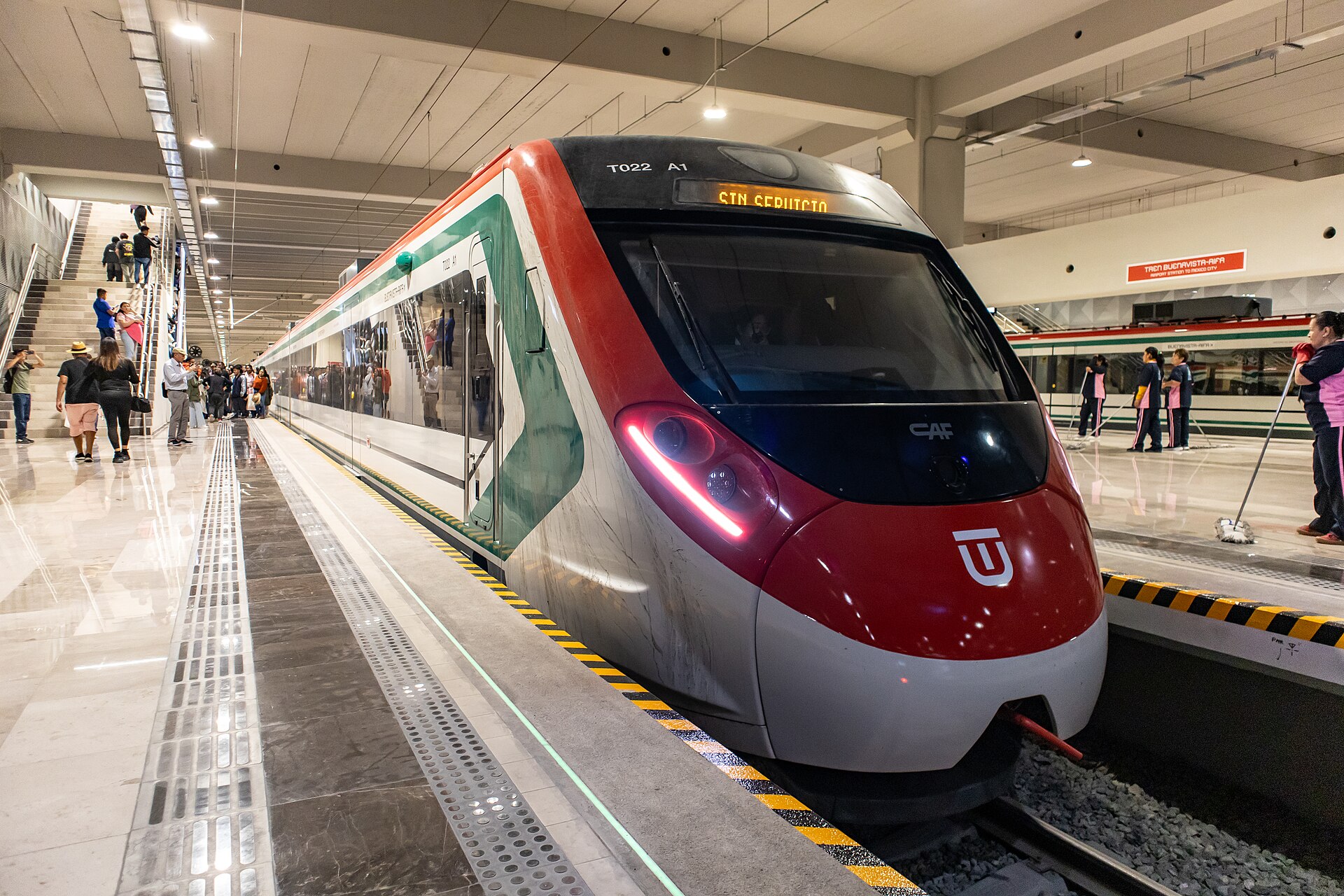
Almost every Mexico City airport guide still describes a city with one usable airport and a second one nobody could reach. That stopped being true on 26 April 2026, when a suburban rail line opened from Buenavista in the centre of the city to Felipe Ángeles, the airport in Zumpango that had spent four years being a good terminal in the wrong place. It is now roughly forty-three minutes from the middle of Mexico City. That changes which flights are worth booking, and it is the first thing this page wants you to know.
This guide covers all three airports that serve the capital — MEX, the old Benito Juárez airport inside the city; NLU, Felipe Ángeles to the north; and TLC, Toluca to the west — with the arrival procedure in order, the fare evidence for every way of getting into town, what happens when you miss something, and an honest account of where the published figures disagree with each other.
The three airports, and which one you want
| MEX — Benito Juárez (AICM) | NLU — Felipe Ángeles (AIFA) | TLC — Toluca | |
|---|---|---|---|
| Where | Inside the city, ~7 km east of the Zócalo | Zumpango, State of Mexico, ~45 km north | Toluca, State of Mexico, ~60 km west |
| Terminals | Two, not walkable to each other | One | One |
| Who flies there | Nearly all international carriers; both hubs | Mostly domestic and Mexican low-cost, with a growing list of international routes | A small number of domestic services |
| Best public link | Metrobús Line 4, 30 pesos, both terminals | Tren Felipe Ángeles from Buenavista, ~43 min | Coach to Observatorio; no rail link |
| Time to the Centro | 20–35 min by car | ~43 min by train, longer by road | 60–90 min, traffic-dependent |
| The catch | Congested, cramped, and terminal transfers are a real journey | Modern and calm, but still far, and the train has hours | Awkward, and route availability changes |
| Choose it when | You are flying internationally, or want the shortest transfer | The fare is meaningfully lower and your flight times fit the train | Only if a specific route makes it obvious |
The practical version: for almost all international visitors, MEX is the answer and you will not have a choice about it. AIFA is now genuinely viable rather than theoretically viable, and is worth choosing when the fare difference is real and your flight lands and departs within the train’s operating hours. Toluca is a specialist option — check what actually flies there before you build a trip around it, because the route list has changed repeatedly.
MEX: which terminal, and why it matters more than you think
Mexico City International Airport has Terminal 1 and Terminal 2, and the single most consequential fact about them is this: they are not walkable to each other. They sit on opposite sides of the airfield. People miss flights over this every week.
- Terminal 1 is the original building at Peñón de los Baños and handles most international carriers. Arrivals are on the ground floor, check-in, security and departures upstairs, gates 1 to 36.
- Terminal 2 opened in 2008 and is Aeroméxico’s hub, with domed, naturally lit halls. Arrivals on the ground floor, check-in upstairs, boarding wings K for international and M for domestic.
Moving between them
The Aerotrén, an automated people mover, links the two in about five minutes and runs daily from 05:00 to 23:00. It has one important restriction: you need a digital or printed boarding pass to ride it. Meeting somebody, changing airlines on separate tickets, arriving to collect luggage — none of those get you on.
If you do not have a boarding pass, or it is outside Aerotrén hours, the alternative is a red public bus from Door 6 at Terminal 1 or Door 4 at Terminal 2, at minimum fare. It is slower, because it goes around by road, and in traffic it can take half an hour or more.
Plan on this basis: if you have to change terminals, allow an hour, not fifteen minutes, and check which terminal your flight uses on the booking itself rather than from memory. Airlines move between them.
Arrivals at MEX, in order
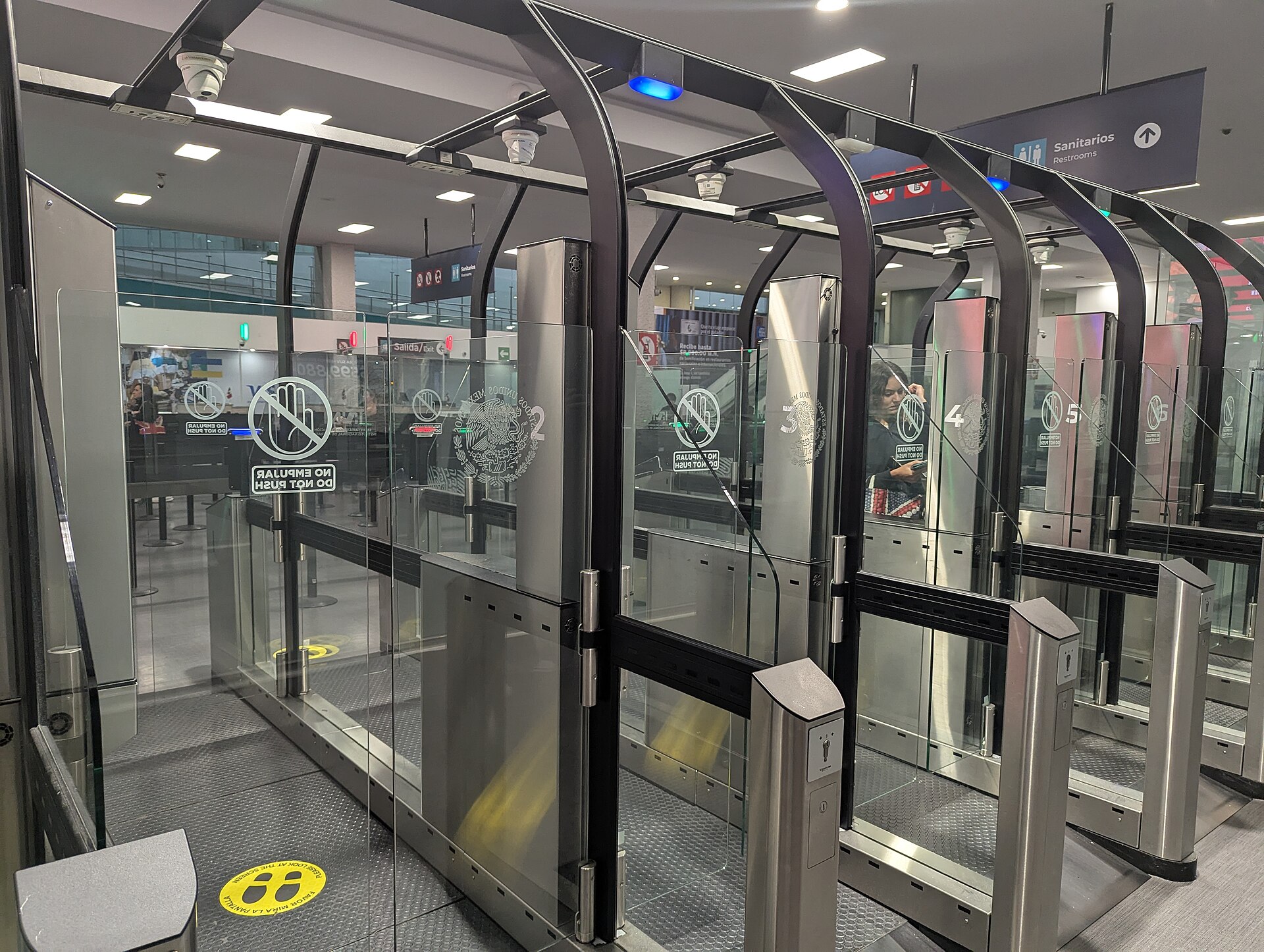
What actually happens, from wheels down to the kerb.
- Disembark and walk. Terminal 1 in particular is long and the walk to immigration is a real one. Allow for it if you have a tight onward connection.
- Immigration. Queues here can be substantial when several long-haul arrivals land together, and an hour is not unusual at peak. Terminal 1 now has automated passport-reading gates alongside the staffed desks.
- Your entry record. Mexico has been moving away from the paper FMM tourist card at air borders towards electronic records and stamps. What you receive varies, and the crucial detail is not the format but the number: you are granted a specific number of days, and it is frequently fewer than the 180 people assume. Check it at the desk, photograph whatever you are given, and do not discover on departure that you overstayed by a fortnight.
- Baggage reclaim, then customs. Customs uses a random-selection system — you press a button, and a green light means walk through while a red light means your bag is inspected. It is routine and quick.
- The arrivals hall. This is where you need to have already decided how you are getting into town, because the moment you emerge you will be approached. Which brings us to the next section.
The single most important arrivals rule
Never accept a ride from anybody who approaches you inside the terminal. Legitimate transport is not sold by people walking up to you. Authorised taxis are bought at a counter; app rides are booked in the app; your hotel car is where the hotel said it would be. This is the one piece of airport advice that is worth more than all the rest combined.
Getting from MEX into the city: the options and the fares
All figures checked September 2026. Where the sources disagree, this page says so rather than choosing the tidiest number.
| Option | Fare | Time to the Centro | Verdict |
|---|---|---|---|
| Metrobús Line 4 | 30 pesos special airport fare | ~45–60 min | Official guidance calls it the fastest, cheapest and safest public option. Card or digital wallet only — no cash. |
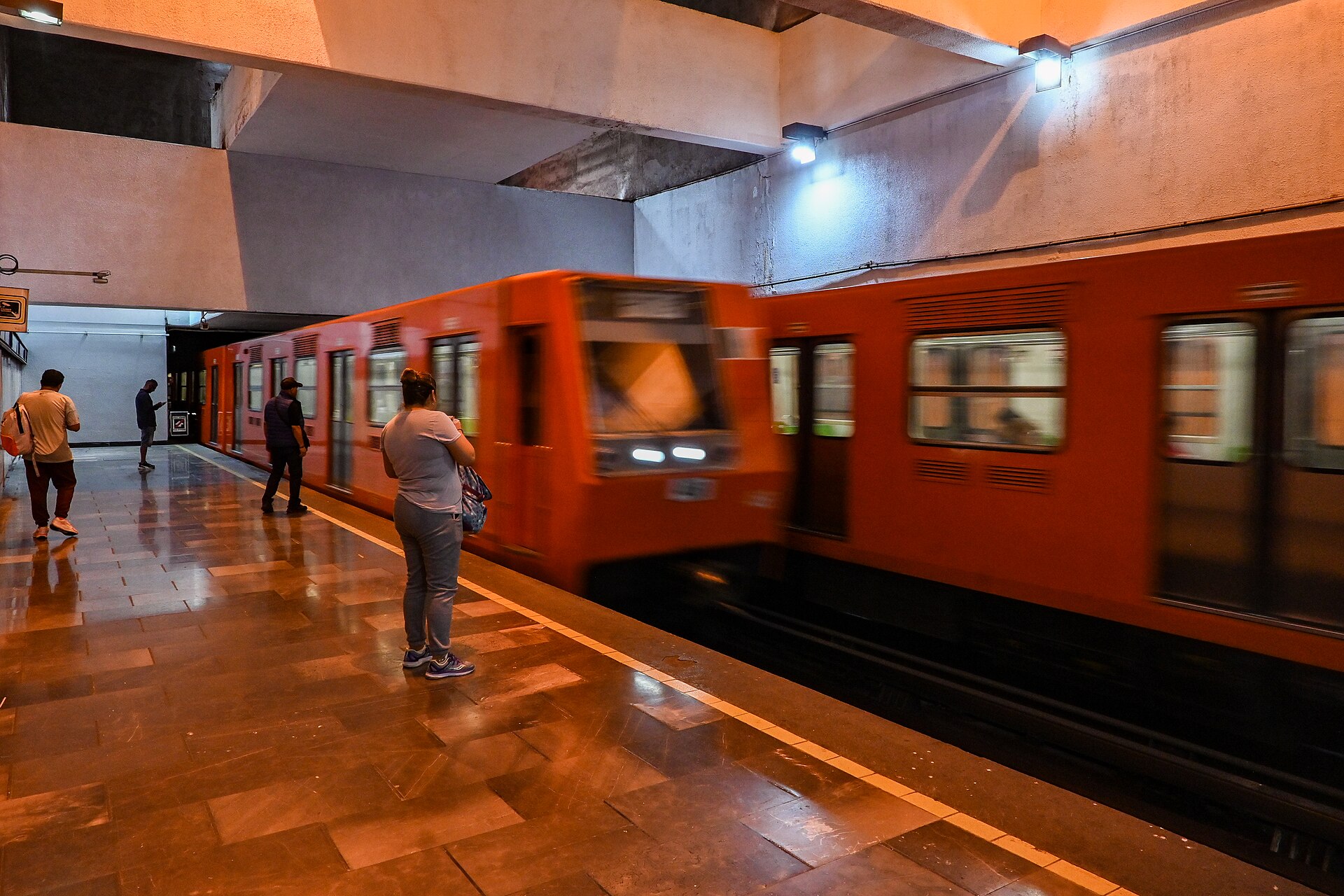
| Metro, Terminal Aérea (Line 5) | 5 pesos | 45–70 min with changes | Cheapest by a mile. Officially not recommended for arriving visitors with heavy luggage — narrow access, multiple transfers. |
| Authorised taxi | Fixed by zone; see below | 20–35 min | The safe default on arrival, especially at night. Buy at the counter inside. |
| Rideshare app | Variable, usually well below the taxi | 20–35 min | Cheaper, but the pickup arrangements at this airport are disputed. See below. |
| Hotel car | Arranged in advance | 20–35 min | The calmest option after a long flight. Confirm in writing. |
Metrobús Line 4 — the fare evidence
Line 4 serves both terminals. The fare is a special 30 pesos rather than the standard 6 pesos charged elsewhere on the Metrobús network, and the official guidance is explicit that cash is not accepted: you pay with the Movilidad Integrada card, a contactless card or a digital wallet. Buy and load a Movilidad Integrada card at a station machine — it works on the Metro, Metrobús, Trolebús, Cablebús, Tren Ligero and Ecobici as well, so it is worth having on day one regardless.
The honest limitation: it is a bus in traffic, the route through the historic centre is slow, and it is genuinely awkward with two large suitcases. Excellent on the way out, mixed on the way in.
Authorised taxis — and why this page will not print a tariff
Authorised taxis operate on fixed rates calculated by geographic zone, and tickets are sold only at authorised counters inside the terminals. That structure is official and unambiguous, and using it is the right call on a night arrival.
The prices are another matter. There were eleven authorised taxi groups on the airport’s register in 2026, and they do not charge the same. Published and reported figures for the same journey — the airport to Roma Norte, say — range from roughly 260 to 450 pesos depending on which operator you read, with vans priced considerably above sedans and at least one operator reported near 950 pesos for Polanco. Mexican press reporting in March 2026 found concessioned airport taxis costing up to double an app ride or a street taxi for the same trip.
So: expect somewhere in the region of 220 to 500 pesos for a sedan to the central colonias, ask the counter for the price before you pay, and compare between counters if there is more than one. The quoted price should be for the whole car, not per person. Anyone telling you otherwise is not with an authorised operator.
Rideshare — the unresolved bit
Pickup arrangements for app-based rides at this airport have been the subject of an ongoing disagreement between federal transport authorities and the platforms, and the airport has run enforcement operations against them. The position has shifted more than once, and this page does not assert what is currently permitted, because any answer printed here would have a decent chance of being wrong by the time you read it.
What to do instead: open the app while you are still airside, read its own airport pickup instructions, and follow those. If the app is not offering airport pickup, take an authorised taxi and do not argue with a stranger in the car park about it.
Departing from MEX: the outbound version
Leaving is a different problem from arriving, and it is the direction in which people most often misjudge the time.
Allow three hours for an international departure and two for a domestic one, measured from when you arrive at the terminal rather than from when you leave the hotel. Terminal 1 is the pinch point: the check-in halls are cramped, the queues for document checks on US-bound flights are slow, and security does not move quickly at peak. At holiday peaks — the fortnight around Día de Muertos, the week before Christmas, Semana Santa — add more.
Work backwards from the traffic, not from the distance. The airport is only seven kilometres from the Zócalo, which lulls people. On a weekday morning that seven kilometres can take forty-five minutes. The rule that works: decide what time you need to be at the terminal, then add an hour for the transfer if you are travelling between 07:00 and 10:00 or 17:00 and 20:30, and half an hour otherwise.
The airport tax is almost certainly already paid. Mexico’s TUA, the airport use fee, is bundled into the ticket price by essentially every airline selling internationally, so you should not be asked for anything at the gate. If somebody does ask you to pay a departure fee in cash, that is not how this works — go to your airline’s counter.
Check your terminal on the day. This matters as much leaving as arriving, and if you get it wrong you are looking at the Aerotrén with a boarding pass, or the red bus without one, and an hour you did not budget.
Duty free and the last-minute shopping is unremarkable and priced accordingly. The one genuinely good buy at this airport is Mexican spirits — mezcal and tequila you will struggle to find at home — and even then the selection in a good shop in Roma or the Centro is better and cheaper. Buy it in town, and remember it has to go in checked baggage unless you buy it airside.
What the airports are actually like to spend time in
An honest assessment, because a layover here is a real possibility and the three buildings are not remotely equivalent.
Terminal 1 at MEX is old, crowded and tired. It works, but it is not somewhere you want six spare hours. Seating airside is insufficient at peak, power sockets are scarce, and the food is mostly chains at airport prices. Wi-Fi exists and is variable enough that you should not plan a video call around it. If you have lounge access through a card or an alliance, this is the terminal where it earns its keep.
Terminal 2 is newer, brighter and calmer, with the naturally lit domed halls that are the one architecturally pleasant thing about the airport. It is still busy, but it is a better place to wait.
AIFA is, by some distance, the most comfortable of the three: spacious, quiet, modern, with a genuinely unusual amount of room per passenger because it was built for far more traffic than it currently carries. There is a small aviation museum on site. The trade-off is the one that defines the whole airport — it is pleasant, and it is a long way out.
Toluca is small and functional. There is very little there, and nothing that would make a long connection enjoyable.
For a genuine long layover at MEX, the calculation is straightforward: under five hours, stay in the terminal; five to eight, consider a day room at one of the attached hotels; more than eight, take an authorised taxi into the Centro, do the Zócalo and the Templo Mayor, and take an authorised taxi back with a hard deadline. Do not attempt Chapultepec or Coyoacán on a layover — the travel time will eat the visit.
AIFA: the airport that just became usable
Felipe Ángeles International opened in 2022 on a former air force base at Santa Lucía, about forty-five kilometres north of the city in the State of Mexico. It is modern, calm, spacious and pleasant to use — and for four years its problem was that reaching it meant an hour or more in a car on roads that could easily make that two.
The Tren Felipe Ángeles, the Buenavista–AIFA suburban rail service, opened on 26 April 2026 and changes the calculation. It runs from Buenavista — in the centre of the city, on Metro Line B, with a connection to the existing suburban network — to a station at the airport in about 43 minutes, roughly every 30 minutes. The line has twelve stations in total; the new Lechería–AIFA section is 28 kilometres with eight of them, running through Tultitlán, Tultepec, Nextlalpan and Zumpango.
The fare, honestly
This is genuinely unsettled and you should check it rather than trust any guide. A promotional fare of 45 pesos for the full Buenavista–AIFA journey ran from opening and was extended through at least June 2026. The announced regular fare is 110 pesos. Passengers boarding at intermediate stations within the Lechería–AIFA section paid 11.50 pesos. Which of those applies when you travel depends on whether the promotion was extended again, and reporting through 2026 went back and forth on it more than once.
Access is by Movilidad Integrada card only. Buy and load one before you go; do not turn up at Buenavista at six in the morning expecting to pay cash.
Should you fly into AIFA?
Yes, if two conditions hold. First, the fare saving is real — on a domestic hop or a low-cost international route it often is. Second, your flight times fit the train, which is the part people get wrong: a 06:00 departure from AIFA means leaving Buenavista well before the service is comfortably running, and a late-night arrival means the same problem in reverse. Check the first and last services against your actual flight before you book.
No, if you are connecting. AIFA and MEX are on opposite sides of a very large city and a self-transfer between them is an hour and a half of road on a good day. Never book a connection that requires it.
TLC: Toluca
Toluca is about sixty kilometres west of the capital at a higher altitude again, and it has spent two decades cycling between being an overflow airport and being nearly empty. There is no rail link; coach services run to Observatorio in the west of the city, and the road journey is sixty to ninety minutes depending on traffic on the Toluca highway, which can be severe.
The honest position: verify what actually flies from Toluca before you plan around it. The route list has changed repeatedly, and a guide that tells you which airlines serve it will be out of date faster than anything else on this page. If a specific fare makes it obviously worth it, it works. Otherwise it is the third choice for a reason.
Money, SIM cards and the first hour
Three small decisions in the arrivals hall that are worth getting right, because each one is quietly expensive if you get it wrong.
Money. Do not change cash at an airport exchange desk; the rates are poor and the spread is wide. Use an ATM instead, preferably one inside a bank-branded enclosure rather than a free-standing machine, and always decline the machine’s offer to convert to your home currency — choose to be charged in pesos, and let your own bank do the conversion. That single choice usually saves more than the ATM fee costs. Draw enough for a couple of days rather than a handful: markets, trajineras, street food and small museums are cash-first, and you do not want to be hunting for a machine on your first morning.
A local SIM or eSIM. Worth having, because you will use maps and a ride app constantly and airport Wi-Fi is not something to rely on. An eSIM bought before you fly is the tidiest route. If you buy locally, note that Mexican operators require registration of prepaid SIMs, so bring your passport and expect the purchase to take a few minutes rather than seconds.
The Movilidad Integrada card. Buy one at the Metrobús Line 4 station in the terminal and load two or three hundred pesos. It covers the Metro, Metrobús, Trolebús, Cablebús, Tren Ligero, Ecobici and the AIFA train, and it is the only way to pay on several of those. Doing it on arrival removes a small daily friction for the rest of the trip — and if you are heading out via AIFA later, you already have the only accepted payment method for the train.
Luggage, accessibility and the things that go wrong
Luggage
- Metro Terminal Aérea is genuinely bad with luggage, and the official guidance says so. Narrow turnstiles, stairs, several changes. Two suitcases and this is a mistake.
- Metrobús Line 4 is better but not good: boarding is level, space is limited, and it fills.
- Luggage storage exists at MEX but availability and pricing change; if you are planning a layover trip into the city, confirm it on arrival rather than assuming.
- Domestic low-cost carriers in Mexico enforce cabin-bag sizing strictly and charge at the gate. This catches out international travellers connecting onto a domestic leg more than almost anything else.
Accessibility
Assistance should be requested through your airline at least 48 hours ahead — it is arranged airline-side, not airport-side, and turning up hoping is how people wait. Terminal 1 is the older and more difficult building, with long distances and congested corridors. The Aerotrén is step-free but requires a boarding pass. Metrobús stations are level-boarding and are generally the more workable public option; the Metro is not. If you use a wheelchair, arrange a pre-booked accessible vehicle rather than relying on finding one at the rank.
When something goes wrong
| Problem | What to do |
|---|---|
| You are at the wrong terminal | Aerotrén if you have a boarding pass and it is between 05:00 and 23:00; otherwise the red bus from Door 6 (T1) or Door 4 (T2). Allow an hour. Tell the airline before you run. |
| You missed the last train from AIFA | Coach or a pre-booked car. Do not improvise a road transfer at midnight from an airport 45 km out. |
| Immigration queue has eaten your connection | Go to your onward airline’s transfer desk landside, not the gate. Same-ticket connections are rebooked; separate tickets are not. |
| The app will not offer an airport pickup | Authorised taxi counter inside the terminal. Do not walk out to meet a driver in a car park. |
| Your flight is cancelled | Mexican passenger rights law is relatively strong: ask at the counter about compensation and re-accommodation, and get it in writing. Do not leave the airport before you have it. |
| You arrive after 23:00 and are exhausted | Hotels are attached to both terminals. On a first night at 2,240 metres this is a reasonable purchase, not a defeat. |
| Something is stolen | Report at the airport police module and get a written record. Insurance will not pay without one. |
What to do before you leave home
- Confirm your terminal from the booking, not from a previous trip.
- Decide your transfer and, if it is a hotel car, confirm it in writing with a flight number.
- Check the first and last services of the Tren Felipe Ángeles against your flight if you are using AIFA.
- Check the current AIFA train fare, because the promotional and regular rates differ by more than double.
- Download the transport app and the airline app, and screenshot your booking. Airport Wi-Fi is not something to depend on.
- Have some pesos before you land, or plan to withdraw from an ATM inside the terminal. Airport exchange desks are poor value.
- Write your accommodation address on paper, including the colonia and the alcaldía. Mexico City has repeated street names across districts and a driver needs the colonia.
Official links worth using instead of a guide
- AICM (MEX): aicm.com.mx — terminal maps, airline-to-terminal lists and service notices.
- AIFA (NLU): aifa.aero — the airport’s own flight and transport pages.
- Tren Felipe Ángeles / suburban rail: the operator’s own timetable and fare pages, which are the only reliable source on whether the promotional fare is still running.
- Metrobús: metrobus.cdmx.gob.mx for Line 4 hours and stops.
- Mexico City’s visitor portal: mexicocity.cdmx.gob.mx, which publishes the official airport guidance quoted throughout this page.
Frequently asked questions
How do I get from Mexico City airport to the city centre?
Metrobús Line 4 from either terminal for 30 pesos, paid by card or digital wallet and not cash, is the official recommendation and the cheapest practical option. An authorised taxi bought at a counter inside the terminal takes 20 to 35 minutes and is the right choice at night or with luggage. The Metro at Terminal Aérea costs 5 pesos and is not advised with heavy bags.
Can I walk between Terminal 1 and Terminal 2?
No. They are on opposite sides of the airfield. The Aerotrén links them in about five minutes between 05:00 and 23:00 but requires a boarding pass; otherwise take the red public bus from Door 6 at T1 or Door 4 at T2. Allow an hour for a terminal change.
Is there a train to AIFA now?
Yes. The Tren Felipe Ángeles from Buenavista opened on 26 April 2026 and reaches the airport in about 43 minutes, roughly every 30 minutes, using the Movilidad Integrada card. Check the current fare before you travel: a 45-peso promotional rate ran from opening, and the announced regular rate is 110.
Should I fly into MEX or AIFA?
MEX if you are flying internationally or want the shortest transfer. AIFA if the fare is meaningfully lower and your flight times fit the train’s operating hours. Never book a connection that requires transferring between the two — they are on opposite sides of the city.
How much is a taxi from Mexico City airport?
Authorised taxis charge fixed rates by zone, bought at counters inside the terminals, and the operators genuinely differ. Reported figures for central colonias run from roughly 220 to 500 pesos for a sedan, with vans higher. Ask at the counter before paying, and note that reporting in 2026 found airport taxis costing up to double an app ride for the same journey.
Can I use Uber at Mexico City airport?
Pickup arrangements have been disputed between federal authorities and the platforms, with enforcement operations at the airport, and the position has changed more than once. Check the app’s own airport instructions when you land. If it is not offering pickup, use an authorised taxi.
How early should I arrive for a flight from MEX?
Three hours for international, two for domestic, and more at holiday peaks. Terminal 1 in particular is congested, and the security queues are not fast. If you have to change terminals first, add an hour on top.
Do I still need the paper FMM tourist card?
Mexico has been moving from the paper card to electronic records and automated gates at air borders, and what you are given varies. The format matters much less than the number of days you were granted, which is often fewer than the 180 people expect. Check it at the desk and photograph whatever you receive.
Is there luggage storage at Mexico City airport?
It has existed, but availability and pricing change, so confirm on arrival rather than planning a layover excursion around it. If you are doing a layover trip into the city, an authorised taxi both ways and a strict eye on the clock is the sane version.
Is Toluca airport worth using?
Only if a specific route makes it obvious. There is no rail link, the coach to Observatorio takes an hour to ninety minutes depending on traffic, and the airlines serving it have changed repeatedly. Check what actually flies there before planning around it.
Once you are in from the airport, the rest of the network works differently. Our guide to getting around Mexico City covers the Metro at five pesos flat, the Metrobús corridors along Insurgentes and Reforma, the Cablebús, and why renting a car here is an expensive way to buy the Hoy No Circula problem.
For the journey into town in full, our guide to getting from the Mexico City airport to the city center compares the Metrobús, authorised taxis, app rides and the Metro option by option, with the 2026 fares, the steps in order from immigration to the kerb, and what to do when a plan fails.
Related Mexico City Guides
- Where to Stay in Mexico City — including the airport hotels attached to both terminals, and when a night at the airport is the right call.
- Mexico City Itineraries — trip lengths compared, with travel-time buffers from the airport to each district.
- Is Mexico City Safe for Tourists — the arrivals-hall rules in more detail, and the verified help numbers.
- Best Time to Visit Mexico City — the months when airport queues and fares are at their worst.
Dedicated guides to the airport-to-city routes, each terminal, late-night arrivals, layover itineraries, AIFA and Toluca transport and the MEX–NLU–TLC comparison are being published to this section over the coming weeks.
Sources and verification
- AICM terminals, Aerotrén and public transport: Mexico City’s official visitor portal, mexicocity.cdmx.gob.mx. Terminal 1 at Peñón de los Baños with gates 1–36; Terminal 2 opened 2008 with wings K and M; Aerotrén linking the two in about five minutes, daily 05:00–23:00, boarding pass required; red public buses from Door 6 at T1 and Door 4 at T2 for those without; Metrobús Line 4 at a special airport fare of 30 pesos, payable only by Movilidad Integrada card, contactless card or digital wallet, described officially as the fastest, cheapest and safest public option; Metro Terminal Aérea on Line 5 at 5 pesos, officially not recommended for arriving visitors with heavy luggage. Checked September 2026.
- Authorised taxis: fixed rates by geographic zone, sold only at authorised counters inside the terminals; eleven authorised taxi groups on the 2026 register. Reported zone fares to the central colonias vary between operators from roughly 220 to 500 pesos for a sedan, higher for vans. Mexican press reporting in March 2026 found concessioned airport taxis costing up to double an app ride or a street taxi. Sources conflict on the tariff and this page publishes a range rather than a figure. Checked September 2026.
- Tren Felipe Ángeles (Buenavista–AIFA): opened 26 April 2026; Buenavista to AIFA in approximately 43 minutes at roughly 30-minute intervals; twelve stations in total, with the 28 km Lechería–AIFA section carrying eight, through Tultitlán, Tultepec, Nextlalpan and Zumpango; access by Movilidad Integrada card only. Fares: a promotional 45 pesos end to end, extended through at least June 2026, against an announced regular fare of 110 pesos, with 11.50 pesos for intermediate stations on the Lechería–AIFA section. The fare position was genuinely unsettled through 2026 and must be checked with the operator. Checked September 2026.
- Rideshare at MEX: pickup arrangements disputed between federal transport authorities and the platforms, with airport enforcement operations reported. This page asserts no current lawful position. Noted September 2026.
- Metro and Metrobús network fares: Metro 5 pesos flat, Metrobús 6 pesos standard, Cablebús 7 pesos, all on the Movilidad Integrada card. 2026 rates, checked September 2026.
- Altitude: 2,240 m. Relevant to late arrivals and first nights. Checked September 2026.
What this page does not claim. Nobody from this site flew these routes on the dates published, timed these transfers or bought these tickets. Travel times are planning ranges from published guidance, not measurements. The authorised-taxi figures are a reported range precisely because the published sources disagree, and printing a single tariff would be more confident than the evidence allows. The AIFA train fare is stated as two competing figures because that is the honest state of it. Airline-to-terminal assignments, Toluca’s route list and rideshare pickup rules all change faster than any guide can track — every one of them is flagged here as something to verify against the operator rather than to trust from this page.
Photo Credits
Tren Buenavista–AIFA at AIFA station: Inauguración Tren Buenavista-AIFA 48 by ProtoplasmaKid, CC BY 4.0, via Wikimedia Commons.
Automated immigration gates at Terminal 1: Filtros Migratorios Autónomos en Aeropuerto Internacional de la Ciudad de México by ProtoplasmaKid, CC BY-SA 4.0, via Wikimedia Commons.
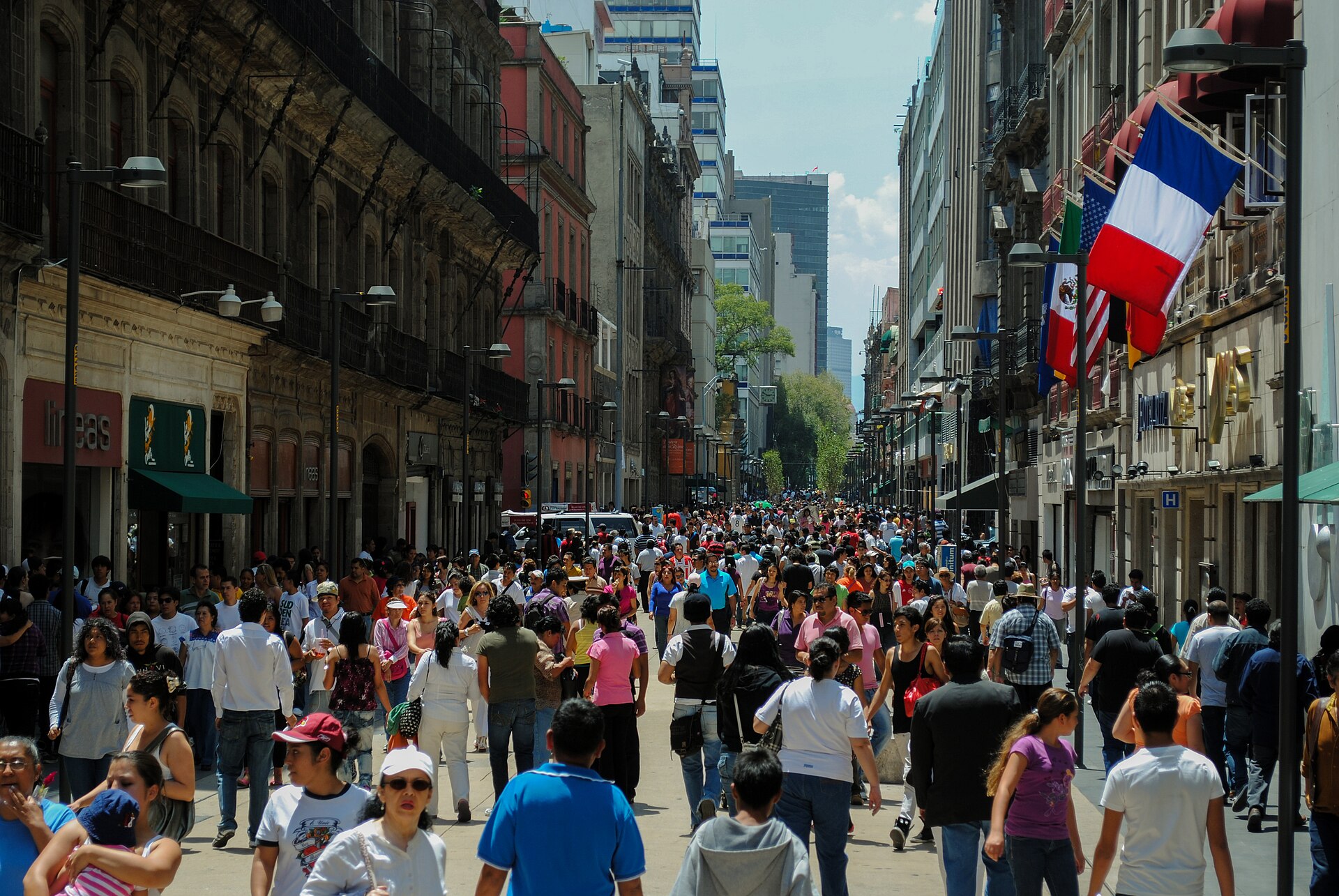
The Metro at Patriotismo and Calle Madero photographs are credited on their original appearance in this site’s media library.