Mexico City is not one city you sleep in. It is roughly a dozen neighbourhoods that happen to share a Metro map, and the distance between them is measured in traffic rather than kilometres. Choosing where to stay in Mexico City is really a decision about which forty-minute journeys you are willing to make twice a day — because whichever colonia you pick, something you want to see will be on the other side of it. Get the base right and the city feels walkable and small. Get it wrong and you spend your holiday in the back of a car on Circuito Interior, watching the meter of your own patience run down.
This guide compares the areas that actually work as a base, tells you what each one costs and what each one sounds like at two in the morning, and — the part almost nobody covers — explains the 2026 rules that now govern short-term rentals in this city, and what they mean for a guest rather than a host.
The short answer
If you want the recommendation without the reasoning:
- First visit, three to five days, no strong preferences: Roma Norte. Walkable, dense with food, comfortable to wander after dark, two Metrobús lines and a Metro station at its edges, and about twenty minutes by car to the Centro outside rush hour.
- You want quiet and trees more than nightlife: Condesa, specifically the Hipódromo oval. Same virtues as Roma, a notch calmer, more residential.
- You are here for the museums, ruins and the Zócalo: Centro Histórico. You will wake up inside the archaeology. It is louder and it empties out oddly on Sunday evenings, but nothing else puts you that close.
- Business, fine dining, or you want a large international-brand hotel: Polanco or the Reforma corridor.
- Budget, solo, or you want to meet people: hostels cluster in Centro Histórico and Roma. Both work; Centro is cheaper, Roma is calmer.
- Repeat visitor who wants to live somewhere rather than visit it: Juárez, San Rafael, Santa María la Ribera, Narvarte or Coyoacán.
- Flight before 08:00, or landing after 23:00: one night at the airport. There are hotels attached to both terminals. This is the one case where sleeping somewhere charmless is the correct answer.
If you read nothing else here, read the section on the booking rules that changed in 2026. The short-term rental landscape in this city is genuinely different from what most guides still describe, and it is the thing most likely to disrupt a trip.
What a bed costs here: planning brackets
These are planning brackets, not quotes. They are the ranges to budget against when you are working out whether five nights is a 12,000-peso accommodation problem or a 40,000-peso one. They are not price checks of named properties, and no live rate comparison was run for this page — rates in this city swing hard with the calendar, and any figure printed in September would be wrong by December. Check real dates before you commit to anything.
| Type of stay | Planning bracket, MXN per night | What you actually get |
|---|---|---|
| Hostel dorm bed | 350–750 per person | Lockers, shared bathroom, usually a rooftop. Centro cheaper than Roma. |
| Hostel private double | 900–1,600 | Often cheaper than a budget hotel and in a better location. |
| Budget hotel, double | 900–1,800 | Clean, small, possibly no lift, possibly facing a main road. Ask which. |
| Mid-range hotel or good apartment | 1,800–3,800 | The broad middle. Roma, Condesa, Juárez, Centro. Lift, hot water, workable Wi-Fi. |
| Design or boutique hotel | 3,500–7,000 | Twelve to forty rooms, a rooftop, a restaurant people come to eat in. |
| International five-star | 6,000–15,000+ | Polanco and Reforma. Club lounges, spas, valet parking you will not need. |
| Airport hotel, one night | 1,800–4,000 | Bought for the walk to check-in, not for the room. |
Brackets checked September 2026. Two things sit on top of whatever headline rate you are shown. IVA at 16% is charged on accommodation, and a city lodging tax — the impuesto sobre hospedaje — also applies. On that second tax I have to be honest about the state of the evidence: Article 164 of the Código Fiscal de la Ciudad de México sets the rate at 3%, while several Mexican tax-advisory firms publish 3.5% for conventional hotels and 5% for stays booked through digital platforms. I could not reconcile those to one authoritative figure, so treat it as “a few per cent more than you expected” and read the final confirmation screen rather than the search-results price. Platform listings in particular tend to reveal the full tax load only at the last step.
The booking rules that changed in 2026
This is the section that dates every other guide to this city.
Mexico City spent several years arguing about short-term rentals, gentrification and rent in the central colonias, and the argument produced actual law. Two parts of it matter to you as a guest.
Every legal host now needs a folio
Hosts and platforms are required to register with the city’s Padrón de Anfitriones y Estancias Turísticas Eventuales at estanciaeventual.cdmx.gob.mx and to display a folio number on every listing. The registry opened on 22 May 2026 with a thirty-day window. In practice this means you can now look at a listing and see whether the operator has bothered to comply. A folio is not a quality rating. It is a signal that the person renting you a flat is running a business rather than a side hustle they will walk away from if the city knocks on the door.
The night cap exists, and it is contested
The same reform caps how much of the year a single property may be let short-term — roughly half of it, widely reported as around 180 nights. Hundreds of amparos, Mexico’s constitutional injunctions, were filed against it, and enforcement has been uneven rather than a switch being thrown. I am not going to tell you your booking will be cancelled, because the honest position is that nobody can tell you that reliably at the moment.
What I can tell you is how to make the question irrelevant:
- Prefer listings that show a folio number.
- Prefer operators who can issue a factura — a real tax invoice. Anyone who can invoice is registered with the tax authority and is not going to evaporate.
- Prefer anything with a physical front desk and a phone number a human answers. Apart-hotels and serviced apartment buildings are the sweet spot: apartment space, hotel accountability.
- For a first trip, or any trip with a fixed obligation in it — a wedding, a conference, a connecting flight — book a hotel. Hotels are regulated separately and have been for decades, and somebody is standing in the lobby at four in the morning when your plans change.
None of this is an argument against apartments. A well-run apartment in Roma or Juárez is one of the real pleasures of this city and is usually the better value at four nights and up. It is an argument for spending ten extra minutes on who you are booking from.
The rest of the fine print, briefly
- Cancellation. Mexican hotels increasingly sell a cheap non-refundable rate alongside a flexible one, and the gap is often only ten to fifteen per cent. At these prices the flexible rate is usually worth it, because the thing most likely to change your plans here is not you. It is a flight, a strike, or an air-quality alert.
- Deposits. A card pre-authorisation at check-in is normal and usually released within a week.
- Cash. Small and family-run places sometimes prefer cash and occasionally discount for it. Larger hotels take cards everywhere.
- Check-in times. 15:00 in, 12:00 out is the norm. This matters more here than in most cities, because a great many flights from Europe and Asia land in the early morning and you will otherwise be awake for twenty hours at 2,240 metres. Ask for early check-in when you book, in writing, and expect to pay something for it.
The areas, compared
Each area below gets the same four questions: who it suits, what it costs, how you get out of it, and what is genuinely wrong with it. I have tried to be useful rather than flattering. Every colonia in this city has a downside, and guides that pretend otherwise are not helping you pack.
Roma Norte — the default, and deservedly so
Suits: first-time visitors, couples, solo travellers, anyone who wants to walk to dinner.
Roma Norte is an early-twentieth-century grid of wide streets, jacarandas, Porfirian mansions in varying states of repair and — at this point — an almost absurd density of restaurants, coffee, bookshops and small galleries. It was badly hit by the 1985 earthquake, emptied out, filled back up with artists in the nineties and has been gentrifying steadily since. That history is legible on nearly every block: a restored mansion, then a gap, then a nineties concrete infill.
What makes it work as a base is not the fashionableness, which you can take or leave. It is the geometry. Roma sits between Avenida Insurgentes and Avenida Cuauhtémoc with Paseo de la Reforma along the top, which puts Metrobús Line 1 on one edge and Line 3 on the other, Metro Insurgentes and Metro Hospital General at the corners, and the whole of Condesa across Insurgentes on foot. From the middle of Roma you can walk into Chapultepec in about half an hour, reach the Zócalo in twenty minutes by car outside peak, and get down to Coyoacán in around forty.
Accommodation: the strongest boutique and small-hotel inventory in the city, plus most of the good apartments. Álvaro Obregón, Colima, Orizaba and Córdoba are the streets to search. Orient yourself by the Fuente de Cibeles roundabout on Plaza Villa de Madrid, and by Plaza Río de Janeiro with its copy of Michelangelo’s David.
What is wrong with it: it has become expensive, and locals will tell you bluntly that visitors are part of why. The restaurant strip along Álvaro Obregón and around Plaza Luis Cabrera is loud on Friday and Saturday until roughly two in the morning. Street noise generally — dogs, gas trucks with their recorded jingle, the camote vendor’s steam whistle after dark — is a genuine feature of central Mexico City, and Roma is no exception. Ask for an interior-facing room. Ask twice.
Condesa and Hipódromo — quieter, greener, slightly pleased with itself
Suits: return visitors, people travelling with dogs, anyone who wants a park rather than a bar scene.
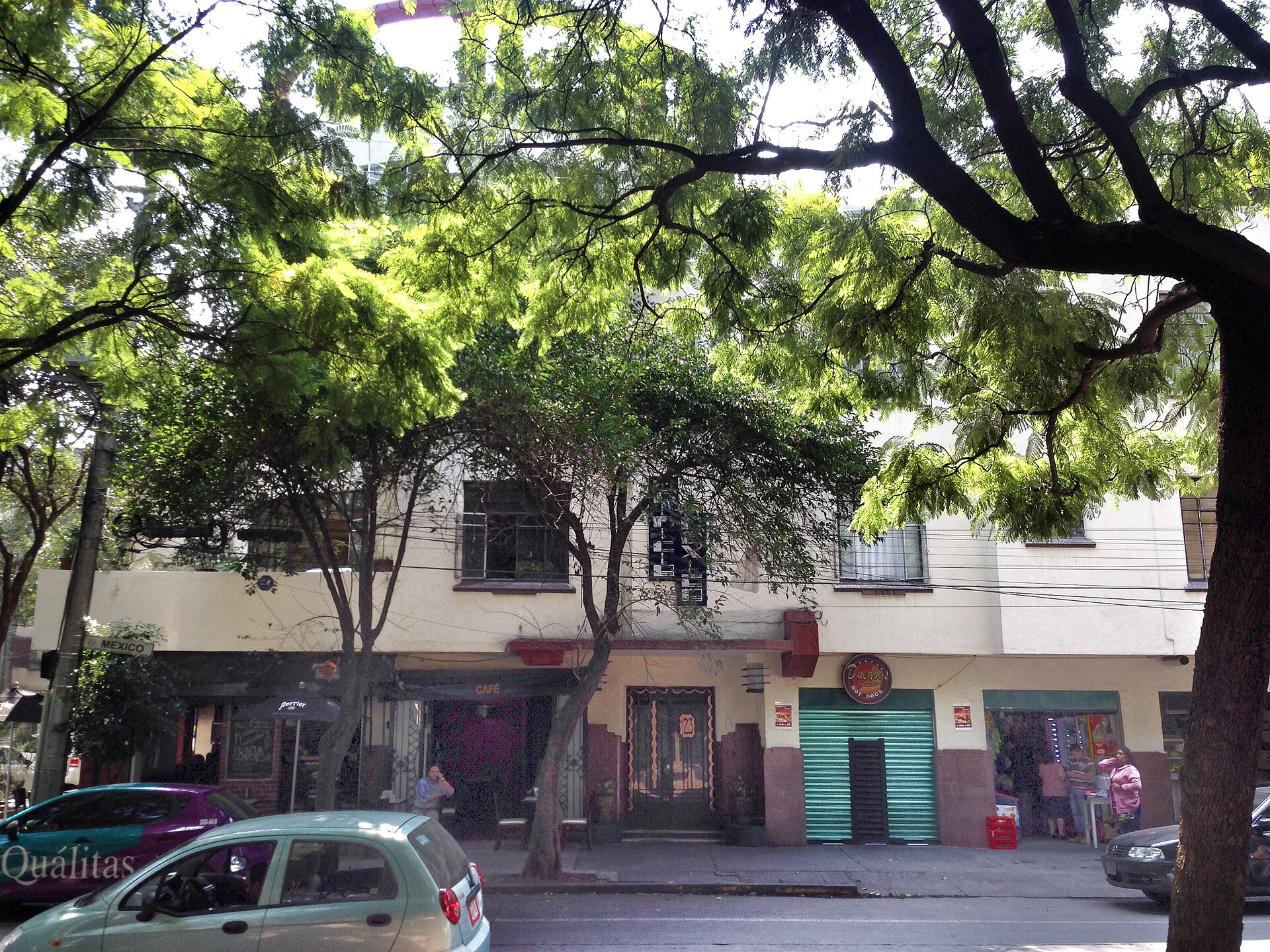
Condesa is Roma’s calmer sibling across Insurgentes. Its centre is Hipódromo, built inside the oval of a 1920s racecourse — which is why Avenida Ámsterdam runs in a perfect ring, and why walking it is so oddly satisfying. Parque México sits in the middle, Parque España a few blocks north, and the district is shaded to the point of gloom in the rainy season.
Architecturally it is the best Art Deco neighbourhood in Latin America and one of the better ones anywhere. If buildings interest you at all, stay here and walk Ámsterdam, Michoacán and Nuevo León slowly, looking up.
Accommodation: fewer hotels than Roma, more apartments and small guesthouses. Rates tend to sit slightly below Roma Norte for equivalent quality, which surprises people who assume the quieter neighbourhood is the dearer one.
What is wrong with it: Avenida Nuevo León and Avenida Tamaulipas carry the nightlife and the traffic, and a room facing either is a mistake. Transport is marginally worse than Roma — Metro Chilpancingo and Patriotismo sit at the edges, and the middle of Hipódromo is a real ten-minute walk from anything underground. There is also a certain self-satisfaction to the place that some visitors find wearing by day three.
Centro Histórico — sleep inside the ruins
Suits: museum-first visitors, short trips, second visits, anyone who would rather walk to the Templo Mayor before breakfast than sit in traffic after it.
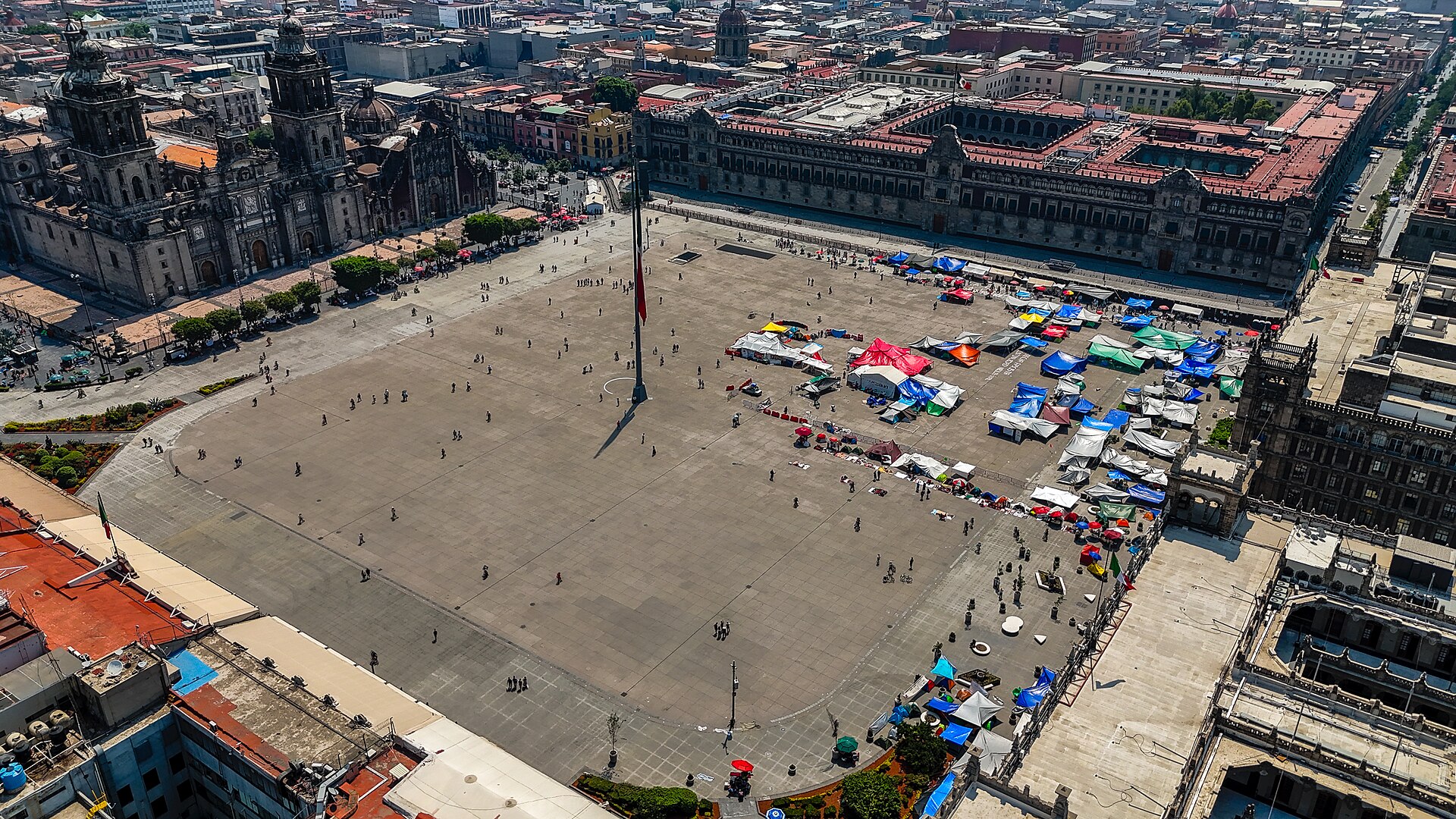
Nowhere else in the Americas puts an Aztec ceremonial precinct, a sixteenth-century cathedral, a Rivera mural cycle and an Art Nouveau opera house inside a fifteen-minute walk of one another. If your list is the Templo Mayor, the Palacio Nacional murals, Bellas Artes, the Torre Latinoamericana deck and the Museo Nacional de Arte, staying in Centro will save you hours across a five-day trip — and those hours are the entire argument.
It is also the best value for what you get. The Gran Hotel Ciudad de México, with its 1908 Jacques Gruber stained-glass ceiling, faces the Zócalo; the ceiling is worth seeing whether or not you sleep under it. There are rooftop terraces along Madero and around the cathedral that look straight down onto the square. The historic-centre regeneration programme has pedestrianised Madero and Regina and cleaned up a great deal over the past two decades.
Transport: unbeatable. Metro Zócalo, Allende, Bellas Artes and Pino Suárez, several Metrobús routes along Eje Central, and most of what you want on foot.
What is wrong with it: it is a working commercial district, not a preserved one. On weekdays the streets east and north of the Zócalo are packed with wholesale trade, delivery trolleys and amplified sales patter, and it is genuinely exhausting. It is loud early. And it hollows out in the evenings in a way that surprises visitors used to European old towns — after about nine on a Sunday several streets go very quiet. Around the Zócalo and along Madero, Regina and the Alameda that is unremarkable. Further east, towards La Merced and Tepito, both locals and every travel advisory will tell you to be more careful, and the boundary moves fast. Stay west of the cathedral and you will be fine.
Juárez and the Reforma corridor — the underrated middle
Suits: people who want to be between everything, business travellers who do not want Polanco, anyone who values a short walk to Reforma.
Colonia Juárez sits between Roma and the Centro, with Paseo de la Reforma along its northern edge. It contains Zona Rosa, which has a complicated reputation, and it also contains some of the best small-restaurant streets in the city — Havre, Versalles, Marsella, Dinamarca — which have quietly become as good as Roma’s without the queues.
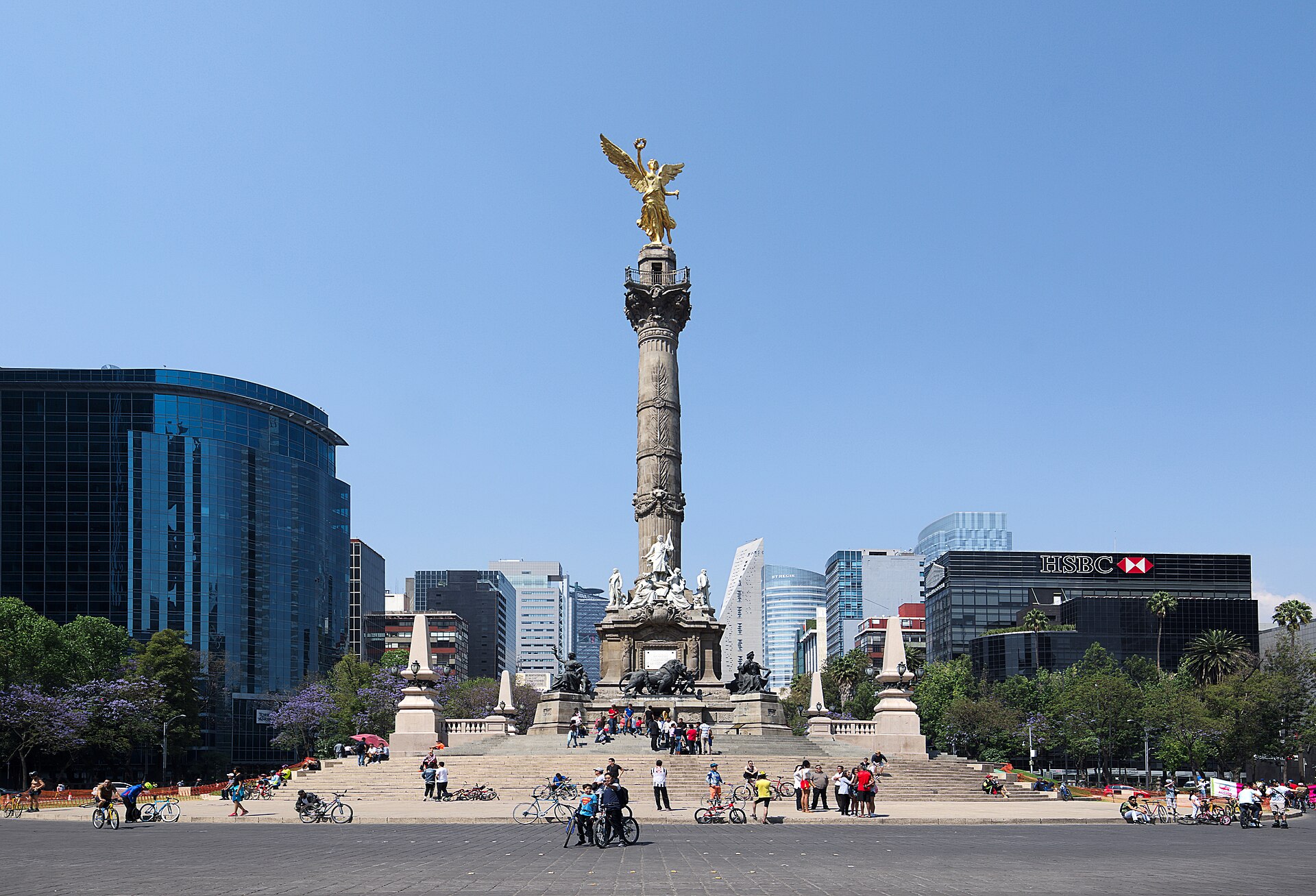
Reforma itself is the axis of the city: the Ángel de la Independencia, the Diana Cazadora, the Monumento a la Revolución a little to the west. Most of the big-brand towers stand along here. On most Sunday mornings the avenue closes to cars for Muévete en Bici and fills with cyclists and runners, with free loan bikes available along the route. If that appeals, staying on or near Reforma puts you in it rather than travelling to it.
What is wrong with it: Zona Rosa proper — roughly Génova, Amberes and Niza — is a nightlife district and behaves like one. It is also the heart of the city’s LGBT+ scene and lively rather than menacing, but if you want to sleep before one in the morning, book on the west or north side of Juárez instead. Rooms facing Reforma in the towers are quieter than you would guess, because the windows are sealed, but they are also anonymous in the way that sealed-window rooms always are.
Polanco — money, museums and the best hotel stock
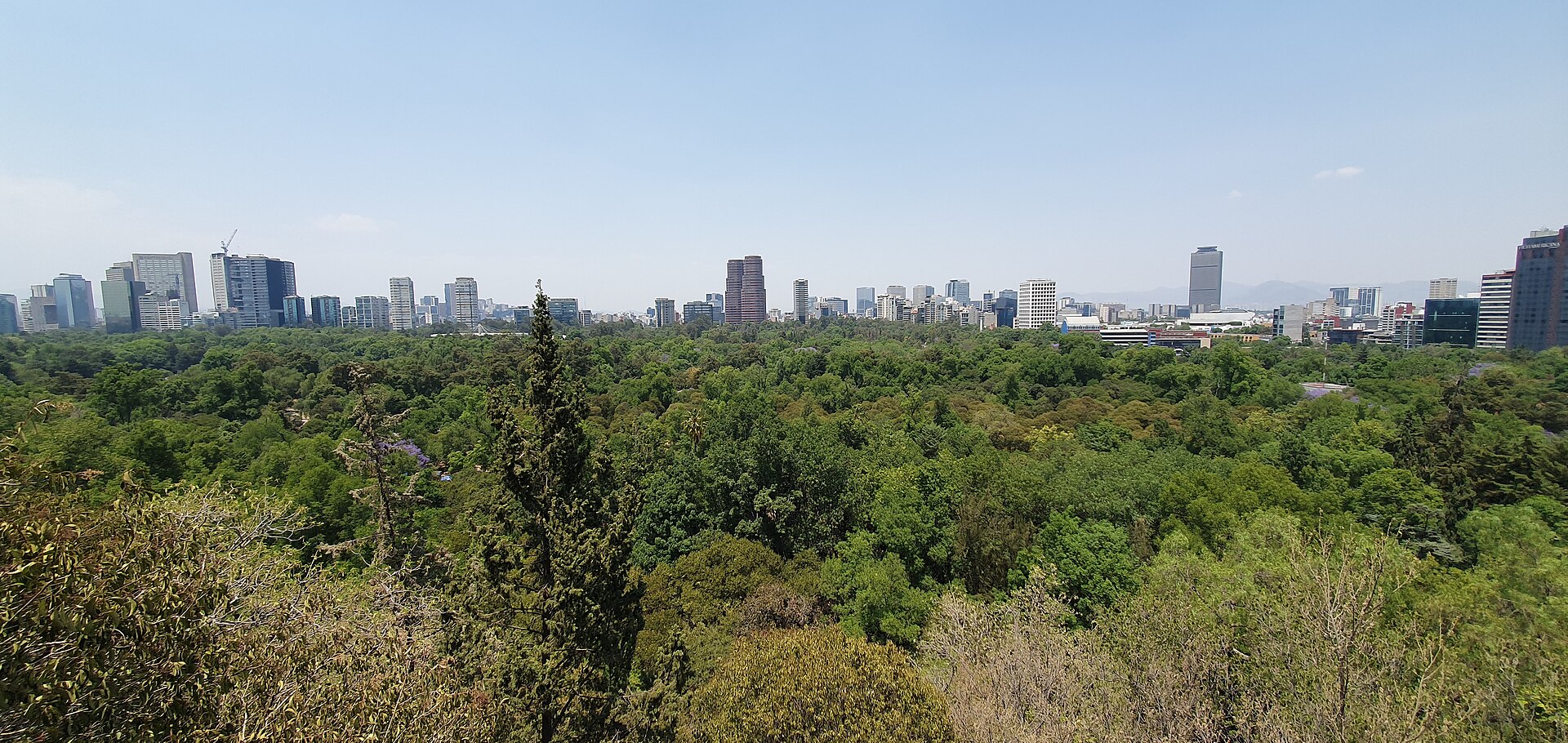
Suits: luxury travellers, families who want space and reliability, anyone whose trip is built around the Museo Nacional de Antropología and the Chapultepec museums.
Polanco runs along the northern edge of Bosque de Chapultepec. It is the wealthiest central district, with the flagship restaurants, the designer shops on Presidente Masaryk and the largest concentration of five-star rooms in the country. The Museo Soumaya and the Museo Jumex are at the Plaza Carso end — Soumaya free, Jumex free on Tuesdays — which is a pleasing contrast with the neighbourhood around them.
The Camino Real Polanco, Ricardo Legorreta’s 1968 slab of magenta and yellow built for that year’s Olympics, is worth walking into whether or not you sleep there. It is one of the great pieces of modern Mexican architecture and the public areas are exactly that.
Transport: Metro Polanco and Auditorio on Line 7, plus Metrobús Line 7 running along Reforma. Walkable to Antropología through the park.
What is wrong with it: it is expensive and it does not feel especially Mexican — you can spend three days in Polanco and eat nothing you could not eat in Madrid. It is also far from the Centro: forty minutes in traffic, and traffic is most of the day. If your trip is history-first rather than restaurants-first, you will be commuting.
Coyoacán — the village option
Suits: slower trips, families, repeat visitors, anyone whose priority is the Casa Azul and the south of the city.
Coyoacán is a colonial village the city swallowed, some eleven kilometres south of the Centro, with cobbled streets, two linked plazas, a serious market and the Museo Frida Kahlo. It is the prettiest place to stay and the most relaxing, and at weekends it is also full — the plazas are a real Mexico City weekend destination rather than a tourist confection.
Accommodation is mostly guesthouses, B&Bs and apartments; there is very little conventional hotel stock, and what exists books early. Prices are moderate.
What is wrong with it: distance. Metro Coyoacán and Viveros are both a fifteen- to twenty-minute walk from the centre of the village, and you are forty to sixty minutes from the Centro Histórico depending on the hour. If you have four days and want the Centro, Chapultepec and Teotihuacán, this is the wrong base. For a week, or a second visit, it is a lovely one. One planning note if the Casa Azul is your reason for being here: it sells tickets online only, with no box office, and it closes on Mondays — so being twelve minutes’ walk away buys you nothing if you have not booked.
The quieter alternatives: San Rafael, Santa María la Ribera, Narvarte, Del Valle, Nápoles
These are where you go when Roma has priced you out or bored you.
- Santa María la Ribera — the Kiosco Morisco, a Moorish pavilion built for an 1884 world’s fair, stands in the middle of the plaza. Beautiful, cheap, genuinely local, on the up. Metro San Cosme and Buenavista. Some blocks are much better than others, so walk it in daylight before committing to a long stay.
- San Rafael — between Santa María and Juárez, full of faded Porfirian grandeur and old theatres. Very cheap, improving, five minutes from Reforma.
- Narvarte — south of Roma across the Viaducto. Almost no visitors, exceptional neighbourhood food, well connected by Metro Line 3 and Metrobús along Eje 4. The pick for a long stay on a budget.
- Del Valle — residential, middle-class and dull in the way that makes for good sleep. Good for families.
- Nápoles — around the World Trade Center and the Polyforum Siqueiros. Business-oriented, quiet at weekends, decent value if no fair is on.
Where not to base yourself
Not because these places are bad, but because they are bad bases:
- Santa Fe. A corporate edge city on the western rim, thirty to seventy-five minutes from anything you came to see, with almost no street life and genuinely hostile pedestrian geography. Stay there only if your meeting is there.
- The airport, for anything except a transit night. Covered below.
- Anywhere chosen purely on price, sight unseen. This city’s neighbourhood quality changes block by block rather than district by district, and a bargain twelve minutes from a Metro station in an area you cannot place is usually a bargain for a reason. Drop the address into street view before booking. It takes a minute and it is the highest-value check on this page.
Airport hotels, and when they are the right answer
Mexico City International Airport sits inside the city, about seven kilometres east of the Centro — unusually close for a capital, which is also why it is unusually loud on approach.
There are hotels physically connected to both terminals: one inside Terminal 1, and hotel stock attached to or immediately adjacent to Terminal 2 by walkway. This genuinely matters, because the two terminals are not walkable to each other. They are linked by the Aerotrén for passengers holding an onward boarding pass, and otherwise by road, which can take half an hour in traffic. Book the hotel at the terminal your flight actually uses. Check your booking rather than your memory — airlines move between terminals.
Take an airport hotel when:
- You depart before about 08:00. Crossing the city at 05:00 is possible, but the saving is not worth the risk.
- You land after about 23:00, tired, with luggage, on your first night at altitude.
- You have a tight connection through Mexico City and want a guaranteed bed rather than a terminal chair.
Do not take one otherwise. The neighbourhoods around the airport are residential and industrial, there is nothing to do, and you will spend your evenings commuting inbound. Worth knowing either way: Metrobús Line 4 serves both terminals at 30 pesos rather than the standard 6 — by a wide margin the cheapest transfer into the Centro, but awkward with large bags, and slow once it reaches the historic streets.
What to verify before you book
This is the part travellers skip. Nine checks, in rough order of how often each one ruins a trip.
1. Noise
The most common complaint about Mexico City accommodation, by a distance. Ask explicitly for an habitación interior — an interior-facing room — on any street with bars or bus traffic. Mexico City is a city of ambient sound in a way that is charming for two nights and less so for seven: gas trucks with jingles, the sweet-potato vendor’s steam whistle after dark, church bells, and fireworks at hours that make no sense to anyone not from here. Earplugs are not optional equipment. Pack them.
2. Lifts, and the altitude
The city sits at 2,240 metres, about 7,350 feet, where oxygen availability is roughly a quarter lower than at sea level. Most people adjust within one to three days, and this is below the altitude at which serious altitude illness becomes likely — so no, you do not need to be frightened by it. But a fourth-floor walk-up with a suitcase on your first afternoon is a different proposition here than in Lisbon, and plenty of beautiful old buildings in Roma and Centro have no lift at all. If you have any doubt, ask: ¿el edificio tiene elevador? If you have a heart or lung condition, this is a conversation for your own doctor before you travel, not for a website.
3. Water — pressure, heat, and whether you can drink it
Tap water is not generally drunk in Mexico City. Hotels and well-run apartments supply purified water: a garrafón dispenser in an apartment, bottles in a hotel. Confirm which, because an apartment with no garrafón means a daily shop. Hot water in older buildings comes from a rooftop boiler that can be temperamental, and pressure on the upper floors of old conversions is often poor. Recent guest reviews mentioning agua caliente are worth more than any amenity list.
4. Earthquakes and the building
This is a seismic city, and everyone who lives here treats that matter-of-factly, so you can too. The questions are practical rather than anxious: does the building have a marked punto de reunión, an assembly point? Is there a clear route down? Has the building been retrofitted, or built since 2017? Established hotels run drills and their staff are trained, which is another quiet argument for a hotel over an anonymous apartment on a first visit. The citywide alert sounds through street loudspeakers and phones, and it is tested every year on 19 September — if you are here on that date and it goes off, that is the national drill, not an emergency.
5. The folio, and who you are actually booking from
As above: look for the registry folio on any short-term rental listing, and prefer operators who can issue an invoice. Thirty seconds of checking here is worth more than an hour of reading reviews.
6. Breakfast, and whether you want it
Usually not. Breakfast out is one of the great pleasures available to a visitor here, and hotel breakfast is often a 300-peso buffet standing between you and a 60-peso plate of chilaquiles two streets away. Take the room-only rate unless the hotel’s restaurant is a destination in its own right — a few in Roma and Polanco genuinely are.
7. Parking, which you almost certainly do not need
Do not rent a car for a trip inside Mexico City. The Metro is 5 pesos flat to anywhere on the network, Metrobús is 6, taxis and app rides are inexpensive by international standards, and the Hoy No Circula programme restricts which cars may drive on which days by plate and emissions sticker, which catches out visitors constantly. Hotel parking runs a few hundred pesos a night for a problem you volunteered for. Rent a car for day trips only, and collect it on the morning you leave.
8. Accessibility, honestly assessed
Mexico City is difficult for wheelchair users and for people with limited mobility, and pretending otherwise helps nobody. Pavements are uneven and frequently blocked, kerb cuts are inconsistent, and many Metro stations have stairs only, though newer stations and Metrobús stops are better. If this affects you: stay in a modern building, preferably a large hotel with step-free access and a lift that actually takes a chair, and ask for measurements in centimetres — door widths, bathroom turning space, whether the shower has a lip. Ask for photographs of the bathroom rather than the bedroom. “Accessible” on a booking platform is not a regulated claim in Mexico and is frequently wrong. Polanco, the Reforma towers and the newer Centro hotels are the most likely to deliver.
9. Cancellation terms, again
Read them rather than assuming them, particularly on apartments, where a policy labelled “moderate” can still cost you a full night.
Seasons, events and what actually moves the price
The weather here barely changes. It is highland and mild, with a rainy season from roughly May to October that usually means a heavy late-afternoon burst rather than a washed-out day. So rates are driven by the calendar rather than the climate.
- Late October to 2 November — Día de Muertos. The single biggest accommodation squeeze of the year. Central colonias sell out months ahead and rates double or worse. Book by July if you want Roma, Condesa or Centro.
- Mid-September — the Independence holidays. The Grito on the night of 15 September fills the Zócalo and the military parade follows on the 16th. Centro hotels with a view of the square charge accordingly, and streets close for days around it.
- The Formula 1 weekend, late October. A genuine city-wide squeeze, and it lands next to Día de Muertos — which is why that fortnight is the most expensive of the year by a clear margin.
- Christmas and Semana Santa. Paradoxically, parts of the city empty as residents leave, and some business-district hotels get cheaper. Centro and Coyoacán do not.
- Big concerts and football. Estadio Banorte — the stadium most of the world still calls the Azteca — and the Autódromo draw crowds that visibly move hotel prices for a weekend.
- Trade fairs. Watch the World Trade Center and Centro Citibanamex calendars if you are pricing Nápoles or Polanco.
Everything outside those windows is a buyer’s market, and the shoulder weeks in February, June and early September are quietly the best value in the year.
Getting from the airport to your bed
Rough travel times from the airport, outside peak hours:
- Centro Histórico — 20 to 35 minutes by car. Metrobús Line 4 runs there directly for 30 pesos.
- Roma, Condesa or Juárez — 30 to 45 minutes by car.
- Polanco — 40 to 60 minutes by car.
- Coyoacán — 45 to 70 minutes by car.
Authorised airport taxis are bought at a counter inside the terminal at a fixed zone price before you go outside. That is the safe default and worth the premium on arrival, particularly at night. Rideshare pickup at this airport has been the subject of an ongoing disagreement between federal transport authorities and the platforms, and the position has shifted more than once — check the current situation and the app’s own airport instructions immediately before you travel, rather than relying on any guide, this one included. Never accept a ride from somebody who approaches you inside the terminal.
Picking a base by trip length
Two or three nights
Centro Histórico. On a trip this short, travel time is the enemy, and Centro removes most of it. You will do the Zócalo, the Templo Mayor, the Palacio Nacional murals, Bellas Artes and the Torre Latinoamericana deck on foot, and take one taxi out to Antropología. Note that most of those museums close on Mondays and the Torre does not — which is worth knowing before you choose your dates, let alone your hotel.
Four or five nights
Roma Norte or Condesa. You now have enough time to absorb a couple of cross-town journeys, and the trade — a slightly longer commute to the ruins in exchange for far better evenings — is clearly worth making.
A week
Split it. Three nights in Centro while you do the historic core and the museums, then four in Roma or Condesa while you do Chapultepec, Coyoacán and the eating. Two check-ins is a small price for halving your time in traffic, and it makes the city legible in a way that one base does not.
Ten days or more, or a return visit
Take an apartment in Juárez, Narvarte, San Rafael or Coyoacán, and live somewhere. At this length the weekly discount is substantial, a kitchen starts to matter, and the pleasure shifts from seeing things to having a local tianguis, a regular coffee place and an opinion about your nearest taquería.
A note on the word “safe”
It is the question everyone asks about this city, and it deserves a straight answer rather than either reassurance or alarm. The central colonias discussed here — Roma, Condesa, Juárez, Polanco, Coyoacán, the tourist core of Centro Histórico, Del Valle, Narvarte — are ordinary urban neighbourhoods where large numbers of people walk around at night without incident. The realistic risks for a visitor are opportunistic: phone snatching, pickpocketing on a crowded Metro carriage, and taxi-related problems that are avoided entirely by using an authorised airport taxi or an app.
Your own government’s travel advisory will have a view on Mexico City specifically, and advisories differ meaningfully between countries and are written state by state — which matters far more for day trips than for the capital. Read the one that applies to you, note that it distinguishes between states, and do not apply guidance written about somewhere else to where you are actually going.
For choosing accommodation, the practical version is short: the street matters more than the district, so look at it before you book; avoid ground-floor rooms with windows onto an empty street; and prefer buildings with a doorman or a staffed lobby if you are arriving late.
Frequently asked questions
Is Roma or Condesa better for a first visit?
Roma Norte, marginally — it has more hotels, better transport on both edges, and more within walking distance. Choose Condesa instead if you want quiet, if you are travelling with a dog, or if the Art Deco architecture is the point. They are a ten-minute walk apart and you will use both regardless.
Is it safe to stay in the Centro Histórico?
Yes, in the western and central parts — around the Zócalo and along Madero, Regina, 5 de Mayo and the Alameda. It is a normal busy city centre with a police presence and pedestrianised streets. Further east and north-east, towards La Merced and Tepito, is a different conversation, and not where the hotels are in any case. The bigger issue with Centro is noise and weekday commercial chaos, not crime.
Can I still book an Airbnb or short-term rental in Mexico City in 2026?
Yes. Short-term rentals are legal and widely available. What changed is that hosts and platforms must register with the city and display a folio number on each listing, and a cap on annual nights was introduced but is tied up in litigation and unevenly enforced. Book from an operator who shows a folio and can issue an invoice, and you are unlikely to notice any of it.
How much should I budget for a hotel in Mexico City?
As a planning figure: around 1,000 pesos a night at the budget end, 1,800 to 3,800 for a good mid-range double in a central colonia, and 6,000 upwards for international five-star. Add 16% IVA and a city lodging tax on top of whatever you are quoted. Día de Muertos and the Grand Prix fortnight break every one of those numbers.
Should I stay near the airport?
Only for a genuinely early departure, a late arrival or a tight connection. Hotels are attached to both terminals and they earn their price on exactly those nights and no others. Check which terminal your flight uses first, because the two are not walkable to each other.
Do I need a car, and do I need hotel parking?
No, and no. The Metro is 5 pesos flat, Metrobús is 6, and the Hoy No Circula plate restrictions catch out visitors regularly. Rent a car only for day trips, and only for the days you need it.
Is Polanco worth the money?
If you want a large, reliable, international-standard hotel with a spa and a concierge, yes — the stock there is the best in the country. If you want to feel as though you are in Mexico City, it is the weakest choice on this page for the price, and Roma at half the rate will give you a better trip.
Which area is best for families with young children?
Condesa and Del Valle for apartments with space near parks; Polanco for hotels with pools, connecting rooms and predictable service. Chapultepec’s lake, zoo and museums are the anchor either way. Coyoacán is excellent at weekends and a long way from everything on a weekday.
How far in advance should I book?
Two to three months for ordinary dates, and by July for the Día de Muertos and Formula 1 window in late October and early November. The September Independence holidays and the weeks around Christmas are the next tightest.
Is the altitude going to affect my first night?
Possibly. Broken sleep on the first night is common, and so is a mild headache. At 2,240 metres this is normally an adjustment rather than an illness, and most people are fine within a day or two. Drink far more water than feels necessary, go easy on alcohol on the first night, and do not book anything strenuous for the first morning. Anyone with a relevant medical condition should ask their own doctor before travelling.
Is there one area that is wrong for everybody?
Santa Fe, unless your meeting is there. It is a long way out, badly connected for a visitor, and has almost nothing at street level. Everything else on this page is right for somebody.
Which base is right also depends on how long you are staying and what you intend to do each day. If you have not settled the shape of the trip yet, our Mexico City itinerary guide compares every trip length from one day to ten and shows which districts each one leans on — useful before you commit to a neighbourhood, and the reason the week-long trip on that page is split across two hotels rather than one.
If the safety question is the one holding up the booking, it deserves more than a paragraph. Our guide to whether Mexico City is safe for tourists sets out what the US and UK advisories actually say — including why a single country-level risk rating is the wrong unit — ranks the risks a visitor genuinely faces, and lists the verified tourist police and Locatel numbers worth writing on paper before you arrive.
How far ahead you need to book depends almost entirely on when you are coming. Our guide to the best time to visit Mexico City breaks the year down by crowds and price as well as weather, and identifies the fortnight around late October — Día de Muertos and the Formula 1 weekend together — when the central colonias sell out months in advance.
Before you settle on a colonia, check what the transfer actually looks like. Our Mexico City airport guide compares MEX, AIFA and Toluca, gives the real fares into town — 30 pesos on Metrobús Line 4, roughly 220 to 500 for an authorised taxi — and explains the Buenavista–AIFA train that opened in April 2026, which has made the northern airport a genuine option for the first time.
Where you sleep decides where you eat, more than most visitors expect. Our Mexico City food guide maps the eating by neighbourhood — Roma and Condesa for restaurants, Juárez for better value, the Centro for the old institutions, and Narvarte or Escandón for what people who live here actually do on a Tuesday night.
How well connected a colonia is matters more than almost anything else on this page. Our guide to getting around Mexico City sets out what each mode is actually for, the flat five-peso Metro fare, and the principle that decides most itineraries here — build a day inside one district and you walk, build it across districts and you sit in traffic.
Choosing a base and choosing where to spend your days are different questions, and the second one deserves its own answer. Our guide to Mexico City neighborhoods to visit takes the same colonias — Roma, Condesa, Juárez, Coyoacán, San Ángel and the rest — and assesses them for walking, eating and looking rather than sleeping, with three route plans and the access rules that catch people out.
A nightly rate is rarely the number you end up paying. IVA at 16 per cent applies to accommodation, a city lodging tax applies on top, and platform quotes often exclude it until the final screen. Our guide to Mexico City trip costs sets out the tax position, three worked budget scenarios and the card and ATM fees that quietly add five to eight per cent to everything else.
Related Mexico City Guides
- Things to Do in Mexico City — what you are basing yourself near, and the Monday closure and admission rules that determine which day you do what.
Neighbourhood-by-neighbourhood hotel comparisons for Roma Norte, Condesa, Polanco and the Centro Histórico, along with dedicated guides to hostels, boutique hotels, airport hotels and accessible stays, are being published to this section over the coming weeks.
Sources and verification
- Short-term rental registry, folio requirement and registration window opening 22 May 2026: Padrón de Anfitriones y Estancias Turísticas Eventuales, Gobierno de la Ciudad de México, estanciaeventual.cdmx.gob.mx. Checked September 2026.
- Annual night cap and its litigation status: reporting on the Mexico City Congress reform capping short-term lets at roughly half the year, and the subsequent amparo filings. Checked September 2026. The position remains contested; verify before relying on it.
- Lodging tax: Article 164 of the Código Fiscal de la Ciudad de México states 3%. Several Mexican tax-advisory publishers report 3.5% for hotels and 5% for digital-platform stays. These sources conflict, and this page deliberately does not assert a single rate. Checked September 2026.
- IVA at 16% on accommodation services. Checked September 2026.
- Transport fares: Metro 5 pesos flat; Metrobús 6 pesos, except Line 4 to the airport terminals at 30 pesos; Cablebús 7 pesos. 2026 rates, checked September 2026. All use the Movilidad Integrada card.
- Museo Frida Kahlo: online-only ticketing, no box office, closed Mondays. Checked September 2026.
- Altitude: 2,240 m, approximately 7,350 ft. Checked September 2026.
- Air quality: the city declares a contingencia ambiental when ozone or particulates spike; live readings by district at aire.cdmx.gob.mx. Checked September 2026.
- Paseo de la Reforma Sunday closure for Muévete en Bici, with free loan bikes along the route. Checked September 2026.
- Rideshare pickup at Mexico City airport: a federal transport notice and the platforms’ own operating guidance have been in conflict. This page does not assert the current lawful position and directs readers to check immediately before travel. Noted September 2026.
What this page does not claim. The nightly figures in the costs table are planning brackets, not price checks of named properties; no live rate comparison was run for this article. Named hotels and buildings appear as landmarks to orient by, not as tested recommendations, and their rates, status and availability should be confirmed directly with the operator. Nobody from this site has stayed in, inspected or been hosted by any property mentioned here. Where sources conflict — as they do on the lodging tax rate — the page says so rather than picking the convenient figure.
Photo Credits
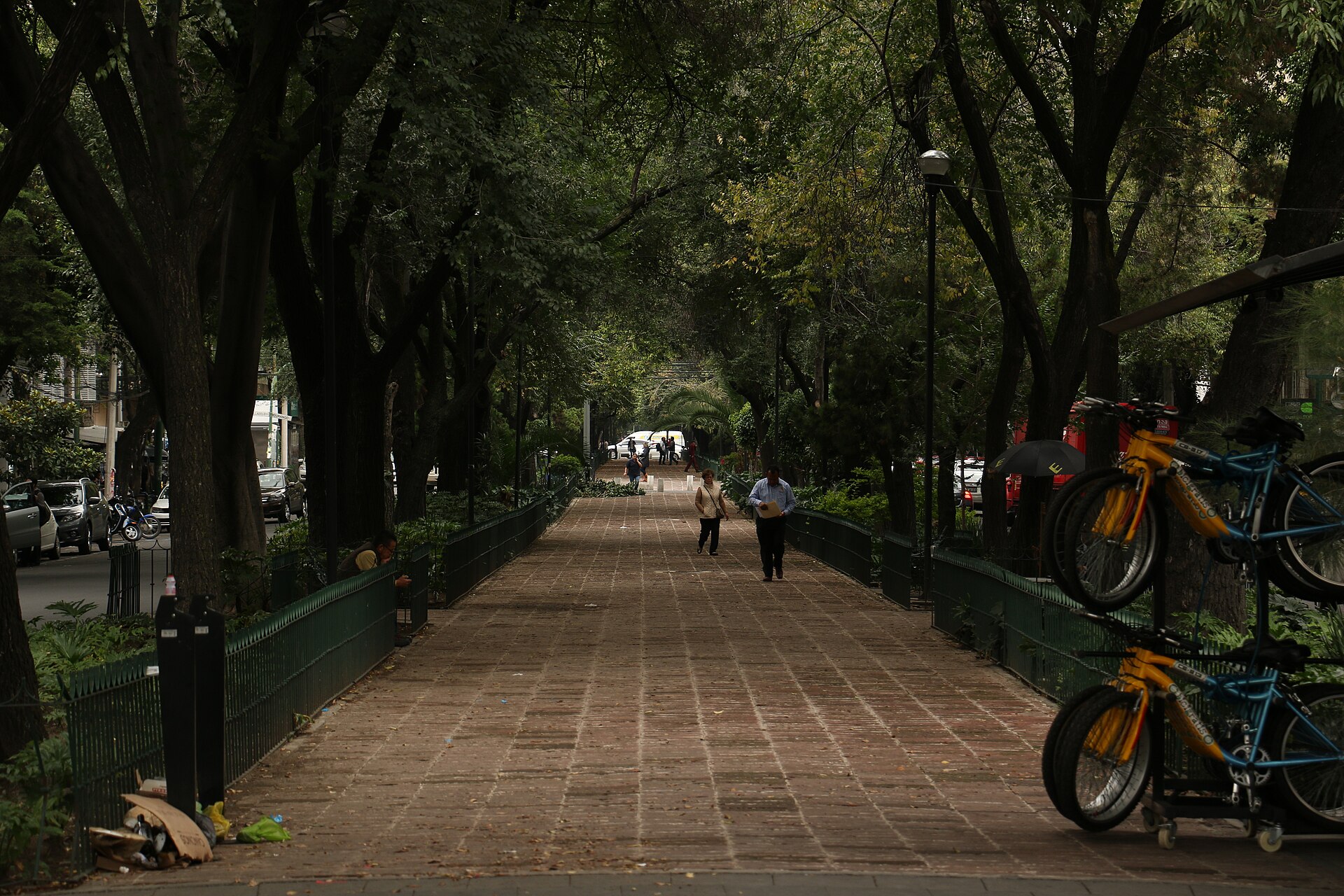
Roma Norte street median: Camellón en la Colonia Roma Norte by Ximena Herand, CC BY-SA 4.0, via Wikimedia Commons.
Avenida México, Condesa: Edificio México (arch. Francisco J. Serrano), colonia Hipódromo, Condesa, Mexico City by Keizers, CC BY-SA 3.0, via Wikimedia Commons.
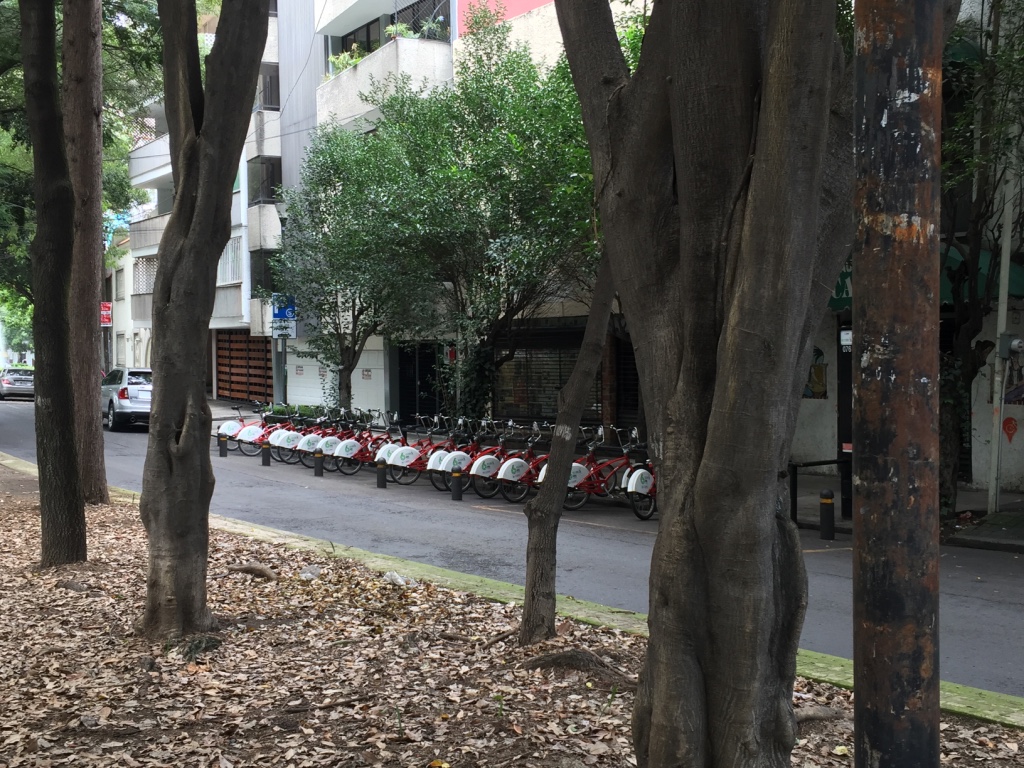
Ecobici docks in Condesa: Bicicletas en la Antigua Pista de caballos de club Hipódromo de la Colonia Condesa, Ciudad de México by Karinadejesus, CC BY-SA 4.0, via Wikimedia Commons.
The Zócalo, Ángel de la Independencia and Chapultepec Castle photographs are credited on their original appearance in this site’s media library.