Look carefully at the last weekend of October 2026 and you will find something no travel guide has flagged: the Gran Desfile de Día de Muertos runs down Paseo de la Reforma on Saturday 31 October, the Formula 1 Mexico City Grand Prix is at the Autódromo Hermanos Rodríguez on Sunday 1 November, and Día de Muertos itself falls on Monday 2 November. Three of the largest crowd events in the city’s year, in seventy-two hours. Of all the mexico city festivals and events on this page, that collision is the one that will decide whether your trip works, because it sets accommodation prices and transport load for the whole week around it.
The short answer: which season suits which traveler
| If you want… | Go in… | Because |
|---|---|---|
| The biggest cultural spectacle | Late October to 2 November | Día de Muertos, but book six months out and expect F1 prices in 2026 |
| Religious Mexico at full intensity | 11–12 December | The Guadalupe pilgrimage — the largest crowd event of the year |
| Live music at scale | March or November | Vive Latino in spring, Corona Capital in late autumn |
| Art and design | February | Zona Maco and the fairs that cluster around it |
| National ceremony | 15–16 September | El Grito on the Zócalo, the military parade the next morning |
| Everything open and nothing crowded | Late January, late May, early October | The genuine off-weeks between the set pieces |
A note on how this page is built. Confirmed dates are given as confirmed and dated. Everything else is given as a typical season, explicitly. Mexican event dates move, sometimes late, and a guide that prints next year’s date as though it were fixed is doing you harm rather than a favour. Where we have a confirmed 2026 or 2027 date, we say who confirmed it and when we checked.
The confirmed calendar
These dates were confirmed as of 18 September 2026. Two caveats attach to the Día de Muertos block: the figures come from consistent Mexican press reporting of the city government’s own announcement, and both official city domains refused connections when we tried to read them directly. So confirm on the city’s own pages before you build travel around them — that is not boilerplate, it is what we would do ourselves.
| Date | Event | Where and when |
|---|---|---|
| Sat 17 Oct 2026 | Desfile de Alebrijes Monumentales | 12:00, Zócalo to Paseo de la Reforma |
| Sat 24 Oct 2026 | Paseo Nocturno en Bicicleta | 19:00–23:00 |
| Sun 25 Oct 2026 | Mega Procesión de Catrinas | From 18:00 |
| Sat 31 Oct 2026 | Gran Desfile de Día de Muertos | 12:00, Puerta de los Leones (Bosque de Chapultepec) → Paseo de la Reforma → Zócalo |
| Sun 1 Nov 2026 | Formula 1 Mexico City Grand Prix | Autódromo Hermanos Rodríguez, Iztacalco |
| Mon 2 Nov 2026 | Día de Muertos | Citywide; cemeteries, homes, Mixquic |
| 20–22 Nov 2026 | Corona Capital | Autódromo Hermanos Rodríguez |
| 13–14 Mar 2027 | Vive Latino | Estadio GNP Seguros |
Día de Muertos: the confirmed 2026 programme
The parade, and what it actually is
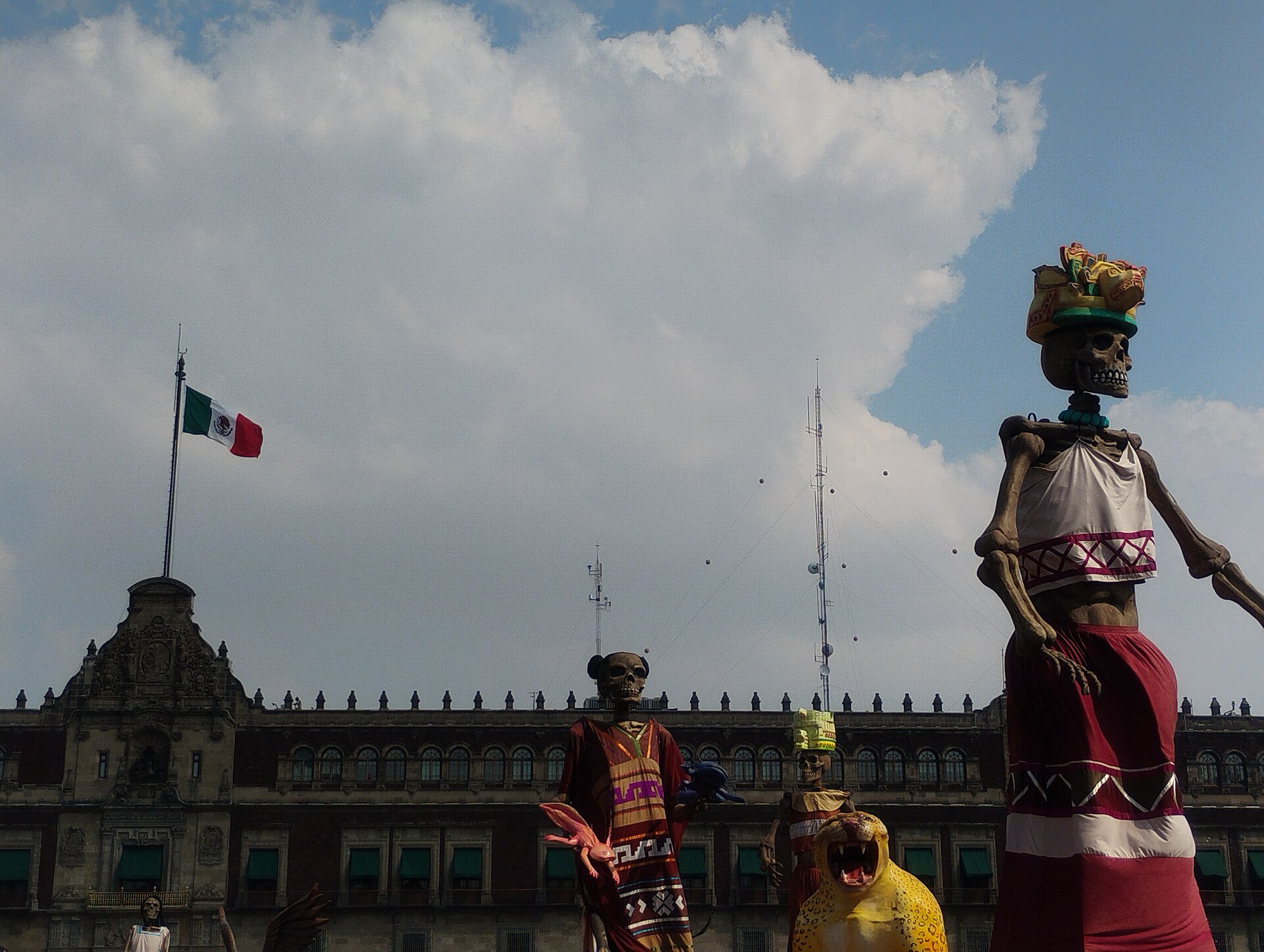
The Gran Desfile de Día de Muertos runs on Saturday 31 October 2026, from 12:00, starting at the Puerta de los Leones in the Bosque de Chapultepec, down Paseo de la Reforma, and finishing in the Zócalo. It is free and it is not ticketed. The 2026 themes are pre-Hispanic roots, popular expression, and tributes to Juan Gabriel, José Alfredo Jiménez, Juan Rulfo and Lola Beltrán. Participant registration closed on 21 August 2026, so if you were thinking of walking in it, that ship has gone for this year.
One thing worth knowing, because it changes how you think about the event: this parade is not an ancient tradition. It began in 2016, inspired by the opening sequence of a James Bond film that invented a Día de Muertos procession that did not then exist. The city built the real thing afterwards. It is now genuinely popular, genuinely Mexican, and genuinely a decade old — and the older, quieter observances happening in homes and cemeteries on the same weekend are the part that is centuries deep.
Watching the parade without ruining your day
Reforma is long, the crowd is enormous, and where you stand matters more than when you arrive.
- Best trade-off: the middle stretch of Reforma between the Diana Cazadora and the Ángel de la Independencia. Wide pavements, several Metro exits, and you can leave sideways into Juárez or Cuauhtémoc when you have had enough.
- Avoid the Zócalo end unless you want to be there for hours. It fills earliest, empties slowest, and the Metro stations around it are the most congested in the network on that day.
- Arrive by 10:00 for a front-row position, or about 11:30 for a workable second-row one. After 12:00 you are watching over shoulders.
- Metro, not taxis. Reforma and the surrounding streets close. Useful stations: Chapultepec and Sevilla (Line 1) at the start, Insurgentes (Line 1) and Hidalgo (Lines 2 and 3) in the middle, Bellas Artes (Lines 2 and 8) near the end. Expect queues at the turnstiles and crowd control at the exits.
- Bring cash, water and sun protection, and nothing in a back pocket. Pickpocketing in dense crowds is the most consistently flagged risk in this city.
- Have an exit plan. Decide in advance which side street you will walk to and which station you will use, because phone signal in a crowd of that size is unreliable.
The rest of the season
The parade is the loudest part, not the best part. Three others:
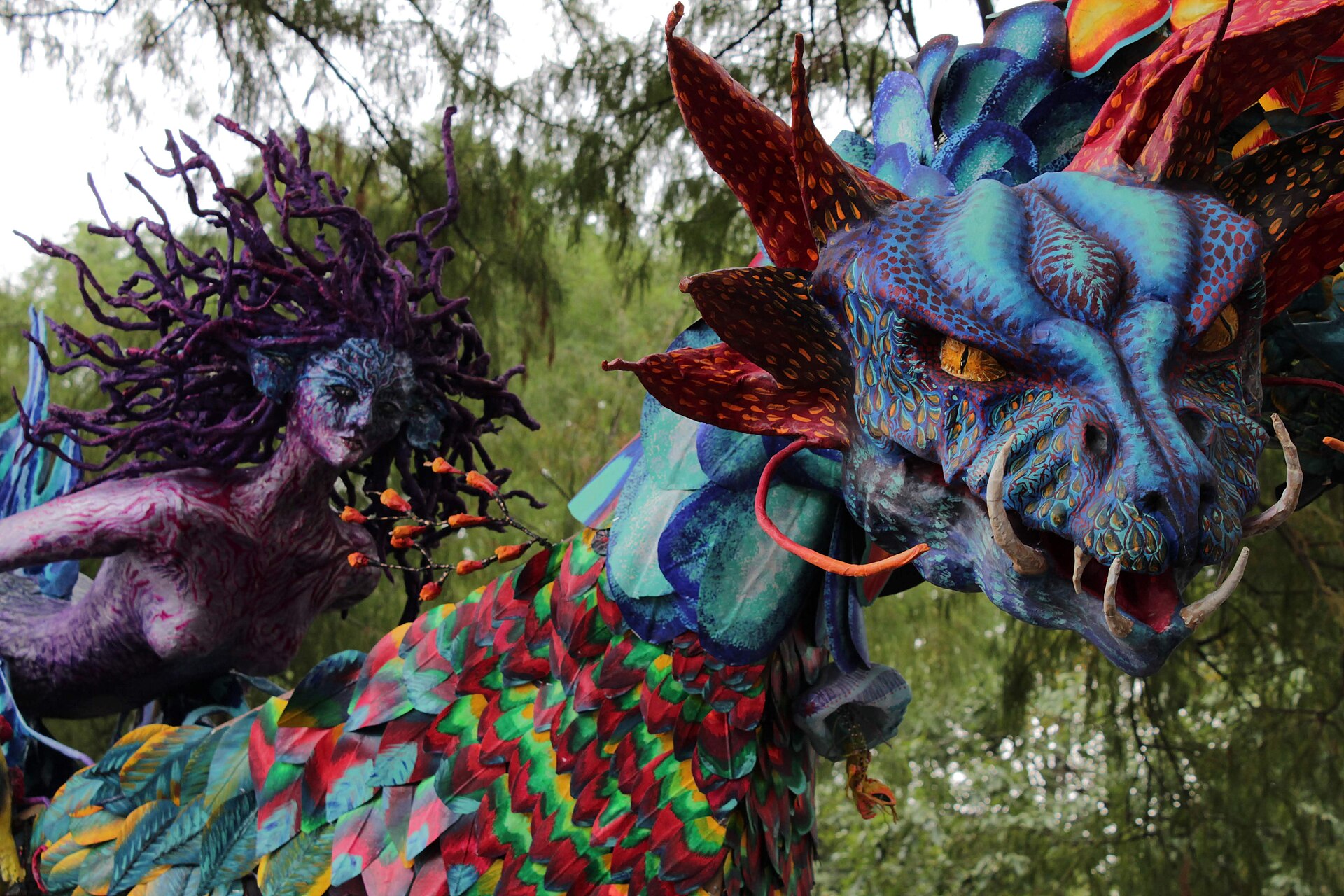
The Desfile de Alebrijes Monumentales on Saturday 17 October from 12:00 moves enormous papier-mâché creatures from the Zócalo out along Reforma, where they then stand for a couple of weeks as an open-air exhibition. Going to see them parked on the avenue on a weekday morning is calmer than watching them move and gets you closer.
The Mega Procesión de Catrinas on Sunday 25 October from 18:00 is a walking procession rather than a float parade, in the evening, with a far higher proportion of participants to spectators. If you want to take part rather than watch, this is the one.
The Zócalo mega-ofrenda fills the main square with a monumental altar installation for roughly the last week of October into early November. Free, open all day, and best at night when it is lit. The square is also regularly closed for its construction and dismantling, so a trip to see the Cathedral that week may find the view obstructed.
Mixquic, and the question of whether to go
San Andrés Mixquic, in the far south of the city in Tláhuac, holds the best-known cemetery vigil in the capital: families clean and decorate graves through 1 and 2 November and sit with them overnight, an observance called La Alumbrada. It is extraordinary, and it is also a village of a few thousand people receiving hundreds of thousands of visitors over two nights.
If you go: go early in the evening rather than at midnight, travel by organised transport or a pre-arranged driver rather than trying to improvise the return, spend money in the village, and understand that you are a guest at other people’s family observance. Do not photograph a family at a grave without being invited to. Ask, in Spanish, and accept no for an answer. The same applies at any cemetery, anywhere in the country, on those two nights.
Respectful participation, plainly
- Día de Muertos is not Mexican Halloween. They fall in the same week and they are not the same thing. One is a remembrance of specific dead people by the families who loved them.
- Catrina face paint is welcome; a costume is not the same as a disguise. Plenty of Mexicans paint their faces and expect visitors to join in, especially at the processions. Dressing as a generic “Mexican” is a different matter.
- Ofrendas are not stage sets. A home altar or a grave is a private thing in a public place. Look, do not touch, do not move anything for a better shot.
- Buy from the people whose festival it is. Cempasúchil marigolds, sugar skulls and pan de muerto from a market stall rather than a chain.
The 2026 collision, and what to do about it
The Formula 1 Mexico City Grand Prix on Sunday 1 November 2026 lands squarely between the parade and Día de Muertos. The Autódromo Hermanos Rodríguez is in Iztacalco in the east of the city, served by Metro Line 9 at Velódromo, Ciudad Deportiva and Puebla, and by Metrobús Line 2 at UPIICSA and El Rodeo on its south side, and a race weekend loads those lines heavily from Friday practice onward.
What this means in practice:
- Book accommodation as early as you possibly can, and expect the week of 29 October to 3 November 2026 to be the most expensive of the year. If you are already committed to those dates, book now rather than after reading this twice.
- Consider staying west or south. Roma, Condesa, Juárez and Polanco are all away from the circuit but within reach of Reforma. The blocks nearest the Autódromo will be both dearer and less pleasant.
- Do not try to do both on the same day. The race is Sunday; the parade is Saturday; Día de Muertos is Monday. That sequence actually works — it is only the accommodation market that suffers.
- F1 tickets are sold by the promoter and its authorised agents. Buy there. A race weekend in a city with this much demand is exactly the market resale scams target.
- If you do not care about the race, consider arriving a week earlier: the alebrije parade on 17 October and the Catrinas procession on 25 October give you most of the season at a fraction of the price and crowd.
Our where to stay in Mexico City guide covers the colonias and the short-term rental registry rules, and our trip costs guide has the accommodation tax position you will meet at the checkout screen.
12 December: the Guadalupe pilgrimage
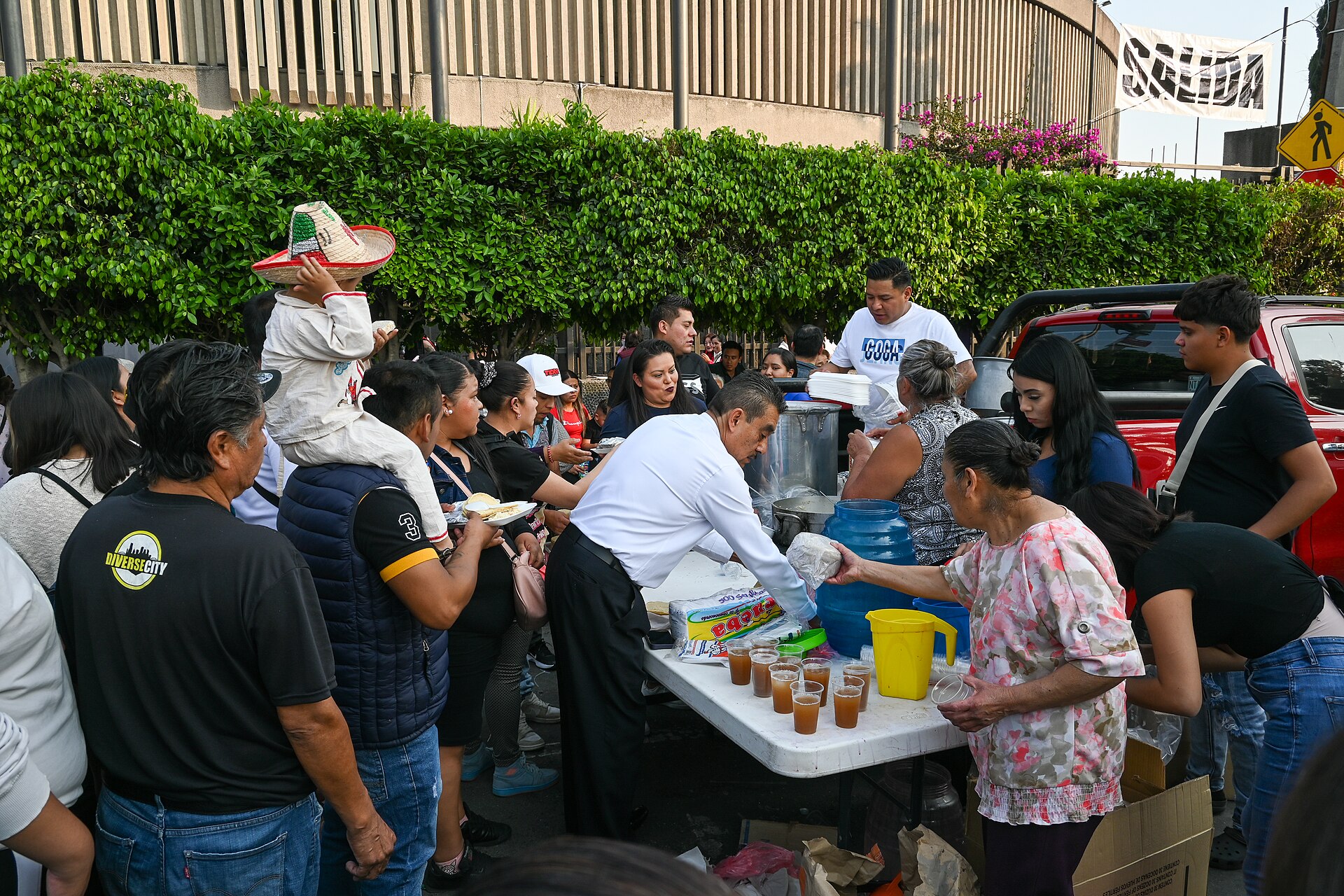
This is the largest crowd event in Mexico City’s year, and outside Mexico it is barely known. Millions of pilgrims converge on the Basílica de Guadalupe in the north of the city for the feast of the Virgin of Guadalupe on 12 December, many walking for days from other states, many arriving through the night of the 11th for Las Mañanitas sung at midnight.
The Basílica is free and open daily from roughly 06:00 to 21:00, with the crypt from 09:00 to 17:00. On 11 and 12 December it is effectively a different place: approach roads closed, contingents of pilgrims filling the Calzada de los Misterios, volunteer kitchens feeding people from folding tables along the route, and dance groups performing on the plaza.
Practical: Metro La Villa-Basílica on Line 6, which will be saturated — consider Indios Verdes or Deportivo 18 de Marzo and a walk. Go in the morning of the 12th rather than overnight if you want to see it without committing to the vigil. Dress modestly, this is a religious observance and not a spectacle laid on for anybody. And be realistic about crowd density: if large tightly-packed crowds are difficult for you, the 13th of December at the same church is peaceful and the decorations are still up.
15–16 September: El Grito and the military parade
Independence is marked over two nights and a morning. On the night of 15 September the president appears on the balcony of the Palacio Nacional at about 23:00 to ring the bell and call out the Grito de Dolores, to a packed Zócalo. On the morning of 16 September a full military parade crosses the same square and moves down Reforma.
Access to the Zócalo on the night of the 15th involves security screening and long queues, and the square fills hours in advance. The alternative that most residents take: watch from a restaurant balcony on one of the surrounding streets, booked well in advance and priced accordingly, or watch it on a screen in a bar and go to the square the next morning for the parade instead. Note that the Museo Frida Kahlo runs special shortened hours on 15 September and closes entirely on the 16th — as do most museums.
The recurring calendar, by season
Dates below are typical seasons, not confirmed dates. Check the organiser before you build travel around any of them.
January to March
- Día de Reyes, 6 January. Rosca de reyes everywhere, with a figurine baked inside; whoever gets it hosts tamales on 2 February.
- Día de la Candelaria, 2 February. Tamales, and the day the Christmas season formally ends.
- Zona Maco, February, at Centro Citibanamex. The largest art fair in Latin America, with a cluster of satellite fairs and gallery openings across Roma, Juárez and San Rafael in the same week — the satellites are free and often better.
- FICUNAM, the UNAM international film festival, February or March.
- Spring equinox at Teotihuacán, around 20–21 March. Enormous crowds, a major INAH crowd-control operation, and special hours. Climbing the pyramids is prohibited, including on the equinox — most guides still say otherwise. See our Teotihuacán guide.
- Festival del Centro Histórico, March or April. Music and performance in the Centro’s churches, palaces and courtyards, much of it free and a great deal of it in buildings not otherwise open.
- Semana Santa, moveable, March or April. The Iztapalapa passion play draws hundreds of thousands. The city empties of residents and fills with domestic visitors; many businesses close.
April to August
- Feria de las Culturas Amigas, usually May, typically on or around the Zócalo. Dozens of countries’ pavilions, free, food-heavy, and pleasantly unglamorous.
- Marcha del Orgullo LGBT+, usually late June, running down Reforma to the Zócalo. One of the largest Pride marches in Latin America; the Zona Rosa is its centre of gravity before and after.
- Mexico City Marathon, usually August. Worth knowing about even if you are not running: it closes a great many central streets on a Sunday morning.
- Chiles en nogada season, roughly July to September. Not an event, but a genuine seasonal window, tied to the pomegranate and walnut harvest. Restaurants advertising them in February are using preserves.
September to December
- Independence, 15–16 September, as above.
- Día de Muertos season, mid-October to 2 November.
- Día de la Revolución, 20 November. A public holiday with a sports-and-military parade; the Monumento a la Revolución is the focus.
- Corona Capital, confirmed for 20–22 November 2026 at the Autódromo Hermanos Rodríguez.
- Guadalupe, 11–12 December, as above.
- Las Posadas, 16–24 December. Neighbourhood processions re-enacting the search for lodging, ending with a piñata and food. Largely private and local rather than staged for visitors — if you are invited, go.
- New Year’s Eve on the Zócalo and along Reforma, with the Ángel as the focal point.
The events that happen every week
Most weeks of the year have no festival in them, and the city has a standing programme that fills the gap. These are not seasonal and they do not need a calendar.
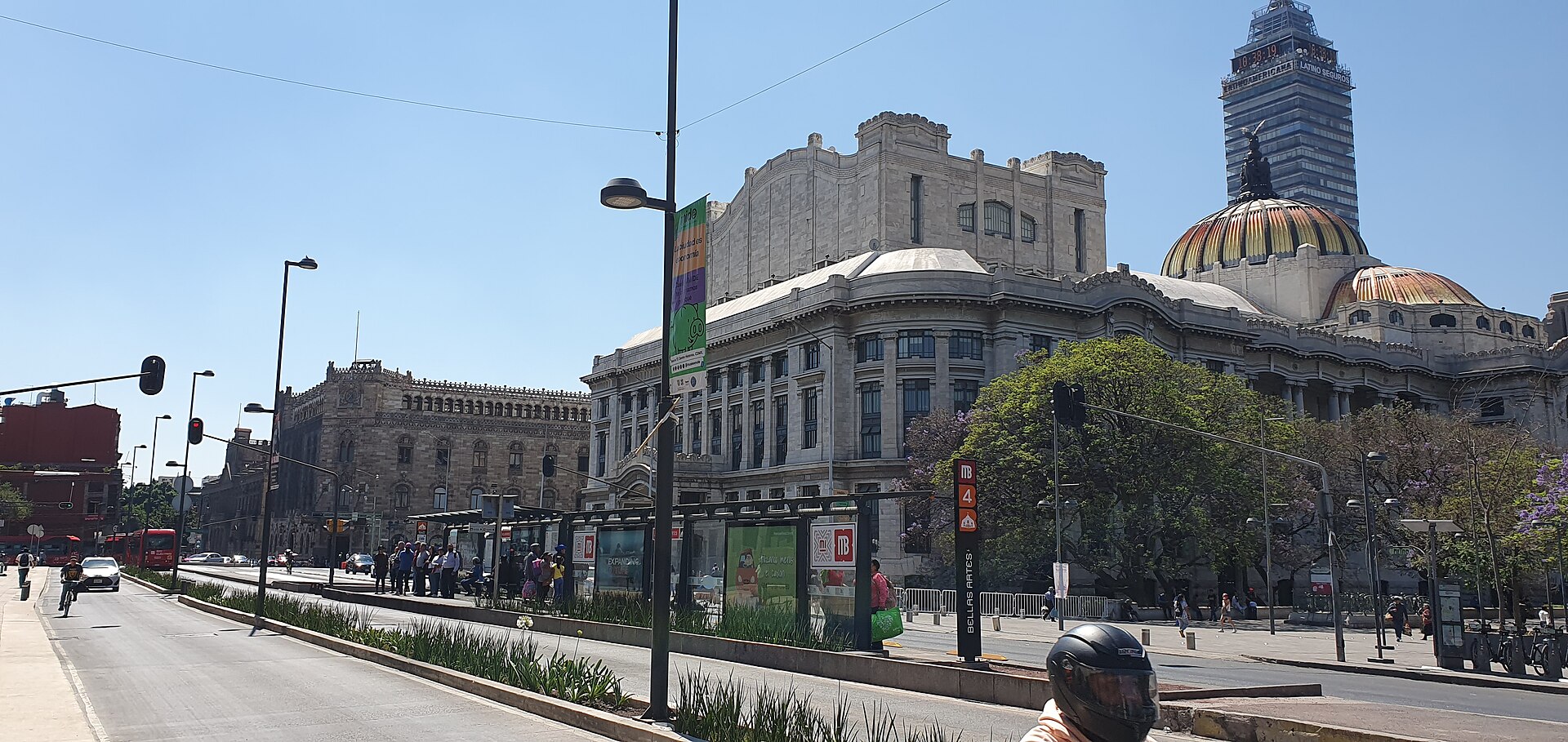
- Ballet Folklórico de México de Amalia Hernández at the Palacio de Bellas Artes. Typically Wednesday and Sunday evenings plus a Sunday morning matinée, roughly 300 pesos in the upper gallery to 1,000 on the main floor. The company has been running since 1952 and the Tiffany glass curtain behind it is worth the ticket on its own. Schedules shift — check current listings rather than assuming a night.
- Lucha libre at Arena México, the CMLL home card: Friday at 20:30, Sunday at 17:00 and Tuesday at 19:30. Box office or Ticketmaster MX. Friday is the big card and the loudest crowd; Tuesday is cheap, half-empty and oddly charming. Cards change around anniversary shows.
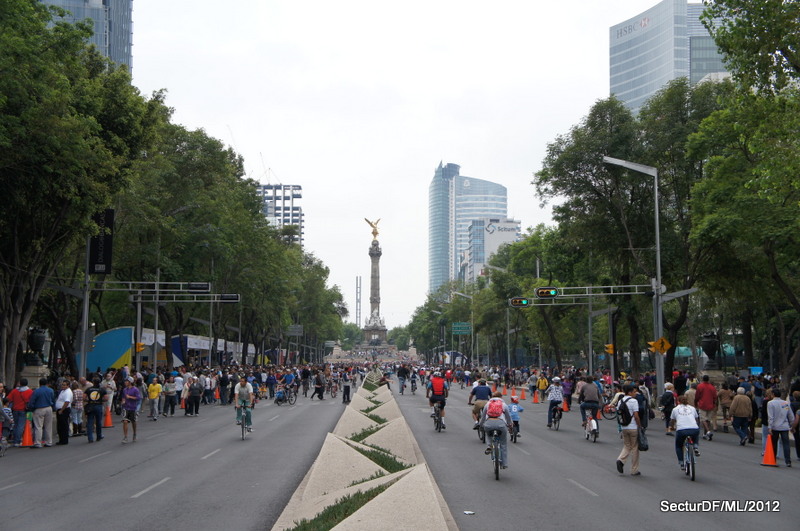
- Muévete en Bici, most Sunday mornings, when Paseo de la Reforma closes to cars until early afternoon and free loan bikes are available along the route. Free, no booking, and the single best Sunday morning in the city.
- Sunday markets. The Bazar del Sábado in San Ángel is Saturdays only; the antiques market on Plaza del Ángel in the Zona Rosa runs at weekends; the Lagunilla flea market on Sundays is enormous and requires keeping a hand on your bag.
The food calendar
Several of the year’s genuine markers are edible rather than staged, and they are a better way to feel the calendar than any parade.
- Rosca de reyes, around 6 January — a ring-shaped bread with a figurine hidden inside. Whoever finds it in their slice hosts tamales on 2 February, the Candelaria, which is why bakeries and tamale stands are both rushed that month.
- Capirotada during Lent, a bread pudding eaten mostly in Semana Santa.
- Chiles en nogada, roughly July to September, tied to the pomegranate and walnut harvest. The genuinely seasonal dish of the Mexican year.
- Pan de muerto from about early October to the first days of November, in every bakery in the city, and better from a neighbourhood panadería than anywhere with a queue outside it.
- Ponche and tamales through the Posadas in late December.
Our Mexico City food guide covers where to find each of these, and which markets do them best.
Tickets, organisers and how not to get caught
| Event | Organiser | Ticketing |
|---|---|---|
| Gran Desfile de Día de Muertos | Gobierno de la CDMX | Free, no tickets |
| Alebrijes parade, Catrinas procession, Zócalo ofrenda | Gobierno de la CDMX | Free, no tickets |
| Basílica de Guadalupe | The Basílica | Free, no tickets |
| El Grito, Zócalo | Federal government | Free; security screening and queues |
| Formula 1 Mexico City Grand Prix | Race promoter and authorised agents | Paid; buy only from official channels |
| Corona Capital, Vive Latino | Festival promoters | Paid; official sellers only |
| Zona Maco | Zona Maco | Paid; satellite fairs usually free |
| Ballet Folklórico at Bellas Artes | INBAL / the company | Paid; typically Wednesday and Sunday evenings plus a Sunday matinée, roughly 300 to 1,000 pesos |
| Lucha libre, Arena México | CMLL | Paid; box office or Ticketmaster MX. Fri 20:30, Sun 17:00, Tue 19:30 |
Two rules that cover most of the risk. If an event is free, nobody can sell you a ticket to it — anyone offering paid access to the Día de Muertos parade or the Basílica is selling you nothing. And for the paid events, buy from the promoter or its named authorised agent, not from a social media account, because a race weekend and a sold-out festival are precisely the markets that attract resale fraud. Profeco, the consumer protection agency, takes complaints on 800 468 8722.
Crowds, transport and getting home
The pattern is consistent across all of these. The event is free and the transport is the constraint.
- Reforma events — parade, Pride, alebrijes, New Year — close the avenue to traffic. Use Line 1 (Chapultepec, Sevilla, Insurgentes) or Lines 2 and 3 at Hidalgo. Buy or top up a Movilidad Integrada card the day before, because the machines have queues on event days.
- Zócalo events — El Grito, the mega-ofrenda, New Year — mean station closures and one-way crowd flow at Zócalo/Tenochtitlan, Allende and Pino Suárez. Walking out to Bellas Artes or Hidalgo and boarding there is usually faster than joining the nearest queue.
- Autódromo events — F1, Corona Capital — load Metro Line 9 at Velódromo, Ciudad Deportiva and Puebla, and Metrobús Line 2 at UPIICSA and El Rodeo. Leaving before the last act or the podium saves an hour.
- Basílica on 12 December — Line 6 at La Villa-Basílica saturates. Deportivo 18 de Marzo and a walk is often quicker.
- App taxis surge hard around all of these and often cannot reach you anyway because of road closures. Walk fifteen minutes out of the closure zone before ordering one.
- Agree a meeting point with anyone you are with. Mobile signal fails in dense crowds, reliably.
Our getting around Mexico City guide covers the network and the card in full, and the safety guide lists the verified helplines, including the 24-hour Tourist Police line on 55 5533 5533 and Locatel on 55 5658 1111.
Frequently asked questions
When is the Day of the Dead parade in Mexico City in 2026?
Saturday 31 October 2026, from 12:00, running from the Puerta de los Leones in the Bosque de Chapultepec down Paseo de la Reforma to the Zócalo. It is free and not ticketed. Confirmed as of 18 September 2026 from reporting of the city government’s announcement — verify on the city’s own pages, because we could not reach them directly.
Is Día de Muertos the best time to visit?
It is the most spectacular and the most expensive, and in 2026 it also collides with the Formula 1 Grand Prix on 1 November. If you want the atmosphere without the peak, come in the week of 17 to 25 October: the alebrijes are up, the Catrinas procession happens, the ofrendas are going in, and the prices are ordinary.
What is the biggest event of the year?
By crowd size, the Guadalupe pilgrimage on 11–12 December, by a very wide margin. Millions of people. Día de Muertos gets far more international attention.
Do I need tickets for Day of the Dead events?
No. The parade, the alebrijes, the Catrinas procession and the Zócalo ofrenda are all free public events with no ticketing at all. Anyone selling you entry to them is selling you nothing. Organised tours to Mixquic are a separate thing and are legitimately sold — you are buying transport and a guide, not access.
Can I visit a cemetery on Día de Muertos?
Yes, and you will be welcomed in most places. Behave as a guest at someone’s family observance: do not photograph people at graves without asking, do not touch or rearrange anything on an altar, keep your voice down, and spend money locally. Mixquic is the best known; smaller cemeteries across the southern boroughs are quieter and no less moving.
Are museums open during festivals?
Mostly, with exceptions. Almost everything closes on Mondays regardless — which in 2026 means Día de Muertos itself, 2 November, falls on a Monday and most museums will be shut. Museums also close or shorten hours on 15 and 16 September, 1 May, 8 and 25 December and 1 January. Teotihuacán is the reliable Monday option. Our museums guide has the closure pattern in full.
How far ahead should I book for Día de Muertos?
Six months for 2026, given the Grand Prix on the same weekend, and three to four months in an ordinary year. Accommodation is the binding constraint; flights into a city this well connected are usually the easier half.
What should I wear to the parade or the procession?
Layers and comfortable shoes — you will be standing for hours at 2,240 metres, in strong sun at midday and a sharp temperature drop by evening. Face paint is entirely welcome, and vendors along the route will do it for a modest price. Leave valuables behind and use a bag that closes.
Is there anything on in the quiet months?
Late January, late May and early October are the genuine off-weeks, and they are excellent for exactly that reason: everything is open, nothing is queued, and prices are at their lowest. The permanent city — the museums, the markets, the colonias — is the real attraction, and it is better without a parade in front of it. See our best time to visit guide for the month-by-month picture.
Between the festivals, the city keeps a standing evening programme: lucha libre three nights a week, the salón de baile orchestras, the mezcalerías and a genuinely world-tier cocktail scene. Our Mexico City nightlife guide covers all of it, including which civic dates bring the dry law with them.
Our full Day of the Dead in Mexico City guide sets out the 2026 programme with what is confirmed and what is not, how to choose between the parades, the ofrendas and the cemetery vigils, what to book with the race weekend in the way, and how to take part respectfully.
For the parade itself, our Mexico City Day of the Dead parade guide sets out the route section by section with the nearest Metro stations, the two start times that have been reported for 2026, where to stand depending on who you are with, and how to get away afterwards.
If you are coming for the race, our Mexico City Formula 1 travel guide covers the 2026 ticket prices, the Metro and Metrobús lines that serve the circuit, where to stay, the altitude, what to bring and how to fit a race weekend around Día de Muertos.
Going to the festival? Our Corona Capital Mexico City festival guide covers the ticket tiers and prices, the rules at the gate, the Metro route to the circuit, and the problem almost nobody mentions: the festival runs until about two in the morning, and the Metro stops at midnight.
Related Mexico City Guides
- Best Time to Visit Mexico City — climate normals, crowd patterns and the quiet weeks.
- Where to Stay in Mexico City — where to base yourself for a Reforma or Zócalo event.
- Mexico City Trip Costs — what a peak week does to a budget, and the taxes on a room rate.
- Getting Around Mexico City — the Metro lines that serve each venue, and the transport card.
- Mexico City Neighborhoods to Visit — the colonias the parade route runs through.
- Mexico City Museums — holiday closures and special hours.
- Teotihuacán — the spring equinox, and why you still cannot climb.
- Mexico City Safety — crowd sense and the verified helplines.
- Things to Do in Mexico City — the permanent city, for the weeks between festivals.
- Mexico City Travel Tips for First Timers — the pre-departure checklist.
Sources and verification
- Día de Muertos 2026 programme — Gran Desfile de Día de Muertos on Saturday 31 October 2026 from 12:00, Puerta de los Leones in the Bosque de Chapultepec along Paseo de la Reforma to the Zócalo; Desfile de Alebrijes Monumentales Saturday 17 October from 12:00, Zócalo to Reforma; Paseo Nocturno en Bicicleta Saturday 24 October 19:00–23:00; Mega Procesión de Catrinas Sunday 25 October from 18:00; 2026 themes covering pre-Hispanic roots, popular expression and tributes to Juan Gabriel, José Alfredo Jiménez, Juan Rulfo and Lola Beltrán; participant registration closed 21 August 2026. Reported consistently by El Universal, México Desconocido and El Informador from the CDMX government’s announcement. We attempted to read gobierno.cdmx.gob.mx and cultura.cdmx.gob.mx directly and both refused connection, so these dates are one step removed from primary and should be confirmed on the city’s own pages. Checked 18 September 2026.
- Formula 1 Mexico City Grand Prix 2026 — 1 November 2026 at the Autódromo Hermanos Rodríguez. Checked 18 September 2026.
- Corona Capital 2026 — 20–22 November 2026, Autódromo Hermanos Rodríguez. Vive Latino 2027 — 13–14 March 2027, Estadio GNP Seguros. Checked 18 September 2026.
- Basílica de Guadalupe — free entry, open daily approximately 06:00–21:00, crypt 09:00–17:00; the feast of the Virgin of Guadalupe falls on 12 December, with vigil and Las Mañanitas overnight on the 11th. Metro La Villa-Basílica, Line 6.
- Teotihuacán equinox — INAH runs a crowd-control operation with special hours, typically an 08:00 opening and last access at 16:30. Climbing the Pyramids of the Sun and Moon is prohibited and has been since 2020, including at the equinox. Only INAH may authorise an ascent.
- Museum closures — most museums close Mondays; Teotihuacán is open Mondays. Museo Frida Kahlo runs special shortened hours on 15 September and closes on 1 May, 16 September, 8 and 25 December and 1 January.
- Ballet Folklórico de México de Amalia Hernández at Bellas Artes — typically Wednesday and Sunday evenings plus a Sunday morning matinée, roughly 300 MXN in the upper gallery to 1,000 MXN on the main floor; schedules shift and current listings should be checked. Lucha libre at Arena México (CMLL) — Friday 20:30, Sunday 17:00, Tuesday 19:30, box office or Ticketmaster MX; cards change around special events.
- Chiles en nogada — a genuinely seasonal dish, generally sold roughly July to September, tied to the pomegranate and walnut harvest.
- Transport — 2026 fares: Metro 5 MXN, Metrobús 6 MXN, Cablebús 7 MXN, via the Movilidad Integrada card. Paseo de la Reforma closes to cars most Sunday mornings for Muévete en Bici.
- Consumer protection — Profeco, 800 468 8722, per the city’s own tourism site. Emergency 911; CDMX Tourist Police 55 5533 5533; Locatel 55 5658 1111.
Confirmed dates on this page carry the date we checked them and the body that set them. Everything presented as a “typical season” is exactly that and is not a prediction. We have not attended every event described here and do not claim to have. Mexican event dates move, sometimes within weeks of the event — before booking flights around any date on this page, open the organiser’s own page and confirm it. We would rather tell you we could not reach a source than quietly imply we did.
Photo Credits
Monumental alebrije on Paseo de la Reforma: Alebrijes Paseo de la Reforma by JCarlosRmz, CC BY-SA 4.0, via Wikimedia Commons.
Pilgrims at the Basílica de Guadalupe on 12 December: 12 de diciembre de 2024 en la Basílica de Guadalupe 4 by ProtoplasmaKid, CC BY-SA 4.0, via Wikimedia Commons.