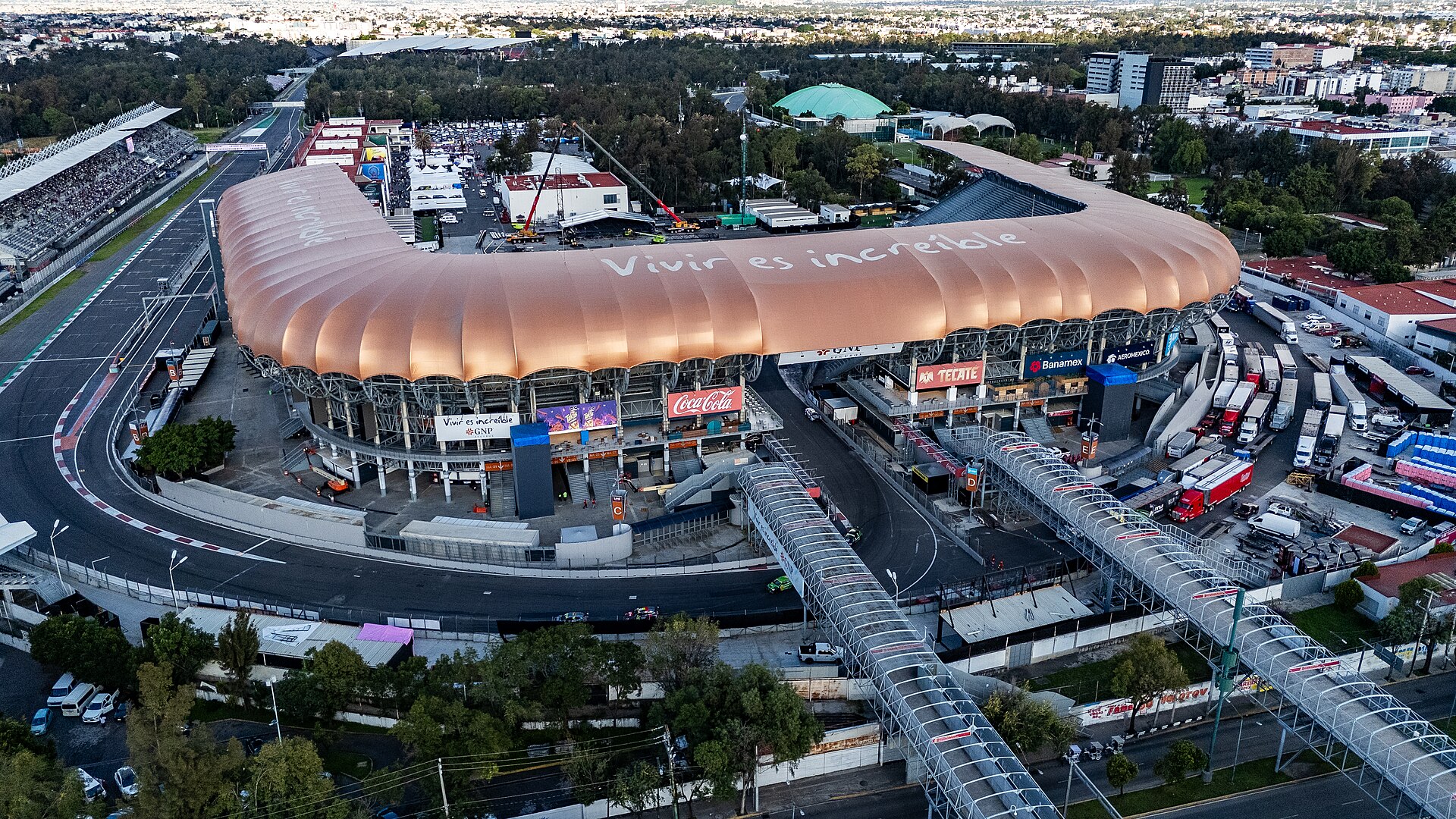
The Mexico City Grand Prix is the only race on the Formula 1 calendar where the cars drive through the stands of a stadium. The track loops into the old Foro Sol, now the Estadio GNP Seguros, in front of tens of thousands of fans, and the podium is held there, in the loudest part of the loudest crowd in the sport. It is also, at well over 2,000 metres above sea level, the highest circuit on the calendar, which matters as much to the spectators as to the engineers. In 2026 it comes with two extra factors: Sergio “Checo” Pérez is back on the grid with the new Cadillac team, and the race falls on Sunday 1 November, in the middle of the Día de Muertos weekend. This Mexico City Formula 1 travel guide is about everything around the track: tickets, getting there and back, where to stay, what to bring, and how to fit a race weekend into the busiest three days of the city’s year.
For the wider autumn calendar, including the Day of the Dead parade on the Saturday, see our guide to Mexico City’s festivals and events.
The short answer
- When: Friday 30 October to Sunday 1 November 2026, at the Autódromo Hermanos Rodríguez in the east of the city. The promoter’s contract has been reported as renewed to 2028.
- Tickets: official prices announced in October 2025 ran from 3,900 to 45,700 pesos, depending on the zone, the grandstand and the package. Buy only through the official Mexico GP channel and its authorised ticketing partner.
- Getting there: Metro Line 9 to Velódromo, Ciudad Deportiva or Puebla on the north side, or Metrobús Line 2 to UPIICSA or El Rodeo on the south side. There is no parking at the circuit, and driving is not recommended.
- Getting in: the venue has 14 entrances; use the gate closest to your grandstand. In 2024 the gates opened at 08:00 on all three days.
- Getting home: the Metro and Metrobús stop at midnight. The official advice is to stay a while after the race rather than join the rush.
- The 2026 collision: the Día de Muertos parade is on Saturday 31 October, qualifying day, and Día de Muertos itself is on Monday 2 November. Book accommodation now.
- The altitude: take it easy on arrival, drink more water than you think you need, and go gently on alcohol in the sun.
Confirmed for 2026, and what to check
| Item | Status | Detail |
|---|---|---|
| Race weekend | Confirmed | 30 October to 1 November 2026, Autódromo Hermanos Rodríguez |
| Ticket prices | Announced October 2025 | 3,900 to 45,700 pesos; examples reported: Orange zone (Grandstand 2A) 3,900; Blue zone 7,000 to 21,750; Green zone 30,500 |
| Ticket sales | Phased | Bank presales and a general sale in November 2025; a further sale opened in May 2026. Check the official site for what remains. |
| Session times | Check | Published by Formula 1 closer to the event. In recent years the race has started in the early afternoon local time. |
| Gate opening | Check | 08:00 on all three days in 2024. Confirm the 2026 times and your gate on your ticket. |
| Bag and item rules | Check | Published by the promoter. Read them before you pack. |
| Metro and Metrobús | Standard service | Line 9 and Metrobús Line 2 serve the circuit; check the operators’ notices that weekend for any changes. |
Where the circuit is, and why it matters
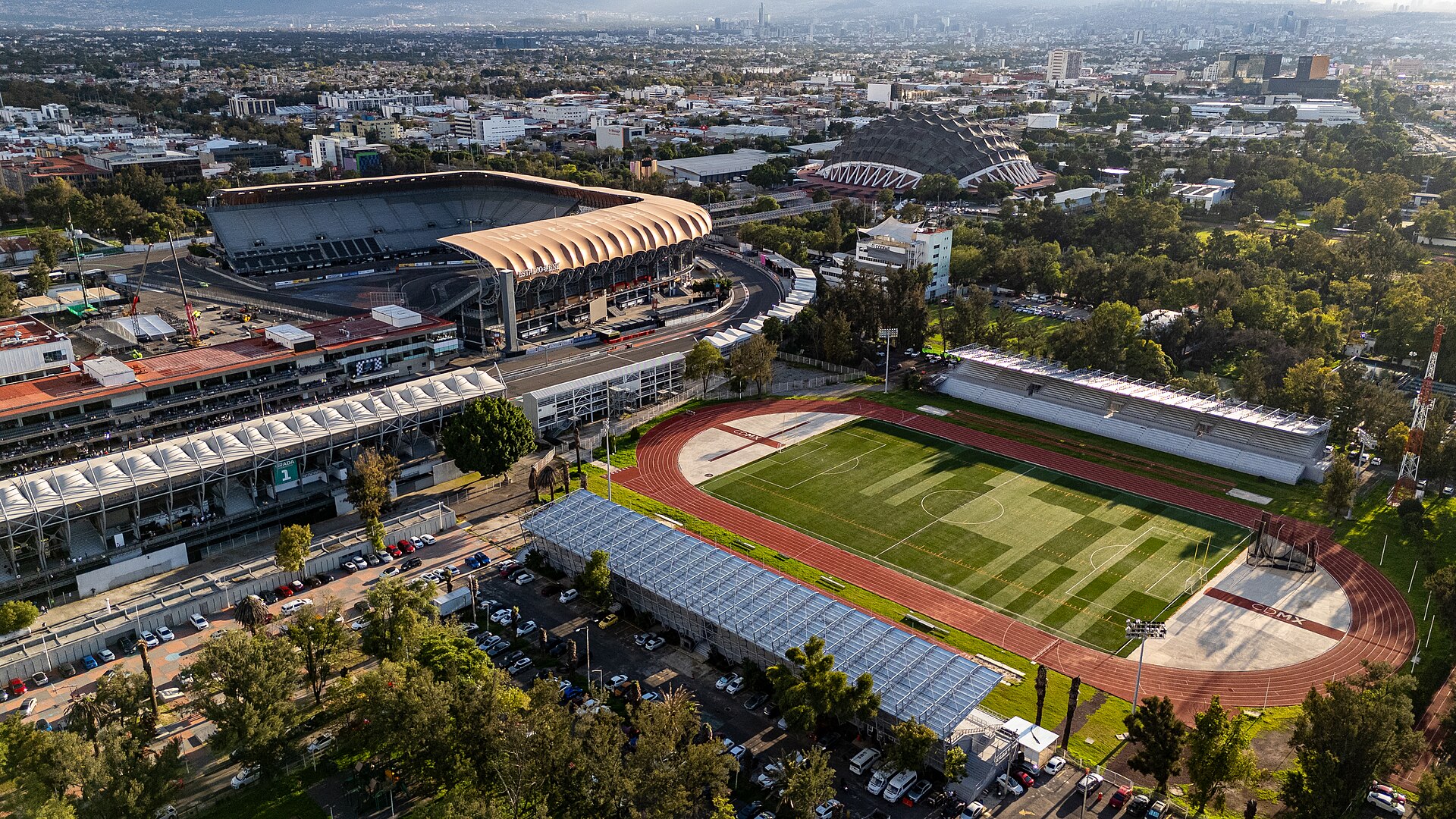
The Autódromo sits inside the Ciudad Deportiva Magdalena Mixhuca, a large public sports complex in the borough of Iztacalco, in the east of the city, a few kilometres south-west of the international airport. It shares the complex with the Estadio GNP Seguros and the Palacio de los Deportes, the indoor arena under its copper-covered dome, and with running tracks, sports fields and a lot of trees.
Two things follow from that location. First, it is a long way from the neighbourhoods where most visitors stay: Roma, Condesa, Juárez, Polanco and the Centro are all to the west. Second, it is well served by public transport, which is the only sensible way to get there on a race day, because the area around the complex is wide arterial roads and residential streets, and there is no parking at the circuit for spectators.
Tickets: the options, and who each suits
The official prices for 2026, announced in October 2025, ran from 3,900 pesos for the cheapest seats to 45,700 pesos for the most expensive packages. The exact grandstand names and what each ticket covers are set by the promoter, so treat the following as a guide to the kind of choice you are making rather than a seating plan.
The cheapest seats
The lowest-priced zone, reported as the Orange zone at 3,900 pesos, gets you into the race weekend at a fraction of the cost of a grandstand on the main straight. Suits: first-timers on a budget, younger fans, and anyone who cares more about the atmosphere than the view of the pit lane. The trade-off: less comfort, less shade, and a view of part of the circuit rather than the key moments.
The middle of the range
The Blue zone was reported at 7,000 to 21,750 pesos, a range wide enough to cover very different seats. Suits: most travelling fans, who want a reserved seat with a good view without paying for hospitality.
The stadium section
The part of the circuit that makes this race unique is the stadium, where the cars thread through the stands at low speed and the podium ceremony takes place. The noise when a Mexican driver comes through is extraordinary. Suits: anyone who wants the atmosphere that makes this race famous, and in 2026 anyone who has come to see Checo Pérez. The trade-off: you see a slow section of the track, not the high-speed straight.
The main straight and the premium end
Reported prices rose to 30,500 pesos for the Green zone and 45,700 pesos at the top of the range. Suits: fans who want the start, the pit lane and the long straight, and those for whom comfort and service are part of the point.
Not going to the track at all
Many visitors in town that weekend will not have a ticket, and that is fine. The race is shown on television and in bars across the city, and the atmosphere spills into the streets. Suits: people who are here for Día de Muertos and want a taste of the race without the cost or the crowds.
Buying safely
- Buy only through the official Mexico GP channel and its authorised ticketing partner. Sold-out events attract counterfeit tickets and resale fraud, especially on social media.
- Check what your ticket covers: which days, which grandstand, which gate.
- Keep your ticket on a charged phone, and carry a power bank.
- If you are sold something that does not exist, Profeco, the federal consumer protection agency, takes complaints on 800 468 8722.
Getting there and back
The two lines that serve the circuit
Formula 1’s own transport guidance points spectators to two lines:
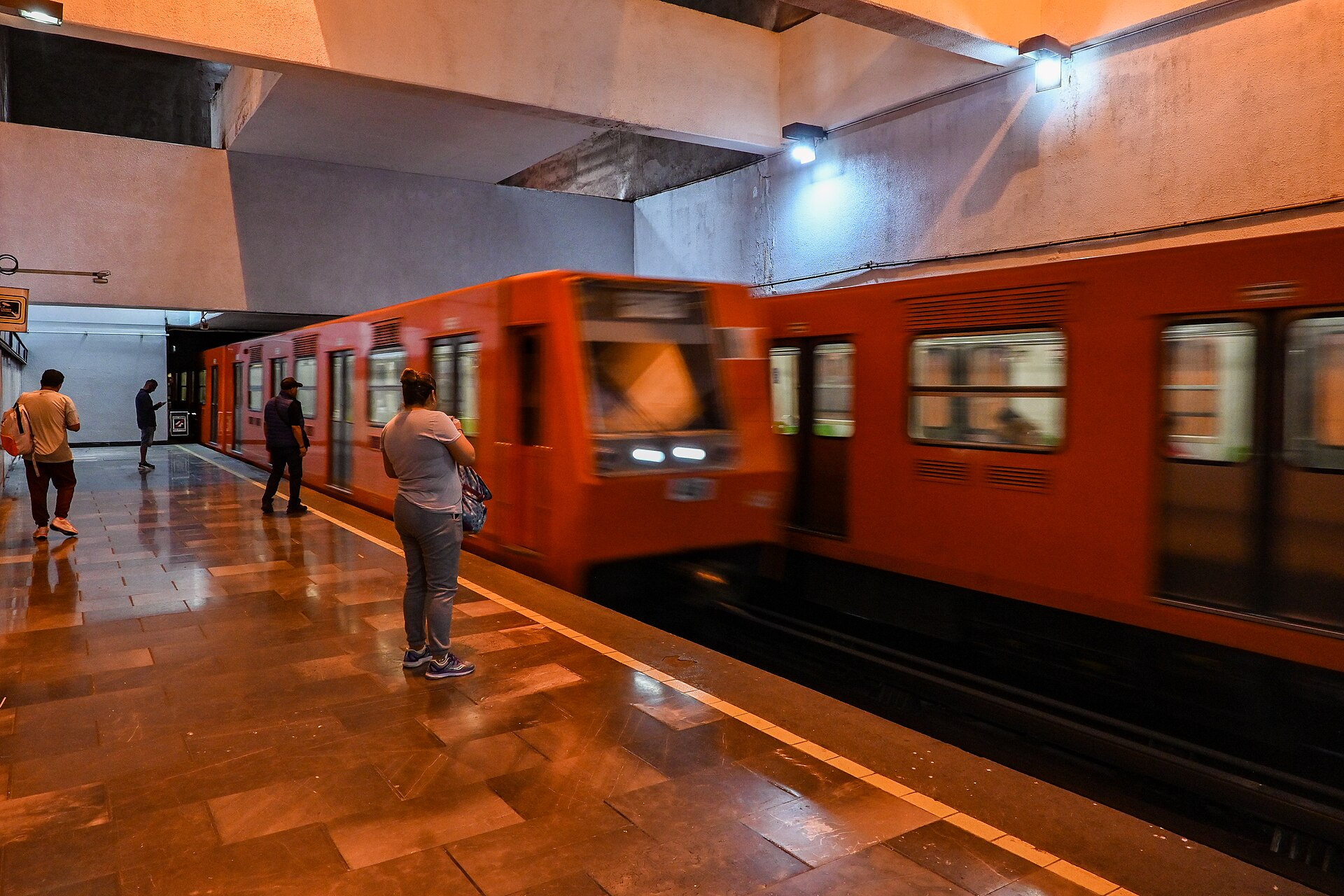
- Metro Line 9 (Pantitlán to Tacubaya), with three stations along the north side of the circuit: Velódromo, Ciudad Deportiva and Puebla.
- Metrobús Line 2 (Tacubaya to Tepalcates), with two stations on the south side: UPIICSA and El Rodeo.
The Metro costs a flat 5 pesos and the Metrobús 6, paid with the rechargeable Movilidad Integrada card. Buy and top up your card the day before, because the machines queue on event days. According to the same guidance, the Metro runs from 05:00 on weekdays, 06:00 on Saturdays and 07:00 on Sundays, and the Metrobús from 04:30 Monday to Saturday and 05:00 on Sundays, both until midnight.
Getting to Line 9 from where you are staying
- From Condesa and Roma: Line 9 runs along the southern edge of these neighbourhoods. Board at Patriotismo, Chilpancingo or Centro Médico and ride east; no change needed.
- From the Centro Histórico: take Line 2 south to Chabacano and change to Line 9 eastbound.
- From Polanco or Chapultepec: take Line 7 or Line 1 to Tacubaya, the western end of Line 9, and ride east across the city.
- From Juárez: take Line 3 south from Balderas to Centro Médico and change to Line 9 eastbound.
At peak times, the front carriages on many lines are reserved for women and children, which is signposted and enforced. Line 3 is due for integral works, with dates that have shifted in reporting, so if you plan to change at Centro Médico, check the Metro’s service notices that week.
Why not drive, or take a taxi?
There is no spectator parking at the circuit, and Formula 1’s guidance does not recommend travelling to it by car, because of the traffic around the venue on a race weekend. App rides and taxis face the same problem: the surrounding roads are congested and partly closed, and drop-off and pick-up near the gates is slow. If you must use one, ask to be dropped well short of the circuit and walk the rest, and after the race walk well clear of the venue before you order a ride back.
Getting home after the race
When the race ends, tens of thousands of people leave at once, and the stations nearest the busiest gates are the most crowded. The official advice is to stay a while rather than join the rush; the podium, the atmosphere in the stadium and the post-race crowd are part of the experience anyway. Then:
- Try the line you did not arrive on. If the Line 9 stations on the north side are jammed, the Metrobús Line 2 stations on the south side may be quicker, and vice versa.
- Walk one station further along the line before you board, if the nearest station is closed off or queuing.
- Agree a meeting point with your group before the race, away from the gates. Mobile signal often struggles in large crowds.
- Remember the midnight cut-off for the Metro and Metrobús, which matters on the Friday and Saturday if you stay out in the city afterwards.
Use Friday to learn the route
If your ticket covers all three days, treat Friday’s practice sessions as a rehearsal. The crowds are smaller, the Metro is calmer, and you can work out which station suits your gate, where the food and toilets are, and where you will meet your group if you get separated. On Saturday and Sunday, when the circuit is full, you will be glad you did.
A stop on the way home: Mercado de Jamaica
Line 9 passes through Jamaica, a few stops west of the circuit, where it meets Line 4. The station is next to the Mercado de Jamaica, the city’s great flower market, which in the last week of October is piled high with orange cempasúchil and magenta velvet flowers for the Día de Muertos altars. If you are leaving the circuit on the Friday or Saturday afternoon, it is a five-minute detour into one of the most colourful sights of the season.
Bringing children
The Grand Prix can be a wonderful day out for older children, but plan for three things. Noise: Formula 1 cars are very loud, so bring proper ear defenders for children rather than relying on earplugs alone. Sun and altitude: keep children in the shade where you can, with hats, sunscreen and plenty of water. Crowds: write your phone number on a wristband or a card in their pocket, agree what they should do if they get lost, and avoid the densest exits by waiting after the race. Check the promoter’s rules on tickets for children and on pushchairs before you go.
Accessibility
Getting to the circuit is easier on the Metrobús than on the Metro for anyone with limited mobility, because many Metro stations involve long staircases and transfers. Check the promoter’s information on accessible seating and entrances when you buy your ticket, and ask which gate is closest to accessible facilities. If you need step-free travel across the city, a pre-booked driver who can drop you close to the right gate may be worth the cost, even with the traffic.
Where to stay for the race
Book as early as you can. In 2026 the race weekend overlaps the Día de Muertos weekend, and the combination is likely to make the nights of 30 October to 1 November among the most expensive and hardest to book of the year.
- Condesa and Roma are the best all-round choice for race fans: lively neighbourhoods with plenty of restaurants, and Line 9 running along their southern edge straight to the circuit.
- The Centro Histórico is a short ride from Chabacano and puts you next to the Zócalo ofrenda and the end of the Día de Muertos parade, but it is noisy and partly closed on the big days.
- Polanco is comfortable and quieter, with a longer ride across the city from Tacubaya.
- Near the airport, the hotels are geographically close to the circuit and convenient for an early flight, but the area offers little else, and you would miss the city.
Prefer properly registered accommodation: short-term rentals in the city are required to show a registration folio on their listings, and a host who can invoice and be contacted directly is worth a slightly higher price. Our where to stay guide compares the neighbourhoods in detail.
Arriving: the airport and the first day
The international airport, AICM, is only a few kilometres from the circuit, but most visitors will head west to their accommodation first. Metrobús Line 4 serves both terminals at a special fare of 30 pesos, paid by card or digital wallet only, not cash. Authorised taxis are sold at counters inside the terminals at fixed rates by zone. The two terminals are not walkable from each other; the Aerotrén between them needs a boarding pass. Our airports guide covers the options and the current position on app rides at the airport.
Then, take the first day easy. Mexico City sits at about 2,240 metres. Most visitors adjust within a day or three, but a long day in the sun at a race track, with beer and not enough water, is a classic way to feel terrible on day two. Drink plenty of water, eat properly, and go gently on alcohol. If you have a heart or lung condition, ask your own doctor before you travel.
What to bring to the circuit
- Your ticket on a charged phone, with a power bank.
- Photo ID.
- Sun protection: a hat, sunscreen and sunglasses. The sun at this altitude is strong even when the air is cool, and much of the seating is open to the sky.
- A warm layer. Mornings in late October and early November are cold, with average lows of about 10 to 12 °C, and the afternoon sun disappears quickly at the end of the day.
- Ear protection. Formula 1 cars are loud, and earplugs make a long day far more pleasant, especially for children.
- A light rain layer. Showers are less likely by November than in October, but not impossible.
- A small bag that complies with the promoter’s rules. Check the prohibited items list before you leave; rules on bag sizes, bottles, umbrellas and cameras change and are enforced at the gate.
- Some cash and a card, unless the venue confirms it is cashless.
Weather on race weekend
Race weekend sits at the turn of the seasons. Using the long-term averages for Mexico City’s reference station at Tacubaya (1991–2020, Servicio Meteorológico Nacional), October averages highs of 23.5 °C, lows of 11.8 °C and about 71 millimetres of rain, and November highs of 22.8 °C, lows of 9.9 °C and only about 17 millimetres. In practice, expect cool mornings, warm and sunny afternoons, and a small chance of a shower. Sunset on 1 November comes at about 18:00, so the end of the day turns cold quickly.
The Día de Muertos weekend: fitting it all in
In 2026 the race weekend is also the climax of the Day of the Dead season, and the two do fit together, if you plan.
- Thursday 29 October: the Zócalo’s Ofrenda Monumental goes up, and the Centro is specially lit from that night. Go before the weekend crowds.
- Friday 30 October: practice day at the circuit. In the evening, the neighbourhood altars of Coyoacán, or dinner in Roma.
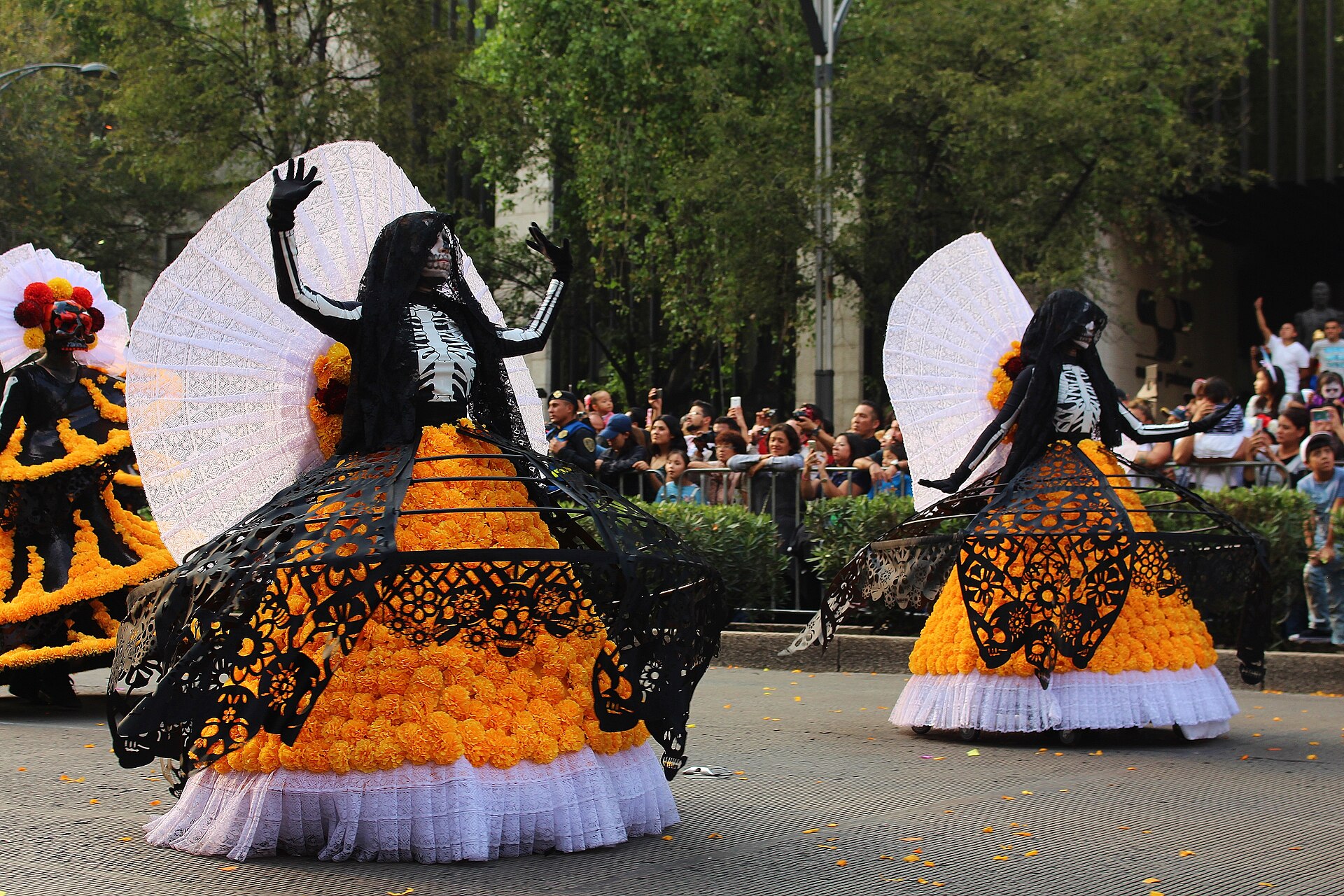
- Saturday 31 October: qualifying day, and also the Gran Desfile de Día de Muertos along Reforma, reported for 14:00 in the latest reports and 12:00 in earlier ones. You cannot do both. Choose, and if you choose the circuit, the parade’s tail end and the Halloween evening in Roma and Condesa are still there for you afterwards.
- Sunday 1 November: the race. The UNAM Megaofrenda is open 11:00 to 21:00 for anyone not at the track.
- Monday 2 November: Día de Muertos. Most museums close on Mondays, so make it a day for Teotihuacan, which is open, or the cemetery vigils in the evening, including the candlelit Alumbrada at Mixquic.
Our Day of the Dead guide covers the season, and our parade guide covers the Saturday in detail.
Being a good guest in the crowd
The Mexico City crowd has a reputation as one of the most passionate in Formula 1, and joining in is half the fun. A few things make it work for everyone.
- Join the singing, and stand for the anthem. The Mexican national anthem before the race is a big moment for the home crowd.
- Cheer for your driver, and respect everyone else’s. In 2026 much of the crowd will be there for Pérez. That is part of the atmosphere, not a reason for friction.
- Never throw anything onto the track or at other fans, and do not climb fences or barriers to get a view.
- Day of the Dead face paint is welcome, and you will see plenty of it that weekend.
- Drink sensibly at altitude and in the sun, and look after the people around you.
- Take your rubbish with you, or use the bins.
What to book, what to verify, and the fallback
Book
- Race tickets, through the official channel only.
- Accommodation for 30 October to 2 November, as early as you can.
- Flights, allowing a buffer day before the race to adjust to the altitude.
- Restaurants for the Friday and Saturday evenings, which are busy across the city that weekend.
- Timed museum tickets for the days around the race, especially the Casa Azul, which sells online only. See our guide to Frida Kahlo Museum tickets.
Verify the week before
- Session times, from Formula 1.
- Your gate and the gate opening times, from your ticket and the promoter.
- The bag and prohibited items rules.
- Metro and Metrobús service notices for Line 9, Metrobús Line 2 and, if you are changing there, Line 3.
- The Día de Muertos parade time and road closures, if you are trying to fit both in.
When the plan goes wrong
- No tickets: watch the race in a bar in Roma or Condesa, and spend the weekend on Día de Muertos.
- The nearest station is jammed: try the other line, Metro Line 9 to the north or Metrobús Line 2 to the south, or walk a station further.
- You feel unwell from the altitude or the sun: find shade, drink water, eat something, and ask the venue’s medical staff for help. In an emergency, call 911.
- You are separated from your group: go to the meeting point you agreed before the race.
- Your phone dies: keep a note of your accommodation address on paper, and your ticket details somewhere other than your phone.
The Mexico City tourist police can be reached 24 hours a day on 55 5533 5533. Our safety guide covers advisories, help numbers and crowd precautions in more detail.
What it costs: a race weekend budget
Prices in Mexican pesos. Tickets are the 2026 official range; everything else is a planning estimate based on prices checked in 2026.
| Item | Cost | Notes |
|---|---|---|
| Race ticket | 3,900 to 45,700 | Official 2026 range, depending on zone and package |
| Metro or Metrobús, per ride | 5 or 6 | Flat fares; Movilidad Integrada card |
| Metrobús Line 4 to or from the airport | 30 | Card or digital wallet only |
| Accommodation | Highest of the autumn | Race weekend and Día de Muertos together; book early |
| Food and drink at the circuit | Venue prices | Higher than in the city; eat a good breakfast first |
One money rule saves more than any other: always pay in pesos. If a card terminal or an ATM offers to charge you in your home currency, decline; that conversion typically costs 5 to 8 per cent. Our costs guide covers money, ATMs and budgets in more detail.
Frequently asked questions
When is the Mexico City Grand Prix in 2026?
The race weekend runs from Friday 30 October to Sunday 1 November 2026, with the race on the Sunday, at the Autódromo Hermanos Rodríguez.
How much are tickets for the Mexico City Grand Prix?
The official 2026 prices, announced in October 2025, ran from 3,900 to 45,700 pesos, depending on the zone, the grandstand and the package. Buy only through the official channel.
How do I get to the Autódromo Hermanos Rodríguez?
By public transport: Metro Line 9 to Velódromo, Ciudad Deportiva or Puebla on the north side, or Metrobús Line 2 to UPIICSA or El Rodeo on the south side. There is no parking at the circuit.
What time does the Metro open on race day?
According to Formula 1’s transport guidance, the Metro opens at 07:00 on Sundays, 06:00 on Saturdays and 05:00 on weekdays, and the Metrobús at 05:00 on Sundays and 04:30 on other days. Both run until midnight.
Where should I stay for the Mexico City Grand Prix?
Condesa and Roma are the best all-round bases, with Metro Line 9 running along their southern edge straight to the circuit. The Centro and Polanco also work, with a change or a longer ride.
Does the altitude affect spectators?
It can. Mexico City is at about 2,240 metres. Most visitors adjust within a day or three; take the first day easy, drink plenty of water and go gently on alcohol in the sun. People with heart or lung conditions should ask their own doctor before travelling.
Can I see the Day of the Dead parade and the race on the same weekend?
Yes, but not on the same day. The parade is on Saturday 31 October, which is qualifying day, and the race is on Sunday 1 November. Choose one for the Saturday.
Is the Mexico City Grand Prix safe?
It is a large, heavily staffed event. The realistic risks are pickpocketing on crowded transport, counterfeit tickets, heat, altitude and getting separated from your group. Buy tickets officially, keep valuables in front pockets and agree a meeting point.
The same circuit hosts Corona Capital three weeks later, from 20 to 22 November 2026. If you are coming back for the music, our Corona Capital visitor guide covers the tickets, the gate rules and how to get home when the Metro has stopped.
Related Mexico City Guides
- Mexico City festivals and events: the full calendar, including the 2026 race weekend and Día de Muertos collision.
- Day of the Dead in Mexico City: the season around the race weekend.
- Where to stay in Mexico City: the neighbourhoods compared.
- Getting around Mexico City: the Metro, Metrobús, fares and the Movilidad Integrada card.
- Mexico City airports: getting from the airport to the city.
- Mexico City in October and in November: the weather and events either side of the race.
- Mexico City safety: advisories, help numbers and crowd precautions.
Sources and verification
- Dates, ticket prices and sales: MVS Noticias and Infobae, 29 October 2025: race weekend 30 October to 1 November 2026; official prices from 3,900 to 45,700 pesos, with the Orange zone (Grandstand 2A) at 3,900, the Blue zone at 7,000 to 21,750 and the Green zone at 30,500; bank presales on 10 and 11 November 2025 and general sale on 12 November 2025; contract renewed to 2028. Infobae, 13 May 2026, and Claro Sports on a further sale phase. Checked 3 October 2026.
- Transport and gates: Formula 1, “How to get to and from the Mexico City Grand Prix” (2024): Metro Line 9 stations Velódromo, Ciudad Deportiva and Puebla on the north side; Metrobús Line 2 stations UPIICSA and El Rodeo on the south side; Metro hours 05:00 weekdays, 06:00 Saturday, 07:00 Sunday to midnight; Metrobús from 04:30 Monday to Saturday and 05:00 Sunday to midnight; no parking at the circuit and driving not recommended; 14 entrances; gates open 08:00 on all three days in 2024; advice to stay later after the race. Checked 3 October 2026.
- Fares and the city: Metro 5 pesos and Metrobús 6 (2026); Metrobús Line 4 to the airport 30 pesos, card only; authorised airport taxis; women-and-children carriages; Line 3 works announced; short-term rental registration folio; dynamic currency conversion costs. Checked September 2026.
- Día de Muertos 2026: Gran Desfile on 31 October, reported for 14:00 (Claro Sports, 25 September 2026; adn40, 26 September 2026) and 12:00 in earlier reports; Zócalo ofrenda 29 October to 2 November; UNAM Megaofrenda 31 October to 2 November, 11:00–21:00. Checked 3 October 2026.
- Climate and altitude: Servicio Meteorológico Nacional normals for Tacubaya, 1991–2020; altitude guidance as cached in September 2026. Sunset calculated for Mexico City on year-round standard time.
- Help numbers: 911; CDMX tourist police 55 5533 5533; Profeco 800 468 8722. Checked September 2026.
What this page does not claim. Nobody from this site attended the Grand Prix for this page, and nothing here describes a personal experience. Ticket prices are the official range as reported when tickets went on sale, not a check of current availability; grandstand names and inclusions are the promoter’s to define. Session times, gate times and the bag policy for 2026 had not been published in a form we could check, which is why this page tells you to confirm them. The transport guidance is Formula 1’s own, from 2024, and the station names were cross-checked against the Metro and Metrobús lines; service can change on event weekends.
Photo Credits
The stadium section of the Autódromo Hermanos Rodríguez: Vista aérea del Autódromo Hermanos Rodríguez 01 by ProtoplasmaKid, CC BY-SA 4.0, via Wikimedia Commons.
The Ciudad Deportiva Magdalena Mixhuca from the air: Vista aérea de la Ciudad Deportiva Magdalena Mixhuca by ProtoplasmaKid, CC BY-SA 4.0, via Wikimedia Commons.
Catrinas on Paseo de la Reforma: Desfile de Día de Muertos 2017 by Mario Yaír TS, CC BY-SA 4.0, via Wikimedia Commons.
The Line 9 train at Patriotismo is credited on its original appearance in this site’s media library.