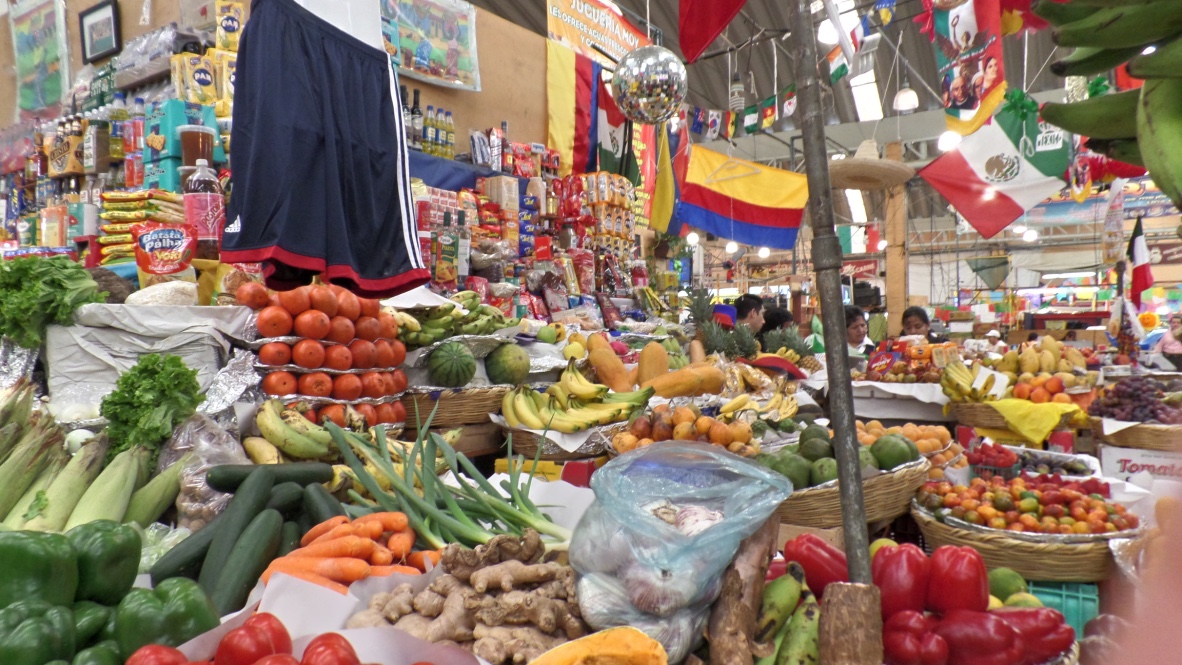
The problem with every Mexico City food guide is that it is really a list of restaurants, and restaurants are the smallest and least interesting part of what happens here. This is a city where the best thing you eat will very likely cost twenty-five pesos, be handed to you on a paper plate while you stand up, and be made by somebody who has made only that one thing, on that one corner, for thirty years. It is also a city with eleven Michelin-starred restaurants and some of the most consequential cooking in the Americas. Both of those facts are true and neither of them is the point.
What this page tries to do instead is give you a method: how to choose where to eat when you do not know anybody, how the day is structured and why that matters more than any address, what the dishes actually are, how to order without embarrassment, and what things cost. Specific restaurants appear as illustrations, dated, not as a ranking — because a list of restaurants goes stale in eighteen months and a method does not.
How to choose where to eat, in four rules
These will serve you better than any list, including this one.
- Specialists beat generalists, always. A place that sells tacos al pastor, and nothing else, will do it better than a place with a twelve-page menu. The same is true of a carnitas stand, a barbacoa stand, a tamalería. A menu offering tacos and pizza and sushi is telling you something.
- Follow the queue, and follow the time of day. A queue at 09:00 means breakfast is good. A queue at 23:00 means the tacos are good. A queue at both means somebody is being paid to stand there.
- Turnover is the only hygiene indicator that matters. Busy stands sell food that has not been sitting. An empty stand with a spotless counter is worse than a chaotic one with fifteen people waiting.
- Eat what is in front of you, geographically. Barbacoa is a weekend morning thing. Chiles en nogada are a July-to-September thing. Cochinita pibil is Yucatecan and available here, but you are eating a very good regional import rather than a local dish. Knowing which is which changes what you order.
The day, and why it is the real map
Mexico City eats on a schedule that catches out almost every visitor, and getting it wrong is the commonest way to eat badly here.
| When | What | What to do about it |
|---|---|---|
| 07:00–10:30 | Desayuno. A real meal: chilaquiles, huevos, tamales, atole, café de olla. | Eat out. This is the cheapest great meal of the day and hotel breakfast is a waste of money. |
| 11:00–13:00 | Almuerzo, a second breakfast. Tortas, quesadillas, more substantial than it sounds. | Skip it if you ate properly at eight. |
| 14:00–16:30 | La comida — the main meal of the day, and it is not lunch. Several courses, slow, social. | Build your day around this. Restaurants fill at three. A 15:00 museum booking and a proper comida cannot both happen. |
| 18:00–20:00 | Coffee, pan dulce, merienda. A light bridge. | The pastry window at a panadería. Take a tray and tongs and help yourself. |
| 21:00 onwards | Cena, light — and then tacos, properly late. | The taquerías get going when most visitors have gone to bed. This is where the city’s best eating actually happens. |
If you take one thing from this page: the good taco hours are 22:00 to 02:00, and an itinerary that has you back at the hotel by nine has quietly removed the best part of Mexican food from your trip.
What to eat: the dishes that matter
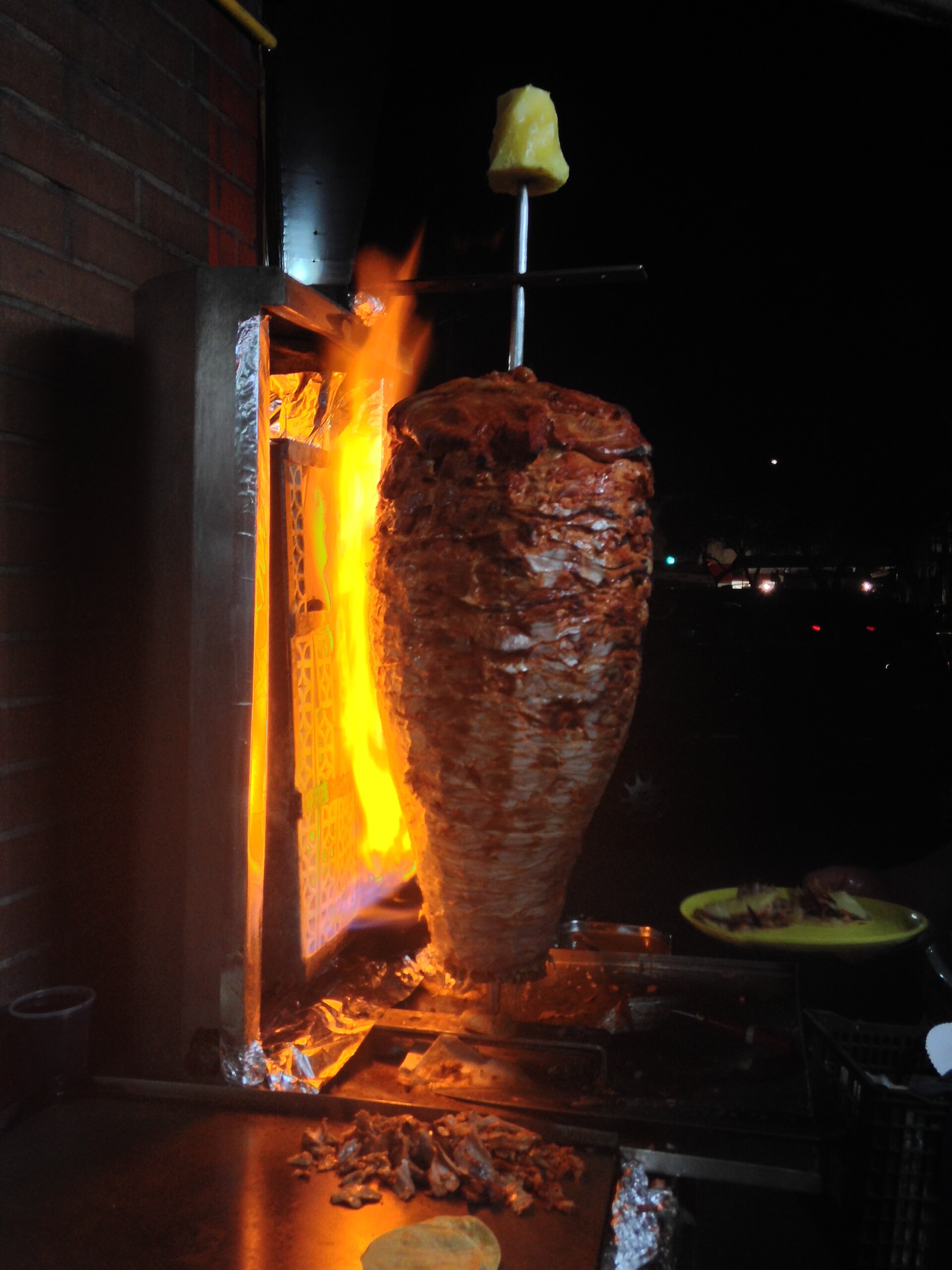
Tacos, correctly understood
A taco is a small soft corn tortilla with a filling, eaten in two or three bites, standing up, with salsa you add yourself. It is not a hard shell, it is not large, and it does not contain cheddar or lettuce. You will usually order two or three of several kinds.
- Al pastor — marinated pork carved from a vertical spit, with pineapple, onion and coriander. The technique came from Lebanese shawarma via migration to Mexico in the early twentieth century, and Mexico City made it its own. The city’s signature taco.
- Suadero — a cut of beef between belly and leg, confited in fat, tender and deeply savoury. Very Mexico City.
- Carnitas — pork slow-cooked in its own fat, from Michoacán. Order maciza for lean, surtida for mixed, and be brave about cuerito.
- Barbacoa — lamb steamed in maguey leaves in a pit. A weekend morning dish. Order it with consomé, the broth from the pit.
- Canasta or sudados — “basket tacos”, pre-filled and steamed in a covered basket, sold from bicycles in the morning. Cheap, soft and better than they sound.
- Guisado — stew tacos, a whole counter of pots: mole verde, chicharrón en salsa verde, rajas con crema, tinga. The best value lunch in the city.
- Cabeza, lengua, ojo, sesos — head, tongue, eye, brains. Genuinely excellent and unaccountably unpopular with visitors. Lengua in particular is a delicacy, not a dare.
- Pescado and camarón — fish and prawn, Baja-style, battered. A different tradition and worth its own outing.
Antojitos: the masa universe
- Quesadillas — and here is the joke this city tells about itself: in Mexico City a quesadilla does not automatically contain cheese. You have to ask for it. The rest of the country finds this incomprehensible and has been arguing about it for decades. Order con queso if you want cheese, and try the fillings instead: flor de calabaza (squash blossom), huitlacoche (corn fungus, earthy and black, a genuine delicacy), tinga, chicharrón prensado.
- Tlacoyos — oval, thicker masa patties stuffed with beans, fava or requesón, cooked on a comal and topped with nopal and cheese. Pre-Hispanic, still sold from a griddle on the pavement.
- Sopes, huaraches, gorditas — variations on masa with a topping. A huarache is shaped like a sandal, which is what the word means.
- Tamales — masa steamed in corn husk or banana leaf. Breakfast food. And the thing to try: the guajolota, a tamal in a bread roll, which is a carbohydrate inside a carbohydrate and is what a great many people in this city eat on the way to work.
- Tortas — sandwiches on telera or bolillo. The pambazo, dipped in guajillo sauce and griddled, and the torta ahogada, drowned in sauce, are the ones to know.
- Esquites and elotes — corn in a cup or on a stick, with mayonnaise, cheese, lime and chilli. Evening street food, and excellent.
The dishes people fly here for
- Mole — not one sauce but a whole family of them, sometimes with twenty or thirty ingredients, ground and cooked for hours. Mole poblano is the famous one; mole negro from Oaxaca is the deepest; mole verde and manchamanteles are worth seeking out. This is celebration food and it takes days to make.
- Chiles en nogada — poblano chillies stuffed with picadillo, covered in walnut cream and pomegranate seeds. Seasonal, roughly July to September, tied to the walnut and pomegranate harvest. Anywhere selling them in February is using preserved ingredients, and it is not the same dish.
- Pozole — hominy soup, white, green or red, with garnishes you add at the table. Thursday is traditional.
- Cochinita pibil — Yucatecan slow-roasted pork with achiote and sour orange, with pickled red onion and habanero. An import, and superb.
- Escamoles and chapulines — ant larvae and grasshoppers. Not novelties: escamoles are seasonal, expensive and delicate, and chapulines are a snack eaten by the handful. Both are pre-Hispanic and both are good.
- Chilaquiles — fried tortilla in salsa verde or roja, with crema, cheese, onion and an egg or chicken. The definitive Mexican breakfast and the thing you will miss most when you leave.
What to drink
- Aguas frescas — jamaica (hibiscus), horchata (rice and cinnamon), tamarindo, limón con chía. Sold everywhere, and the correct thing with tacos.
- Café de olla — coffee brewed in a clay pot with piloncillo and cinnamon.
- Atole and champurrado — thick warm masa drinks, breakfast and cold evenings. Champurrado is the chocolate one.
- Pulque — fermented maguey sap, viscous, sour, mildly alcoholic, pre-Hispanic and very much an acquired taste. The pulquerías that survive in the Centro are worth visiting for the rooms as much as the drink.
- Mezcal and tequila — sip, do not shoot; no salt and lime with a good one. Both are regional products with denominations of origin, and the range available here is far better than what gets exported.
Where to eat, by neighbourhood
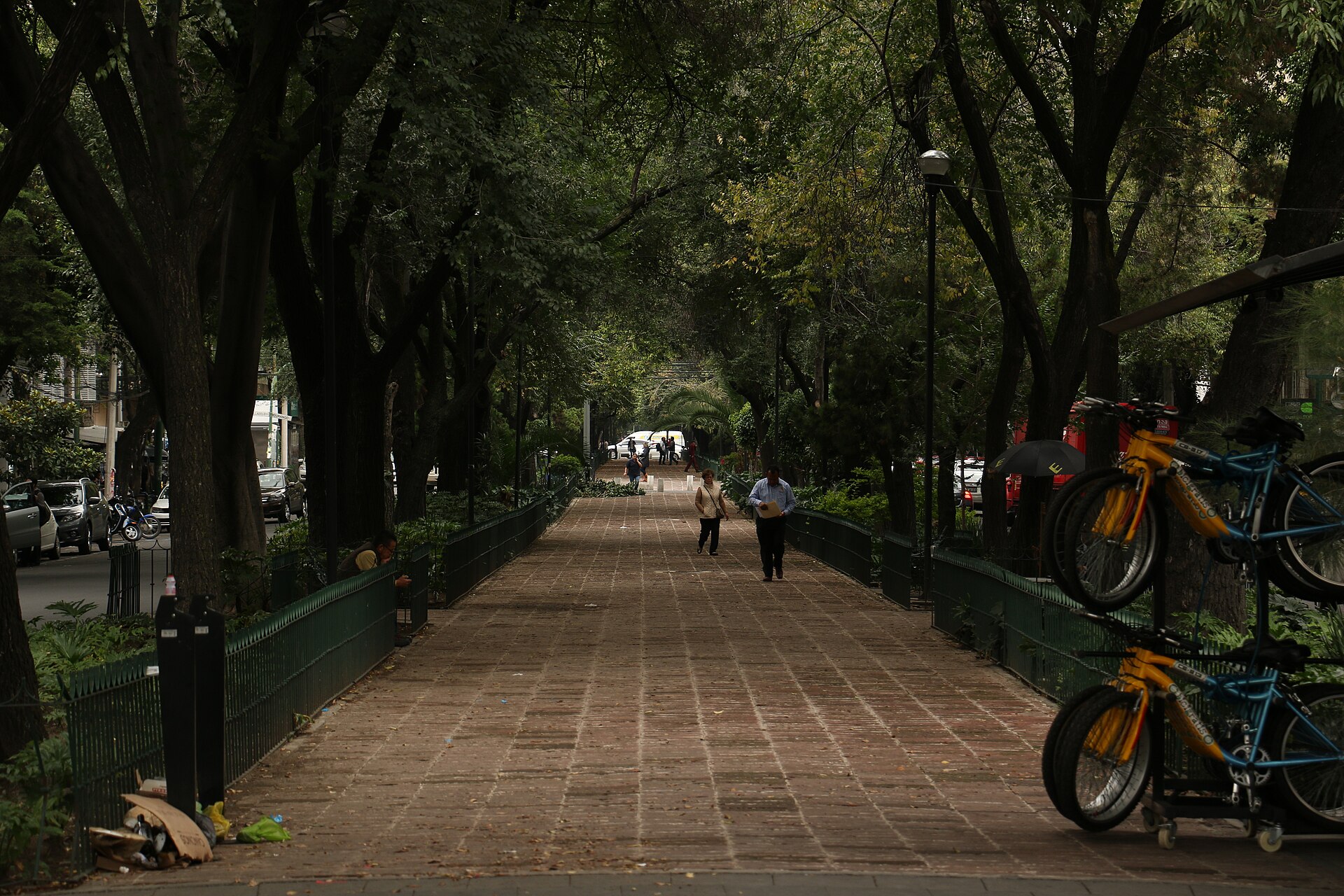
A working map rather than a list of addresses.
- Roma Norte — the densest concentration of restaurants, the most openings, the most English spoken, the highest prices. Excellent, and not representative. Álvaro Obregón, Colima, Orizaba.
- Condesa — similar, calmer, more terraces, more brunch. Michoacán and Nuevo León.
- Juárez — quietly as good as Roma and cheaper, on Havre, Versalles and Marsella. The most underrated eating district in the centre.
- Centro Histórico — the oldest institutions and the best cantinas, plus enormous market and street eating. Some restaurants here have been open for a century.
- Polanco — the international fine dining, including both of the city’s two-star restaurants. Superb, expensive, and the least Mexican-feeling place to eat in the city.
- Coyoacán — the market, tostadas, churros, and weekend crowds that are part of the point.
- Narvarte, Del Valle, Escandón, San Rafael — where people who live here eat. No English menus, no queue of visitors, half the price and frequently better. If you have more than four days, spend an evening in one of them.
- Mercado de San Juan — the specialist market, for produce and prepared food rather than a grocery shop.
- Mercado Medellín — Roma Sur, and the most pan-Latin American market in the city: Colombian, Venezuelan, Cuban and Central American stalls alongside Mexican ones.
Note that the visitor logistics of the big markets — hours, which ones to attempt, how they are laid out — are covered in our markets guide rather than here.
Cantinas, and the botana tradition
A cantina is not a bar, and treating it as one is how visitors miss the point of it. It is a room — often a very old room, with a tiled floor, a long wooden counter, swing doors and waiters in waistcoats who have worked there for decades — where the drinking is inseparable from the eating.
The tradition that matters is la botana. In a traditional cantina, food arrives with the drinks, in rounds, without being ordered and frequently without being charged for: a plate of something, then another, escalating as the afternoon goes on. Sopa de médula, chicharrón en salsa verde, frijoles charros, a few tacos de guisado, occasionally something quite elaborate by round four. The economics are that you keep drinking; the effect is one of the more generous forms of hospitality in Mexican food culture.
Several cantinas in the Centro Histórico have been open for well over a century and are worth visiting for the rooms as much as the food. Two conventions worth knowing before you go in. Many cantinas historically excluded women, and while that is long gone by law and largely gone in practice, a handful of the most old-fashioned still feel like male rooms; it is worth a glance through the door. And the good hours are mid-afternoon into early evening, not late — a cantina at two in the afternoon on a Friday is the real thing, and the same room at eleven at night is just a bar.
Order a caballito of tequila or a mezcal, or a beer, and let the botana come. Do not order a full meal on top of it; you will not need one.
Bakeries, sweets and coffee
Three things that will occupy more of your trip than you expect.
The panadería is a daily institution and it works on an unusual system: you take a metal tray and a pair of tongs from the door, walk around helping yourself, and hand the tray over at the till to be counted. Nobody serves you. Pan dulce — conchas with their shell-patterned sugar crust, orejas, cuernitos, garibaldis, the cinnamon-coated churro-adjacent things — costs very little and is meant to be eaten with coffee or with a hot milk drink in the early evening rather than as a dessert. The concha dipped into hot chocolate or café con leche is a national ritual, not a twee one.
Churros deserve a specific note, because the version here is not the frozen-supermarket thing: extruded fresh, fried to order, rolled in sugar, and served with thick chocolate for dipping in one of several consistencies — French, Spanish or Mexican, which differ by thickness and sweetness. The oldest churrerías in the Centro run late and are a legitimate end to an evening.
Coffee has quietly become very good here. Mexico grows a great deal of coffee — Chiapas, Veracruz, Oaxaca — and a specialist scene in Roma, Condesa, Juárez and the Centro now roasts and serves it seriously, which was not true fifteen years ago. Alongside that sits the traditional café de olla, brewed in clay with piloncillo and cinnamon, which is a different drink and worth ordering on a cold morning rather than as a novelty. The one thing to avoid is hotel coffee, which is uniformly the worst coffee available within two hundred metres of wherever you are standing.
Traditional sweets — dulces típicos — are their own world: cajeta, ate, camotes, amaranth alegrías, crystallised fruit, tamarind sweets coated in chilli. Buy them in a market rather than an airport.
Food tours and cooking classes
Both are genuinely worth it here, for different reasons, and both are things this page would recommend over a restaurant booking if you had to choose.
A food tour earns its cost on the first evening of a trip rather than the last, because what it actually buys is not the food but the decoding: which stand, what to say, how to judge a salsa, why that queue is there. Look for small groups, a route through markets and stands rather than restaurants, and a guide who can explain the food rather than just lead you to it. Evening taco tours and morning market tours are the two formats that work best.
A cooking class is the better buy if you have a spare half-day and any interest in the technique. The good ones start at a market, so you learn to shop before you learn to cook, and they teach something with an actual method behind it — mole, salsas ground in a molcajete, hand-pressing tortillas from masa — rather than assembling ingredients someone else prepared. Ask whether you go to the market, and whether you make the tortillas.
Book either one to two weeks ahead. Smaller operators frequently have midweek space at shorter notice, and midweek is the better experience anyway.
The fine dining, with the numbers dated
The Michelin Guide arrived in Mexico in 2024, and the position as of the 2026 selection, revealed on 20 May 2026, is this: 29 starred restaurants nationally, of which 11 are in Mexico City — two with two stars and nine with one, and none in the country with three. The city also carries a further 26 Bib Gourmand entries, which is the more useful list for most visitors because it flags good value rather than ambition.
Pujol and Quintonil, both in Polanco, hold the two stars and both retained them. Rosetta, Máximo and Sud 777 are among the one-star holders; Gaba and La Once Mil were new entries in the 2026 selection. And the fact that says most about this city’s food culture: Taquería El Califa de León was the first taco stand in Mexico to be awarded a Michelin star, in the guide’s inaugural Mexican selection — a counter serving four things, in a room you could cross in three steps.
Two honest caveats. These ratings change every May, so check the current selection rather than trusting the year attached to any article, this one included. And the top tables here book out one to three months ahead, release seats at unpredictable times, and are not remotely the only way to eat extraordinarily well in this city — a point the Califa de León star makes better than any argument.
What it costs
Planning brackets in pesos, per person, checked September 2026. These are what things broadly cost, not quoted prices from named venues.
| Meal | Bracket, MXN | Notes |
|---|---|---|
| A taco | 15–35 each | Three or four makes a meal. Al pastor at the lower end, seafood higher. |
| Street breakfast | 50–90 | Tamal and atole, or a guajolota and coffee |
| Market comida corrida | 80–150 | Soup, rice, a main, agua fresca. The best value meal in Mexico. |
| Sit-down breakfast, Roma or Condesa | 150–300 | Chilaquiles and good coffee |
| Casual restaurant dinner | 300–600 | Two courses, a drink |
| Serious restaurant, à la carte | 800–1,600 | Before wine |
| Tasting menu at the top | 2,500–5,000+ | Before pairings, which roughly double it |
| Coffee | 45–90 | The specialist coffee scene here is genuinely good |
Two structural notes. IVA at 16% is usually already included in a menu price in Mexico, unlike the United States — check whether the menu says IVA incluido. And tipping is 10 to 15% in restaurants, sometimes added as a propina sugerida on the bill, which you are entitled to adjust. Street stalls and markets are not tipped.
How to order without embarrassment
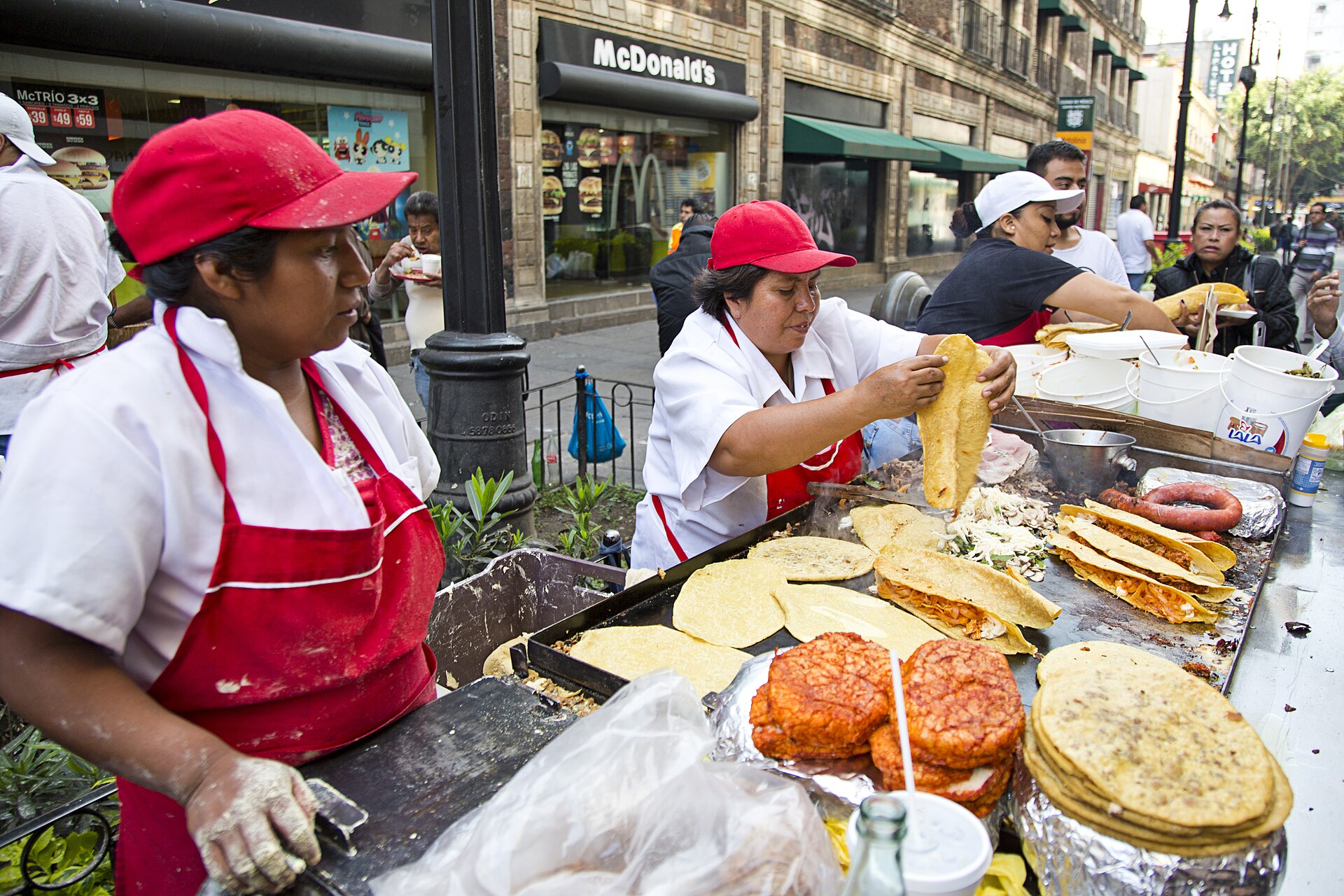
Nobody expects you to speak Spanish, and a little goes a very long way.
- ¿Qué me recomienda? — “What do you recommend?” The single most useful sentence available to you. It will get you the right thing and it will please whoever you ask.
- Dos de pastor, por favor. — Two al pastor. You order by number and type, not by “a taco of”.
- ¿Con todo? — the question you will be asked: “with everything?” — onion and coriander. Say sí unless you have a reason not to.
- ¿Pica? — “Is it spicy?” Ask before you spoon on a salsa. The answer poquito from a Mexican cook is not calibrated to you.
- Sin cebolla / sin cilantro — without onion, without coriander.
- La cuenta, por favor. — the bill. In a restaurant it will not come until you ask; that is politeness, not neglect.
A few conventions worth knowing. At a stand you eat standing at the counter and pay at the end, usually in cash. Salsas are self-service and vary enormously in heat — take a little first. Limes are on the counter and are used on everything. And nobody minds you pointing at what the person next to you is having; it is how half the orders here get placed.
Dietary requirements, realistically
Vegetarian
Much easier than its reputation. Quesadillas with squash blossom, huitlacoche or mushrooms; tlacoyos; sopes; nopales; mole with vegetables; chiles rellenos; enfrijoladas. The catch is invisible: beans and rice are often cooked with lard or chicken stock, and a “vegetarian” dish may not be. Ask ¿lleva manteca? — does it have lard — and ¿lleva caldo de pollo? Roma and Condesa have a substantial explicitly vegetarian and vegan scene if you would rather not negotiate.
Vegan
Harder on the street, easy in the central colonias, where dedicated vegan taquerías and restaurants are now common. Sin queso, sin crema, sin manteca covers most of it.
Gluten
Structurally favourable: corn tortillas are naturally gluten-free and corn is the base of most of the food described on this page. The hazards are wheat tortillas (common in the north, less so here), tortas, and cross-contamination on a shared griddle. Say soy celíaco or soy celíaca; coeliac awareness is growing but is not universal, so a written card in Spanish is worth carrying if you are highly sensitive.
Allergies
Nuts appear in moles, and sesame in many of them. Dairy is pervasive. Allergy labelling is not what it is in Europe, so be explicit, be specific, and do not rely on a menu description. For a severe allergy, restaurants are safer than stands, purely because you can have a longer conversation.
Children
Mexico City is very welcoming to children in restaurants. The food is not, by default, spicy — heat is added at the table from salsas, which means a plain quesadilla or a plate of carnitas suits most children fine.
Booking, and what needs it
| Type of place | Book ahead? | Fallback if you did not |
|---|---|---|
| Starred tasting menus | 1–3 months, and set a reminder for when seats release | Ask about bar seating or a cancellation list, or eat at a Bib Gourmand instead |
| Well-known Roma and Condesa restaurants | A few days to two weeks; more for a weekend evening | Turn up at 13:30 for comida rather than 21:00 for dinner |
| Traditional Centro institutions | Usually not, but weekends are busy | Go on a weekday |
| Cantinas | No | — |
| Markets and street stands | Never | — |
| Cooking classes and food tours | 1–2 weeks | Smaller operators often have same-week space midweek |
One timing trick worth having: the hardest restaurant in the city to get into at nine at night is often available at two in the afternoon, because comida is when Mexicans eat and dinner is when visitors do. The kitchen is the same.
What to verify before you go
- Whether the place still exists. Restaurant turnover in Roma and Condesa is high. Check a recent review or a current social media post, not a two-year-old list.
- Opening days. Many traditional places close Mondays; barbacoa and carnitas specialists often open only Saturday and Sunday mornings and sell out by midday.
- Whether they take cards. Many of the best places do not. Carry cash.
- Whether the seasonal dish is actually in season, chiles en nogada above all.
- The current Michelin selection, if that is how you are choosing. It is reissued every May.
Five meals that will define your trip
If you take nothing else from this page, take this sequence. It costs very little, it requires no bookings, and it will teach you more about the city than any single restaurant could.
- Chilaquiles for breakfast, at a place with a queue of people going to work. Green or red, with an egg on top. Around ninety pesos. This is the meal people miss most after they leave.
- A comida corrida in a market, at half past two. Soup, rice, a main, an agua fresca, for something in the region of a hundred pesos. It is the meal that runs this country, and it is served in every market in the city.
- Tacos al pastor at eleven at night, standing up. Three of them, with everything, and a salsa you should taste before you commit to. Watch the carving; the good ones flick the pineapple off the top of the trompo onto the tortilla in one motion.
- A quesadilla with squash blossom or huitlacoche from a woman with a comal on the pavement. Pre-Hispanic ingredients, cooked in front of you on a griddle, for about forty pesos. Nothing on a tasting menu will be more interesting than the huitlacoche.
- A slow afternoon in a cantina with the botana arriving in rounds. Not for the drink. For the room, the waiters, and the fact that somewhere in this city that arrangement has been going on all afternoon, every afternoon, for a hundred years.
Nothing on that list needs a reservation, English, or more than a few hundred pesos. That is the actual argument of this page.
Frequently asked questions
What food is Mexico City famous for?
Tacos al pastor above everything — marinated pork carved from a vertical spit with pineapple, a technique brought by Lebanese migrants and made local here. Beyond that: suadero tacos, tlacoyos, quesadillas with squash blossom or huitlacoche, tamales and the guajolota, esquites, and the whole tradition of market comida corrida.
Is street food in Mexico City safe to eat?
Broadly, if you choose for turnover and temperature — busy stands, food cooked hot in front of you, more caution with raw salsas and unpeeled fruit early in the trip. Our safety guide covers this properly. Avoiding street food entirely costs you most of what makes eating here remarkable.
What time do people eat in Mexico City?
Breakfast from about seven, the main meal — la comida — from two to half past four, something light in the evening, and tacos properly late, from about ten at night. Restaurants fill at three, not at eight.
Why do quesadillas in Mexico City not have cheese?
Nobody has satisfactorily explained it and the rest of the country has never accepted it. In the capital, a quesadilla is masa with a filling, and cheese is one option among several. Ask for it con queso — and try the flor de calabaza or huitlacoche instead.
How much should I budget for food?
You can eat extremely well on 300 to 500 pesos a day using markets, stands and comida corrida. A mid-range day with one sit-down dinner runs 800 to 1,200. A tasting menu at the top is 2,500 to 5,000 before pairings. IVA is usually included in menu prices; tip 10 to 15% in restaurants and not at stands.
Do I need to book restaurants in advance?
Only at the top end, where one to three months is realistic, and for popular Roma and Condesa dinners on a weekend. Everything else — markets, stands, cantinas, traditional Centro institutions on a weekday — takes you as you come.
When are chiles en nogada available?
Roughly July to September, with the walnut and pomegranate harvest. It is a genuinely seasonal dish and out-of-season versions are not the same thing.
Can I eat vegetarian or vegan here?
Easily in the central colonias, and more easily on the street than people expect — quesadillas, tlacoyos, sopes and nopales are all naturally meat-free. Watch for lard in beans and chicken stock in rice, and ask directly.
Is Mexican food in Mexico City spicy?
The cooked food generally is not. Heat comes from salsas added at the table, which puts you in control. Ask ¿pica? and start with a small amount, because a Mexican cook’s idea of poquito is not yours.
How many Michelin stars does Mexico City have?
Eleven starred restaurants in the 2026 selection revealed on 20 May 2026 — two with two stars, nine with one, and none in the country with three — plus 26 Bib Gourmand entries. Pujol and Quintonil hold the two stars. The selection is reissued each May, so check the current list.
Museum days and eating hours collide here more than in most cities. Our guide to the best museums in Mexico City builds comida at two o’clock into both of its timed routes for exactly that reason — a museum booking at three and a proper meal cannot both happen.
Buying is a different skill from eating, and the markets reward it: prices are posted and fixed in food markets, negotiable at craft stalls, and cash is assumed almost everywhere. Our Mexico City markets and shopping guide covers market-by-market navigation, provenance, packing and the export rules that catch people out at the airport.
Related Mexico City Guides
- Things to Do in Mexico City — what you are eating between.
- Mexico City Itineraries — including why a 15:00 museum slot and a proper comida cannot both happen.
- Is Mexico City Safe for Tourists — street food, water and stomach upsets, handled honestly.
- Where to Stay in Mexico City — the neighbourhoods above, judged as bases rather than as dinner.
- Best Time to Visit Mexico City — including the months when chiles en nogada and the seasonal dishes appear.
Dedicated guides to the best tacos, street food, restaurants, breakfast, coffee, food tours, cooking classes, vegetarian and vegan eating, gluten-free dining and fine-dining reservations are being published to this section over the coming weeks.
Sources and verification
- MICHELIN Guide Mexico 2026 selection, revealed 20 May 2026: 29 starred restaurants nationally; Mexico City holding 11 — two two-star and nine one-star — with no three-star restaurants in Mexico, plus 26 Bib Gourmand entries. Pujol and Quintonil retained two stars; Rosetta, Máximo and Sud 777 among the one-star holders; Gaba and La Once Mil new entries. Taquería El Califa de León was the first taco stand in Mexico to hold a star, from the guide’s inaugural Mexican selection. Checked September 2026. The selection is reissued each May.
- Chiles en nogada seasonality: generally July to September, tied to the walnut and pomegranate harvest. Checked September 2026.
- IVA at 16% on food and drink, normally included in Mexican menu prices; tipping convention of 10–15% in restaurants, with propina sugerida lines on a bill being adjustable. Checked September 2026.
- Street food guidance: Mexico City’s official visitor portal publishes street food and local-dish pages; the turnover-and-temperature approach given here is consistent with standard public health advice. Checked September 2026.
- Water: tap water is not generally drunk; hotels and rentals supply purified water, and ice in established venues is made commercially from purified water. Checked September 2026.
What this page does not claim. Nobody from this site has eaten at the restaurants named here, and no meal, menu or price on this page was tested in person. The cost brackets are planning ranges rather than quoted prices, and no venue price survey was run. Named restaurants appear as illustrations of a category with their guide status dated, not as tested recommendations — check that any of them is still open and still doing what this page says before you travel to it. Michelin ratings are reissued every May and the figures here are explicitly tied to the 20 May 2026 selection. Where a dish is seasonal or regional, the page says so rather than implying it is available everywhere, always.
Photo Credits
Mercado Medellín, Roma Sur: Puesto de verduras en el Mercado Medellín by Karinadejesus, CC BY-SA 4.0, via Wikimedia Commons.
Trompo of tacos al pastor: Trompo de tacos al pastor by ProtoplasmaKid, CC BY-SA 4.0, via Wikimedia Commons.
The Roma Norte and street stand photographs are credited on their original appearance in this site’s media library.