There are more than 150 museums in this city, which is more than almost anywhere on earth, and the list of the best museums in Mexico City that most guides produce is not wrong so much as useless: it ranks them without telling you the two things that actually determine whether your visit works. Which is that almost all of them close on Mondays, and that since 1 January 2026 Sunday is no longer free if you are a foreign visitor — a change that nearly every English-language page about this city has failed to make.
So this page does it the other way round. The rules first, because they decide your week. Then the museums that are genuinely worth your time, with who each one suits, what to look for inside, how long it actually takes, and what to do instead when it is shut. There are also two museums here that most guides get wrong, and one that has just reopened after five years, which almost nobody has caught up with.
The two rules that decide your museum week
Monday closes almost everything
The Museo Nacional de Antropología, the Templo Mayor, Chapultepec Castle, the Museo Frida Kahlo, the Palacio Nacional and the Museo del Palacio de Bellas Artes all close on Mondays. That is most of this page.
Open on Mondays: Teotihuacán, the Basílica de Guadalupe, the Torre Latinoamericana deck, the markets, and the parks. If your trip contains a Monday, that is the day for the day trip, and you should stop trying to rearrange it.
Sunday is no longer free for visitors
A reform to the Ley Federal de Derechos, published in the Diario Oficial in November 2025 and in force from 1 January 2026, did two things at once. It raised admission at INAH Category I sites to 210 pesos for foreign visitors, against 105 for Mexican nationals and documented foreign residents. And it restricted free Sunday entry to Mexican nationals and legal residents only. If you are here on a tourist permit, Sunday costs exactly what Tuesday costs — and is considerably more crowded, because it is still free for everyone else.
Free with valid identification regardless of nationality: under-13s, students and teachers, over-60s with an INAPAM card, and visitors with disabilities. Category II sites are 155 and 85.
The exception worth planning around: the Museo del Palacio de Bellas Artes is run by INBAL, not INAH. Different institution, different rules — and it remains free to everybody on Sundays. So does the Museo Soumaya, every day, because it has never charged at all. And the Museo Jumex is free on Tuesdays. A Sunday built around Bellas Artes and a Tuesday built around Polanco are the two best-value days available to a visitor here.
The admission table
Checked September 2026. INAH revises its tariffs every January, so verify anything you read here that is more than a year old.
| Museum | Visitor | National / resident | Hours | Closed |
|---|---|---|---|---|
| Museo Nacional de Antropología | 210 | 105 | Tue–Sun 09:00–18:00 | Mon |
| Templo Mayor and site museum | 210 | 105 | Tue–Sun 09:00–17:00 | Mon |
| Chapultepec Castle (Museo Nacional de Historia) | 210 | 105 | Tue–Sun 09:00–17:00 | Mon |
| Museo Frida Kahlo (Casa Azul) | 320 | 160 | Tue 10–18, Wed 11–18, Thu 10–21, Fri–Sun 10–18 | Mon |
| Museo Dolores Olmedo | 432 | 162 | Tue–Sun 10:00–18:00 | Mon |
| Museo del Palacio de Bellas Artes | ~90 | ~90 | Tue–Sun 10:00–18:00 | Mon. Free to all Sundays. |
| Palacio Nacional (Rivera murals) | Free | Free | Tue–Sun, approx. 09:00–17:00 | Mon, holidays, and at short notice |
| Museo Soumaya | Free | Free | Tue–Sun, typically 10:30–18:30 | — |
| Museo Jumex | Paid | Paid | Approx. 10:00–17:00 | Free Tuesdays. |
| Torre Latinoamericana mirador | 220 adult / 170 child 4–11 | Same | Daily 09:00–22:00 | Nothing. Open Mondays and late. |
Two practical notes on Antropología specifically: lockers cost 10 pesos and a video permit is 65. At Bellas Artes a photography permit is 30. These are small sums that catch people out at the door with no cash.
The one that has to be booked before you leave home
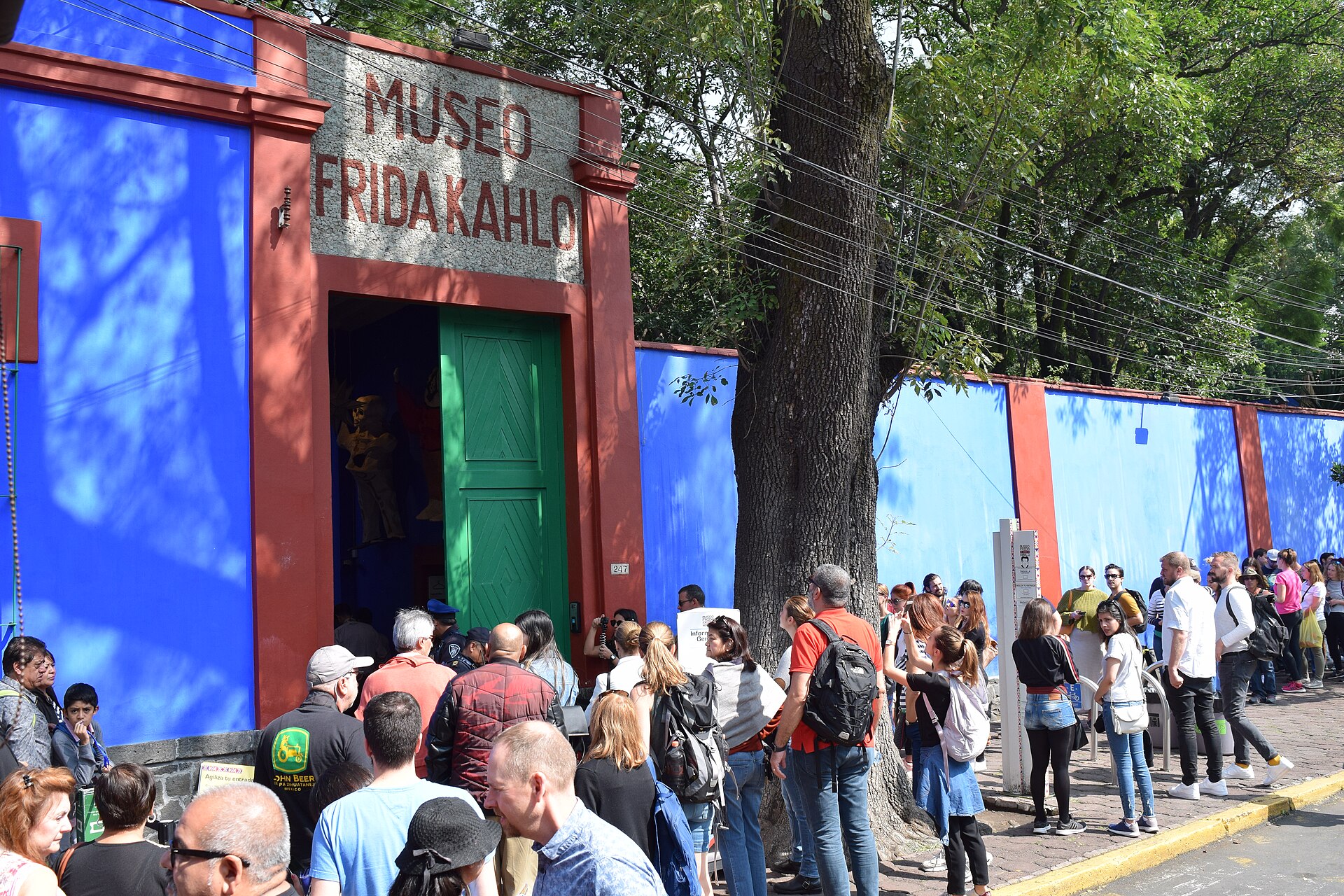
The Museo Frida Kahlo sells tickets online only. There is no box office. None. Turning up is not an option, and people do it every day and are sent away.
Book as soon as your dates are fixed — popular slots go weeks ahead — and note three things almost nobody mentions. It is closed on Mondays. Your ticket also covers the Museo Diego Rivera-Anahuacalli, Rivera’s extraordinary volcanic-stone building further south, which most ticket-holders never realise they have already paid for. And it closes entirely on 1 May, 16 September, 8 and 25 December and 1 January, with shortened hours of 10:00 to 14:00 on 15 September, 24 December and 31 December.
Concessions: students and teachers 60, over-60s and children aged 6 to 12 at 30, under-6s and visitors with disabilities free.
If you cannot get a ticket: go to Coyoacán anyway. The Anahuacalli on its own is worth the trip, the market is excellent, and the Museo Nacional de Culturas Populares is next to the plaza. The Casa Azul is a small house and a queue-managed experience; the neighbourhood around it is the better part of the day for a lot of people.
The essential five
Museo Nacional de Antropología
Who it suits: everybody. This is not a museum for people interested in archaeology; it is the reason a great many people come to Mexico at all.
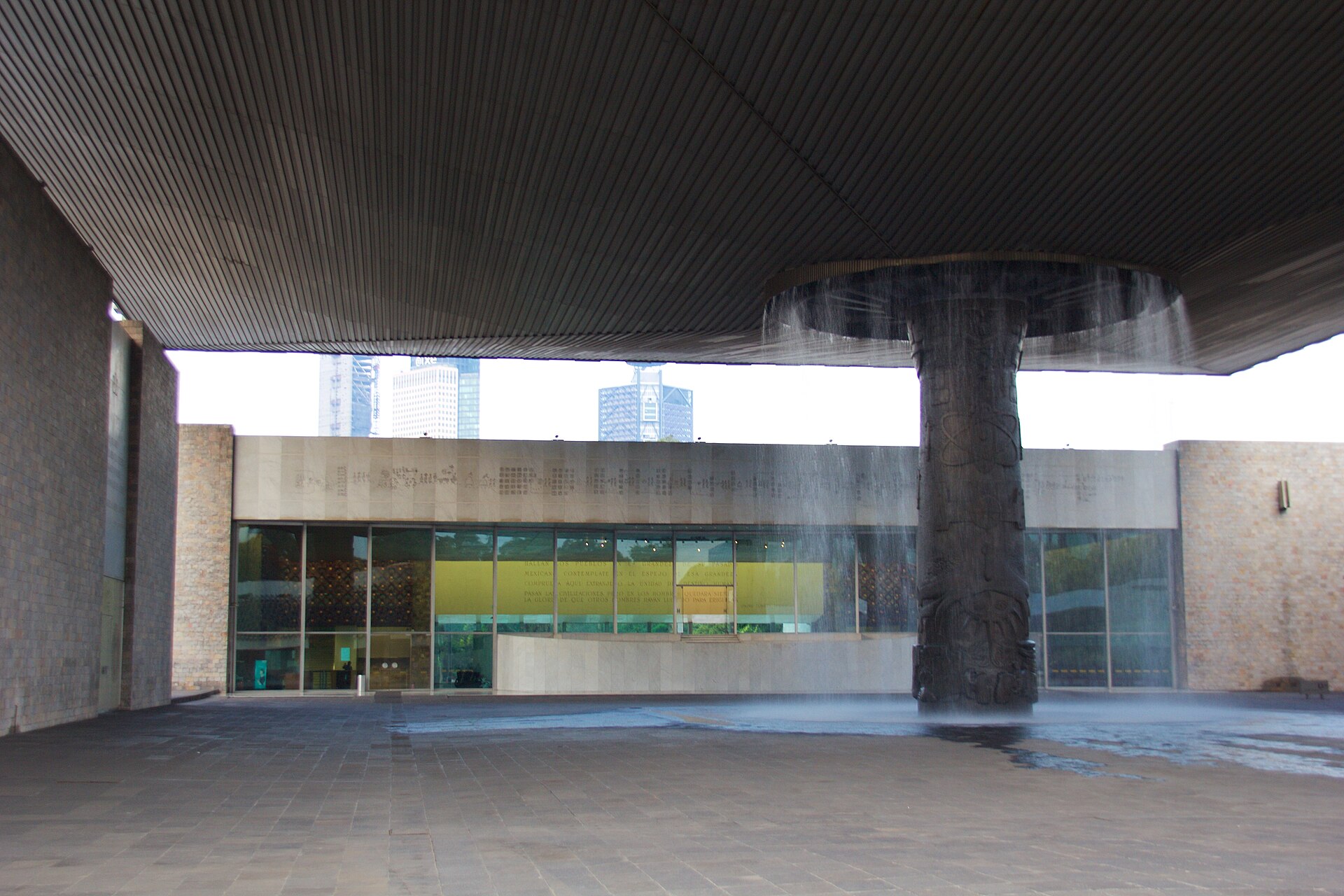
Twenty-two permanent halls plus two temporary ones, arranged around a courtyard under El Paraguas — a vast concrete canopy carried on a single fluted column with water falling from its edge, one of the great pieces of twentieth-century architecture anywhere.
What to actually look at: the Mexica hall, with the Sun Stone, is where everyone goes and it deserves it. But the halls people wish they had left time for are Maya — the Pakal tomb reconstruction from Palenque — and Oaxaca, for the Zapotec and Mixtec material. Teotihuacán hall is worth doing before you visit the site rather than after. The upper floor holds the ethnography of living indigenous cultures and is almost always empty, which is its own recommendation.
How long: three hours as an absolute minimum; a full day if you are the sort of person who reads panels. Go at 09:00.
Museo Frida Kahlo
Who it suits: almost everyone, with a caveat. It is a house, not a gallery — the interest is in the kitchen, the garden, the studio, the wheelchair at the easel, the corsets. There are relatively few major paintings. If you came for the art, the Dolores Olmedo and the Museo de Arte Moderno hold more of it.
How long: ninety minutes, and it is timed-entry, so you will not be able to linger indefinitely.
Chapultepec Castle — Museo Nacional de Historia
Who it suits: anybody interested in how modern Mexico was made, and anybody who likes a view.
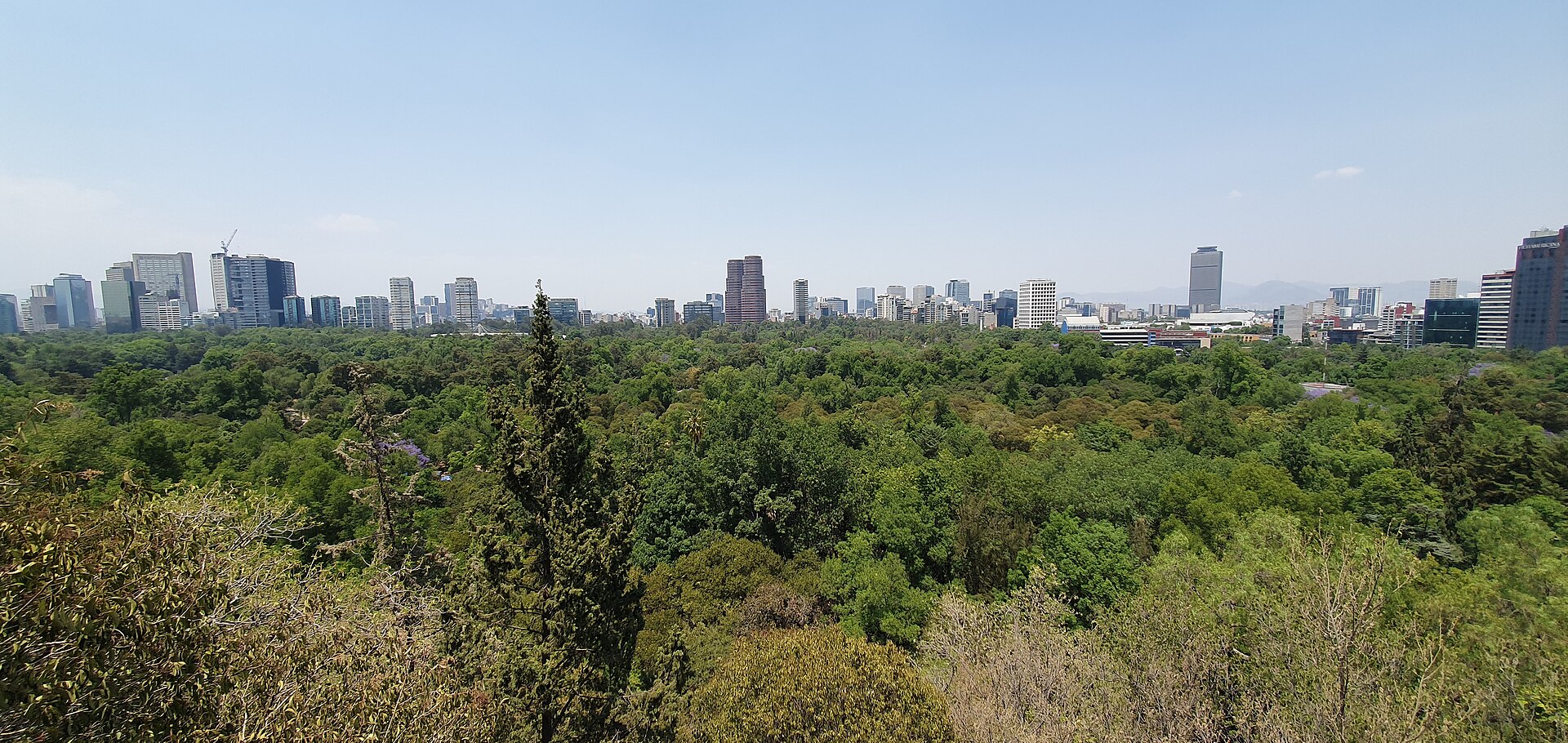
It sits on the hill the Mexica called Chapultepec, was a military academy, and became the residence of Maximilian and Carlota during the brief Second Mexican Empire — which makes it the only royal castle in the Americas. Their apartments are preserved, there are murals by Siqueiros, O’Gorman and Orozco, and the stained glass on the terrace level is remarkable.
How long: two hours, plus twenty minutes of uphill walking to get there. There is a shuttle if the climb is a problem, but it is not always running.
Templo Mayor
Who it suits: anybody standing in the Centro Histórico, which is to say everybody.
The Great Temple of Tenochtitlan, found by accident in 1978 by electricity workers laying cable, and excavated since in the middle of a working city. The ruins themselves are hard to read — this is a stack of seven superimposed temples, each built over the last — so the honest advice is that the site museum is the better half, and that this is one of the few places in the city where a guide genuinely earns their fee. The Coyolxauhqui monolith and the Tlaltecuhtli stone are the two things to make sure you see.
How long: ninety minutes to two hours.
Museo del Palacio de Bellas Artes
Who it suits: anybody at all interested in the muralists, and anybody who likes buildings.
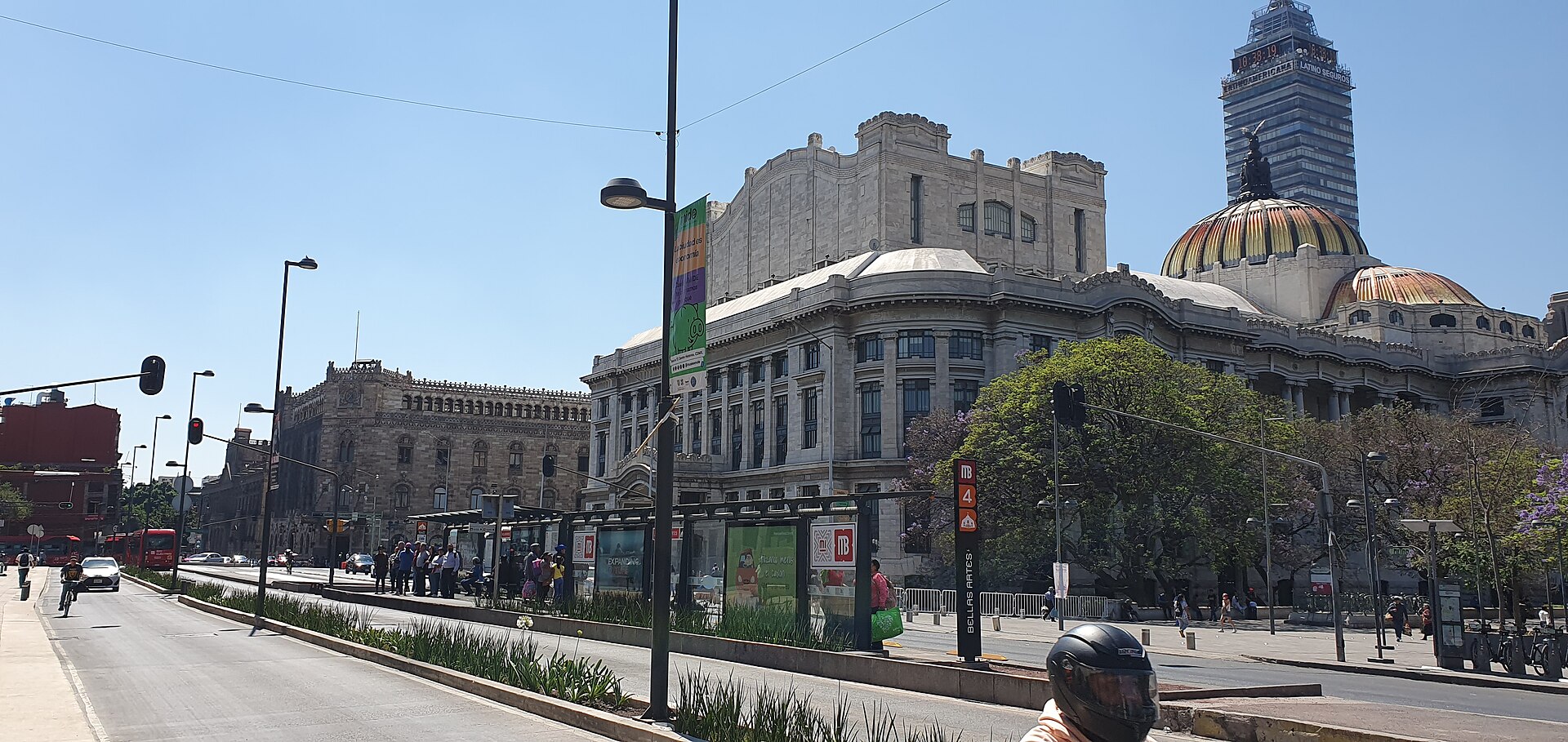
An Art Nouveau exterior in Carrara marble with an Art Deco interior, begun under Porfirio Díaz and finished after the Revolution, which is why it changes style halfway up. The museum on the upper floors holds seventeen murals, including Rivera’s Man, Controller of the Universe — his recreation of the fresco that Rockefeller Center destroyed in New York for including Lenin — alongside major Orozco, Siqueiros, Tamayo and González Camarena.
The vestibule is free, so you can walk in and see the building without paying. The Tiffany glass curtain in the theatre itself is only visible if you attend a performance — most reliably the Ballet Folklórico, which typically runs Wednesday and Sunday evenings plus a Sunday matinée.
How long: an hour for the murals, two if the temporary exhibition is good.
The free ones, which are seriously good
- Palacio Nacional — free, and it holds Diego Rivera’s mural cycle of Mexican history on the main staircase, which is arguably the single most important thing to see in the country. Bring photo ID for over-18s, expect security screening, and leave large bags, tripods and food behind. Free guided tours run in Spanish and English, most reliably Saturday and Sunday around 11:00. It closes on national holidays and occasionally at short notice, so never make it the only thing on a morning.
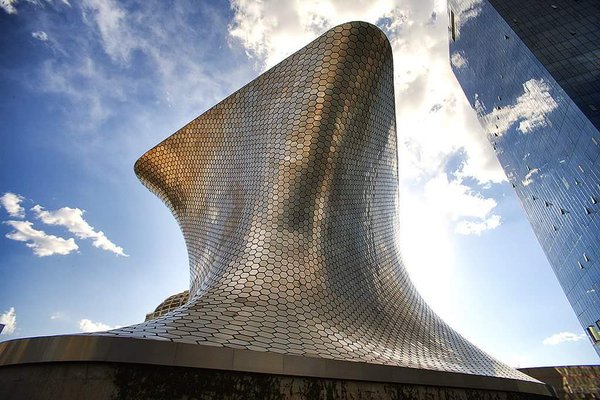
- Museo Soumaya — free, always, with no ticket and no booking. Carlos Slim’s collection in a building clad in aluminium hexagons at Plaza Carso. The collection is uneven and heavy on Rodin, and the building is the point. Go up in the lift and walk down the spiral.
- Museo Jumex — across the plaza from the Soumaya, a David Chipperfield building holding one of Latin America’s most serious contemporary collections. Free on Tuesdays.
- Colegio de San Ildefonso and the Secretaría de Educación Pública — the murals here are where the movement started, before Bellas Artes. The SEP courtyards hold well over a hundred Rivera panels and entry is free. Ten minutes’ walk from the Zócalo and almost empty.
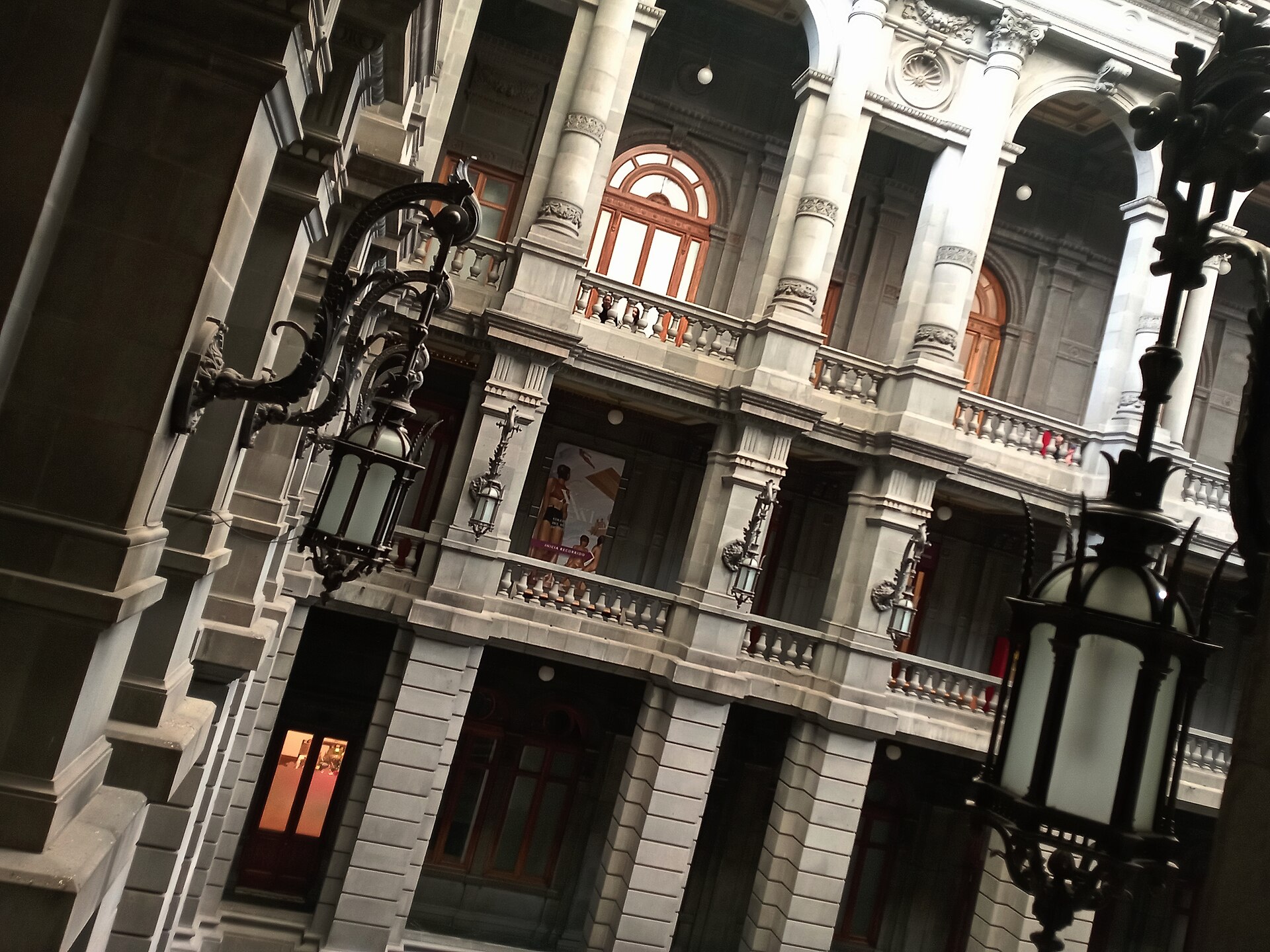
- Museo Nacional de Arte (MUNAL) — paid, but modest, and the building is a Porfirian palace of extraordinary confidence. Mexican art from the colonial period to the mid-twentieth century, which fills the gap between the pre-Hispanic collections and the muralists.
The one that just reopened, and that most guides still list as closed
The Museo Dolores Olmedo reopened on 30 May 2026, after more than five years shut — closed by the pandemic in 2020, then caught in a long and contested proposal to move the collection to the Aztlán park in Chapultepec. That relocation was cancelled, and the museum has reopened at its original site in La Noria, Xochimilco, in the seventeenth-century hacienda where Dolores Olmedo assembled it.
This matters because the collection is not a footnote. It holds one of the most significant private groupings of Diego Rivera and Frida Kahlo works anywhere, and for a long time it was the place to see Kahlo paintings rather than Kahlo’s kitchen.
Current admission is 432 pesos for foreign visitors, 162 for Mexican nationals, and 70 for students, teachers, Xochimilco residents and over-60s, open Tuesday to Sunday from 10:00 to 18:00. Note that the foreign-visitor premium here is much steeper than at INAH sites, and that almost every English-language museum list still describes this museum as closed. Check its own channels before you make the journey south — it has been reopen for only a few months and arrangements at a newly reopened museum change.
The second tier, which is better than most cities’ first
This is where the argument that Mexico City is the best museum city in the Americas is actually won. Any of these would be the headline institution somewhere else.
- Museo Tamayo, in Bosque de Chapultepec — Rufino Tamayo’s own international modern collection in a low, brutalist, half-buried building that is a pleasure to walk through. Small enough to do in an hour, and almost never crowded.
- Museo de Arte Moderno, also in the park — twentieth-century Mexican art, and the home of Frida Kahlo’s Las dos Fridas, which is the painting a great many people go to the Casa Azul hoping to see and do not find there.
- Museo Diego Rivera-Anahuacalli — Rivera built it from black volcanic stone to house his own collection of pre-Hispanic pieces, and it looks like a temple crossed with a bunker. Genuinely strange and genuinely moving. Included in the Casa Azul ticket, which is the best unclaimed bargain in the city.
- Museo Casa Estudio Diego Rivera y Frida Kahlo, San Ángel — Juan O’Gorman’s 1930s functionalist pair of houses, one red, one blue, joined by a rooftop bridge. Among the first modernist buildings in the Americas, and a better piece of architecture than either of them ever lived in otherwise.
- Casa Luis Barragán, Tacubaya — the architect’s own house, a separate UNESCO World Heritage listing, and one of the most affecting interiors anywhere. Visits are by advance booking only and in small guided groups, so this genuinely needs planning ahead. If architecture is any part of why you travel, put it first.
- Museo Franz Mayer, by the Alameda — decorative arts in a former hospital, with a cloister courtyard that is one of the calmest places in the Centro and a café in it.
- Museo de Arte Popular — Mexican folk art in an Art Deco former fire station. Alebrijes, textiles, ceramics, and the annual alebrije parade originates here. The best museum shop in the city by a distance.
- Museo Memoria y Tolerancia, at the Alameda — the Holocaust and other genocides, and contemporary Mexican themes including disappearances. Serious, well made and emotionally heavy; it is not a filler between other things.
- Museo Nacional de las Culturas del Mundo — free, in the old colonial mint building behind the Palacio Nacional, and almost always empty.
- MUAC, at Ciudad Universitaria — the university’s contemporary art museum, on a UNESCO-listed campus that is worth the trip south on its own for the O’Gorman library mosaic and the Siqueiros reliefs.
- Museo del Objeto del Objeto (MODO), Roma — design and everyday objects, small, idiosyncratic and a good hour on a wet afternoon in a neighbourhood you are probably already in.
Who should visit what
Matching the museum to the traveller, rather than ranking them against each other.
- First visit, three days, one museum day only. Antropología in the morning, Templo Mayor and the Palacio Nacional murals in the afternoon. That is the irreducible core and everything else is addition.
- Here for Frida Kahlo. Book the Casa Azul the day you book flights. Then use the included Anahuacalli ticket, and add the Museo de Arte Moderno for Las dos Fridas and the Dolores Olmedo for the paintings. That is a genuinely full two days and it is a much better Kahlo trip than the house alone.
- Here for the muralists. Palacio Nacional, Bellas Artes, San Ildefonso, the SEP courtyards, Chapultepec Castle, and the Polyforum Siqueiros. Almost all of it free, and one exceptional day.
- Architecture. Casa Luis Barragán (book ahead), the Casa Estudio in San Ángel, Ciudad Universitaria, the Soumaya, the Jumex, and Antropología’s canopy. This is arguably the strongest twentieth-century architecture itinerary in the Americas.
- Contemporary art. Jumex, MUAC, Tamayo, and the commercial galleries in Roma and San Miguel Chapultepec, most of which are free and open to anyone who walks in.
- Short on money. Palacio Nacional, Soumaya, San Ildefonso and the SEP, the Museo Nacional de las Culturas, Bellas Artes on a Sunday and Jumex on a Tuesday. That is several days of first-rate museum-going for almost nothing.
- Travelling with teenagers. Templo Mayor, Chapultepec Castle and the Museo de Arte Popular tend to land better than the big survey collections. The Torre Latinoamericana is a reliable reset.
- Limited mobility. Antropología, the Soumaya, Jumex, Bellas Artes and the Franz Mayer are the workable ones. Chapultepec Castle and the Casa Azul are the difficult ones.
A timed route: two museum days that work
Day one — the Centro, on foot
- 09:00 Templo Mayor, before the square fills. Ruins first, museum second.
- 11:00 Palacio Nacional for the Rivera staircase. ID in hand.
- 12:30 Walk to the Colegio de San Ildefonso or the SEP courtyards — five minutes, free, and the origin of everything you just looked at.
- 14:00 Comida. This is not optional; restaurants fill at three and you will have been on your feet for five hours.
- 16:00 Museo del Palacio de Bellas Artes, or the MUNAL if you want fewer people.
- 19:00 Torre Latinoamericana at dusk, which is open until 22:00 and is at its best just after rain.
Day two — Chapultepec
- 09:00 Museo Nacional de Antropología, at opening. Three hours minimum.
- 12:30 Walk through the park and up to Chapultepec Castle. Allow twenty minutes for the climb.
- 15:00 Late comida in Polanco or Condesa.
- 16:30 Museo Tamayo or the Museo de Arte Moderno if you still have energy — both are in the park and both are small enough to do properly in an hour. The Museo de Arte Moderno holds Kahlo’s Las dos Fridas.
Do not attempt Antropología and the Castle and Coyoacán in one day. People try it, and they end up doing three things badly and a great deal of sitting in traffic.
Bags, access and the practical bits
- Bags. Large bags and backpacks generally have to go into a locker or a cloakroom. Antropología charges 10 pesos for a locker. The Palacio Nacional will not admit large bags, tripods or food at all.
- Identification. Over-18s need photo ID for the Palacio Nacional. Concessions everywhere require documentary proof — a student card, an INAPAM card — and are refused without it.
- Photography. Generally permitted without flash. Video permits cost extra: 65 pesos at Antropología, 30 for photography at Bellas Artes. Tripods are usually banned.
- Cash. Several ticket offices and all locker systems are cash-first. Carry small notes.
- Accessibility. The larger institutions — Antropología, Soumaya, Jumex, Bellas Artes — are broadly step-free with lifts. Chapultepec Castle is on a hill and is genuinely difficult; there is a shuttle, but it does not always run and the castle interior has stairs. The Casa Azul is a historic house with narrow doorways and level changes. Contact any of them directly rather than relying on a booking platform’s tick-box.
- Language. Antropología has English labelling throughout. Many smaller museums do not. Audio guides are available at the major sites for a fee.
Guides, audio and how to get more out of a visit
Three of the museums on this page are considerably better with help, and the rest are not.
The Templo Mayor is the clearest case. What you are looking at is seven temples built one on top of the other over roughly two centuries, sheared through and left open, and without somebody explaining the sequence it reads as a field of rubble with walkways over it. An official site guide, or a good audio guide, transforms it. This is the one place in the city where the guide is not an optional extra.
Antropología rewards a guide too, but differently — not because it is hard to read, since the labelling is bilingual and excellent, but because it is enormous and a guide edits for you. If you have three hours rather than six, somebody choosing thirty objects out of tens of thousands is worth paying for. Guides can be hired at the entrance.
The mural circuit is the third. Rivera’s Palacio Nacional staircase is a dense political argument about four hundred years of Mexican history, full of named individuals and specific events, and most visitors photograph it and leave without knowing what they looked at. Either take the free weekend tour, read up beforehand, or accept that you are seeing a very large painting rather than reading it.
Everywhere else, skip it. The Casa Azul is timed and self-guiding, the Soumaya and Jumex are contemporary spaces that explain themselves, and Chapultepec Castle is signposted adequately. Money saved there is better spent on the two places where a guide genuinely changes the visit.
Two smaller tips that are worth more than they sound. Go at opening, not at eleven — the difference in crowding at Antropología and the Templo Mayor between 09:00 and 11:00 is the difference between two experiences. And pick three things and see them properly rather than walking every hall. Museum fatigue at 2,240 metres arrives faster than you expect, and nobody has ever regretted spending forty minutes in one room.
Closures, and what to do instead
| If this is closed | Go here |
|---|---|
| Everything, because it is Monday | Teotihuacán; the Basílica de Guadalupe; the Torre Latinoamericana; markets; Xochimilco |
| Museo Frida Kahlo, sold out | Museo Diego Rivera-Anahuacalli (already on your ticket if you have one), Museo Nacional de Culturas Populares, Coyoacán market |
| Palacio Nacional, holiday closure | Colegio de San Ildefonso or the SEP murals, both ten minutes away and free |
| Antropología, too crowded | Do not substitute it — move it to another morning. The upper ethnography floor is always quiet if you need shelter. |
| Chapultepec Castle, and the hill is too much | Museo Tamayo and the Museo de Arte Moderno, both flat and both in the park |
| Anything, and it is raining | This is the best museum city in the Americas. Pick another one. |
Papalote Museo del Niño and Universum, the two children’s and science museums, are covered in our family travel guides rather than here.
Frequently asked questions
What is the best museum in Mexico City?
The Museo Nacional de Antropología, without serious competition — twenty-two halls of pre-Hispanic and living indigenous culture in a building that is itself one of the great works of twentieth-century architecture. Allow at least three hours and go at opening.
Are museums in Mexico City free on Sundays?
Not for foreign visitors any more. Since 1 January 2026, free Sunday entry at INAH sites applies only to Mexican nationals and legal residents; visitors on a tourist permit pay full price. The Museo del Palacio de Bellas Artes, which is INBAL rather than INAH, remains free to everyone on Sundays, and the Museo Soumaya is free every day.
Which museums are open on Monday?
Very few. Antropología, Templo Mayor, Chapultepec Castle, the Casa Azul, the Palacio Nacional and Bellas Artes all close. Teotihuacán, the Basílica, the Torre Latinoamericana deck and the markets stay open — which is why Monday is the right day for the day trip.
Do I need to book museum tickets in advance?
Only for the Museo Frida Kahlo, which sells online only and has no ticket window at all, and which is closed on Mondays. Everything else on this page sells at the door. Book the Casa Azul as soon as your dates are set.
How much do museums cost in Mexico City?
INAH Category I sites — Antropología, Templo Mayor, Chapultepec Castle, Teotihuacán — are 210 pesos for foreign visitors and 105 for Mexican nationals and residents. The Casa Azul is 320, the Dolores Olmedo 432, Bellas Artes around 90 and free on Sundays. The Palacio Nacional and the Soumaya are free. INAH revises its tariffs each January.
Is the Frida Kahlo museum worth it?
Yes, if you want the house, the garden and the life. Less so if you came for the paintings — the Museo Dolores Olmedo and the Museo de Arte Moderno hold more significant Kahlo works. And your Casa Azul ticket already includes the Anahuacalli, which most visitors never use.
Has the Museo Dolores Olmedo reopened?
Yes. It reopened on 30 May 2026 at its original site in La Noria, Xochimilco, after more than five years closed; the proposed move to Chapultepec was cancelled. Tuesday to Sunday, 10:00 to 18:00, 432 pesos for foreign visitors. Most English-language guides have not caught up.
How many days do I need for the museums?
Two full days covers the essential list — the Centro on one and Chapultepec on the other. Three or four if you want Coyoacán, the Soumaya and Jumex pairing in Polanco, and the Dolores Olmedo in the south. A museum-led trip to this city justifies six days easily.
Can I take photographs inside?
Generally yes, without flash. Video permits cost extra — 65 pesos at Antropología — and photography at Bellas Artes carries a 30-peso permit. Tripods are almost always refused.
Where can I see the muralists?
The Palacio Nacional for Rivera’s history cycle, free. Bellas Artes for seventeen murals including Man, Controller of the Universe. The Colegio de San Ildefonso, where the movement began, and the Secretaría de Educación Pública courtyards, which hold over a hundred Rivera panels and are free. Chapultepec Castle for Siqueiros and O’Gorman. That is a full and excellent day.
One piece of sequencing worth acting on: the Teotihuacán hall here makes far more sense before you see the site than after. Our guide to Teotihuacan from Mexico City covers the excursion itself — the ticket rules, the gates, a working route along the Calzada de los Muertos, and the murals at Tepantitla and Tetitla that almost no visitor reaches.
The newly reopened Museo Dolores Olmedo sits in Xochimilco, a long way south of everything else on this page. Our Xochimilco guide covers the journey down, the canals themselves and what else is worth the trip once you are that far out — the town market, the sixteenth-century monastery and the ecological park at Cuemanco.
The Casa Azul is the one that catches most people out, because it has no box office at all — tickets are sold online only, and turning up without one means being turned away. Our guide to Frida Kahlo Museum tickets has the current prices for every category, the Wednesday and Thursday hours that trip people up, the bag and camera rules, and the Anahuacalli courtesy that comes with your ticket and almost nobody uses.
Related Mexico City Guides
- Things to Do in Mexico City — everything else, with the same opening rules applied.
- Mexico City Itineraries — how the museum days fit into trips of different lengths.
- Best Time to Visit Mexico City — including the national holidays on which museums close entirely.
- Where to Stay in Mexico City — the Centro puts you inside walking distance of half this page.
- Mexico City Food Guide — because comida at three is what stops a museum day collapsing.
Dedicated guides to the Frida Kahlo museum, Antropología, the Templo Mayor, Chapultepec Castle, the mural circuit and the free museums are being published to this section over the coming weeks.
Sources and verification
- INAH 2026 tariffs and the nationality rule: reform to the Ley Federal de Derechos published in the Diario Oficial de la Federación on 7 November 2025, in force 1 January 2026. Category I 210 pesos for foreign visitors and 105 for Mexican nationals and documented residents; Category II 155 and 85. Free Sunday entry restricted to Mexican nationals and legal residents. Free with valid ID regardless of nationality for under-13s, students, teachers, INAPAM cardholders and visitors with disabilities. Checked September 2026.
- Museo Nacional de Antropología: Tue–Sun 09:00–18:00, 22 permanent and 2 temporary halls, locker 10 pesos, video permit 65. Checked September 2026.
- Templo Mayor and Chapultepec Castle: Tue–Sun 09:00–17:00, INAH Category I. Checked September 2026.
- Museo Frida Kahlo: 320 general, 160 national; online sales only with no box office; Tue 10–18, Wed 11–18, Thu 10–21, Fri–Sun 10–18, closed Mon; ticket includes the Museo Diego Rivera-Anahuacalli; concessions 60 for students and teachers, 30 for over-60s and children 6–12, free for under-6s and visitors with disabilities; closed 1 May, 16 September, 8 and 25 December, 1 January, with 10:00–14:00 hours on 15 September, 24 and 31 December. Checked September 2026.
- Museo Dolores Olmedo: reopened 30 May 2026 at its original La Noria site in Xochimilco after more than five years closed; the proposed relocation to Aztlán Parque Urbano in Chapultepec was cancelled, with the CNDH reporting the transfer project annulled. Tue–Sun 10:00–18:00; 432 pesos foreign visitors, 162 Mexican nationals, 70 for students, teachers, Xochimilco residents and over-60s. Checked September 2026. Recently reopened; verify arrangements with the museum directly.
- Museo del Palacio de Bellas Artes: INBAL rather than INAH, free to all on Sundays, around 90 pesos otherwise, Tue–Sun 10:00–18:00, 17 murals, vestibule free, photography permit 30. Checked September 2026.
- Palacio Nacional: free; photo ID required for over-18s; security screening; no large bags, tripods or food; free guided tours in Spanish and English, most reliably Saturday and Sunday around 11:00; closes on holidays and at short notice. Checked September 2026.
- Museo Soumaya: free, Tue–Sun, typically 10:30–18:30. Museo Jumex: free on Tuesdays. Torre Latinoamericana: daily 09:00–22:00, 220 adult and 170 child 4–11, floor 44. Checked September 2026.
- Ballet Folklórico de México at Bellas Artes: typically Wednesday and Sunday evenings plus a Sunday matinée. Schedules shift — check current listings. Checked September 2026.
What this page does not claim. Nobody from this site visited these museums on the dates published, timed these routes or photographed these collections. Admission prices, opening hours and closure lists were verified against the operating institutions in September 2026 and are dated accordingly — but INAH revises its tariffs every January, INBAL and private museums set their own prices independently, and the Dolores Olmedo has been reopen for only a few months. The route timings are planning suggestions rather than measured visits. Where a rule is unusual enough that visitors get caught — online-only ticketing at the Casa Azul, the nationality condition on free Sundays, the Palacio Nacional’s short-notice closures — this page states it plainly rather than burying it.
Photo Credits
Museo Soumaya exterior: Exterior Museo Soumaya Completo by Edson Joan, CC BY-SA 4.0, via Wikimedia Commons.
Museo Nacional de Arte: Museo Nacional de Arte (MUNAL), CDMX, MX by Juan Carlos Fonseca Mata, CC BY-SA 4.0, via Wikimedia Commons.
The Museo Nacional de Antropología, Casa Azul, Chapultepec Castle and Palacio de Bellas Artes photographs are credited on their original appearance in this site’s media library.