Here is the number that reorganises a family budget: children under 13 enter every INAH site free, regardless of nationality, on production of identification. That is the Museo Nacional de Antropología, Templo Mayor, Chapultepec Castle and Teotihuacán — the four heavyweight sights of the region — at no cost for anyone under thirteen, while adults pay 210 pesos each. Combine that with a trajinera at Xochimilco priced per boat rather than per head, and mexico city with kids turns out to be substantially cheaper per person than the same city visited by a couple. Almost no family guide says so.
The short answer: what works at which age
| Age | Best of the city | Skip | Watch for |
|---|---|---|---|
| Under 4 | Chapultepec park, the zoo (free), Parque México, boat on the lake | Long museum days, cobbled villages | Strollers on broken pavement; long Metro staircases |
| 4–7 | Papalote Museo del Niño, Acuario Inbursa, Cablebús, Xochimilco, the zoo | Teotihuacán in the afternoon heat | Altitude on day one; sun exposure |
| 8–12 | Teotihuacán, Templo Mayor, Antropología, lucha libre, Aztlán | Fine dining, bar-heavy colonias in the evening | All INAH admission still free — carry ID |
| 13–17 | Lucha libre, the murals, Coyoacán, the Torre deck, markets | Nothing, really | Adult INAH price now applies |
The thirteenth birthday is the cliff edge in this budget. A twelve-year-old is free at the big four; a thirteen-year-old pays 210 pesos a site. If you have a child about to cross that line, this is a real argument for going sooner.
What it costs, and why families do well here
Prices checked September 2026, in pesos. INAH rates are the foreign-visitor tariff; Mexican nationals and residents pay roughly half.
| Venue | Adult | Child | Hours |
|---|---|---|---|
| Museo Nacional de Antropología | 210 | Free under 13 | Tue–Sun 09:00–18:00 |
| Templo Mayor | 210 | Free under 13 | Tue–Sun 09:00–17:00 |
| Chapultepec Castle | 210 | Free under 13 | Tue–Sun 09:00–17:00 |
| Teotihuacán | 210 | Free under 13 | Daily 09:00–17:00, open Mondays |
| Zoológico de Chapultepec | Free | Free | Tue–Sun 09:00–16:30 |
| Papalote Museo del Niño | 220 | 220 (under 2 free) | Tue–Fri 10:00–18:00, Sat–Sun to 19:00 |
| Acuario Inbursa | from ~350 | from ~350 (under 3 free) | Daily 10:00–18:00 |
| Aztlán Parque Urbano | Free entry, rides paid | Same | Tue–Fri 12:00–20:00, Sat–Sun 10:00–22:00 |
| Torre Latinoamericana deck | 220 | 170 (ages 4–11) | Daily 09:00–22:00 |
| Museo Frida Kahlo | 320 | 30 (ages 6–12), free under 6 | Closed Mondays; online only |
| Museo Soumaya | Free | Free | Tue–Sun, typically 10:30–18:30 |
| Xochimilco trajinera | 750 per hour, per boat — up to ~18 people | Generally 08:00–18:00 | |
Three things follow from that table. The free tier is unusually strong — a zoo, a world-class private art museum, the Rivera murals at the Palacio Nacional, the largest urban park in Latin America and the Basílica, all at no charge. The paid tier is cheap for children and expensive for adults. And anything priced per party rather than per person favours you. Our Mexico City trip costs guide has a worked five-day family budget that comes out around 1,655 pesos per person per day, below the equivalent for a couple.
Where to base a family
The colonia decision matters more with children than without, because a fifteen-minute walk home beats a forty-minute taxi at the end of every day.
- Condesa is the strongest family base. Flat, green, low-rise, two large parks with playgrounds inside walking distance, and quiet streets. It is a twenty-minute walk or a short ride to Chapultepec, which is where a large part of your week will be spent.
- Roma Norte is a close second: flatter and smoother pavements than most of the city, plenty of casual restaurants that will not mind children, and good Metro and Metrobús links.
- Polanco works if the budget allows — quiet, patrolled, Chapultepec at one end, and both the Acuario and the Soumaya on foot.
- The Centro Histórico is the one we would not choose with young children. It is noisy, the pavements are broken and often blocked by stalls, and it empties in a way that feels less comfortable after dark.
Look for a ground-floor or lift-served apartment rather than a fourth-floor walk-up, and check the listing shows a registry folio number — a city reform requires every short-term rental host to register and display one. Our where to stay guide covers that in full, and Mexico City neighborhoods to visit compares the colonias as places to spend the day.
Bosque de Chapultepec: most of your week
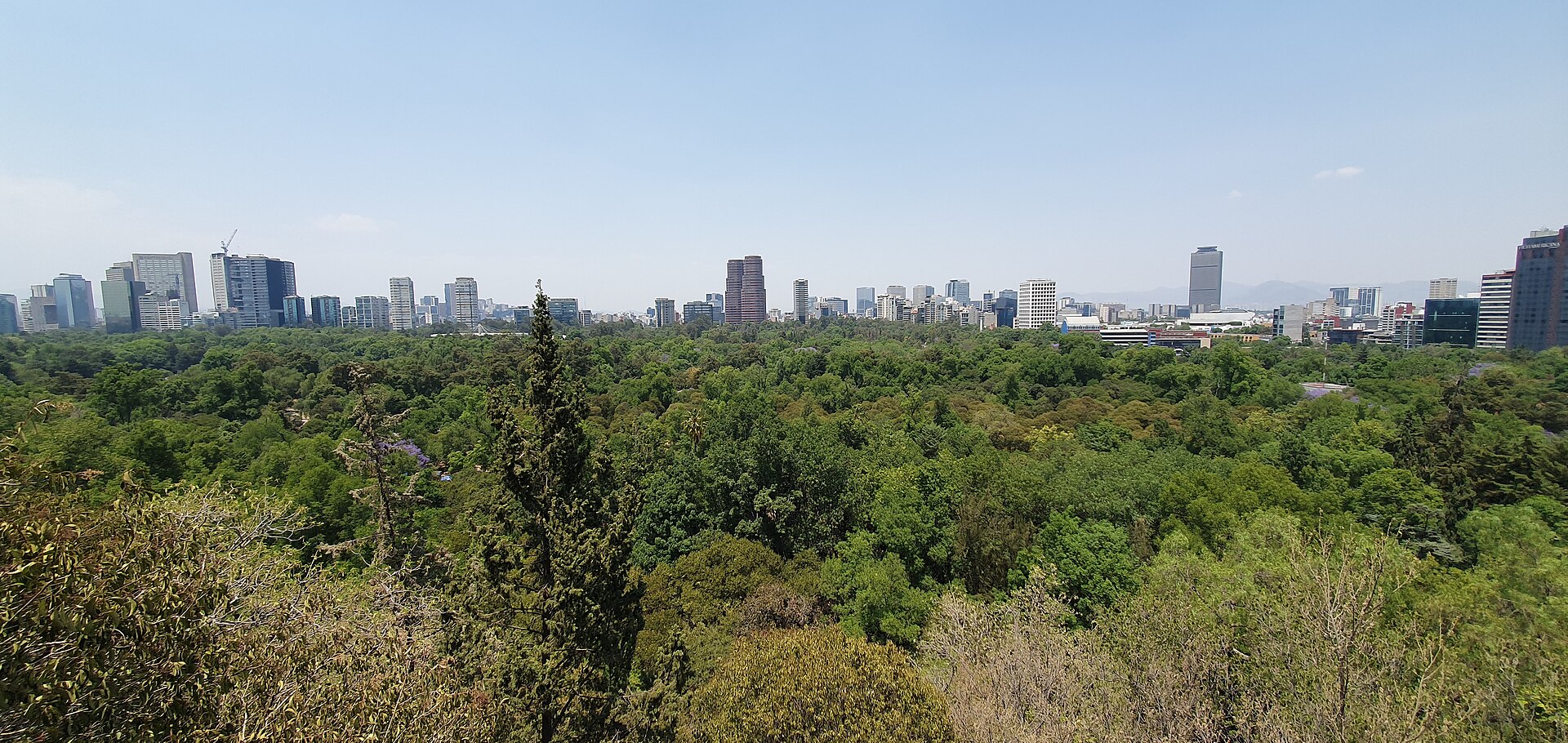
Chapultepec is one of the largest urban parks in the Western Hemisphere and it contains, within walking distance of each other, a free zoo, a free botanical garden, a children’s museum, a castle, the Anthropology Museum, a lake with rowing boats, and a great deal of open ground. It was expanded further under the Chapultepec: Naturaleza y Cultura programme, with a fourth section opening on 24 September 2024 and Cablebús Line 3 linking the sections.
The free half
- Zoológico de Chapultepec — free entry, Tuesday to Sunday 09:00 to 16:30, closed Mondays and on certain public holidays. Run by the city’s environment department. No ticket to buy, no booking, and it is genuinely good.
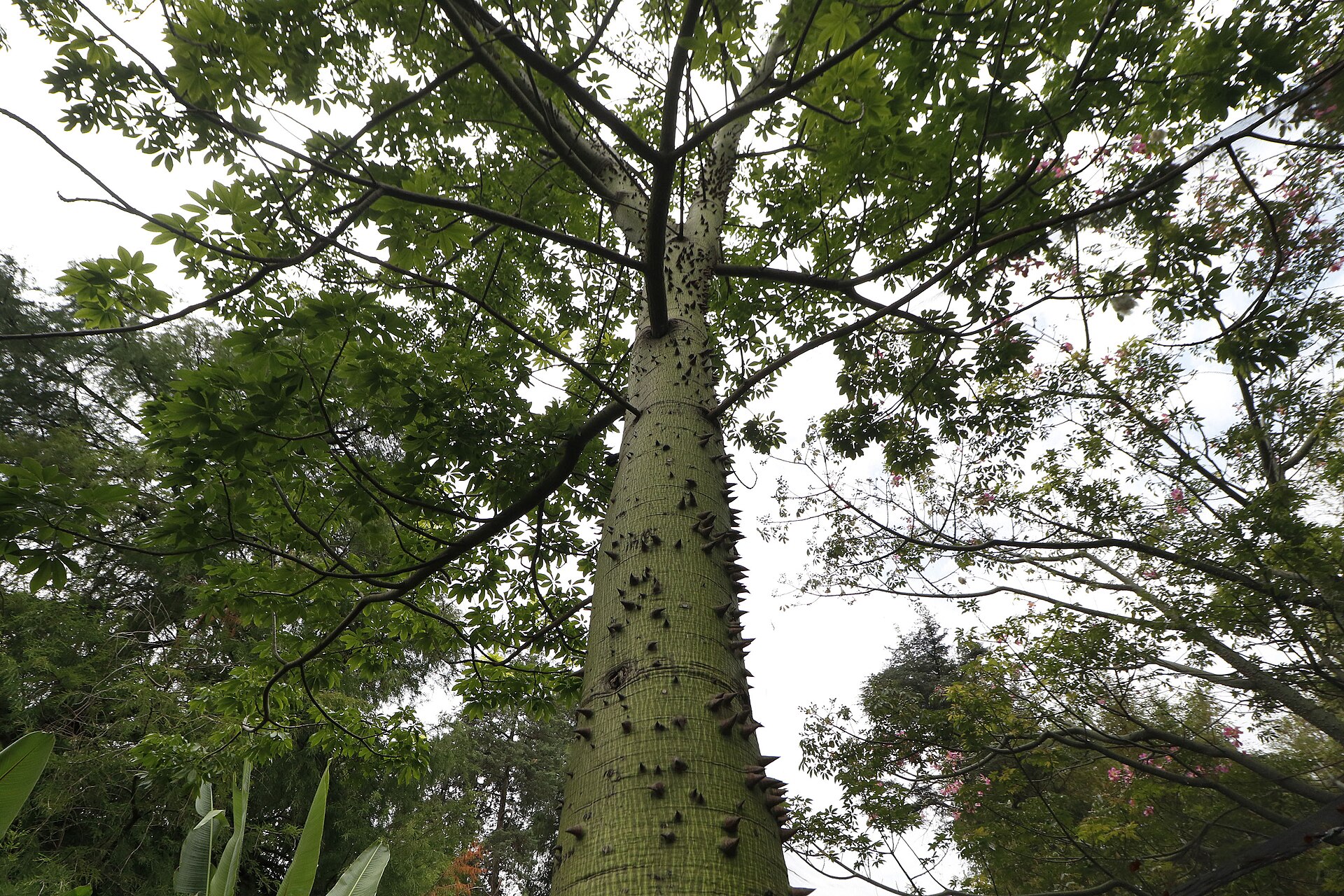
- Jardín Botánico — free, and more interesting than it sounds, with cactus collections and thorn-covered ceibas that hold a child’s attention longer than a flowerbed.
- The lake and rowing boats — a small hourly charge for the boat, paid at the landing. Cheap and reliably popular.
- Open space. Sunday is the park’s busiest and best day, with families out in numbers, food carts everywhere and the atmosphere of a public holiday.
The paid half
- Papalote Museo del Niño — a hands-on children’s museum, 220 pesos for adults and children alike, under-2s free, with extra-cost add-ons for the Domo (60), the Cancha (120) and the Estadio (180). Tuesday to Friday 10:00 to 18:00, weekends to 19:00, closed Mondays. Book online; weekends and Mexican school holidays are busy.
- Chapultepec Castle — 210 pesos for adults, free under 13. A real castle on a real hill with a real view, which is an easier sell to an eight-year-old than most museums. The walk up is steep.
- Museo Nacional de Antropología — 210 adults, free under 13. Twenty-two permanent halls is far too much for a child; two or three halls and the courtyard fountain is the right visit. Lockers are 10 pesos.
Aztlán Parque Urbano — and the ride that no longer exists
If your research turned up La Feria de Chapultepec, ignore it. The funfair closed in 2019 after a fatal accident and was demolished. Guides that still list it are years out of date.
Its site now holds Aztlán Parque Urbano, opened on 20 March 2024. The model is unusual and worth understanding before you arrive: entry is free but capacity is controlled, so you collect a free access card at the ticket windows and load credit onto it, because the individual attractions are paid. Tuesday to Friday 12:00 to 20:00, weekends 10:00 to 22:00, closed Mondays. Going in with a fixed amount loaded onto the card is a good way to have the “one more ride” conversation once rather than fifteen times.
Beyond the park
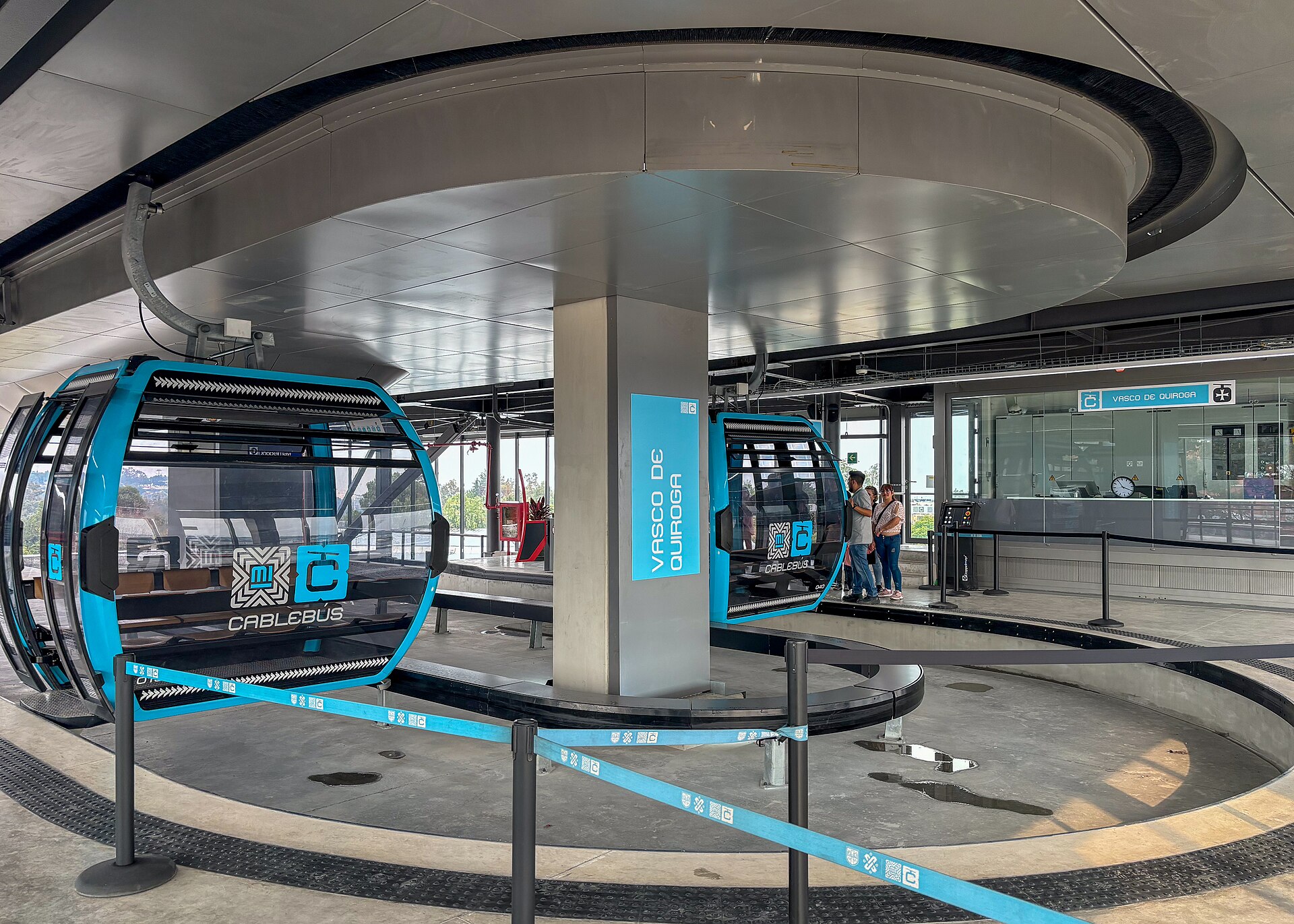
- Cablebús, 7 pesos a ride on the Movilidad Integrada card. It is a cable car over the city, which to a child is a ride rather than a bus. Line 3 links the Chapultepec sections. Cheapest entertainment in the city by a wide margin.
- Acuario Inbursa in Polanco — the largest aquarium in the city, from about 350 pesos, under-3s free, and open daily including Mondays, which makes it one of the very few indoor options on the day everything else shuts.
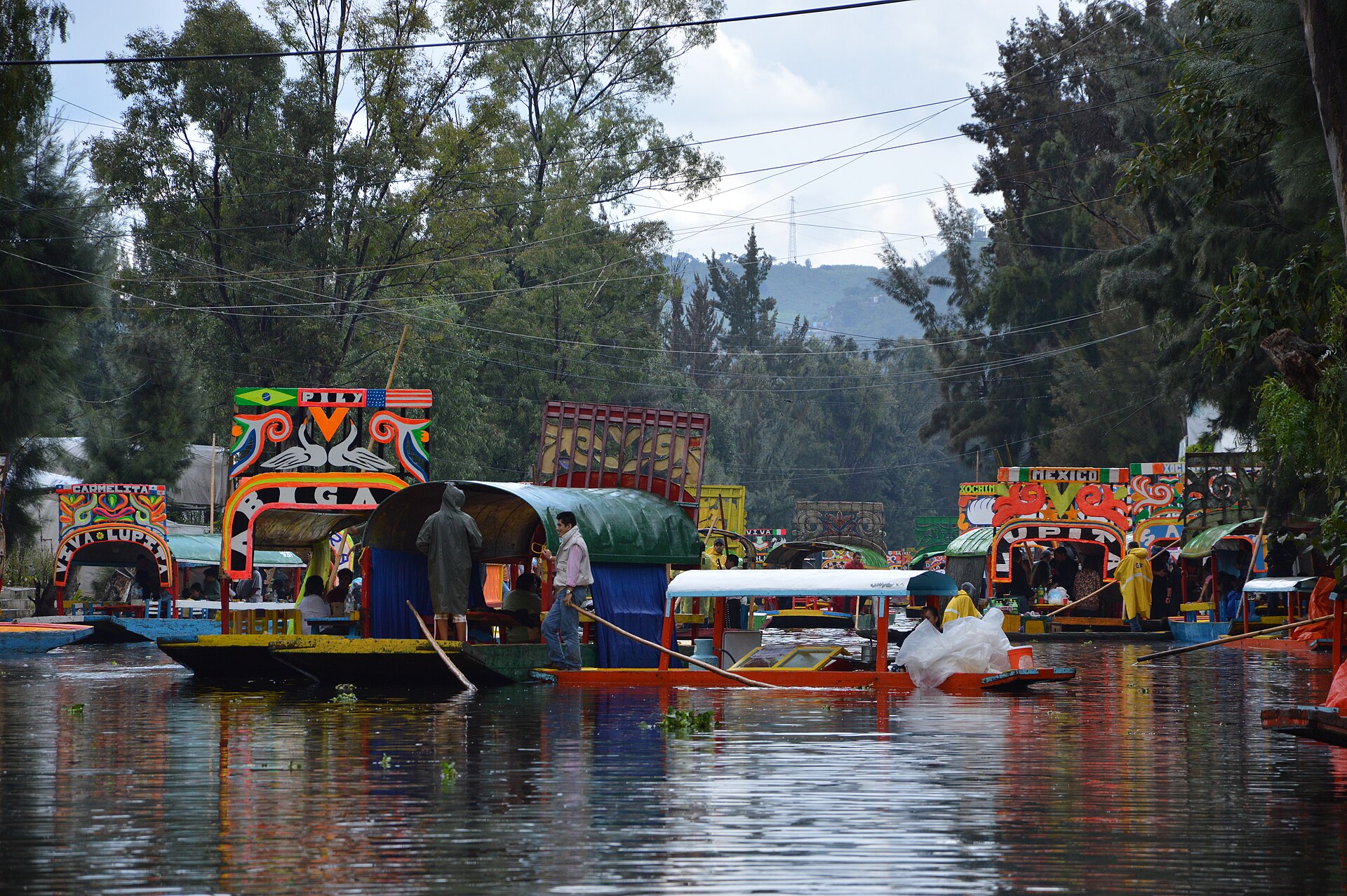
- Xochimilco — a trajinera at 750 pesos per hour for the whole boat. Bright paint, food boats, mariachis by the song, and a party of four pays a quarter each. Cash only on the water. Our Xochimilco guide covers the quieter landings, which are much better with small children than the busiest one.
- Teotihuacán — free for under-13s, open Mondays, and the scale of it does the work. Go at 09:00, not midday: there is no shade. Climbing the pyramids has been prohibited since 2020 and remains so, so do not promise a summit. Our Teotihuacán guide has the current rules.
- Lucha libre at Arena México — the Sunday Domingo Familiar card at 17:00 is explicitly the family one and finishes early. Masks from the stalls outside. The upper tiers are a steep climb. See our nightlife guide for ticketing.
- Torre Latinoamericana — 220 adults, 170 for children aged 4 to 11, open daily until 22:00. The Monday fallback, and a good one.
- Six Flags México in Tlalpan and KidZania Cuicuilco both exist and both do what they say. We would not spend a scarce day in Mexico City on either — but if you are here for two weeks, or if a rainy afternoon needs filling, they are there. Reported 2026 season passes for Six Flags ran 1,300 to 1,999 pesos, and KidZania family packages 869 to 1,399 pesos on promotion; those are aggregator figures rather than operator tariffs, so check before you go.
The Monday problem, and the Sunday one
Mondays. Antropología, Templo Mayor, Chapultepec Castle, the Casa Azul, the Palacio Nacional, Papalote, the zoo and Aztlán all close. That is most of a family week in one sentence. What stays open: Teotihuacán, the Acuario Inbursa, the Torre Latinoamericana, the parks, the markets, Xochimilco and the Basílica. Put Teotihuacán or the aquarium on your Monday and the problem disappears.
Sundays. Since 1 January 2026, free Sunday entry at INAH sites applies only to Mexican nationals and legal residents — so a foreign family pays full adult price on a Sunday, in a longer queue, for no saving. Children under 13 are free every day anyway, so this only hits the adults. Museum days midweek; Sunday for the park, Reforma’s car-free morning, or Xochimilco.
Toilets, feeding and the practical middle of the day
This is the part that decides whether a day works, and it is the part every guide omits.
- Public toilets usually cost 5 to 10 pesos and are often attended. Carry coins. Many do not supply paper, or supply it by the sheet at the door. A small pack of tissues and hand gel in the day bag solves this permanently.
- Museums, department stores and shopping centres have the most reliable free facilities. So do the larger Sanborns restaurants, which are everywhere and are the standard fallback.
- Baby-changing facilities are inconsistent outside modern museums and malls. Papalote, the Soumaya, Antropología and the larger centres are reliable; markets and older museums are not.
- Breastfeeding in public is unremarkable and widely done.
- The midday meal is the meal. The comida corrida — a fixed multi-course lunch served in ordinary neighbourhood fondas from about 13:00 to 17:00, for 80 to 150 pesos — is how the city eats and it suits children far better than a late dinner. Portions are generous and sharing is normal.
- Food for cautious eaters. Quesadillas, sopa de fideo, rice, plain grilled meat, tortillas, and agua fresca are on almost every menu and are not spicy. Sin picante, por favor is the phrase. Note that in Mexico City a quesadilla does not automatically contain cheese — you have to ask for it con queso, which is a running national joke and also a genuine source of small disappointment.
- Water. Tap water is not generally drunk. Hotels and rentals supply purified water; a large garrafón from a corner shop costs a fraction of the same volume in small bottles. Carry a refillable bottle.
- Snacks are everywhere and cheap. Fruit cups with lime and chilli (ask for it without), elotes, churros, marquesitas. A stall is never more than two streets away.
Getting around with children
- Children under 5 travel free on the Metro. Adults pay 5 pesos flat. Buy a Movilidad Integrada card on arrival and load 200 pesos.
- Avoid the Metro at peak — roughly 07:00 to 09:30 and 18:00 to 20:30. It is genuinely crowded, and crowded is unpleasant with a small child and impossible with a stroller.
- Front carriages on many lines are reserved for women and children at peak times. This is signposted and enforced, and it is a real advantage travelling with children.
- Strollers and the Metro do not get on. Many stations have long staircase transfers and no lift. A carrier or a compact fold is far better than a full-size buggy.
- Taxi car seats are not standard. Ride-hailing apps in Mexico City do not reliably offer them. If you need one, bring it, or plan to use a private driver you have arranged in advance.
- Cobbles. Coyoacán, San Ángel and Chimalistac are cobbled, uneven and steep in places — difficult with wheels of any kind. Roma and Condesa are the flattest.
- Pavements in the Centro are frequently broken and often obstructed. Watch the ground, not the buildings.
Altitude, sun and air: the three environmental things
Altitude. Mexico City sits at 2,240 metres, with roughly a quarter less oxygen than at sea level. Most people, including children, adjust within one to three days; this is below the level at which serious altitude illness becomes likely, and it is not a reason for alarm. It is a reason to plan an easy first day, push water hard, and not schedule a pyramid or a hill climb before day three. If anyone in your family has a heart or lung condition, take your own doctor’s advice before travelling — we are not in a position to give medical guidance and will not.
Sun. The altitude means stronger UV than the mild temperature suggests. This catches families out constantly. High-factor sunscreen, hats, and shade at midday, particularly at Teotihuacán and Xochimilco where there is none.
Air quality. The valley traps pollution, and when ozone or particulates spike the city declares a contingencia ambiental, advising reduced strenuous outdoor activity especially between 13:00 and 19:00. Live readings by district are at aire.cdmx.gob.mx. If a bad-air day lands on your park day, swap it for the aquarium or Papalote.
Making a big museum work with children
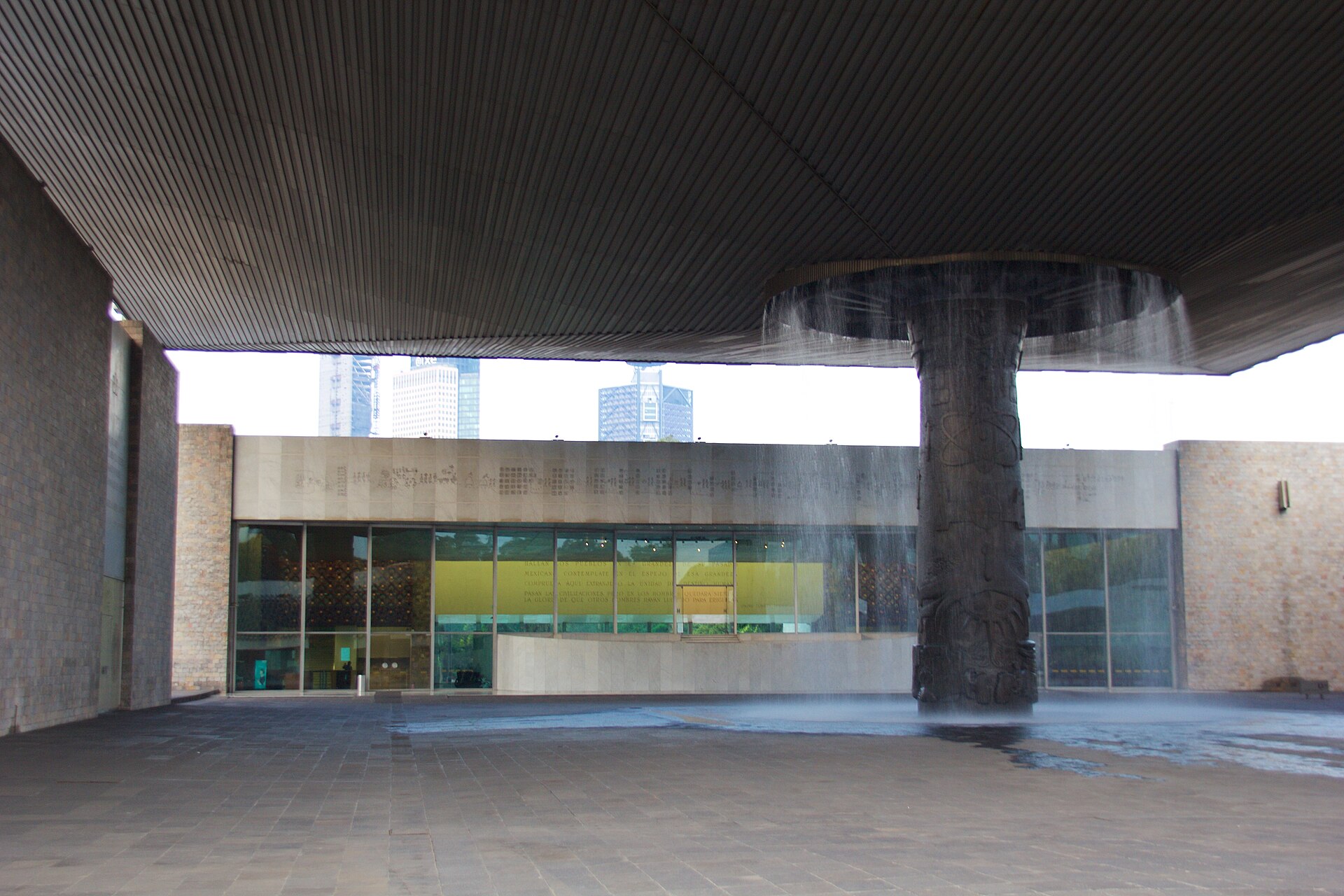
The Museo Nacional de Antropología has twenty-two permanent halls plus temporary galleries, and attempting all of them with a child is how a free ticket turns into a bad afternoon. The version that works is short and deliberate.
- Start in the courtyard, under El Paraguas — a vast concrete umbrella with water falling from its rim. Ten minutes of standing under it buys you goodwill for the rest of the visit.
- Pick two halls, not twenty-two. Mexica, for the Sun Stone and the scale of the sculpture, and Maya, for the Pakal tomb reconstruction. Both are immediately legible to a child without any background.
- Ninety minutes is a complete visit. Leave while it is still going well.
- Lockers are 10 pesos and worth it. A video permit is 65 if you want one.
- Do it before Chapultepec park, not after. Museum first, running-around second, is the order that works; reversed, nobody has the patience.
The same principle applies at Templo Mayor, where the site walkways and the scale model do more work with children than the museum galleries, and at Chapultepec Castle, where the terraces and the view carry the visit. Our Mexico City museums guide has the full collection-by-collection picture.
What to pack for a family day
- Coins — for toilets, at 5 to 10 pesos a time, and for attendants.
- Tissues and hand gel. Many toilets supply paper by the sheet at the door, or not at all.
- High-factor sunscreen and hats. The UV at 2,240 metres is stronger than the mild temperature suggests, and Teotihuacán and Xochimilco have no shade at all.
- Layers. Mornings are cool, midday is warm, evenings drop sharply.
- A refillable bottle and purified water from your accommodation.
- Identification for every child. The under-13 exemption is applied at the ticket window on production of a document, not on your word.
- A carrier rather than a full-size buggy if your child is small enough — Metro staircases and broken pavement make this the better tool.
Wet weather and other backups
The rainy season runs roughly May to October and usually delivers a heavy late-afternoon burst rather than all-day rain — which is precisely the shape of a family day anyway. Be outside in the morning, indoors from about 16:00.
| Plan A | Wet or bad-air backup |
|---|---|
| Chapultepec park and zoo | Papalote Museo del Niño, in the same park |
| Teotihuacán | Museo Nacional de Antropología — the same civilisation, indoors |
| Xochimilco | Acuario Inbursa (open Mondays) |
| Coyoacán walking | Mercado de Coyoacán, which is covered |
| Centro Histórico walking | Templo Mayor’s museum, or the Torre deck |
| Aztlán Parque Urbano | A cinema — check subtitulada versus doblada |
What to book before you leave home
- Casa Azul tickets, if you want them. Online only, no box office at all, closed Mondays. Children 6 to 12 pay 30 pesos and under-6s are free. Honestly: the Casa Azul is a slow, crowded, timed-entry house museum and is a poor fit for under-8s.
- Papalote, particularly for a weekend or a Mexican school holiday.
- The Sunday lucha libre card, if your children are old enough to enjoy it.
- Nothing else. The zoo, the park, the Soumaya, the Cablebús, Xochimilco, the markets and Teotihuacán are all walk-up.
And the thing to know rather than book: Casa Luis Barragán enforces a minimum age of 12, strictly. It is a UNESCO-listed house and it turns families away at the door every week. If you have a younger child, take it off the list rather than finding out on the doorstep.
A three-day family shape that works
Day 1 — arrival and acclimatising
- Late morning: Movilidad Integrada cards, then a slow walk in Condesa — Parque México and Parque España, both with playgrounds.
- Comida corrida at a neighbourhood fonda around 14:00.
- Afternoon: nothing. Genuinely. You are at 2,240 metres and everyone is tired.
- Early dinner nearby and an early night.
Day 2 — Chapultepec
- 09:00: Zoológico de Chapultepec, free, before it fills. 90 minutes.
- 11:00: the lake and a rowing boat, or the botanical garden.
- 13:00: lunch from the carts or a café at the park’s edge.
- 14:30: Papalote Museo del Niño, or Chapultepec Castle if your children are over about seven.
- 17:00: Cablebús Line 3, one stop and back, purely because it is a cable car.
Day 3 — Teotihuacán, or Xochimilco
- 08:00: bus from Terminal del Norte to Teotihuacán, about an hour. Buy the return ticket on arrival.
- 09:15–12:30: the Avenue of the Dead and the plazas. Adults 210, under-13s free. Shade is non-existent — hats, water, and no promises about climbing.
- Lunch at the site restaurants, then the bus back by 14:30.
- Or, if that sounds too long: Xochimilco by Metro and Tren Ligero, two hours on a boat at 750 pesos for the whole party, and home by mid-afternoon.
Our Mexico City itineraries put these into longer shapes, and things to do in Mexico City ranks the sights themselves.
Frequently asked questions
Is Mexico City good for kids?
Unusually so, and for a specific reason: the things children like most here — a free zoo, a huge park, a cable car, boats, pyramids, wrestling — are either free or very cheap, and the big museums cost nothing for under-13s. The constraints are altitude on day one, broken pavements, and the fact that most museums shut on Mondays.
Is it safe to travel to Mexico City with children?
The capital is not among the areas governments advise against visiting, and the risks are ordinary urban ones. The two that matter for families: pickpocketing in crowds and on the Metro, and unlicensed taxis. Use app rides or authorised sitio taxis, keep bags closed, and agree a meeting point with older children in case you are separated. Our safety guide has the verified helplines, including Locatel on 55 5658 1111, which has English-speaking staff.
Can children go to Teotihuacán?
Yes, free under 13, and it is open on Mondays when nearly everything else is shut. Go early — the site is entirely unshaded and it is a lot of walking on uneven ground. Climbing the pyramids is prohibited and has been since 2020, so do not build the trip around it.
What about strollers?
Fine in Roma, Condesa, Polanco and inside the museums. Difficult in the Centro, where the pavements are broken, and genuinely hard in Coyoacán and San Ángel, which are cobbled. Most Metro stations have long staircases and no lift. A carrier is more useful than a buggy for a child small enough to be carried.
Do restaurants welcome children?
Yes, across the board and in a way that is noticeably warmer than in much of Europe. Markets, fondas and neighbourhood restaurants are all comfortable with children, high chairs are common, and lunch is the natural time. The only rooms that will not suit are the starred tasting menus in Polanco, which are not designed for it.
Will my children eat the food?
Probably, with a little steering. Quesadillas, rice, plain grilled meat, tortillas and sopa de fideo are gentle and everywhere. Say sin picante, and ask for a quesadilla con queso — in Mexico City the cheese is genuinely optional and not assumed.
Which day should we avoid planning anything?
Your first afternoon. The combination of a flight, the altitude and a large city defeats most ambitious opening plans. The second day is when the trip starts.
Is the water safe for children?
Do not drink the tap water; use the purified water supplied by your accommodation or bought in bottles or a garrafón. Ice in established restaurants and cafés is made from purified water and is not a concern. Brushing teeth with tap water is what most residents do, but use bottled if you would rather.
Are there discounts for families?
Not in the bundled-family-ticket sense. The saving is structural instead: under-13s free at INAH sites, under-5s free on the Metro, under-2s free at Papalote, under-3s free at the Acuario, a free zoo, and per-boat pricing at Xochimilco. Carry identification for every child — the exemptions are applied at the window, not on trust.
Markets work better with children than museums do — they are open on Mondays, they cost nothing to walk through, and there is food every few metres. Our Mexico City markets and shopping guide sets out which ones are manageable with a family and which are best left for another trip.
The park half of a family week deserves its own planning, because the altitude decides what is realistic more than the distance does. Our guide to Mexico City parks and outdoor activities sets out the green spaces by effort and opening hours, including which ones stay open on the Monday when every museum shuts.
One caveat on the Casa Azul specifically: children aged 6 to 12 pay 30 pesos and under-6s are free, but strollers and baby carriers must be left at the coat check, and the house is quiet, crowded and largely about objects behind glass. Our guide to Frida Kahlo Museum tickets sets out the rules and suggests better Coyoacán options for younger children.
Related Mexico City Guides
- Things to Do in Mexico City — the full sight list, ranked.
- Mexico City Neighborhoods to Visit — which colonias are flat, and which are cobbled.
- Where to Stay in Mexico City — bases, and the rental registry rules.
- Mexico City Trip Costs — a worked five-day family budget.
- Getting Around Mexico City — the Metro with children, and the transport card.
- Teotihuacán — free for under-13s, open Mondays, and the climbing ban.
- Xochimilco — per-boat pricing and the quieter landings.
- Mexico City Museums — the 2026 tariffs and the closure pattern.
- Mexico City Safety — advisories and verified helplines.
- Mexico City Travel Tips for First Timers — the pre-departure checklist.
- Mexico City Nightlife Guide — including the Sunday family lucha libre card.
Sources and verification
- INAH admission and child exemptions — reform to the Ley Federal de Derechos, Diario Oficial de la Federación 7 November 2025, in force 1 January 2026: Category I 210 MXN foreign, 105 MXN national and resident. Free on production of valid identification regardless of nationality for under-13s, students, teachers, over-60s with INAPAM and visitors with disabilities. Sunday free entry restricted to Mexican nationals and legal residents. INAH revises tariffs each January.
- La Feria de Chapultepec and Aztlán Parque Urbano — La Feria operated for more than fifty years and closed in 2019; the site was redeveloped as Aztlán Parque Urbano, which opened on 20 March 2024. Entry is free with capacity control via a free access card obtained at the ticket windows, onto which credit is loaded because the attractions are paid. Tuesday to Friday 12:00–20:00, weekends 10:00–22:00, closed Mondays. Checked 18 September 2026.
- Papalote Museo del Niño — as of June 2026: museum 220 MXN for adults and children, Domo 60 MXN, Cancha 120 MXN, Estadio 180 MXN, under-2s free. Tuesday to Friday 10:00–18:00, Saturday and Sunday 10:00–19:00, closed Mondays. Checked 18 September 2026.
- Zoológico de Chapultepec — free entry, Tuesday to Sunday 09:00–16:30, closed Mondays and certain public holidays. Operated by the city’s environment secretariat (Sedema). Checked 18 September 2026.
- Acuario Inbursa — general admission from approximately 350 MXN, Fast Pass approximately 320 MXN, under-3s free; open daily 10:00–18:00. Checked 18 September 2026.
- Six Flags México and KidZania Cuicuilco — reported 2026 Six Flags season passes at 1,300 MXN (Silver), 1,500 MXN (Gold) and 1,999 MXN (Prestige, reduced from 2,900), with a mid-2026 promotional window giving free entry to children under 1.20 m and over-65s; KidZania Cuicuilco family packages reported at 869 MXN and 1,399 MXN on promotion against regular prices of 1,270 MXN and 2,120 MXN. These are aggregator and promotional figures rather than operator tariff pages, and are time-limited — verify with the operator before travelling.
- Other admissions — Museo Frida Kahlo 320 MXN foreign / 160 MXN national, 30 MXN for children 6–12, free under 6, online only with no box office, closed Mondays; Torre Latinoamericana 220 MXN adult and 170 MXN child 4–11, daily 09:00–22:00; Museo Soumaya free, Tuesday to Sunday typically 10:30–18:30; Xochimilco trajineras at the official Alcaldía tariff of 750 MXN per hour per boat, capacity approximately 18, cash only.
- Transport — Metro 5 MXN flat, Metrobús 6 MXN, Cablebús 7 MXN, via the Movilidad Integrada card. Front carriages on many Metro lines are reserved for women and children at peak times; this is signposted and enforced.
- Chapultepec — expanded under the Chapultepec: Naturaleza y Cultura programme, with the fourth section opening on 24 September 2024 and Cablebús Line 3 linking the sections.
- Teotihuacán — open daily including Mondays, site museums close 16:30; climbing the Pyramids of the Sun and Moon has been prohibited since 2020 and remains so. Only INAH may authorise an ascent.
- Casa Luis Barragán — casaluisbarragan.org: advance online purchase required, slots strictly subject to availability, minimum age 12, strictly enforced. Checked 18 September 2026.
- Altitude, sun and air — 2,240 m with roughly a quarter less oxygen than at sea level; most people adjust within one to three days, and this is below the threshold at which serious altitude illness becomes likely. Planning information only; no medical advice is given, and anyone with a heart or lung condition should consult their own doctor. Air-quality readings by district are published by the city at aire.cdmx.gob.mx.
- Safety — UK FCDO advice for Mexico names pickpocketing on public transport and unlicensed taxis among the principal risks in the capital. Emergency 911; CDMX Tourist Police 55 5533 5533; Locatel 55 5658 1111 with English-speaking staff.
Prices, hours and age rules on this page carry the date they were checked and the body that sets them. Several of the commercial family venues publish promotional pricing that changes within weeks, and where our figure came from an aggregator rather than the operator we have said so. We have not visited every venue listed here with children, or at all, and do not claim to have. Check the operator’s own current page before you build a day around any figure here — including ours.
Photo Credits
Cablebús at Vasco de Quiroga: Cablebus Vasco de Quiroga by Cocu15, CC BY-SA 4.0, via Wikimedia Commons.
Ceiba in the botanical garden at Bosque de Chapultepec: MX TV JARDÍN BOTÁNICO DEL BOSQUE DE CHAPULTEPEC by Secretaría de Cultura CDMX, CC BY 2.0, via Wikimedia Commons.