A Metro ride across Mexico City costs five pesos. A tasting menu in Polanco costs four thousand. Both are ordinary prices in the same city on the same afternoon, which is why a single number for the mexico city trip cost is close to useless — and why almost every budget you will read online is quietly modelling a traveller who is not you. What follows is the arithmetic instead: dated inputs, stated assumptions, three worked scenarios, and the fee traps that quietly add five to eight per cent to everything you pay by card.
Scope, currency and how to read this page
Everything here is in Mexican pesos (MXN), because that is what you will actually pay and because a peso figure ages more gracefully than a converted one. Conversions are given once, dated, and then left alone.
| Currency | Mid-September 2026 | Rule of thumb |
|---|---|---|
| US dollar | 1 USD ≈ 17.17 MXN | Divide pesos by 17 for a close-enough dollar figure |
| Euro | 1 EUR ≈ 19.8 MXN | Divide by 20 |
| Pound sterling | 1 GBP ≈ 23.1 MXN | Divide by 23 |
The peso moved between roughly 16.89 and 17.18 to the dollar in the week these figures were checked, touching a more-than-two-year high near 16.98 on 11 September before easing. That is a two per cent swing inside seven days, which tells you how much confidence to place in any conversion older than a month.
What this page covers: what a trip costs and how to spend less without spending worse. Transport, admissions, food, fees, cash strategy and three full scenarios. What it does not cover: individual hotel recommendations, which belong in our where to stay in Mexico City guide, and the free-attraction inventory, which sits in things to do in Mexico City. Flights are excluded throughout: they vary more by where you live than by anything Mexico City does.
Dated inputs: the prices this budget is built on
Every figure below was checked in September 2026 against the operator or authority that sets it, and is dated for that reason. Three of them move on a known schedule: INAH revises its heritage tariffs every January, the Michelin guide changes in May, and transport fares are set annually by the city.
Transport, 2026 rates
| Mode | Fare | Notes |
|---|---|---|
| Metro | 5 | Flat, any distance, any number of transfers |
| Metrobús | 6 | Except Line 4 to the airport terminals |
| Metrobús Line 4, airport | 30 | Card or digital wallet only — no cash accepted |
| Cablebús | 7 | Line 3 links the Chapultepec sections |
| Ecobici, 1 day | 134 | Unlimited 45-minute rides for 24 hours |
| Ecobici, 3 days | 263 | ID plus a Visa or Mastercard to register |
| Ecobici, 7 days | 441 | Overage 27 for 46–60 min, then 54 per hour |
| Airport authorised taxi | ~220–500+ | Zone-based; operators differ sharply, see below |
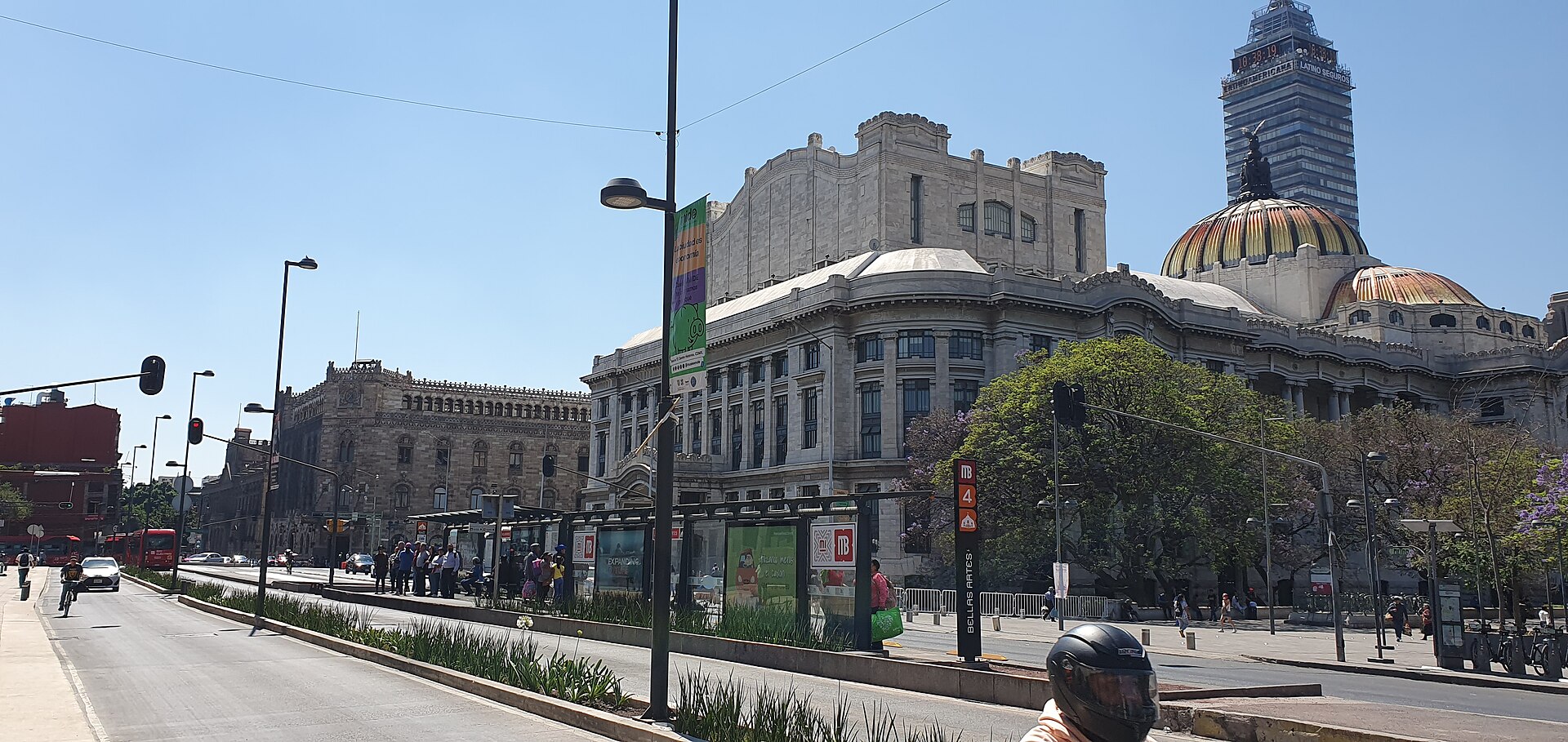
All the public modes use the rechargeable Movilidad Integrada card, bought and topped up at station machines. Buy one on arrival and load two hundred pesos; it will cover most of a week.
Admissions, 2026 rates
The single biggest change in this column happened on 1 January 2026. A reform to the Ley Federal de Derechos, published in the Diario Oficial on 7 November 2025, raised INAH Category I admission from 96 pesos to 210 for foreign visitors, with Mexican nationals and documented foreign residents paying 105. It also restricted the Sunday free-entry rule: Sunday is now free only to Mexican nationals and legal residents. Most English-language budgets still assume a free Sunday and a 96-peso weekday. Both assumptions are now wrong, and together they can understate a museum-heavy week by six hundred pesos a head.
| Site | Foreign visitor | National / resident | Note |
|---|---|---|---|
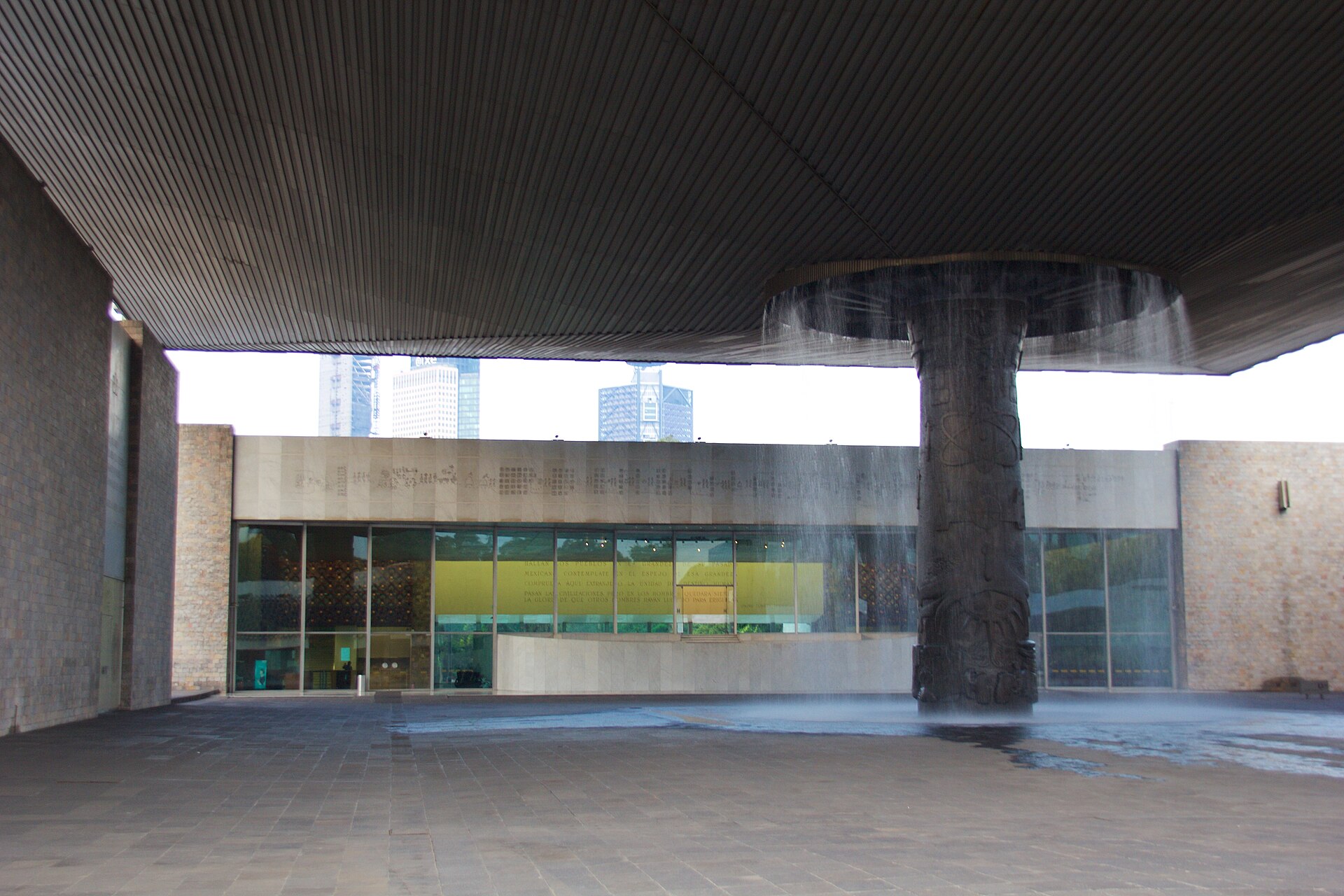
| Museo Nacional de Antropología | 210 | 105 | Locker 10, video permit 65 |
| Templo Mayor | 210 | 105 | Includes the site museum |
| Chapultepec Castle | 210 | 105 | INAH Category I |
| Teotihuacán | 210 | 105 | Open Mondays |
| Museo Frida Kahlo (Casa Azul) | 320 | 160 | Online only; includes Anahuacalli |
| Museo Dolores Olmedo | 432 | 162 | Widest foreign/national gap in the city |
| Museo del Palacio de Bellas Artes | ~90 | ~90 | INBAL — free to everyone on Sundays |
| Torre Latinoamericana deck | 220 adult / 170 child | Same | Daily to 22:00, open Mondays |
| Palacio Nacional | Free | Free | Photo ID required, security screening |
| Museo Soumaya | Free | Free | No ticket, no booking |
| Museo Jumex | Paid | Paid | Free on Tuesdays |
| Basílica de Guadalupe | Free | Free | Daily, roughly 06:00–21:00 |
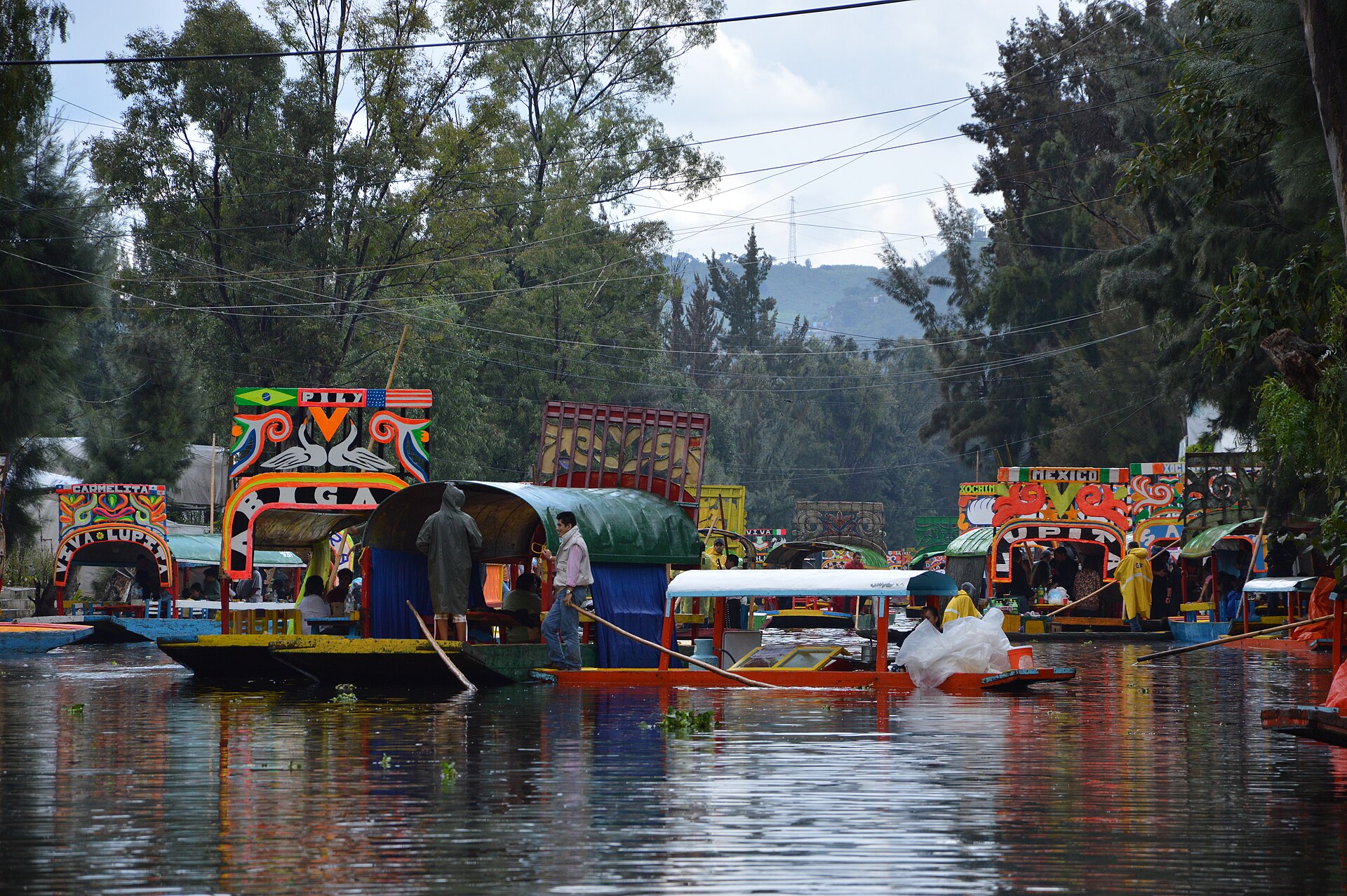
| Xochimilco trajinera | 750 per hour, per boat | Not per person. Up to ~18 people | |
Free entry regardless of nationality, on production of valid identification: under-13s, students and teachers, over-60s with an INAPAM card, and visitors with disabilities. Carry the document; the rule is applied at the window, not on trust.
Per person, or per party? The distinction that changes your budget
Some costs in Mexico City scale with the number of people and some do not, and the ones that do not are where a party of four either saves a great deal or gets quietly overcharged.
Priced per party, not per person:
- Xochimilco trajineras. The official Alcaldía tariff is 750 pesos per hour for the boat, which takes up to about eighteen people at the same rate. Two people pay 375 each per hour; twelve pay 62 each. Touts at the busier landings quote per person, or in dollars, or add a compulsory “guide”. The rate is posted at the embarcadero — read it before you board, and bring cash, because there is none of it on the water. Our Xochimilco guide covers which landings are least aggressive about this.
- Airport taxis. Charged by zone for the vehicle, so four people in one sedan pay once. Reported figures for the central colonias run roughly 220 to 500 pesos for a sedan, and higher for a van — one operator was reported near 950 to Polanco. Mexican press in March 2026 reported concessioned airport taxis costing up to double an app ride. The sources genuinely disagree and there is no single authoritative tariff to quote. Buy at an authorised counter inside the terminal, ask the price before you accept the ticket, and see our airports guide for the alternatives.
- App taxis and private day-trip drivers. Per vehicle. A driver for a day trip split four ways is often cheaper per head than four bus tickets plus four tour seats.
- Accommodation. A double room costs what a double room costs. Solo travellers carry the full weight of the largest line in the budget, which is why the solo scenario below is not simply a third of the family one.
Priced per person: all public transport, every museum admission, guided walking tours, Ecobici passes, and food. There is no family ticket culture here — expect to pay per head at the window, with the concession categories above being the only discounts on offer.
Food: what things actually cost
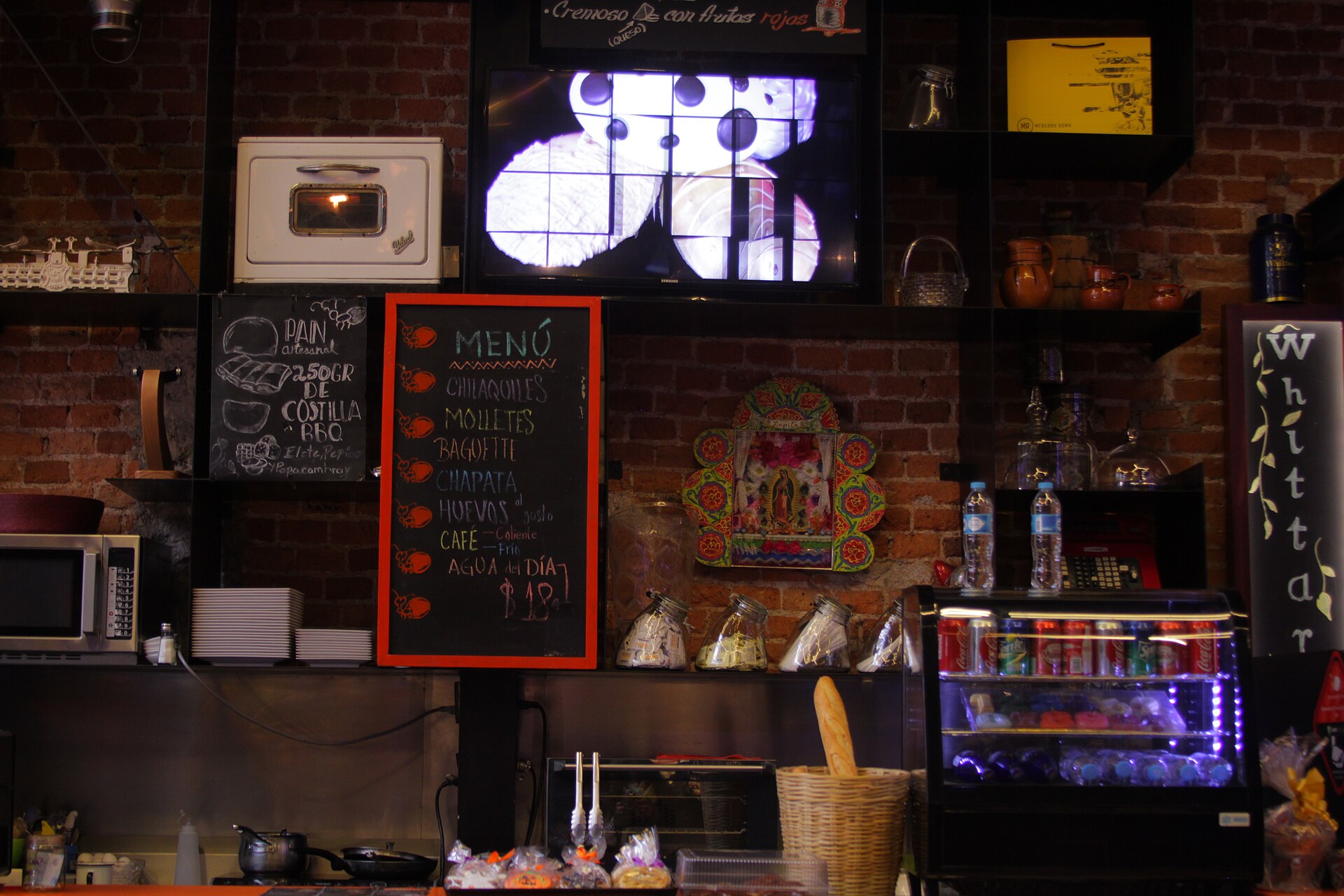
Food is the line where your choices matter most, because the range is enormous and the quality does not track the price nearly as closely as you would expect. These are observed street and menu prices in the central colonias in September 2026, given as bands because they genuinely vary block to block.
| Item | Typical price | Where |
|---|---|---|
| Taco at a street stand | 15–30 | Anywhere; three or four make a meal |
| Agua fresca or agua del día | 15–30 | Markets, fondas, stalls |
| Comida corrida — set lunch, 3 courses | 80–150 | Fondas, mostly 13:00–17:00 |
| Market breakfast | 60–120 | Any covered market |
| Coffee in a specialty café | 55–95 | Roma, Condesa, Juárez |
| Mid-range restaurant dinner, per head | 350–700 | Roma, Condesa, Centro |
| Beer in a bar | 60–140 | Varies wildly by colonia |
| Mezcal or cocktail | 150–300 | Roma and Condesa at the top end |
| Tasting menu, starred restaurant | 2,500–4,500+ | Polanco, mostly |
The comida corrida is the single most useful thing on that table. It is a fixed multi-course lunch served in ordinary neighbourhood fondas in the early afternoon — soup, a rice or pasta course, a main, often a drink and something sweet — and at eighty to a hundred and fifty pesos it makes the middle of the day almost free. Eating your large meal at lunch rather than dinner is worth two to four hundred pesos a day per person, and it is what most people in the city actually do.
Two seasonal notes. Chiles en nogada appear roughly July to September, tied to the pomegranate and walnut harvest; anywhere selling them in February is using preserves and charging you for the occasion. And Mexico City held eleven MICHELIN-starred restaurants in the 2026 selection revealed in May — two at two stars, nine at one, none at three — which sets the ceiling on this table but tells you nothing about the floor. Our Mexico City food guide works through where to eat at each level.
Accommodation: bands, and an honest caveat
We could not obtain accommodation rates from an authoritative operator source, and we are not going to dress up platform listings as verified tariffs. The bands below are observed ranges from booking platforms in September 2026, and they should be treated as a planning assumption rather than a price.
| Type | Per night, observed | Assumption |
|---|---|---|
| Hostel dorm bed | 250–600 | Centro, Roma or Condesa, shared room |
| Private hostel or budget hotel room | 800–1,600 | Double, central colonia |
| Mid-range hotel or apartment | 1,600–3,500 | Double, Roma, Condesa or Juárez |
| Upper-tier hotel | 3,500–9,000+ | Polanco, Reforma, boutique Roma |
Rates rise at weekends, over Día de Muertos and in the December holidays, and they have been rising generally: average residential rents in the city reached roughly 21,921 pesos in June 2026, up 9.6 per cent year on year, and short-stay pricing has followed.
The taxes nobody quotes you
This matters more than the headline rate. 16 per cent IVA applies to accommodation. A city lodging tax also applies — and here the sources genuinely disagree. Article 164 of the Código Fiscal de la CDMX states 3 per cent, while several tax-advisory sources report 3.5 per cent for hotels and 5 per cent for stays booked through digital platforms. We are not going to assert one figure when the official text and the professional commentary diverge. What you should do instead: assume roughly 19 to 21 per cent on top of any rate quoted exclusive of tax, and treat the confirmation screen as the only number that counts. Platform quotes frequently exclude the lodging tax until the final step.
The rental registry, if you are booking an apartment
A city reform requires every short-term rental host and platform to register in the Padrón de Anfitriones y Estancias Turísticas Eventuales and show a folio number on every listing; the registry opened on 22 May 2026. There is an associated cap of roughly half the year per property, but it is contested — hundreds of legal challenges were filed and enforcement has been uneven. Do not assume your booking will be cancelled. Do prefer listings that display a folio and operators who can invoice and be contacted directly, because those are the ones least likely to evaporate.
Fees: where money disappears without anything being bought
This section is worth more than any of the savings tips further down, because these charges are pure loss and they are entirely avoidable.
Dynamic currency conversion — decline it, every time
When an ATM or a card terminal in a shop or restaurant offers to charge you in your home currency rather than in pesos, that is dynamic currency conversion, and it costs a reported five to eight per cent. The machine presents it as a convenience and sometimes as a default. Always choose pesos. Your own bank will convert at something close to the interbank rate; the terminal will not.
On a two-thousand-peso restaurant bill that is a hundred to a hundred and sixty pesos for pressing the wrong button. Over a week of card payments it is easily more than a museum day. It is the single highest-value paragraph on this page.
ATM surcharges
Mexican banks charge their own fee for a withdrawal, on top of whatever your home bank charges, and it is levied per withdrawal rather than per peso. Reported 2026 figures, from secondary sources and indicative rather than guaranteed:
| Bank | Surcharge | Per-withdrawal limit |
|---|---|---|
| Banorte | ~58 | ~10,000 |
| Santander | ~79 | ~11,000 |
| Scotiabank | ~130 | ~9,000 |
| BBVA | reported ~197 | — |
The typical range across Mexican ATMs is quoted at thirty to eighty pesos, with airport and convenience-store machines at the top. Because the fee is fixed per transaction, the whole strategy is fewer, larger withdrawals. Taking 10,000 pesos once at a 58-peso fee costs 0.6 per cent; taking 1,000 pesos ten times at 79 pesos costs 7.9 per cent. That is the difference between a rounding error and a real expense.
Practical rules: use a machine inside a bank branch during opening hours rather than a free-standing one in a shop; decline the conversion; take a large amount early in the trip; and keep it somewhere sensible rather than all in one pocket.
Cash or card
Cards are widely accepted in restaurants, hotels, supermarkets and museums in the central colonias. Cash is required, or strongly preferred, in these places:
- Street food stalls and market stalls, without exception
- Xochimilco — there is no card acceptance on the water at all
- Small fondas and tiendas
- Tips, everywhere
- Rural day-trip destinations, including Tolantongo and the monarch sanctuaries
- Bathroom attendants and parking attendants — keep five- and ten-peso coins
One important exception in the other direction: Metrobús Line 4 to the airport does not take cash. It is 30 pesos, card or digital wallet only. Arriving with nothing but pesos and expecting to pay a driver will not work.
Tipping
Service is not normally included. Ten to fifteen per cent is standard in restaurants, with fifteen for good service; check the bill for a propina line before adding, because some places aimed at visitors now include one. Round up for taxis rather than calculating. Ten to twenty pesos for hotel housekeeping per night, similar for a porter per bag, five or ten for a bathroom attendant or a supermarket bagger. Tour guides are the exception where a real percentage is expected. Tip in cash and in pesos.
Three worked scenarios
All figures are per person per day in pesos unless stated, exclude international flights, and assume the foreign-visitor rate at INAH sites. Each states its assumptions, because a budget without assumptions is a guess with a table around it.
Scenario A — the 1,200-peso day
Assumptions: solo or sharing a hostel dorm, staying in the Centro or Roma, eating at markets and fondas, using the Metro, one paid sight every other day, no bar tab.
| Line | Per day | Basis |
|---|---|---|
| Accommodation | 400 | Dorm bed, mid-band, tax included |
| Breakfast | 80 | Market stall |
| Lunch | 110 | Comida corrida |
| Dinner | 120 | Tacos and an agua fresca |
| Transport | 20 | Four Metro rides |
| Sights | 105 | One 210-peso admission every other day |
| Water, coffee, incidentals | 100 | |
| Total | 935 | Round to 1,200 with a buffer |
Five days at this rate is about 6,000 pesos, or roughly 350 US dollars, excluding flights. This is a completely liveable trip: the Zócalo, the Palacio Nacional, the Basílica, Chapultepec park, the markets and Bellas Artes’ vestibule are all free, and the food at this level is often better than the food three times the price.
Scenario B — the 2,800-peso day
Assumptions: a couple sharing a mid-range double in Roma or Condesa (accommodation halved per head), one sit-down restaurant meal a day, a paid sight most days, occasional taxis, a drink in the evening.
| Line | Per person per day | Basis |
|---|---|---|
| Accommodation | 1,250 | 2,500 double including tax, split two ways |
| Breakfast | 120 | Café or market |
| Lunch | 180 | Fonda or market hall |
| Dinner | 450 | Mid-range restaurant, no wine |
| Drinks | 200 | Two, somewhere pleasant |
| Transport | 120 | Metro plus one app taxi |
| Sights | 250 | Averaged across the week |
| Incidentals and tips | 200 | |
| Total | 2,770 |
Five days for two people is about 27,700 pesos, roughly 1,615 US dollars, excluding flights. Add a day trip and the day it falls on runs 600 to 1,300 pesos higher per head, depending on destination — see our day trips from Mexico City guide for the per-destination arithmetic.
Scenario C — a family of four, five days
Assumptions: two adults and two children aged 8 and 11, one two-bedroom apartment, self-catered breakfasts, one restaurant meal a day, Metro and occasional taxis. Children under 13 enter INAH sites free with identification, which is the single largest saving available to a family here and is routinely missed.
| Line | Five days, whole party | Basis |
|---|---|---|
| Accommodation | 14,000 | 2,800 a night, tax included |
| Breakfasts | 1,500 | Supermarket and market shopping |
| Lunches | 3,000 | Fondas and markets, four people |
| Dinners | 6,000 | 1,200 a night for four |
| Transport | 1,200 | Metro plus three or four taxis |
| Sights | 2,100 | Two adults paying; both children free at INAH sites |
| Xochimilco | 1,500 | Two hours, one boat, whole party |
| Teotihuacán day | 1,800 | Buses for four plus two adult admissions |
| Incidentals | 2,000 | |
| Total | 33,100 | ≈ 1,930 USD, ≈ 1,655 per person per day |
Note what the per-head figure does: four people together come in well below the couple’s rate, because accommodation splits four ways, Xochimilco is priced per boat, and the children pay nothing at the biggest museums. Families are the group Mexico City is cheapest for, and almost no budget page says so.
Where the money goes that you did not plan for
- The Sunday assumption. Budgeting for free Sundays at INAH sites, as most guides still do, understates a museum-heavy week by several hundred pesos a head. The exemption is now restricted by nationality.
- The airport arrival. A tired party of four taking a van from the terminal can spend more in one ride than in two days of Metro. Metrobús Line 4 costs 30 pesos a head, but it is awkward with luggage — decide in advance rather than at the kerb.
- The convenience ATM. Two small withdrawals a day at 130 pesos a time, all week, comes to more than the Casa Azul, the Antropología and Teotihuacán combined.
- DCC on every card payment. Five to eight per cent of everything you pay by card, silently.
- Lodging tax added at the last screen. Roughly a fifth on top of a rate quoted exclusive of tax.
- Bottled water. Tap water is not generally drunk here. Most hotels and rentals supply purified water; if yours does not, a large garrafón from a corner shop costs a fraction of the same volume in small bottles.
- Altitude, day one. Not a line in any budget, but the thing that most often turns an expensive planned first day into a wasted one. At 2,240 metres, plan lightly and buy nothing you cannot move.
Eleven ways to spend less without spending worse
- Eat the comida corrida. Eighty to a hundred and fifty pesos for a full lunch, in ordinary fondas, from about 13:00. This is the biggest single saving available and it makes the trip better rather than worse.
- Take out cash once, in a bank branch. One large withdrawal at a low-fee bank beats six small ones anywhere.
- Always decline the currency conversion. Pesos, every time, at every terminal.
- Go to museums on Tuesdays and Wednesdays. Not Sundays, which are now full price for visitors and busier for everyone.
- Use the free tier properly. The Palacio Nacional and its Rivera murals, Museo Soumaya, the Basílica de Guadalupe, Bosque de Chapultepec, Bellas Artes’ vestibule, the Zócalo, Coyoacán’s plazas, Viveros, and Museo Jumex on Tuesdays. That is a genuinely full three days at zero admission.
- Buy a Movilidad Integrada card on arrival. Five-peso rides make almost every taxi decision look expensive.
- Find people at the Xochimilco landing. The boat costs 750 an hour whether two or twelve are on it.
- Do day trips by intercity bus, not tour. Teotihuacán independently is about 580 to 780 pesos all in; the guided equivalent is 1,200 to 2,500. Buy the return leg on arrival.
- Carry ID for every concession you might qualify for. Student, teacher, over-60, disability and under-13 exemptions apply at INAH sites regardless of nationality, but only on production of the document.
- Stay a week rather than four days. The fixed costs — flights, airport transfers, the first acclimatisation day — amortise fast, and the marginal day at Scenario A or B rates is cheap.
- Do not buy a city tourist pass without doing the arithmetic. With so much of the top tier free or under 250 pesos, passes that bundle paid attractions rarely clear their own price here. Add up what you would actually visit first.
Frequently asked questions
How much does a week in Mexico City cost?
Per person, excluding international flights and at September 2026 prices: roughly 8,400 pesos (about 490 USD) at Scenario A, 19,400 pesos (about 1,130 USD) at Scenario B, and about 11,600 pesos per head for a family of four sharing an apartment. The spread is almost entirely accommodation and restaurants.
Is Mexico City expensive?
Not by North American or Western European standards, and markedly less so if you eat where residents eat and use the Metro. But the gap has narrowed: rents rose 9.6 per cent in the year to June 2026, museum admission for foreign visitors more than doubled on 1 January 2026, and restaurant prices in Roma and Condesa now compare with mid-sized European cities. The cheap city is still there. It is two streets over.
How much cash should I bring?
Bring a modest amount of your own currency as a fallback and withdraw pesos here — the rate at a Mexican ATM, with DCC declined, beats airport exchange counters comfortably. Plan on carrying two to three thousand pesos at a time for a couple, topping up from a bank branch machine. Do not exchange large sums at the airport.
Can I use dollars?
Some places aimed at visitors will accept them, at a rate chosen by the person holding the calculator. It is always worse than the ATM. Pay in pesos.
Do I need to tip, and how much?
Yes. Ten to fifteen per cent in restaurants, checking first for an included propina; round up for taxis; ten to twenty pesos a night for housekeeping; small coins for attendants. Cash, in pesos.
Is a Mexico City tourist pass worth it?
Usually not, and the arithmetic is unusually easy to do here. The Palacio Nacional, Museo Soumaya and the Basílica are free; Bellas Artes’ museum is about 90 pesos; the INAH heavyweights are 210 each. Total up the attractions you genuinely intend to visit before you buy anything that bundles them.
What is the cheapest way in from the airport?
Metrobús Line 4 at 30 pesos, which serves both terminals — card or digital wallet only, no cash. Metro Terminal Aérea on Line 5 is 5 pesos but is officially not recommended for arriving visitors with heavy luggage. Authorised taxis are bought at counters inside the terminals and priced by zone for the vehicle, with reported figures for the central colonias ranging roughly 220 to 500 pesos and higher for vans. Our airports guide has the full comparison.
Will prices be different when I travel?
Yes, and in a known pattern. INAH revises its tariffs every January, so anything on this page dated before the most recent January needs rechecking. The MICHELIN selection changes each May. Transport fares are set annually. The exchange rate moves weekly. Peso figures here are reliable for months; converted figures are reliable for weeks.
Which colonia is cheapest to stay in?
The Centro Histórico and Santa María la Ribera are consistently cheaper than Roma, Condesa or Polanco, and Roma Sur undercuts Roma Norte across the board. All are on the Metro. Our Mexico City neighborhoods to visit guide compares them as places to spend your days, and where to stay as places to sleep.
Several of the decisions that shape this budget are made at home rather than here — which eSIM, which card, whether your bank needs telling, and whether you will withdraw once or six times. Our Mexico City travel tips for first timers work through that setup alongside the entry process and the first-day plan.
Scenario C above is worked through properly elsewhere. The reason a family of four comes in below a couple per head is structural — accommodation splits four ways, Xochimilco is priced per boat, and children under 13 pay nothing at the biggest museums. Our guide to Mexico City with kids sets out the venue-by-venue child pricing and the age thresholds that trigger it.
Related Mexico City Guides
- Where to Stay in Mexico City — the accommodation side, with the rental registry rules in full.
- Things to Do in Mexico City — including everything on the free tier.
- Getting Around Mexico City — the Movilidad Integrada card, lines and transfers.
- Mexico City Museums — the 2026 INAH tariffs and which collections justify them.
- Mexico City Food Guide — markets, fondas and where the comida corrida is best.
- Day Trips From Mexico City — independent versus guided costs, destination by destination.
- Xochimilco — the per-boat tariff and how it is misquoted.
- Mexico City Airports — transfer options and what each really costs.
- Mexico City Neighborhoods to Visit — a costed day in each colonia.
- Best Time to Visit Mexico City — when rates rise and why.
Sources and verification
- Exchange rates — mid-September 2026: 1 USD ≈ 17.17 MXN, with a weekly range of approximately 16.89 to 17.18 and a more-than-two-year high near 16.98 on 11 September 2026; 1 MXN ≈ 0.0580 USD, 0.0506 EUR, 0.0434 GBP. Checked 18 September 2026. Rates move continuously; treat every conversion here as indicative.
- INAH tariffs and the Sunday rule — reform to the Ley Federal de Derechos, Diario Oficial de la Federación 7 November 2025, in force 1 January 2026: Category I 210 MXN foreign, 105 MXN national and resident, up from 96 MXN; Sunday free entry restricted to Mexican nationals and legal residents. Exemptions on production of ID for under-13s, students, teachers, over-60s with INAPAM and visitors with disabilities. INAH revises tariffs each January.
- Museum admissions — institutions’ own pages, checked September 2026: Museo Frida Kahlo 320 / 160, online only, including Museo Diego Rivera-Anahuacalli; Museo Dolores Olmedo 432 / 162, reopened at La Noria on 30 May 2026; Museo del Palacio de Bellas Artes approximately 90, INBAL rather than INAH and free to everyone on Sundays; Torre Latinoamericana 220 adult / 170 child 4–11; Museo Soumaya free; Museo Jumex free on Tuesdays.
- Transport fares — 2026 rates: Metro 5 MXN flat, Metrobús 6 MXN, Metrobús Line 4 airport service 30 MXN card or digital wallet only, Cablebús 7 MXN, all via the Movilidad Integrada card.
- Ecobici — ecobici.cdmx.gob.mx plans and tariffs: 1 day 134 MXN, 3 days 263 MXN, 7 days 441 MXN on 45-minute rides; overage 27 MXN for 46–60 minutes and 54 MXN per further hour; valid ID and a Visa or Mastercard required. Checked 18 September 2026.
- Xochimilco — official Alcaldía Xochimilco tariff for 2026: 750 MXN per hour per trajinera, capacity approximately 18, not charged per person. Cash only on the water.
- ATM surcharges and DCC — reported 2026 figures: Banorte ~58 MXN (limit ~10,000), Santander ~79 MXN (limit ~11,000), Scotiabank ~130 MXN (limit ~9,000), BBVA reported ~197 MXN; typical range across Mexican ATMs quoted at 30–80 MXN per withdrawal. Dynamic currency conversion reported to cost 5–8 per cent. These come from secondary aggregators rather than the banks’ own tariff schedules and are indicative; the fee is charged per withdrawal, which is the point that matters. Checked 18 September 2026.
- Lodging taxes — 16 per cent IVA applies. Article 164 of the Código Fiscal de la CDMX states a 3 per cent lodging tax; several tax-advisory sources report 3.5 per cent for hotels and 5 per cent for digital-platform stays. The figure is genuinely in dispute and no single rate is asserted here.
- Short-term rental registry — Padrón de Anfitriones y Estancias Turísticas Eventuales, estanciaeventual.cdmx.gob.mx, opened 22 May 2026; the associated night cap is contested and under legal challenge.
- Rents — average Mexico City rent approximately 21,921 MXN in June 2026, up 9.6 per cent year on year, reported by Mexico Business News.
- Accommodation bands — observed platform listings in September 2026, with hostel dorms from approximately 4 USD and adults-only hotels from approximately 110 USD. These are platform observations, not verified operator tariffs, and are presented as planning assumptions only.
- Airport taxis — authorised operators charge fixed rates by geographic zone from counters inside the terminals; reported figures for central colonias run approximately 220–500 MXN for a sedan and higher for vans, with one operator reported near 950 MXN to Polanco, and Mexican press in March 2026 reporting concessioned airport taxis at up to double an app ride. Sources disagree; no single authoritative tariff is published here.
- Food prices — observed street, market and menu prices in the central colonias, September 2026, given as bands.
- MICHELIN — MICHELIN Guide Mexico 2026 selection revealed 20 May 2026: 11 starred restaurants in Mexico City, 2 at two stars and 9 at one, none at three, plus 26 Bib Gourmand entries.
Every figure on this page carries the date it was checked and the body that sets it, because a costs page without dates is fiction. We have not stayed in, eaten at or bought from every business represented in these bands, and we do not claim to have. Where an official source and professional commentary disagree — lodging tax, airport taxi tariffs — we give both positions rather than the convenient one. Prices in Mexican pesos throughout; conversions are indicative and will be stale before the peso figures are.
Photo Credits
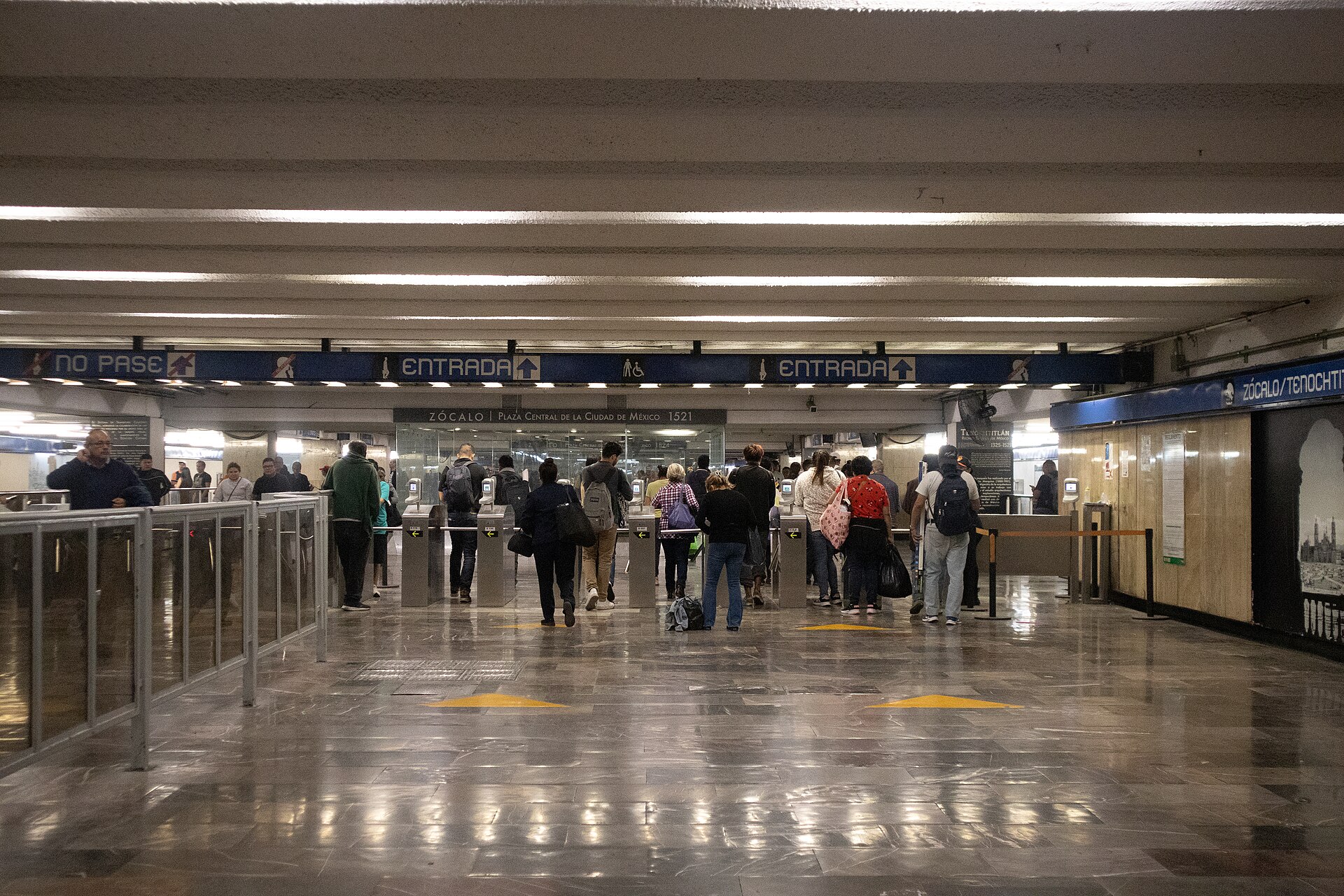
Metro Zócalo turnstiles: Metro Zócalo Tenochtitlan – 02 – Torniquetes by ProtoplasmaKid, CC BY-SA 4.0, via Wikimedia Commons.
Food stall in Mercado Roma: Puesto de comida en el mercado Roma by Mvt2092, CC BY-SA 4.0, via Wikimedia Commons.