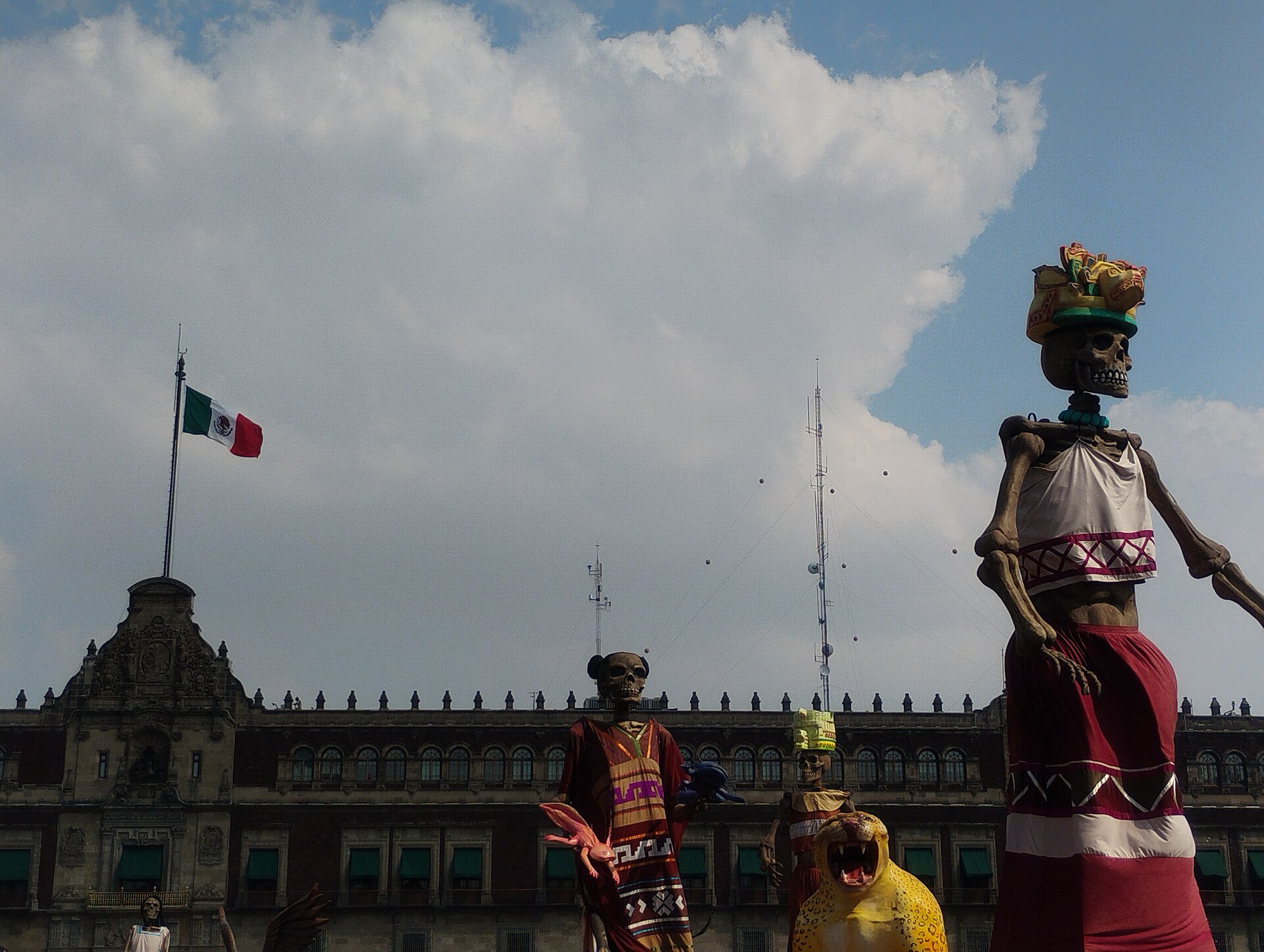
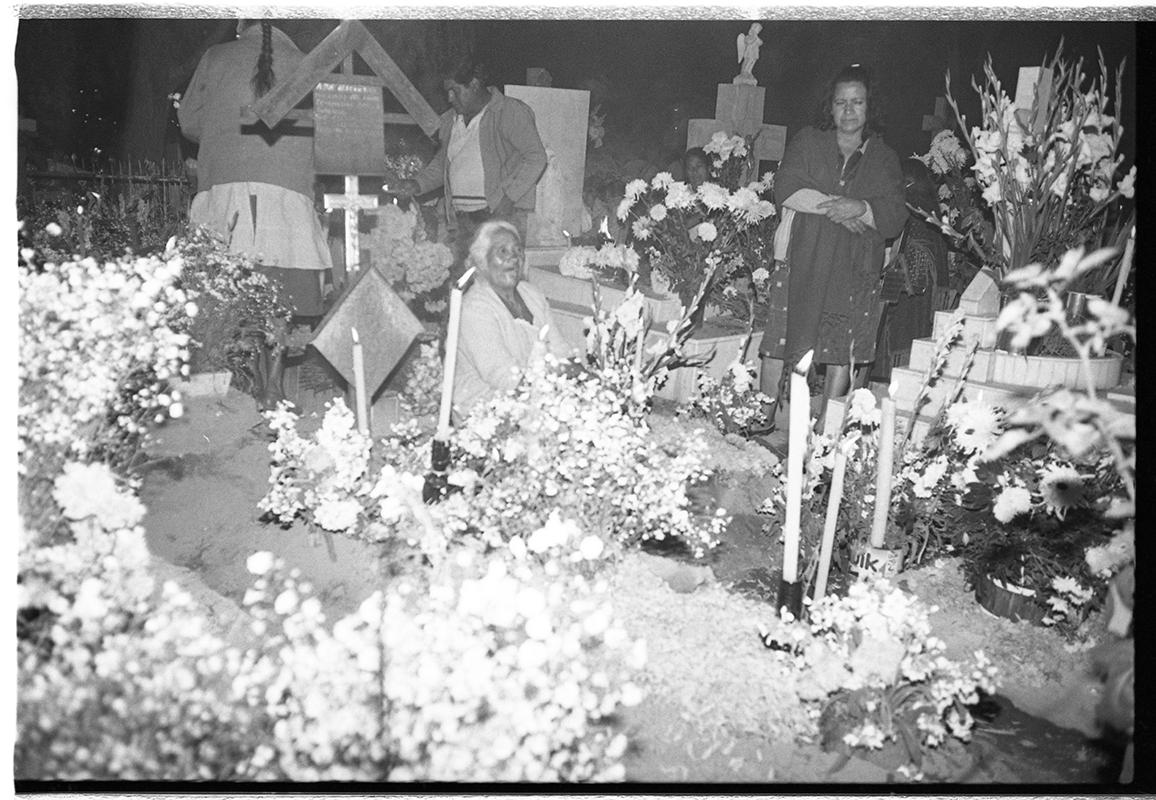
On the night of 2 November, in the cemetery of San Andrés Mixquic at the south-eastern edge of the city, families sit beside graves they have spent the day scrubbing and decorating, and thousands of candles burn among the marigolds until long after midnight. Some thirty kilometres to the north-west, a few days earlier, a 32-metre Catrina of painted cartonería will have gone up in the Zócalo, and the biggest parade of the year will have marched down Paseo de la Reforma to meet her. Both are Día de Muertos in Mexico City. One is centuries old, the other barely a decade, and the trick to the season is knowing which you are looking at and how to behave at each. This Day of the Dead Mexico City guide is built to help you choose between them, with the 2026 dates that have been confirmed, the ones that have not, and the practical detail that decides whether the week works.
The 2026 calendar has a twist that almost no guide has noticed. The Gran Desfile de Día de Muertos is on Saturday 31 October, the Formula 1 Mexico City Grand Prix is on Sunday 1 November, and Día de Muertos itself falls on Monday 2 November, the day nearly every museum in the city closes. Three of the year’s largest crowd events in three days, with the museums shut on the third. That sets accommodation prices, Metro crowds and your sightseeing plan for the whole week, and it is the first thing to plan around.
The short answer
- When: the season builds from mid-October, with the alebrije parade on 17 October, and peaks from 29 October to 2 November. The traditional days are 1 November, for children who have died, and 2 November, for adults.
- What is free: almost everything. The parades, the processions, the Zócalo ofrenda, the UNAM Megaofrenda and the cemetery vigils are all free and unticketed. Anyone selling you “entry” to them is selling you nothing.
- What to book now: accommodation for 30 October to 2 November, which the F1 race weekend makes unusually expensive; transport to Mixquic if you want to go on the night of 2 November; and any museum tickets for the days around the holiday.
- What to verify the week before: the parade’s start time, which has been reported as both 12:00 and 14:00; Metro station closures around the Zócalo; and the hours of the ofrendas you want to see.
- The best quiet alternative: come in the week of 17 to 25 October. The alebrijes are on Reforma, the Catrinas procession runs on the 25th, the marigold festival has started, and the hotels are at ordinary prices.
- The rule that matters most: at a cemetery, you are a guest at someone’s family remembrance. Ask before you photograph anyone, and do not touch the ofrendas.
The 2026 calendar, confirmed and unconfirmed
These dates come from Mexican press reporting of the city government’s programme, checked between September and early October 2026. The city’s own culture pages refused connections when we tried to read them in September, so treat everything here as one step removed from primary and confirm on the city’s official channels in the week before you travel. Where reports disagree, we say so rather than picking one.
| Date (2026) | Event | Where and when | Cost |
|---|---|---|---|
| Sat 17 Oct | 18th Desfile de Alebrijes Monumentales (Museo de Arte Popular) | From 12:00, Zócalo to Paseo de la Reforma. The giant sculptures then stay on display along Reforma. | Free |
| Sun 18 Oct | Marcha Zombie | Reported from 10:00, from Avenida de la República near the Monumento a la Revolución to the Zócalo. Food donations collected for a food bank. | Free |
| 18 Oct – 1 Nov | Festival Flores de Cempasúchil | Reforma between the Ángel de la Independencia and the Ahuehuete; about 140 growers from Tláhuac, Milpa Alta and Xochimilco | Free to visit |
| Sat 24 Oct | Night bike ride (Paseo Nocturno) | 19:00–23:00, about 19 km from the Fuente de Petróleos to the Centro via Reforma and Avenida Juárez; costume contest, bike loans | Free |
| Sun 25 Oct | Mega Procesión de Catrinas | From 18:00, starting on Reforma at the Ángel, via Avenida Juárez and 5 de Mayo to the Zócalo | Free |
| Wed 28 Oct | Noche de Museos | The city’s monthly late opening, on the last Wednesday. The Casa Azul’s session runs 17:15–21:00. | Varies by museum |
| 29 Oct – 2 Nov | Ofrenda Monumental in the Zócalo | A tribute to José Guadalupe Posada’s Catrina, with a 32-metre cartonería figure, sawdust carpets and marigolds. The Centro is specially lit from 29 Oct to 4 Nov. | Free |
| 29 Oct – 4 Nov | Festival “La Puerta entre dos mundos” | Bosque de Chapultepec: music, dance, food, altars and a drone show | Check listings |
| 31 Oct – 2 Nov | Megaofrenda UNAM, 29th Festival Universitario de Día de Muertos | Esplanade of the Museo Universum, Ciudad Universitaria, 11:00–21:00. Theme: the university’s 475 years. | Free |
| Sat 31 Oct | Gran Desfile de Día de Muertos | Puerta de los Leones (Bosque de Chapultepec), along Reforma to the Zócalo. Start reported as 12:00 (mid-September reports) and 14:00 (a late-September report citing the city’s guide). Confirm. | Free |
| Sun 1 Nov | Día de Todos los Santos; Formula 1 Mexico City Grand Prix | Homes and cemeteries; the race at the Autódromo Hermanos Rodríguez | Race ticketed |
| Mon 2 Nov | Día de Muertos; La Alumbrada in Mixquic | Cemeteries citywide; Mixquic’s celebrations run 31 Oct to 2 Nov, with the candlelit Alumbrada on the night of the 2nd | Free |
Two further notes. The city also announced an installation called Sendero de las Almas, but we could not confirm its location or dates, so it is not in the table. And the city’s programme lists community altars at twelve further sites beyond the Zócalo, which change each year; ask at your hotel or check the city’s listings once the season starts.
What Día de Muertos actually is
The short version: it is a time when the dead are believed to come home, and their families get ready for them. The traditional pattern in central Mexico is that children who have died, the angelitos, return on 1 November, which is also the Catholic feast of All Saints, and adults on 2 November, All Souls’ Day. Families build an ofrenda, an altar of offerings, at home, and many also clean and decorate the family grave and spend time beside it. In 2008 UNESCO inscribed the indigenous festivity dedicated to the dead on its Representative List of the Intangible Cultural Heritage of Humanity.
Everything on a traditional ofrenda has a job to do. Mexico City’s official tourism site describes the core elements this way, and it is worth knowing them before you stand in front of one:
- Water, for the thirst of a soul after a long journey.
- Salt, for purification.
- Candles, to light the way home.
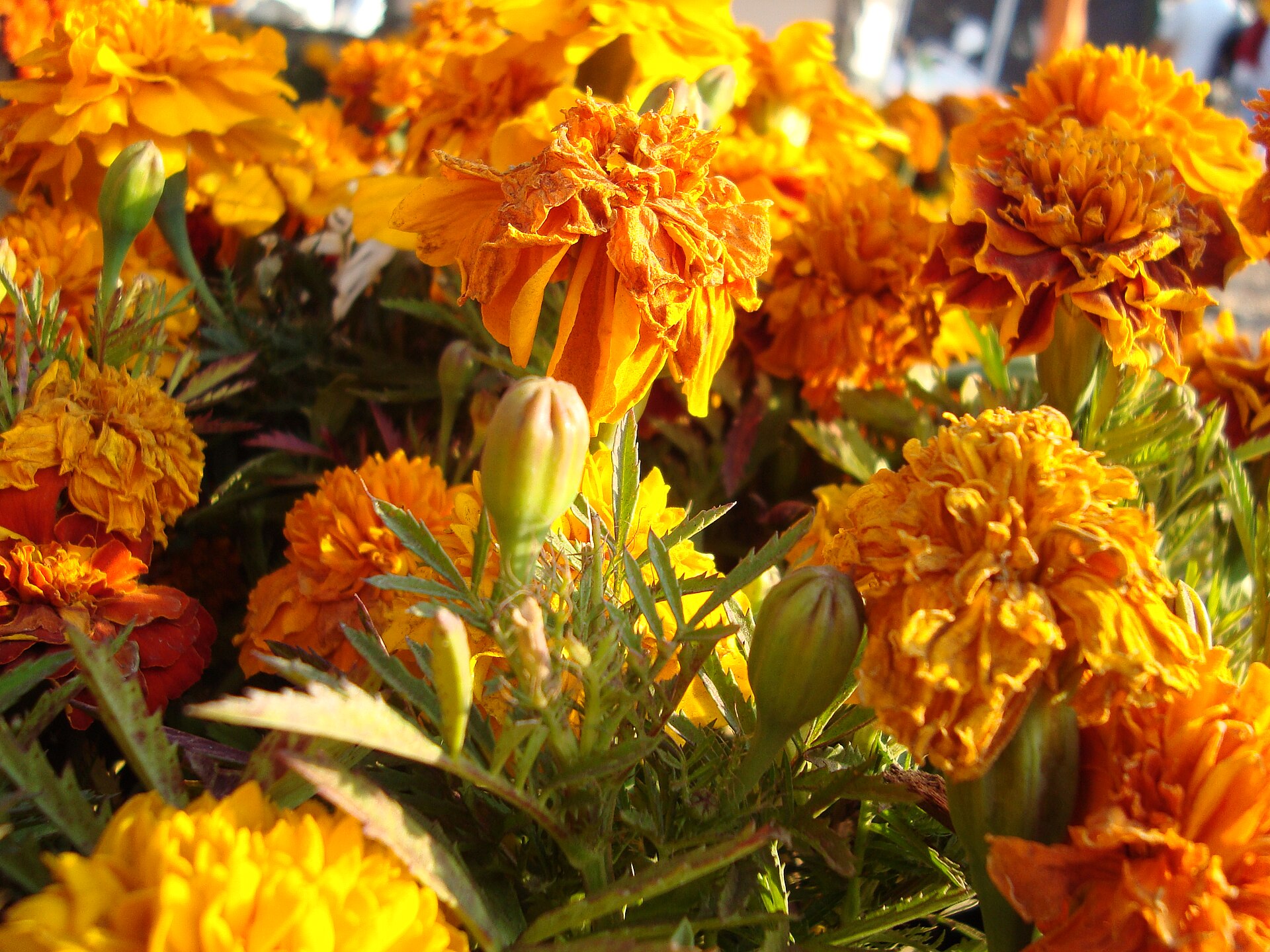
- Flowers, above all cempasúchil, the orange marigold, whose colour and scent are said to guide the dead; petals are often laid in a path.
- Bread, specifically pan de muerto, the sweet round loaf decorated with dough “bones”.
- Copal incense, to clean the space.
- A petate, a woven mat for the visitor to rest on, and toys on the altars made for children.
- Photographs of the people being remembered, with their favourite food, drink and possessions, which is why you will see bottles of tequila, packets of cigarettes and plates of mole on ofrendas without anyone thinking it odd.
Two pieces of popular culture sit on top of this. One is La Catrina, the elegant skeleton in a feathered hat, who began as a satirical etching by José Guadalupe Posada in the early twentieth century and was named and made famous by Diego Rivera, who painted her at the centre of his mural Sueño de una tarde dominical en la Alameda Central. You can see the original in the Museo Mural Diego Rivera beside the Alameda; check its hours, and remember that, like most museums, it closes on Mondays. The other is the parade, which is new. It began in 2016, after a James Bond film invented a Día de Muertos procession through the Centro that did not then exist, and the city decided to stage the real thing. Our guide to Mexico City’s festivals and events tells that story in more detail.
And it is not Mexican Halloween, although the two now share a week and some of the costumes. You will see both: children in witch costumes asking for their calaverita (a few coins or sweets) in the street on 31 October, and, in the same week, families sitting quietly by a grave. The rule of thumb is simple. Anything with a photograph of a real person on it is about grief, however colourful it looks.
Choosing your Day of the Dead: the options, and who each suits
You cannot do all of it, and you should not try. The season offers broadly five different experiences, and the right mix depends on how you feel about crowds, how late you like to stay up, and whether you have come for spectacle or for something quieter.
The public spectacles: parades and processions
The Gran Desfile on 31 October is the big one: floats, giant skeletons, dancers, bands and hundreds of thousands of spectators along Reforma. The alebrije parade on 17 October is in many ways better for visitors, because the monumental, fantastical creatures of painted cartonería stay on display along Reforma afterwards, so you can see them up close on a calm weekday. The Catrinas procession on 25 October is the one to join rather than watch: a walking procession in the evening, with a high share of participants in full Catrina make-up and dress.
Suits: first-time visitors, photographers, families with children old enough to cope with a crowd, and anyone who wants the full-volume version of the season. Does not suit: anyone who hates crowds, or travellers with small children who need space and toilets on demand.
The ofrenda trail
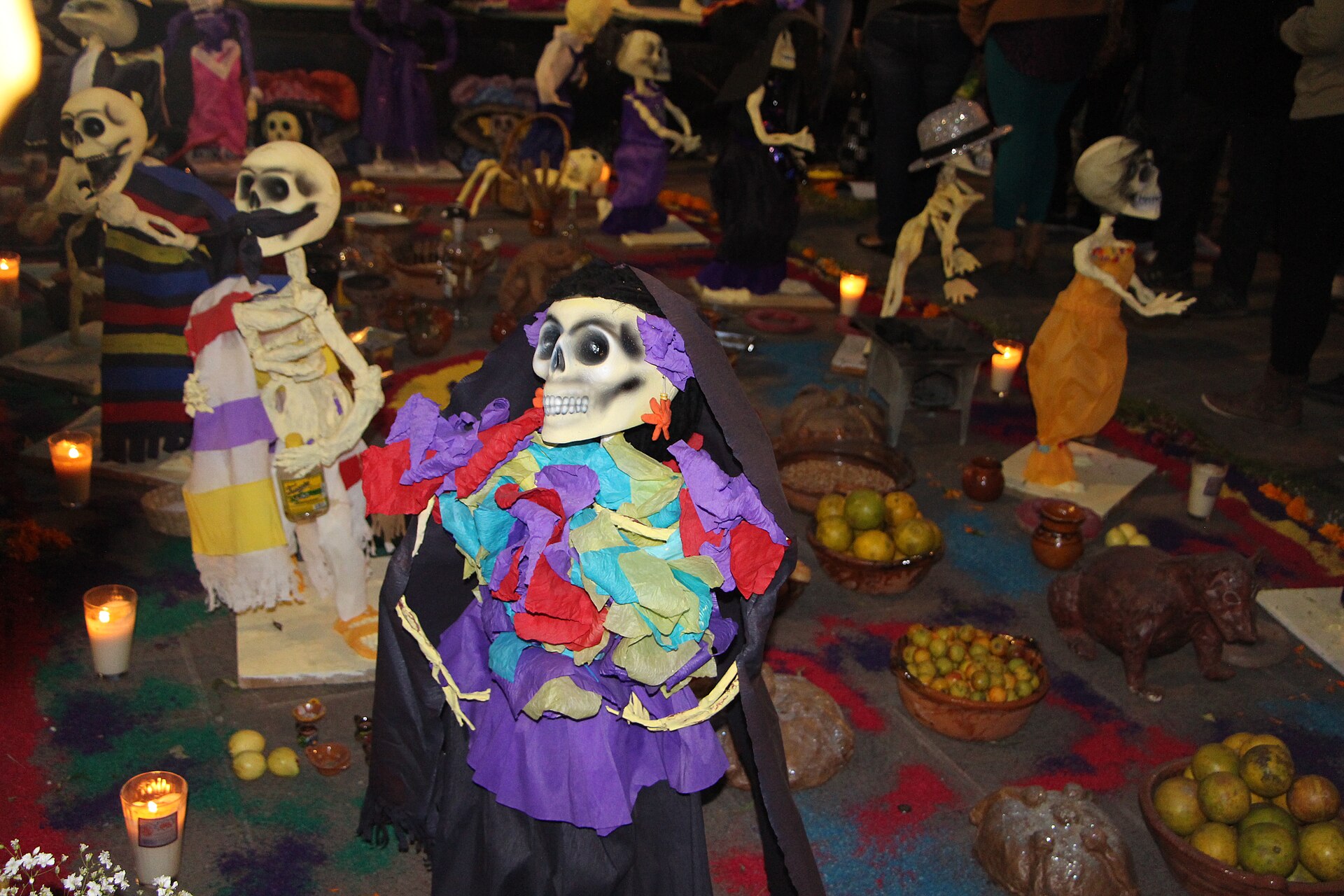
This is the most rewarding option for most visitors and the one most people undervalue. The Ofrenda Monumental in the Zócalo (29 October to 2 November) is the showpiece, best at night when it is lit. The Megaofrenda at UNAM (31 October to 2 November, 11:00 to 21:00) fills the esplanade of the Museo Universum at Ciudad Universitaria with altars built by faculties and students, often witty, sometimes political and always inventive; in 2026 they are themed on the 475 years since the founding of the Universidad de México. In Coyoacán and San Ángel, the squares, churches and markets fill with altars in the last days of October, and many shops and restaurants build their own.
Museums are part of the trail too. The Museo Anahuacalli, Diego Rivera’s volcanic-stone museum in Coyoacán, is well known for its annual ofrenda, and the Museo Dolores Olmedo in Xochimilco, which reopened at its original site in May 2026 after more than five years closed, was long famous for its own. Check whether each is staging one in 2026 before you make the trip, and remember that both close on Mondays, which includes 2 November this year.
Suits: almost everyone, especially culture-focused travellers, families with young children (go in daylight) and anyone who wants the meaning as well as the spectacle.
The cemetery vigil
This is the oldest and most moving part of the season, and the one that demands the most care. The best-known vigil in the capital is in San Andrés Mixquic, in the borough of Tláhuac, where the celebrations run from 31 October and culminate in La Alumbrada on the night of 2 November, when the graves are lit with thousands of candles. It is extraordinary. It is also a small community receiving enormous numbers of visitors, a long way from the centre, with a late-night return. Many visitors go with an organised tour, which is a perfectly legitimate thing to buy: you are paying for transport and a guide, not for access, which is free.
The alternative is a smaller local cemetery, where families keep the same observance with far fewer outsiders. Ask locally, go in the late afternoon or early evening of 1 or 2 November, and behave exactly as you would at a stranger’s family gathering.
Suits: adult travellers who want the traditional observance and are prepared to be quiet, respectful and patient. Does not suit: anyone in a hurry, anyone who wants photographs above all, or young children late at night.
Markets, flowers and food
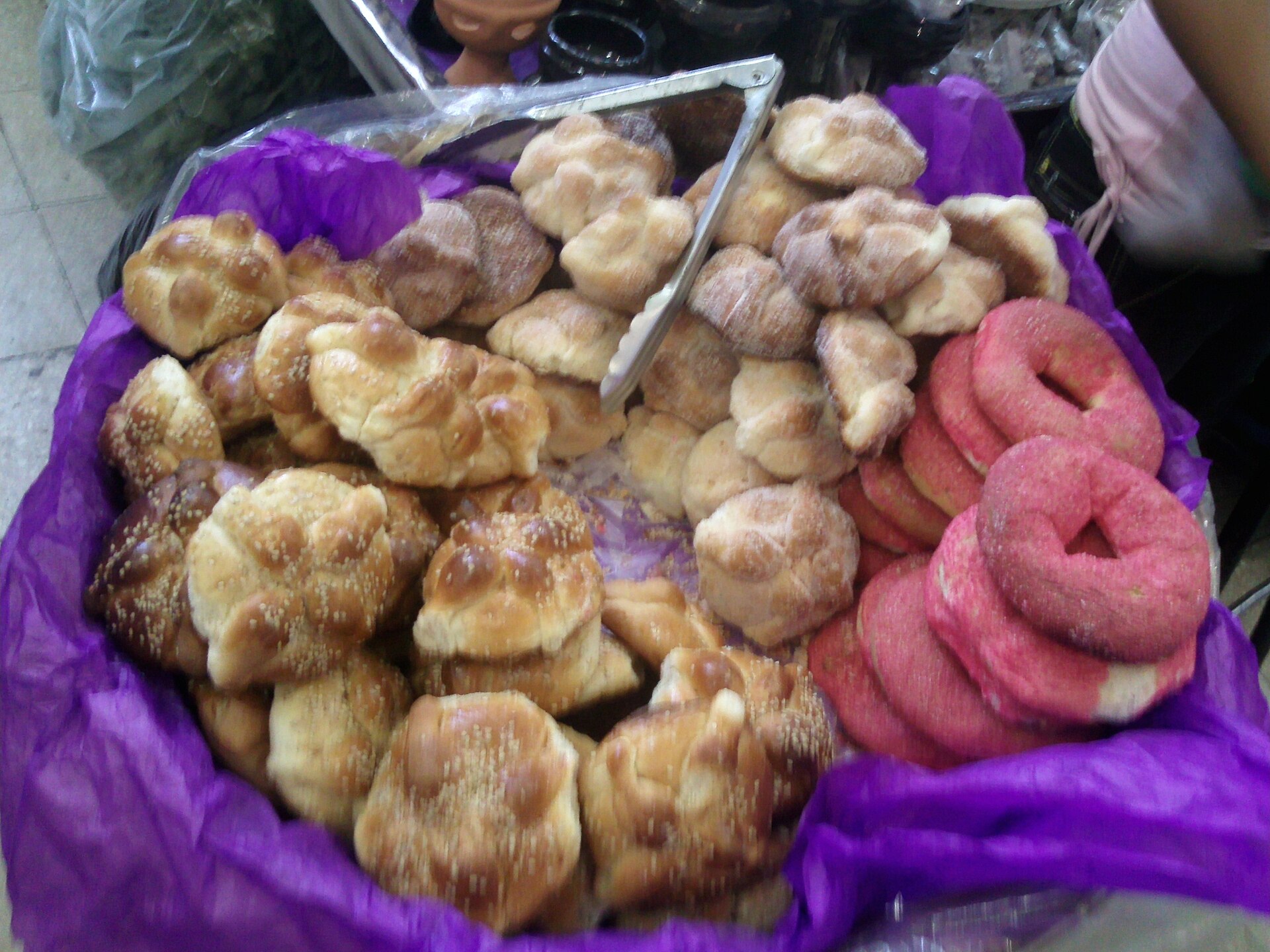
Food is a large part of the season, and it is the easiest part to share in. Pan de muerto appears in bakeries in the weeks before 2 November, plain, sugared or filled, and is eaten with hot chocolate. Sugar skulls and figures in sugar, chocolate and amaranth are sold in markets for ofrendas and as gifts. The great flower market at Mercado de Jamaica (Metro Jamaica, Lines 4 and 9) turns orange and purple with cempasúchil and the velvety magenta terciopelo in the last week of October, and in 2026 the Festival Flores de Cempasúchil puts growers from the city’s own southern farming boroughs on Reforma from 18 October to 1 November. Our Mexico City food guide covers the markets and what to eat in them.
Suits: everyone, and particularly food lovers and families. It is also the best way to spend money that goes straight to local producers.
The party side
There is a festive, social side to the season, especially among younger people. The Catrinas procession, the Marcha Zombie, the night bike ride along Reforma on 24 October and the Halloween parties in Roma and Condesa on 31 October are fun, inclusive and perfectly appropriate places for costumes and face paint. The festival in the Bosque de Chapultepec from 29 October adds music, dance and a drone show.
Suits: younger travellers, groups of friends, and anyone who wants to take part rather than watch.
The week-early option
If the F1 collision puts you off, or you dislike crowds, come between about 17 and 25 October instead. You get the alebrije parade and the sculptures on Reforma, the Catrinas procession, the marigold festival, the bakeries full of pan de muerto and the ofrendas beginning to go up, at ordinary prices and without the race-weekend crush. What you miss is the Zócalo ofrenda, the main parade and the vigils, which is a real loss, but a smaller one than most people expect.
Respectful participation
Visitors are welcome at almost every part of the season, including the cemeteries, and Mexicans are generally delighted that outsiders want to share it. The welcome rests on visitors behaving as guests. The useful comparison is this: photographing a family at their relative’s grave is like photographing strangers at a funeral.
- Ask before photographing people, especially at graves and home altars. A nod and a gesture at the camera is enough; accept a no.
- Do not touch or rearrange anything on an ofrenda, and do not take anything from one, including a single marigold.
- In cemeteries, walk on the paths, not on graves; keep your voice down; no flash at night; and no drones anywhere.
- Do not bring alcohol into a cemetery unless a family invites you to share theirs, in which case accepting a small amount is a kindness and declining politely is fine too.
- Catrina face paint is welcome, especially at the processions, and many Mexicans paint their faces too. A cartoon “Mexican” costume, with a sombrero and a fake moustache, is a different thing.
- Spend locally: buy flowers, bread, food and candles from the people selling them around the cemeteries and markets.
- Leave nothing behind, and take your rubbish with you.
Crowds, transport and getting around
The season’s big public events are concentrated on two axes, Paseo de la Reforma and the Zócalo, and on event days both close to traffic. Plan around that.
- On parade days (17 and 31 October, and the evening of 25 October), Reforma closes to traffic and buses are diverted. Use the Metro: Line 1 at Chapultepec, Sevilla and Insurgentes for the Reforma end, and Bellas Artes or Hidalgo for the Centro end. Taxis and app rides cannot reach the route and get stuck around it; walk out of the closed area before you order one.
- Around the Zócalo, Zócalo/Tenochtitlan Metro station can close or run one-way during big events. Walking to Allende, Bellas Artes or Pino Suárez is usually faster than queuing at the nearest entrance.
- Top up your Movilidad Integrada card the day before. On event days the machines have queues. Metro fares are a flat 5 pesos, Metrobús 6.
- In dense crowds, pickpocketing is the realistic risk. Keep your phone and wallet in front pockets, and agree a meeting point with your group in advance, because mobile signal often fails when hundreds of thousands of people are in one place.
- On Sunday 1 November, the F1 race loads Metro Line 9 and Metrobús Line 2 towards the Autódromo in the east of the city. If you are not going, avoid them.
- To UNAM, take Metro Line 3 to Copilco or Universidad, or the Metrobús along Insurgentes Sur, and allow time to walk across the campus to the Universum.
- To Mixquic, the trip to the far south-east of the city is long, and the return after La Alumbrada is late. An organised tour, or a driver who waits, is the realistic option for most visitors.
Our getting around guide explains the Metro, Metrobús and fares, and our safety guide covers crowd precautions and help numbers.
Where to stay, and when to book
Book as early as you can. The combination of Día de Muertos and a Formula 1 race weekend makes the nights of 30 October to 1 November likely to be among the most expensive and hardest to book of the whole year in 2026. If prices look unreasonable, consider shifting your trip a week earlier, or arriving on 1 November and staying through the following week, when the ofrendas are still up for a day or two.
- The Centro Histórico puts you next to the Zócalo ofrenda and the end of the parade route, but it is the noisiest and most closed-off area on the big days.
- Roma, Condesa and Juárez are close to Reforma for the parades and full of restaurants, and are the easiest base for most visitors.
- Coyoacán is calmer, closer to UNAM and full of neighbourhood altars, but further from the parades.
Whatever you book, prefer accommodation that is properly registered: short-term rentals in the city are required to show a registration folio on their listings, and a host who can invoice and be contacted directly is worth more than a slightly cheaper price. Our where to stay guide compares the neighbourhoods in detail.
Weather, clothing and the nights
Late October and early November sit at the turn of the seasons. Using the long-term averages for the Tacubaya station, October averages about 71 millimetres of rain and November only about 17, so late-October afternoons can still bring a shower while November is usually dry. Daytime highs are around 23 °C; average lows are about 12 °C in October and 10 °C in November.
- For the parades, it is the midday sun you need to plan for: a hat, sunscreen and water, and a spot in the shade if you can find one.
- For the night events, and above all a cemetery vigil, it gets cold. Bring a warm layer and a scarf; you may be standing or sitting outside for hours.
- Wear comfortable shoes. You will walk a lot, and cemetery paths are uneven and crowded in the dark.
Museums and closures over the holiday
The calendar this year creates a trap. Monday 2 November is Día de Muertos, and it is also a Monday, the day the Museo Nacional de Antropología, the Templo Mayor, Chapultepec Castle, the Casa Azul and most other museums close every week. If you have only that day, plan it around things that stay open:
- Teotihuacan, which is open on Mondays: a morning at the pyramids and an evening at a vigil is a remarkable day. See our Teotihuacan guide.
- Xochimilco, where the trajineras run as usual at the official rate of 750 pesos an hour per boat, not per person. See our Xochimilco guide.
- The markets, the Basílica de Guadalupe, the Torre Latinoamericana viewing deck and the ofrendas themselves, all of which are open.
Sunday 1 November has its own rule: entry to INAH sites such as the Museo Nacional de Antropología is free on Sundays only for Mexican nationals and legal residents; foreign visitors pay 210 pesos. The Museo del Palacio de Bellas Artes, run by a different institute, is free to everyone on Sundays. For the Casa Azul, which sells tickets online only, book early: see our guide to Frida Kahlo Museum tickets, and our museums guide for the full closure pattern.
What to book or verify, and the fallback plan
Book before you travel
- Accommodation for 30 October to 2 November, as early as possible.
- Transport to Mixquic for the night of 2 November, if you want to go: an organised tour or a driver who waits.
- Timed museum tickets for the days around the holiday, especially the Casa Azul, which has no box office.
- Restaurant tables for the evenings of 31 October and 1 November, which are among the busiest of the year.
- Race tickets, if you want the Grand Prix, only from the official seller or its named agents.
Verify the week before
- The parade’s start time and route, on the city’s official channels. Reports in September gave both 12:00 and 14:00.
- Metro station closures around the Zócalo and Reforma on event days.
- The hours of the ofrendas you want to see, and whether the museum ofrendas are running in 2026.
- The weather forecast, for late-October showers.
When the plan goes wrong
- The parade is impossibly crowded: move away from the Zócalo end. The crowd is usually thinner near the start in Chapultepec and along stretches of Reforma, and the parade passes everyone eventually.
- You missed the alebrije parade: the sculptures stay on display on Reforma afterwards. Go on a weekday morning.
- Mixquic is too far, too late or too much: see the UNAM Megaofrenda in the afternoon and visit a smaller local cemetery in the early evening instead.
- It rains: head indoors to the museum ofrendas, or wait it out; late-October showers usually pass quickly.
- Your museum day falls on 2 November: swap it for Teotihuacan or Xochimilco and move the museum to Tuesday.
One rule covers the tickets question: if an event is free, nobody can sell you a ticket to it. The parades, the Zócalo ofrenda, the Megaofrenda and the cemeteries are all free. If you are overcharged or sold something that does not exist, Profeco, the federal consumer protection agency, takes complaints on 800 468 8722.
Frequently asked questions
When is Day of the Dead in Mexico City in 2026?
The traditional days are Sunday 1 November and Monday 2 November 2026, but the season runs from mid-October. The main parade is on Saturday 31 October, the Zócalo ofrenda is up from 29 October to 2 November, and the alebrije parade opens the season on 17 October.
What time does the Day of the Dead parade start in 2026?
Reports have disagreed: mid-September reports of the city’s announcement gave 12:00 from the Puerta de los Leones in Chapultepec, and a late-September report citing the city’s guide gave 14:00. Confirm on the city’s official channels in the week before, and arrive early either way to find a spot.
Do I need tickets for Day of the Dead events?
No. The parades, the processions, the Zócalo ofrenda, the UNAM Megaofrenda and the cemetery vigils are free and unticketed. Tours to Mixquic are sold legitimately, but you are buying transport and a guide, not entry.
Where are the best ofrendas in Mexico City?
The Ofrenda Monumental in the Zócalo (29 October to 2 November), the Megaofrenda at UNAM’s Ciudad Universitaria (31 October to 2 November, 11:00 to 21:00), and the neighbourhood altars of Coyoacán and San Ángel. Some museums, such as the Anahuacalli, are known for their own; check whether they are running in 2026.
Is Mixquic worth visiting?
For travellers who want the traditional cemetery vigil, yes: La Alumbrada on the night of 2 November is unforgettable. But it is far from the centre, very crowded and late, and it is a family observance rather than a show. Go with an organised tour or a driver, dress warmly and behave as a guest. A smaller local cemetery is a quieter alternative.
Can tourists visit cemeteries on Día de Muertos?
Yes, and you will usually be made welcome. Walk on the paths, keep your voice down, do not touch the ofrendas, and ask before you photograph anyone.
Is it respectful to wear Catrina make-up?
Yes, especially at the processions, where many Mexicans paint their faces too. Keep it out of the cemeteries at night unless you see local families doing the same, and avoid caricature costumes.
Are museums open on 2 November?
In 2026, mostly not, because 2 November falls on a Monday, when most museums close every week. Teotihuacan, Xochimilco, the markets, the Basílica and the ofrendas are open.
Is Day of the Dead the same as Halloween?
No. They fall in the same week and share some costumes, but Día de Muertos is a remembrance of specific people by the families who loved them. You will see both in Mexico City; the difference is usually obvious.
How far ahead should I book?
For 2026, as far ahead as you can. The Formula 1 Grand Prix on 1 November lands between the parade and Día de Muertos, so accommodation for that weekend is unusually expensive and scarce.
If the parade is the part you most want to see, our guide to the Day of the Dead parade route covers it in detail: each section of the route from Chapultepec to the Zócalo, roughly when the parade reaches it, the best places to watch with children, and what to do if you cannot get close.
If you are still choosing your dates, our guide to Mexico City in October compares the quieter first half of the month with the season’s peak, and suggests a 13 to 25 October window that catches the alebrijes and the Catrinas procession at ordinary prices.
Related Mexico City Guides
- Mexico City festivals and events: the full year of events, including the 2026 Día de Muertos and F1 collision, with dates and ticketing rules.
- When to visit Mexico City: the climate month by month, crowds and prices.
- Where to stay in Mexico City: the neighbourhoods compared, with the accommodation rules that matter.
- Mexico City museums: tickets, prices and the Monday closures.
- Mexico City neighbourhoods: Coyoacán, San Ángel, the Centro and the rest.
- Xochimilco: the official boat rate, the embarcaderos and how to avoid being overcharged.
- Mexico City food guide: markets, street food and the dishes to look for.
- Getting around Mexico City: the Metro, Metrobús and fares.
Sources and verification
- 2026 programme: adn40, 26 September 2026, reporting the city’s official guide: alebrije parade 17 October (Museo de Arte Popular, 18th edition, Zócalo to Reforma, sculptures remaining on display); Marcha Zombie 18 October; Festival Flores de Cempasúchil 18 October to 1 November on Reforma, about 140 growers from Tláhuac, Milpa Alta and Xochimilco; night bike ride 24 October, 19:00–23:00, about 19 km; Catrinas procession 25 October; Zócalo Ofrenda Monumental 29 October to 2 November with lighting to 4 November, a tribute to Posada’s Catrina with a 32-metre cartonería figure; Chapultepec festival 29 October to 4 November; Mixquic 31 October to 2 November with La Alumbrada on 2 November; Gran Desfile 31 October at 14:00. Checked 3 October 2026.
- Parade route and earlier timing: El Universal, México Desconocido and El Informador reporting of the CDMX government announcement: Gran Desfile 31 October 2026 from 12:00, Puerta de los Leones to the Zócalo via Reforma; alebrije parade 12:00; Catrinas procession from 18:00; night bike ride 24 October. Checked 18 September 2026. The city’s culture and government domains refused connections when checked, so these are one step from primary.
- UNAM Megaofrenda: El Imparcial (24 September 2026) and El Sol de México: 31 October to 2 November 2026, esplanade of the Museo Universum, Ciudad Universitaria, 11:00–21:00, free; 29th Festival Universitario de Día de Muertos; theme marking 475 years of the Universidad de México. Checked 3 October 2026.
- Ofrenda elements: Mexico City’s official tourism site (mexicocity.cdmx.gob.mx), page on Day of the Dead ofrendas. Checked 3 October 2026.
- Formula 1: Mexico City Grand Prix on Sunday 1 November 2026 at the Autódromo Hermanos Rodríguez. Checked September 2026.
- Museums, admissions and closures: Monday closures; INAH Category I tariff of 210 pesos for foreign visitors from 1 January 2026, with free Sunday entry limited to Mexican nationals and legal residents; Bellas Artes free to all on Sundays; Casa Azul online-only tickets and Noche de Museos session 17:15–21:00; Museo Dolores Olmedo reopened 30 May 2026 at La Noria. Checked September 2026.
- Climate: Servicio Meteorológico Nacional normals for Ciudad de México (Tacubaya), 1991–2020.
- Transport and accommodation rules: Metro 5 pesos and Metrobús 6 pesos (2026); short-term rental registration folio requirement. Checked September 2026.
What this page does not claim. Nobody from this site attended these events on the dates published or visited Mixquic for this page, and nothing here describes a personal experience. The 2026 programme is drawn from Mexican press reporting of the city’s announcements, not from the city’s own pages, which could not be read directly; reports disagree on the parade’s start time, and we could not confirm the Sendero de las Almas installation, the twelve community altar sites, or whether the Anahuacalli and Dolores Olmedo museums are staging ofrendas in 2026. Crowd and transport advice is general planning guidance, not an official operating plan. Programmes change at short notice, so check the city’s official channels before you travel.
Photo Credits
A community ofrenda in Coyoacán: Día de Muertos en Coyoacán 77 by Elenats.93, CC BY-SA 4.0, via Wikimedia Commons.
Mixquic, 2 November 1986: Reportaje en Mixquic del Día de Muertos, noviembre 02 1986, Museo Archivo de la Fotografía, Gobierno de la Ciudad de México, CC0, via Wikimedia Commons.
Pan de muerto in a Coyoacán market: Coyoacán día de muertos 06 by Guillerminargp, CC BY-SA 3.0, via Wikimedia Commons.
Cempasúchil at the UNAM Megaofrenda: Cempasúchil en la Megaofrenda by Yavidaxiu, CC BY 3.0, via Wikimedia Commons.
The Día de Muertos figures in the Zócalo are credited on their original appearance in this site’s media library.