The most useful fact about free things to do in Mexico City in 2026 is a price change that many guides haven’t caught up with. The old advice was simple: go to the big museums on a Sunday, when they’re free. At the sites run by INAH, the national institute behind the Museo Nacional de Antropología, Templo Mayor, Chapultepec Castle and Teotihuacán, Sunday free entry is for Mexican nationals and foreign residents, not for visitors on a tourist permit, and since 1 January 2026 those visitors pay 210 pesos (100 in 2025). They pay the full price on Sundays too, and share the rooms with the Sunday crowds. The good news is that the city is still full of things that cost nothing at all: two outstanding art museums with no ticket, a national palace’s murals by free guided visit, a vast urban forest, the shrine of the Virgin of Guadalupe, a university campus that is a World Heritage site, and plenty of good people-watching. This guide sorts out which is which, when each is open, how long it takes and how to string them together.
For the paid headliners, from the Casa Azul to Teotihuacán, see our main guide to things to do in Mexico City. For a full daily budget, see what Mexico City costs.
The short answer
- Always free: the Museo Soumaya and the Museo Jumex in Polanco, the Bosque de Chapultepec, the Basílica de Guadalupe, the city’s squares, parks and markets, and Cencalli, the maize museum in Chapultepec.
- Free on certain days: the Museo del Palacio de Bellas Artes and the Museo Tamayo on Sundays; MUAC, the university’s contemporary art museum, on Thursday evenings.
- Free but booked: the Diego Rivera murals in the Palacio Nacional, seen on free guided visits that you register for at the Hacienda museum from 10:00.
- Not free for foreign visitors on Sundays: INAH sites, including the Antropología, Templo Mayor, Chapultepec Castle and Teotihuacán, at 210 pesos.
- Best free day: Chapultepec and Polanco, with the forest, Cencalli and the two free museums of Plaza Carso.
- Mondays: most museums and the first section of Chapultepec close. The Soumaya and the Basílica stay open.
What counts as free in this guide
Every place here passes one of three tests:
- No ticket at all, for anyone, any day it is open.
- A free day or time slot that applies to visitors from abroad, not just to residents.
- Free to enter, with a paid extra inside, where the free part is worth the trip on its own.
Places that are free only for Mexican nationals, residents, students or retirees with Mexican credentials aren’t counted as free here, because most readers can’t use those concessions. Prices and hours were checked in November 2026 against the venues’ own sites or official listings, and opening rules change, so check the venue’s own page before you go.
The shortlist at a glance
| Place | Area | Free when | Open | Allow | Best for |
|---|---|---|---|---|---|
| Museo Soumaya (Plaza Carso) | Polanco | Always | Daily, 10:30–18:30 | 1–2 hours | Art lovers, Mondays |
| Museo Jumex | Polanco | Always | Tue–Fri 10:00–17:00, Sat 10:00–19:00, Sun 10:00–17:00 | 1 hour | Contemporary art |
| Bosque de Chapultepec | Chapultepec | Always | First section Tue–Sun 05:00–18:00 | Half a day | Families, runners, everyone |
| Cencalli | Chapultepec | Always | Tue–Sun 10:00–17:00 | 1 hour | Food lovers |
| Museo Tamayo | Chapultepec | Sundays | Tue–Sun 10:00–18:00 | 1–2 hours | Modern and contemporary art |
| Museo del Palacio de Bellas Artes | Centro | Sundays | Tue–Sun 10:00–18:00 | 1–2 hours | Murals, architecture |
| Palacio Nacional murals | Centro | Free guided visits, registered for in person | Tue–Sun, from 10:00 (check first) | 1–2 hours | Diego Rivera |
| Zócalo, Catedral, Centro streets | Centro | Always | Streets any time; check church hours | Half a day | First-timers |
| Basílica de Guadalupe | North | Always | Daily, 06:00–21:00 | 2 hours | Faith, history, crowds |
| Ciudad Universitaria (UNAM) | South | Campus always; MUAC Thu 18:00–20:00 | Campus daytime; MUAC Tue–Sun | Half a day | Architecture, murals |
| Parks of Roma and Condesa | Roma, Condesa | Always | Any time in daylight | 2 hours | Slow mornings |
| Noche de Museos | Citywide | Free or discounted entry | Last Wednesday of the month, 18:00–22:00 | An evening | Night owls |
Which free day suits you
The same city gives very different free days depending on who you are.
- First-time visitors: the Centro. The Zócalo, the cathedral, the Palacio Nacional tour and the walk along Madero to Bellas Artes give you the country’s history in a single day for the price of a Metro ticket.
- Art lovers: Polanco and Chapultepec. The Soumaya and the Jumex any day but Monday, with the Tamayo and the Bellas Artes museum added on a Sunday and MUAC on a Thursday evening.
- Families: the Bosque de Chapultepec on a weekend, with its paths, lakes and zoo, then a free afternoon in Parque México. INAH’s free entry for children under 13 applies to Mexicans and foreign residents, so check the price for your children at the desk if you add an INAH museum.
- Architecture fans: Ciudad Universitaria, the Biblioteca Vasconcelos, the Palacio Postal and the Bellas Artes building. None needs a ticket to admire.
- People on a tight budget for a whole trip: build your week around the free days. Bellas Artes and the Tamayo on Sunday, MUAC on Thursday evening, Noche de Museos if you are in town on the last Wednesday of the month, and the always-free museums in between.
- Travellers with only one free day: Chapultepec and Polanco, which packs a forest, two free museums and Cencalli into one area.
The Sunday rule, and how to use it
INAH’s Sunday rule is the single biggest trap in this subject. Under the 2026 tariff, INAH’s Boletín 6 of 6 January 2026 puts general entry to the Antropología at 210 pesos, with half price for Mexican nationals and foreign residents who can prove residence, and Sundays free for Mexicans and foreign residents. INAH’s own listings for Templo Mayor, Chapultepec Castle and Teotihuacán show the same 210 pesos for foreign visitors and Sunday free entry for Mexicans. If you are visiting on a tourist permit, Sunday at the Antropología is a full-price day with the Sunday crowds. INAH’s exemptions for children under 13, students and teachers with valid ID and older adults with an INAPAM card apply to Mexicans and foreign residents, so ask at the desk before assuming your documents qualify.
Other museums run their own rules, and Sunday still works in your favour at several of them:
- Museo del Palacio de Bellas Artes: the federal Culture Ministry’s museum directory lists Sunday as free entry, and 90 pesos on other days, Tuesday to Sunday, 10:00 to 18:00. Unlike INAH’s rule, the listing names no nationality condition.
- Museo Tamayo: its own site lists Sunday free entry. It opens Tuesday to Sunday, 10:00 to 18:00.
- MUAC: Sunday is half price for the public, not free. Its free slot is Thursday from 18:00 to 20:00.
The practical upshot: if you’re in the city over a Sunday, spend it on Bellas Artes, the Tamayo, the forest and the free museums of Polanco, and put the Antropología on a weekday, when it costs the same and is quieter. Our Antropología visitor guide has the full ticket rules.
Centro Histórico: the free heart of the city
The historic centre is the best place in the city to spend a day without spending money. Its streets, squares and churches cost nothing, and its two great free set pieces, Rivera’s murals in the Palacio Nacional and the Bellas Artes on a Sunday, are among the most impressive things in the country.
The Zócalo and the Catedral Metropolitana
The Zócalo, officially the Plaza de la Constitución, is the country’s civic stage: the national palace on one side, the cathedral on another, and a constant flow of protests, ceremonies, concerts and ordinary life across the paving. Walk it, then step into the Catedral Metropolitana, which is a working church and free to enter outside services. Be quiet and discreet during Mass, and check the cathedral’s own schedule if you want to time your visit around one. The cathedral and the excavated Templo Mayor next door together tell the story of a city built on top of another; the Templo Mayor is an INAH site and paid, but you can look down into the ruins from the street for nothing.
Diego Rivera at the Palacio Nacional
The murals on the main staircase and first-floor corridors of the Palacio Nacional, Rivera’s history of Mexico from the pre-Hispanic world to his own century, are among the best free things in the city. Access has changed in recent years. INAH’s listing for the palace describes guided visits only, by reservation from 10:00, Tuesday to Sunday, at the Museo de Arte de la Secretaría de Hacienda, Moneda 4, around the corner from the palace. The tour that includes the central patio and the Rivera murals runs at several times through the day. The government’s flyer for the visits says they are free, that over-18s must show official photo ID, that bags, hats and sunglasses go to a cloakroom, and that tours can be suspended without notice, which happens when the palace is in use for state business. Register as early as you can, carry your passport, and have a plan B for the same morning.
More Rivera at the Secretaría de Educación Pública
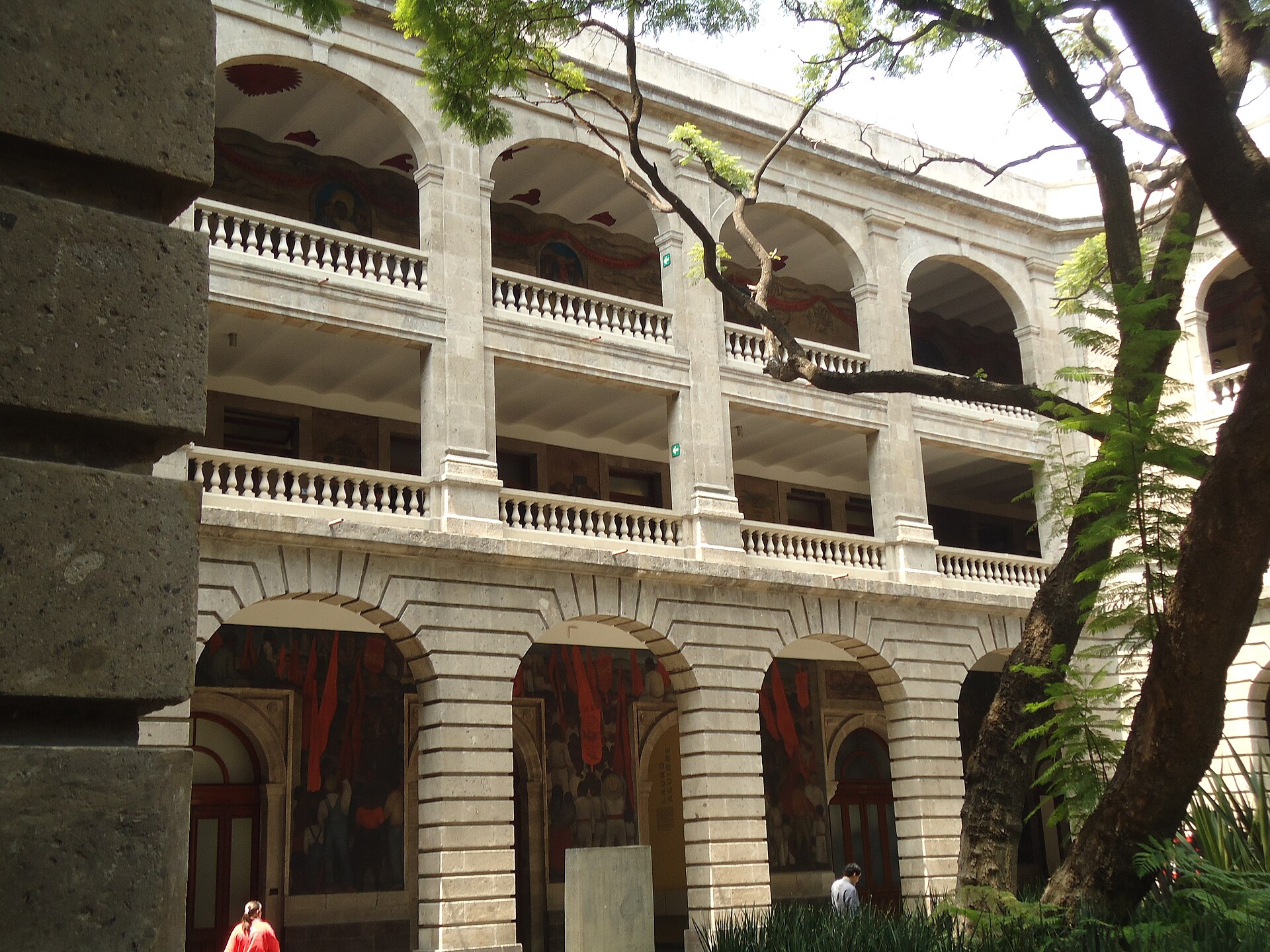
A few blocks north of the Zócalo, the courtyards of the Secretaría de Educación Pública’s historic building are lined with one of Rivera’s great mural cycles, painted across hundreds of square metres of wall in the 1920s. It is a working ministry building rather than a museum, so access can change. Check the ministry’s current visiting arrangements before you go, take photo ID, and treat it as a bonus rather than the centrepiece of your day.
Bellas Artes, the Alameda and the Palacio Postal
The Palacio de Bellas Artes, the white marble concert hall at the western end of the Centro, is worth seeing for its exterior and its art deco interior alone. The museum on the upper floors, with murals by Rivera, Orozco, Siqueiros and Tamayo, is the one to save for a Sunday, when the Culture Ministry’s listing shows free entry. Next door, the Alameda Central, laid out in the late sixteenth century, is a good place to sit among the fountains and the Sunday crowds.
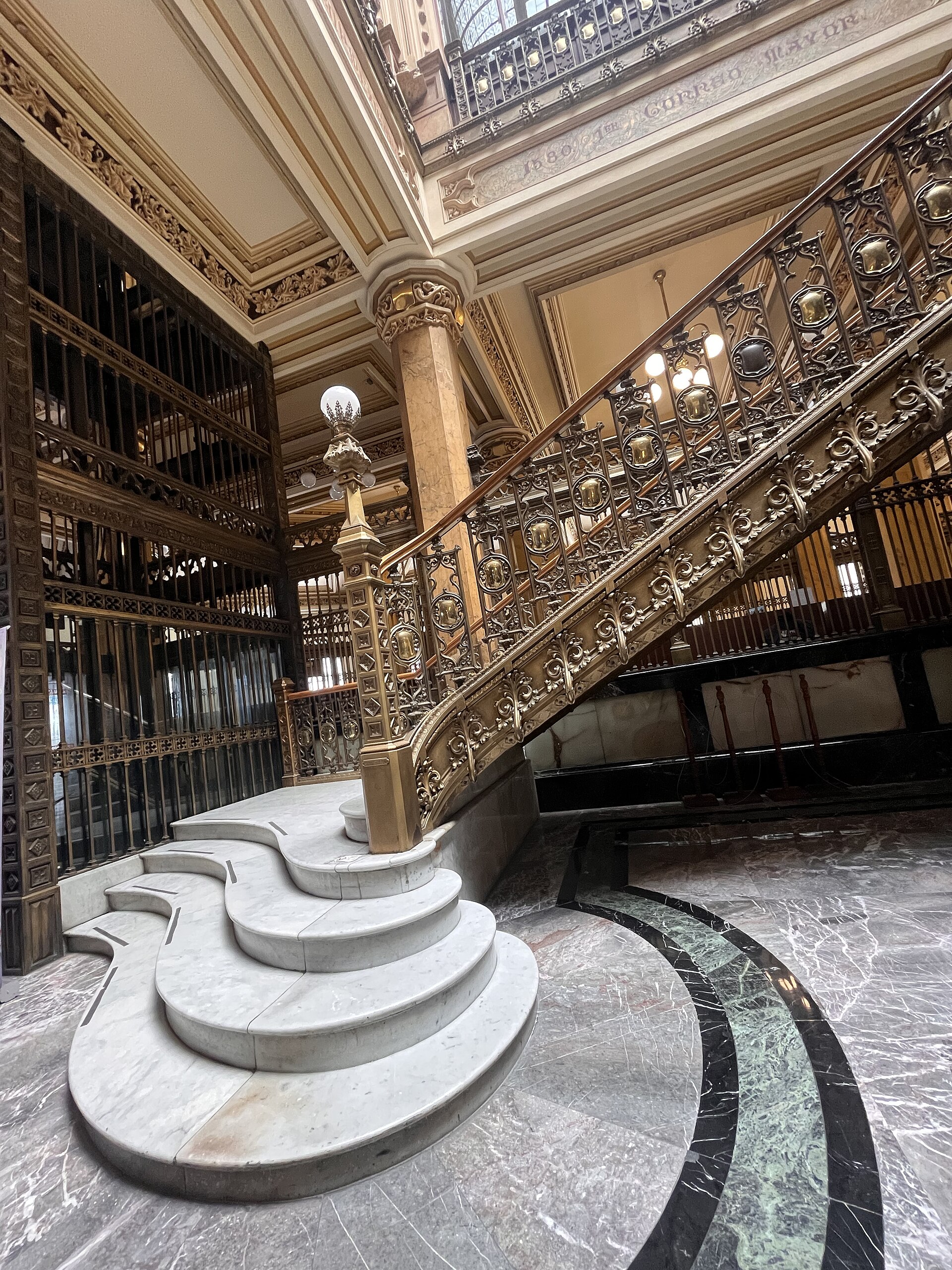
Across the street from Bellas Artes, the Palacio Postal is still a working post office, and its gilded bronze staircases and marble hall are among the finest interiors of the Porfirian era. Step in during post-office hours and look up.
Markets and squares
Wandering the markets costs nothing, and the Centro has some of the most absorbing in the city. Plaza Garibaldi, north of the Alameda, is where mariachi bands wait for hire; listening from the square is free, but a song played for you is not, so agree the price first. For the city’s markets in more depth, see our guide to markets and shopping.
Chapultepec and Polanco: the best free day in the city
If you have one free day to spend, spend it here. The Bosque de Chapultepec is a vast city forest with lakes, museums and the castle on its hill, and the free museums of Plaza Carso are a short ride away in Polanco.
The Bosque de Chapultepec
The forest is free to enter. Its first section, the oldest and busiest, with the castle, the zoo and the big museums, opens Tuesday to Sunday from 05:00 to 18:00 and closes on Mondays for maintenance; the second, third and fourth sections are open around the clock, according to the city’s tourism portal. On weekends the paths fill with families, vendors and runners, which is half the point. The castle at the top of the hill is an INAH site and paid. The zoo, which opened in 1924, is in the first section too; check its current hours before you go. Our guide to parks and the outdoors covers the forest in detail.
Cencalli and the Tamayo
Cencalli, the house of maize and food culture in the park’s old Molino del Rey, is free and opens Tuesday to Sunday from 10:00 to 17:00. It’s an hour well spent before or after lunch, especially if you’re interested in Mexican food. The Museo Tamayo, near the Antropología on Paseo de la Reforma, shows modern and contemporary art; its own site lists Sunday as free.
Museo Soumaya and Museo Jumex
Two of the best free things in the city face each other across Plaza Carso in Polanco. The Museo Soumaya, in its shimmering tiled building, is free every day from 10:30 to 18:30, Mondays included, and holds a large private collection of European and Mexican art, including a big collection of Rodin sculpture. The Museo Jumex, across the plaza, is one of the country’s leading contemporary art museums. Its entry is free; it opens Tuesday to Friday from 10:00 to 17:00, Saturday from 10:00 to 19:00 and Sunday from 10:00 to 17:00, closes on Mondays, and runs free guided visits on weekdays at 12:00 and 16:00. Together they make a perfect half-day, and the Soumaya is the best answer in the city to the Monday museum problem.
Roma and Condesa: free by design
The two neighbourhoods most visitors stay in are, conveniently, two of the best places in the city to spend nothing. Their pleasure is walking: tree-lined avenues, Art Deco and Porfirian houses, and two of the city’s loveliest parks.
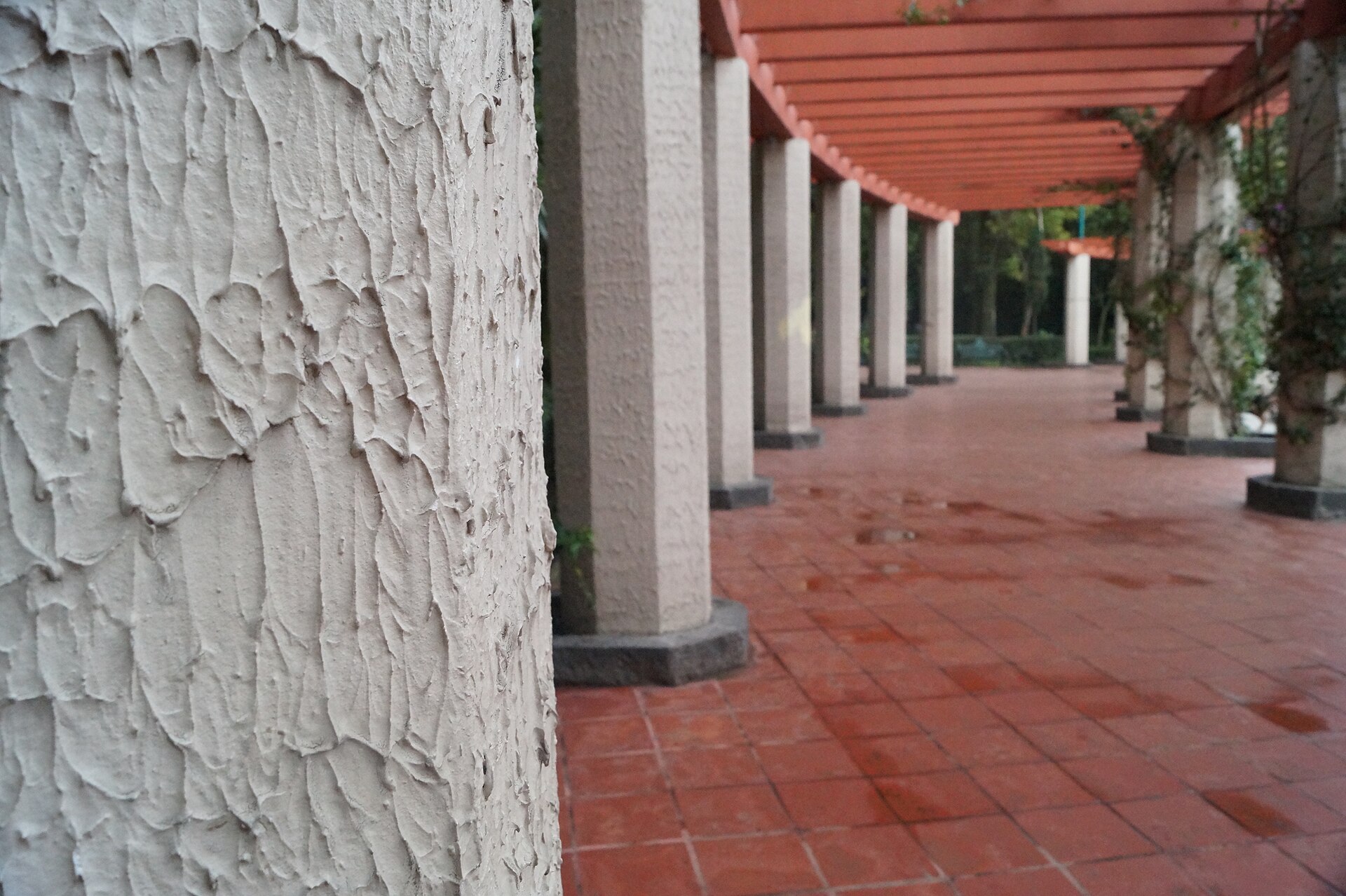
Parque México, the oval park at the heart of Hipódromo Condesa, is built on the site of a former racecourse, which is why the streets around it curve. Mornings bring dog walkers, joggers and yoga classes; weekends bring families. Parque España is a short walk north. In Roma, Plaza Río de Janeiro and the Fuente de Cibeles are the focal points for a wander among the old mansions. None of this needs a ticket, a booking or a plan, which is exactly what makes it a good first day while you get used to the altitude. Our guide to Roma versus Condesa explains the differences between the two.
Coyoacán, San Ángel and the university
The south of the city has the free attractions that most visitors miss.
Coyoacán and San Ángel
Coyoacán’s two central squares, the Jardín Centenario and the Jardín Hidalgo, its cobbled streets and its market are a pleasure to wander, whether or not you have a Casa Azul ticket. The Casa Azul itself is not free: 320 pesos, online only (see our Frida Kahlo Museum guide). San Ángel, to the west, has cobbled lanes, colonial houses and a Saturday art market around Plaza San Jacinto that is free to browse.
Ciudad Universitaria
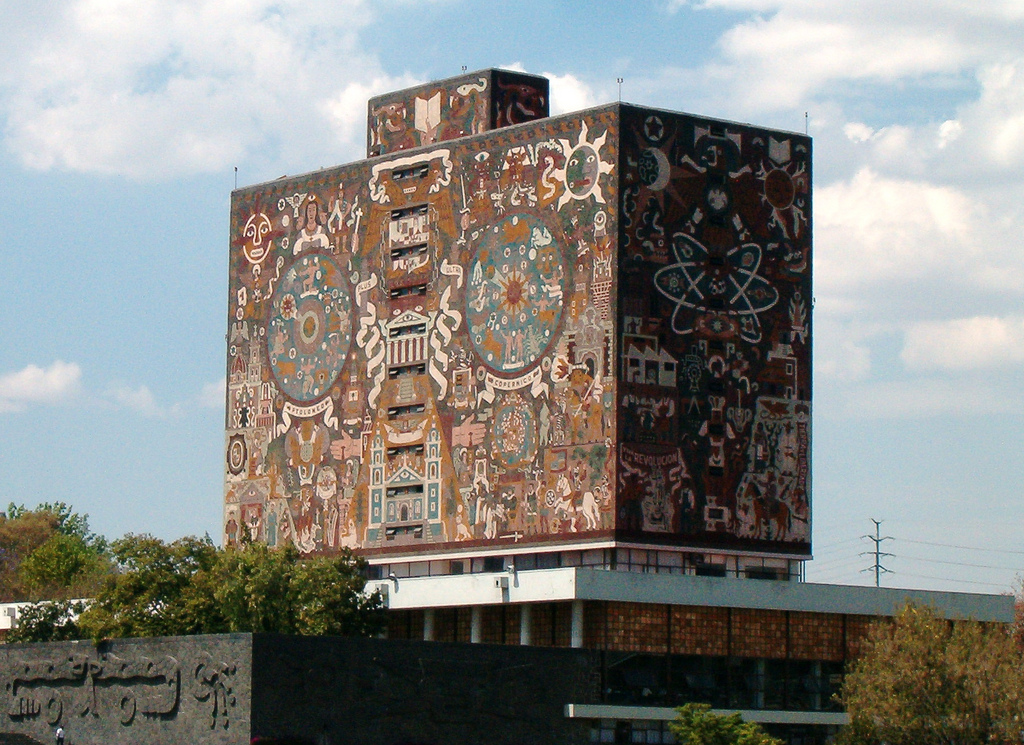
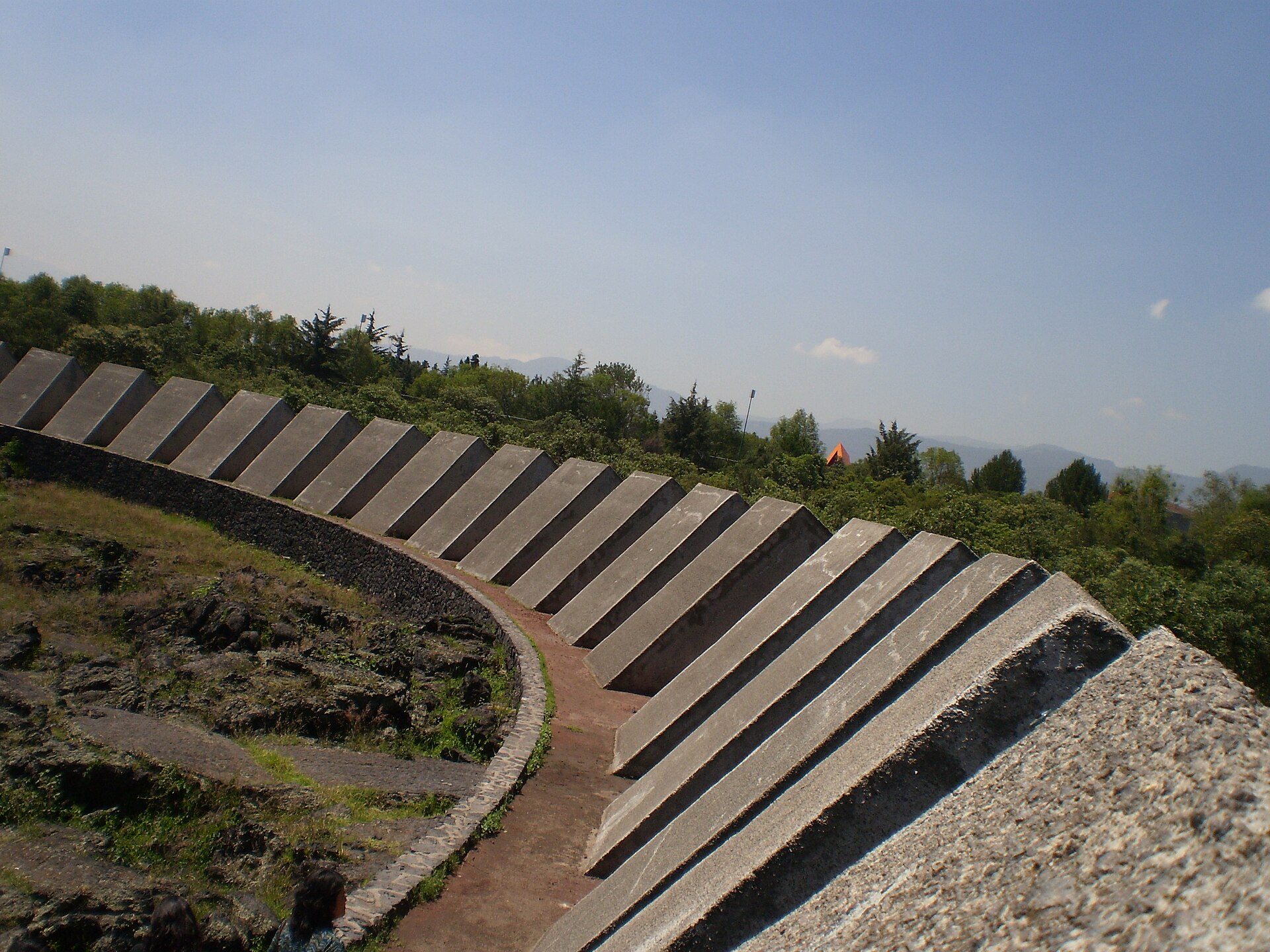
The main campus of UNAM, the national university, is a UNESCO World Heritage site and one of the great modernist ensembles anywhere, and walking it costs nothing. The windowless book tower of the Biblioteca Central is covered on all four sides in Juan O’Gorman’s stone mosaic, which you see from the esplanade outside. Further south, the Espacio Escultórico is a ring of concrete sculptures around a field of volcanic rock, an extraordinary place to stand on a clear day.
On the same campus, MUAC, the university’s museum of contemporary art, is free on Thursdays from 18:00 to 20:00, and costs 60 pesos at other times, half price on Sundays. Since 1 August 2026 it has opened Tuesday, Wednesday and Friday from 10:00 to 18:00, Thursday until 20:00, Saturday from 11:00 to 20:00 and Sunday from 11:00 to 18:00, closed Mondays.
The north: the Basílica and the Biblioteca Vasconcelos
The Basílica de Guadalupe
The Basílica de Santa María de Guadalupe, the shrine of the Virgin of Guadalupe on the city’s northern edge, is free to visit, every day from 06:00 to 21:00, according to its own site. The modern basilica, round and tent-like, has housed the cloak of Juan Diego, bearing the image of the Virgin of Guadalupe, since 1976; a moving walkway carries visitors past it below the altar. The old baroque basilica next door, which held the image for 267 years from 1709, still stands beside it, and the hill of Tepeyac above has chapels and a view back over the city. Visit with respect: it’s a place of worship first, and Masses run through the day. Avoid the days around 12 December, the Virgin’s feast day, unless you want to see the pilgrimage itself, when millions of people arrive.
The Biblioteca Vasconcelos
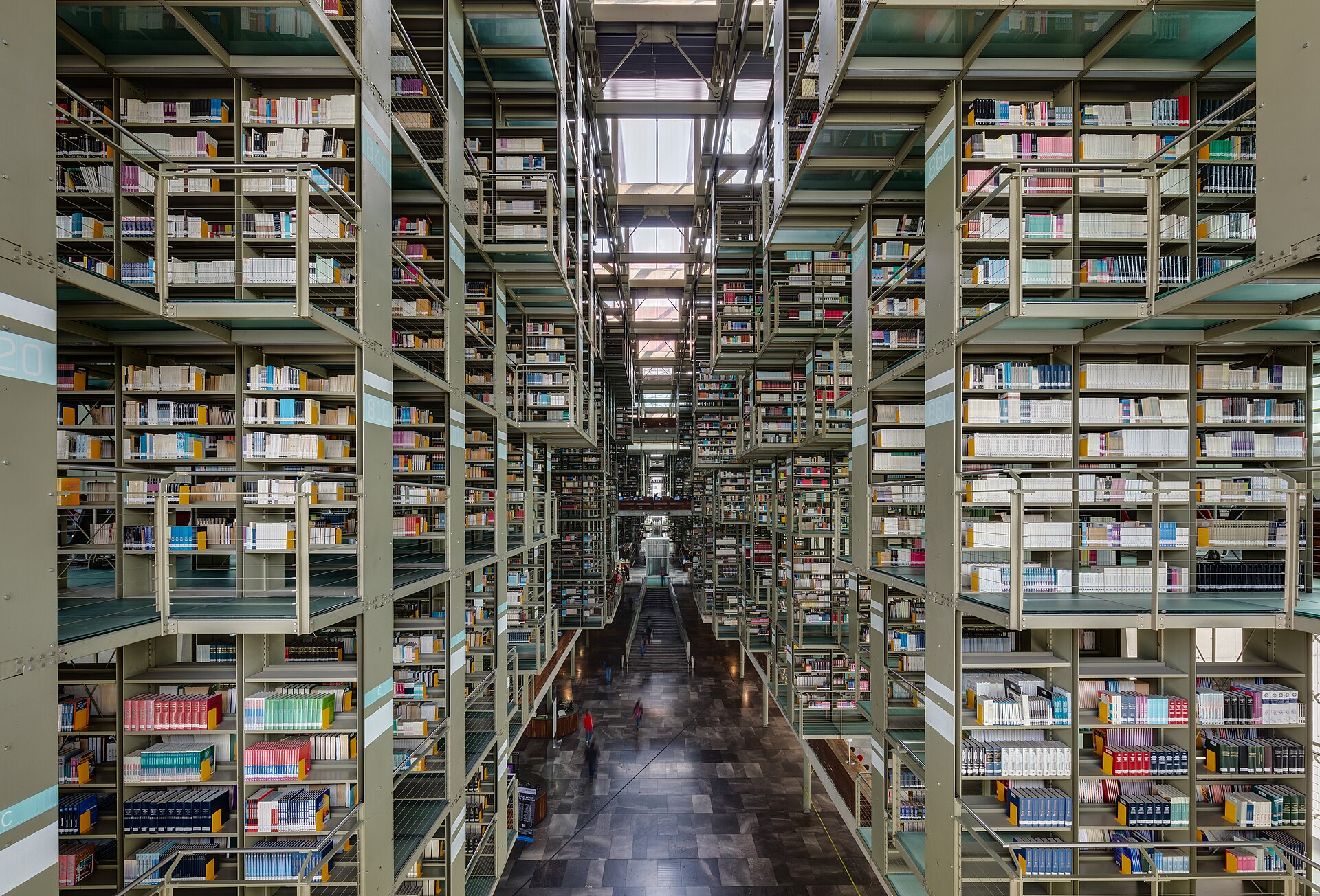
The Biblioteca Vasconcelos, near the Buenavista station in the north of the centre, is a public library and an architectural sight: bookshelves hung in tiers inside a vast hall, with a whale skeleton sculpture suspended in the middle. You can walk in and wander. Check its hours before you go, and keep your voice down; people are studying.
Free evenings and Sundays
- Noche de Museos. On the last Wednesday of each month, around 45 museums across the city stay open from 18:00 to 22:00 with free or discounted entry and special events, according to the city’s tourism portal. The programme varies; check the Secretaría de Cultura’s listings for the next edition, especially around the holidays.
- Sundays on Reforma. On Sunday mornings a long stretch of Paseo de la Reforma closes to cars for the city’s Muévete en Bici programme, and the avenue fills with cyclists, skaters and walkers. Check the city’s mobility department for the current route and hours.
- Sundays in the parks. Chapultepec, the Alameda and Parque México are at their most sociable on Sunday afternoons, with families, vendors and impromptu music.
- Plaza Garibaldi in the evening. Mariachi bands gather here most nights. Listening is free; requesting a song is not.
Three free routes
Route one: the Centro on foot (Tuesday to Sunday)
Start at the Museo de Arte de la Secretaría de Hacienda at 10:00 to register for a Palacio Nacional tour, then walk the Zócalo and the Catedral Metropolitana while you wait. After the tour, look down into the Templo Mayor from the street, then walk west along Madero, the pedestrian street, to the Palacio Postal and Bellas Artes. On a Sunday, go up to the Bellas Artes museum. Finish with an hour in the Alameda. Allow a full day, including lunch.
Route two: Chapultepec and Polanco (Tuesday to Sunday)
Enter the first section of the Bosque in the morning, walk the paths around the lake, and visit Cencalli. On a Sunday, add the Museo Tamayo. After lunch, take a taxi or app ride to Plaza Carso for the Museo Soumaya and the Museo Jumex. Allow a full day. On a Monday, skip Chapultepec’s first section and go straight to the Soumaya, which opens every day.
Route three: Coyoacán and the university (any day; Thursday evening for MUAC)
Start in Coyoacán’s squares and market in the morning, then head to Ciudad Universitaria to see the Biblioteca Central’s mosaic and the Espacio Escultórico. If it’s a Thursday, stay for MUAC’s free slot from 18:00. Allow a day, with lunch in Coyoacán.
For ready-made plans that mix free and paid sights, see our Mexico City itineraries.
What isn’t free, although people think it is
| Place | The assumption | The reality in 2026 |
|---|---|---|
| Museo Nacional de Antropología, Templo Mayor, Chapultepec Castle | Free on Sundays | 210 pesos for foreign visitors every day; Sunday free for Mexicans and residents only |
| Teotihuacán | Free on Sundays | 210 pesos for foreign visitors every day |
| Palacio Nacional | Walk in and see the murals | Free, but by guided visit with prior registration |
| Museo Frida Kahlo (Casa Azul) | Buy at the door | 320 pesos, online only |
| MUAC | Free on Sundays | Half price on Sundays; free on Thursdays from 18:00 to 20:00 |
| Xochimilco | Cheap per person | 750 pesos an hour for the boat, however many share it |
| Torre Latinoamericana | Free viewpoint | A paid viewing deck |
For Xochimilco’s rates in detail, see our guide to Xochimilco boat prices.
Nearly free: the best things under 100 pesos
Some of the best value in the city costs a few coins rather than nothing:
- A Metro ride: 5 pesos, any distance, which makes every free sight in this guide cheap to reach.
- MUAC outside its free slot: 60 pesos for one of the best contemporary art museums in the country, half that on Sundays.
- The Museo del Palacio de Bellas Artes on a weekday: 90 pesos, Tuesday to Saturday, if Sunday doesn’t fit your plans.
- The Museo de Arte Moderno and the Museo Tamayo in Chapultepec: 95 pesos each on paying days, according to the park’s May 2026 museum guide.
Compare that with 210 pesos for each INAH site, 320 for the Casa Azul and 750 an hour for a Xochimilco boat, and the free and nearly free city starts to look like the better half of it.
Mondays, closures and the fallback
Monday is the day free plans go wrong. Most museums close, and so does the first section of the Bosque de Chapultepec. What stays open: the Museo Soumaya, the Basílica de Guadalupe, the Zócalo and the Centro’s streets and churches, the parks of Roma and Condesa, the markets, and the outer sections of Chapultepec. Our guide to things to do in Mexico City has more Monday options.
The Centro has a second kind of closure. Protests, marches and official events in and around the Zócalo can shut museums, close the Palacio Nacional’s tours and block streets at short notice. If your plan depends on one place, have a second nearby, and check the venue’s social media on the morning.
Access and practicalities
- Photo ID. Carry your passport, or a good copy plus another photo ID, for the Palacio Nacional and other government buildings.
- Bags. Large bags and backpacks go to a cloakroom at many museums and at the Palacio Nacional. Travel light.
- Getting around. The Metro costs 5 pesos a ride, so even a free day costs a little in transport. See our guide to getting around Mexico City.
- Altitude. Mexico City sits at 2,240 metres. Free days tend to involve a lot of walking, so pace yourself, especially on your first day. See our guide to altitude in Mexico City.
- Water. Carry purified water, not tap water. See can you drink tap water in Mexico City.
- Tipping. Many walking tours advertised as free work for tips; budget for one if you join.
Frequently asked questions
Are museums free on Sundays in Mexico City?
Some are, but not the INAH sites for foreign visitors. Sunday free entry at INAH sites, including the Museo Nacional de Antropología, Templo Mayor, Chapultepec Castle and Teotihuacán, is for Mexican nationals and foreign residents, not visitors on a tourist permit, who pay 210 pesos. The Museo del Palacio de Bellas Artes and the Museo Tamayo list Sunday as free.
Which museums in Mexico City are always free?
The Museo Soumaya (daily, 10:30 to 18:30) and the Museo Jumex (Tuesday to Sunday) in Polanco, and Cencalli in Chapultepec (Tuesday to Sunday, 10:00 to 17:00).
Is the Palacio Nacional free?
Yes, by free guided visit. INAH’s listing describes visits by reservation from 10:00, Tuesday to Sunday, at the Museo de Arte de la Secretaría de Hacienda, Moneda 4. Over-18s need official photo ID, and tours can be suspended without notice.
Is Bellas Artes free?
The building’s lobby and exterior are a sight in themselves. The museum upstairs is free on Sundays and 90 pesos on other days, Tuesday to Sunday from 10:00 to 18:00, according to the federal Culture Ministry’s listing.
Is the Bosque de Chapultepec free?
Yes. The first section opens Tuesday to Sunday from 05:00 to 18:00 and closes on Mondays; the other sections are open around the clock. The castle and the INAH museums inside the park charge entry.
What free things are open on Mondays?
The Museo Soumaya, the Basílica de Guadalupe, the Zócalo and the Centro’s streets and churches, the outer sections of Chapultepec, the parks of Roma and Condesa, and the markets.
What is Noche de Museos?
On the last Wednesday of each month, around 45 museums stay open from 18:00 to 22:00 with free or discounted entry and special events. Check the Secretaría de Cultura’s listings for the next edition.
Is Museo Soumaya really free?
Yes. There’s no ticket, and it opens every day, Mondays included, from 10:30 to 18:30.
Related Mexico City Guides
- Things to do in Mexico City: the full shortlist, paid and free.
- The best museums in Mexico City.
- Parks and the outdoors, including the Bosque de Chapultepec.
- Mexico City neighbourhoods, for walking days.
- Markets and shopping.
- Mexico City costs: a full daily budget.
- Mexico City itineraries.
Sources and verification
Prices and hours were checked in November 2026 against these sources:
- INAH, Boletín No. 6 of 6 January 2026: the 2026 Antropología tariff and Sunday entry. inah.gob.mx
- INAH, tarjeta informativa of 18 August 2025: Sunday free entry for Mexicans and foreign residents. inah.gob.mx
- INAH places directory, Teotihuacán: 210 pesos for foreign visitors. lugares.inah.gob.mx
- INAH places directory, Palacio Nacional: guided visits by reservation. lugares.inah.gob.mx
- Government of Mexico, Palacio Nacional visitor flyer: free tours, ID and cloakroom rules. gob.mx
- Secretaría de Cultura, Sistema de Información Cultural, Museo del Palacio de Bellas Artes: hours, price and Sunday entry. sic.cultura.gob.mx
- Museo Soumaya: hours and free entry. museosoumaya.org
- Museo Jumex: free entry, hours and guided visits. fundacionjumex.org
- Museo Tamayo, visitor information: hours and Sunday entry. museotamayo.org
- Bosque de Chapultepec, guide to the park’s museums (May 2026): Cencalli’s hours and free entry. chapultepec.org.mx
- Mexico City tourism portal, Bosque de Chapultepec: section hours and the Monday closure. mexicocity.cdmx.gob.mx
- Mexico City tourism portal, Zoológico de Chapultepec: history. mexicocity.cdmx.gob.mx
- MUAC, UNAM: hours, prices and free Thursday slot. muac.unam.mx
- Basílica de Santa María de Guadalupe: hours and history. virgendeguadalupe.org.mx
- Mexico City tourism portal, Noche de Museos. mexicocity.cdmx.gob.mx
- Mexico City tourism portal, Using the Metro: the 5-peso fare. mexicocity.cdmx.gob.mx
Free-entry rules change. Check each venue’s own page before you build a day around it.
Photo Credits
Biblioteca Vasconcelos: Biblioteca Vasconcelos, Ciudad de México, México, 2015-07-20, DD 16-18 HDR by Diego Delso, CC BY-SA 4.0, via Wikimedia Commons.
The SEP courtyard: Patio with Murales in the SEP by Kgv88, CC BY-SA 3.0, via Wikimedia Commons.
The Palacio Postal staircase: Detalle de la escalera Palacio Postal México by Tucita33, CC BY 4.0, via Wikimedia Commons.
Pergolas in Parque México: Estuco de las columnas del Parque México by Pedro Camilo Márquez Vallarta, CC BY-SA 4.0, via Wikimedia Commons.
Biblioteca Central, Ciudad Universitaria: Biblioteca Central UNAM México by Scanudas, CC BY 2.0, via Wikimedia Commons.
The Espacio Escultórico: Crestas del Espacio Escultórico by Ramón Ortega (tres), CC BY-SA 3.0, via Wikimedia Commons.