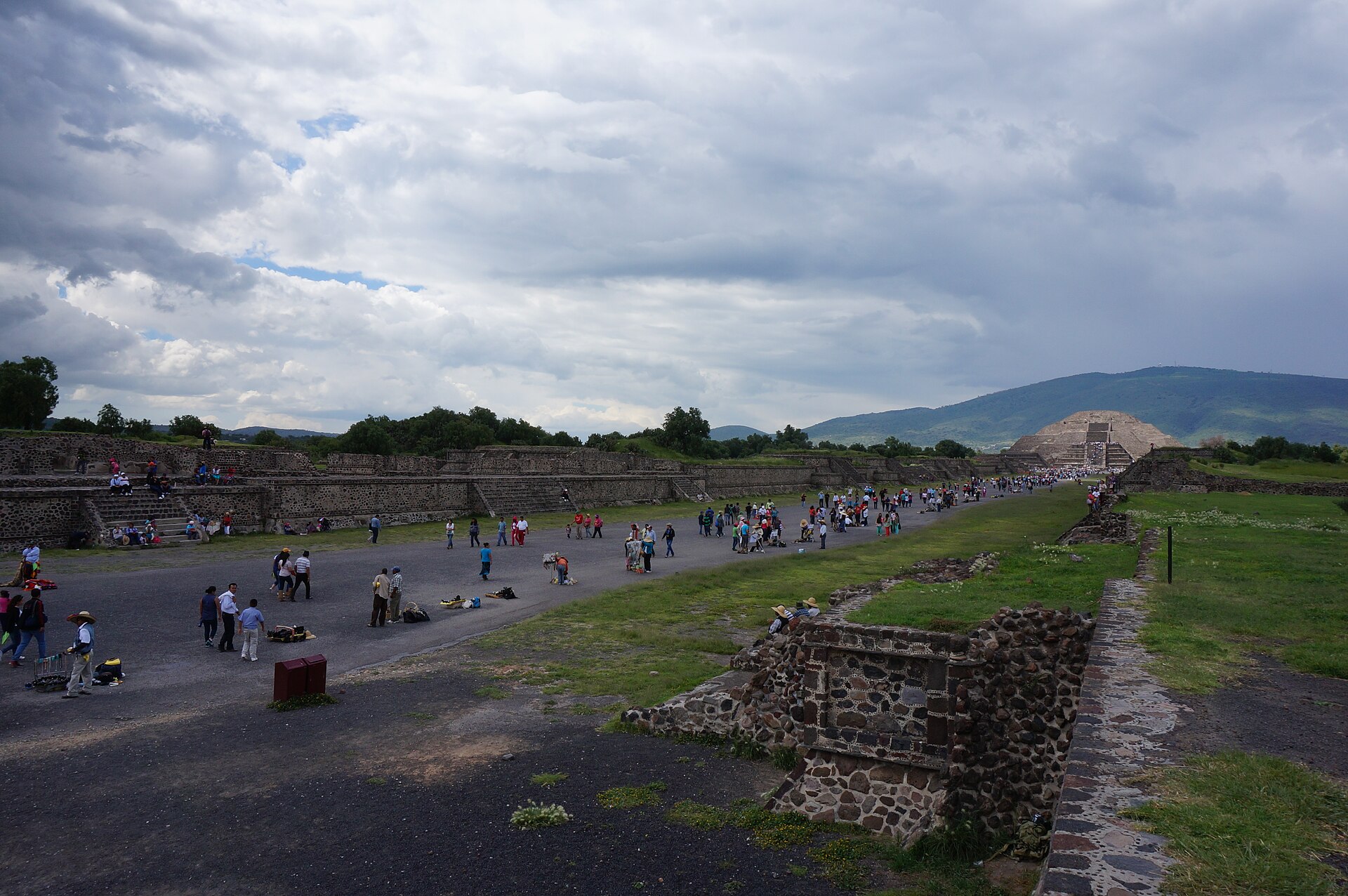
Before anything else, the thing you most need to know about visiting Teotihuacan from Mexico City, because almost every English-language guide still gets it wrong: you cannot climb the pyramids. Ascent of the Pyramid of the Sun has been prohibited since 2020, when it was suspended as a pandemic measure and then never restored, and the Pyramid of the Moon is closed to climbing as well. Visitors are directed to stay on the plazas and off the platforms. Only INAH can authorise an ascent — not the state government, not the municipality, and emphatically not a tour operator promising you the summit.
That is not a reason to skip it. Teotihuacan is one of the largest and strangest cities the ancient world produced, it is an hour from the capital, and walking the Avenue of the Dead is an experience of scale that no photograph conveys. But it does change what the day is, and a page that lets you arrive expecting a climb has failed you before you set off.
What you need to know in ninety seconds
- Where: about 50 km north-east of Mexico City, in the State of Mexico — a different state from the capital, which matters if you are reading a travel advisory.
- Admission: 210 pesos for foreign visitors, 105 for Mexican nationals and documented residents. INAH Category I.
- Hours: daily, approximately 09:00 to 17:00, with the site museums closing at 16:30. Open on Mondays, which is exactly why Monday is the right day for it.
- Tickets: at the site box offices or through INAH’s official channel. Not required in advance.
- Entry: through Gates 1 to 5. Which one you use changes your whole route — see below.
- Climbing: not permitted, on either pyramid.
- Getting there: buses from Terminal del Norte every 15 to 20 minutes, about an hour.
- Time needed: three to four hours on site, five to seven hours door to door.
What Teotihuacan actually was
Worth five minutes before you go, because it changes what you are looking at.
At its height, around 400 to 500 CE, this was one of the largest cities in the world — perhaps 125,000 people, possibly more, laid out on a rigid grid over some twenty square kilometres, with multi-family apartment compounds, workshops, drainage and painted walls. For comparison, it was larger than Rome’s contemporary rivals in the Americas by an order of magnitude and comparable in scale to the great cities of the Old World at the same moment.
And here is what makes it genuinely strange: we do not know who built it. We do not know what they called it, what language they spoke, or what ethnic group they belonged to. There is no deciphered writing system. The name Teotihuacan is Nahuatl — “the place where the gods were created” — and it was given by the Mexica, who arrived centuries after the city had already collapsed and who regarded the ruins as sacred and ancestral. The Avenue of the Dead is their name too, based on their mistaken assumption that the platforms lining it were tombs.
The city was burned and abandoned some time in the seventh or eighth century. Whether that was invasion, internal revolt, drought, or some combination is still argued about; the evidence of deliberate burning is concentrated on the elite structures along the central axis, which has been read by many archaeologists as pointing inward rather than outward.
What survives is deceptive in one particular way. The site looks bare and grey. It was not: it was plastered and painted, comprehensively, in red and in complex polychrome murals — which is why the mural complexes mentioned below are not an optional extra but the closest you can get to seeing the city as it was. The pyramids were red. Hold that in your head as you walk the avenue and the place changes.
One more thing to know. The Pyramid of the Sun stands over a natural lava-tube cave, discovered in the 1970s, which appears to have been the reason this spot was chosen — and beneath the Temple of Quetzalcóatl, excavations from 2003 onwards found a sealed tunnel containing thousands of offerings, including liquid mercury and pyrite-covered walls that would have glittered like a night sky. Nothing about this city is as plain as it looks.
Independently or on a tour?
This is the real decision, and it is closer than most guides admit.
| Independently, by bus | Organised tour | Private driver | |
|---|---|---|---|
| Cost per person | ~210 admission + ~130 return bus | Typically several times that | Highest, but split between a group |
| Departure | When you like, from 06:00 | Fixed, usually 07:00–08:00 hotel pickup | When you like |
| Time on site | As long as you want | Usually 2–3 hours, sometimes less | As long as you want |
| Interpretation | None unless you hire a site guide | Included, quality varies enormously | Depends on the driver |
| The catch | You do the logistics | The obsidian workshop stop, and the rush | Cost |
| Best for | Confident travellers, tight budgets, photographers | Short trips, first-time visitors, anyone wanting context | Families, limited mobility, groups of four or more |
Going independently is genuinely easy and is what this page would recommend for most people who have been in Mexico for more than a day. Buses leave Terminal del Norte, on Metro Line 5, every fifteen to twenty minutes. Ask for Los Pirámides rather than the town of Teotihuacán — they are not the same destination and the distinction matters. The journey is about an hour, the bus drops at the gates, and the return works the same way in reverse.
The honest case for a tour is interpretation, not transport. This site is genuinely hard to read without help, and a good guide turns a walk between large mounds into a story about a city of perhaps 125,000 people whose name, language and ethnicity we do not actually know. The honest case against is that a great many tours build in a compulsory stop at an obsidian or “artisan” workshop where you are given a tequila-and-pulque tasting and a hard sell, and that this typically costs you an hour you would rather have spent on the Avenue of the Dead. Ask before booking whether there is a shopping stop and how long you get on site. If the answer is vague, the answer is yes.
The middle option, and a good one: go independently, then hire an authorised guide at the gate. You get the interpretation without the schedule or the shopping.
Getting there, in detail
| Method | Time | Cost per person | Notes |
|---|---|---|---|
| Bus from Terminal del Norte | ~1 hour each way | Roughly 60–70 pesos each way | Every 15–20 min. Metro Line 5 to Autobuses del Norte, 5 pesos. Ask for Los Pirámides. |
| Organised tour | 8–10 hours door to door | Several hundred to over a thousand | Usually includes the Basílica de Guadalupe and Tlatelolco, plus a shopping stop |
| App ride or private car | 60–75 min each way | High one way, better split | Agree the return in advance; app coverage at the site is unreliable |
| Hot air balloon | Dawn, roughly 3–4 hours including transfers | Substantially more than everything else combined | Weather-dependent and frequently cancelled. See below. |
Leave early. This is the single highest-value piece of advice on the page and almost nobody follows it. The site opens at nine, the coach parties arrive around eleven, and the sun becomes genuinely punishing from mid-morning in the dry months. Being at Gate 1 at opening is a materially different visit from arriving at midday.
The site, and a route that works
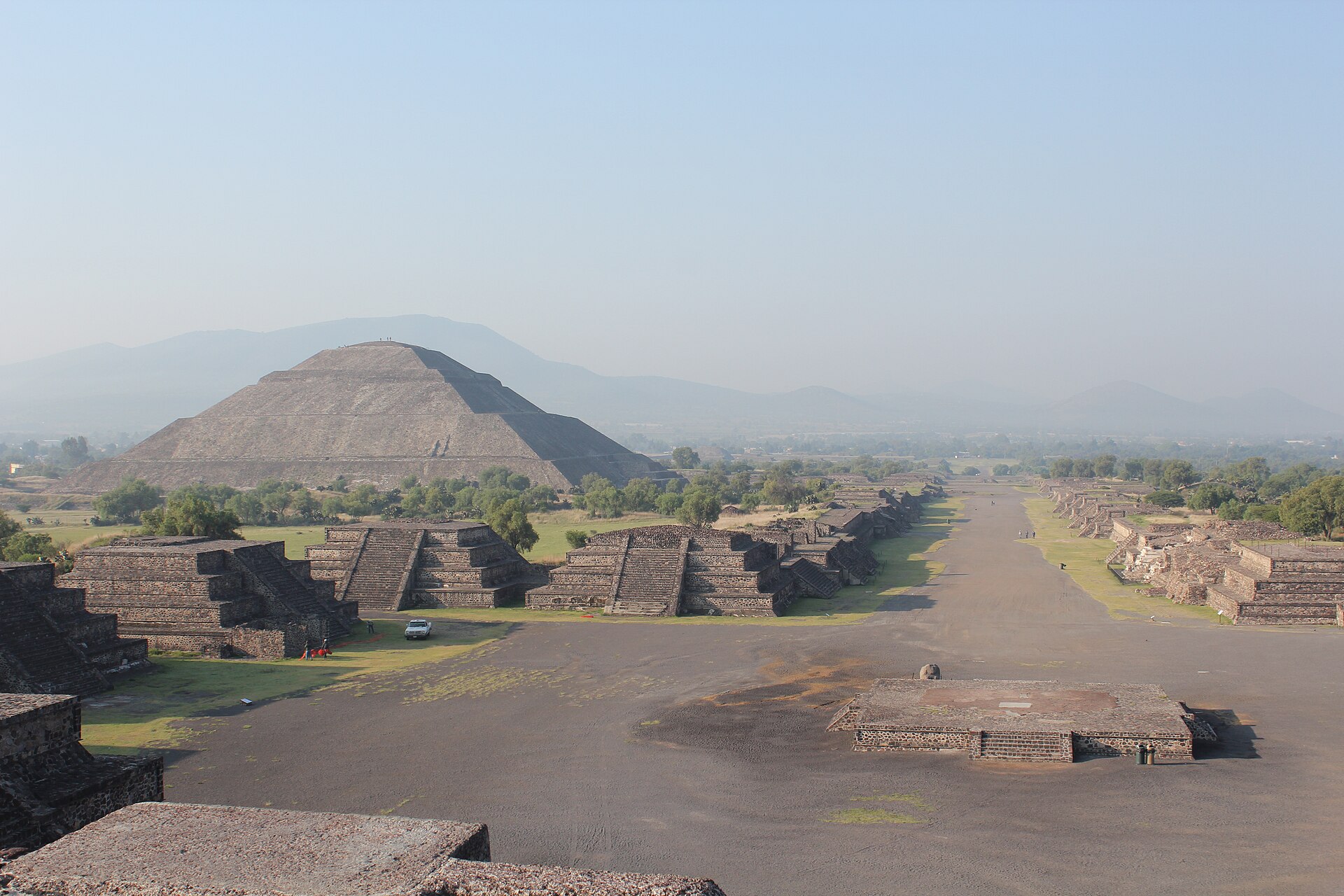
Teotihuacan is about twenty square kilometres, of which you will walk a strip roughly three kilometres long. The layout is a single vast north–south axis, the Calzada de los Muertos, with the Pyramid of the Moon closing it at the north end and the Ciudadela at the south.
Enter at Gate 1 and walk north. This is the route the city was designed to be experienced along, and it saves the Pyramid of the Moon for the end rather than making it the first thing you see.
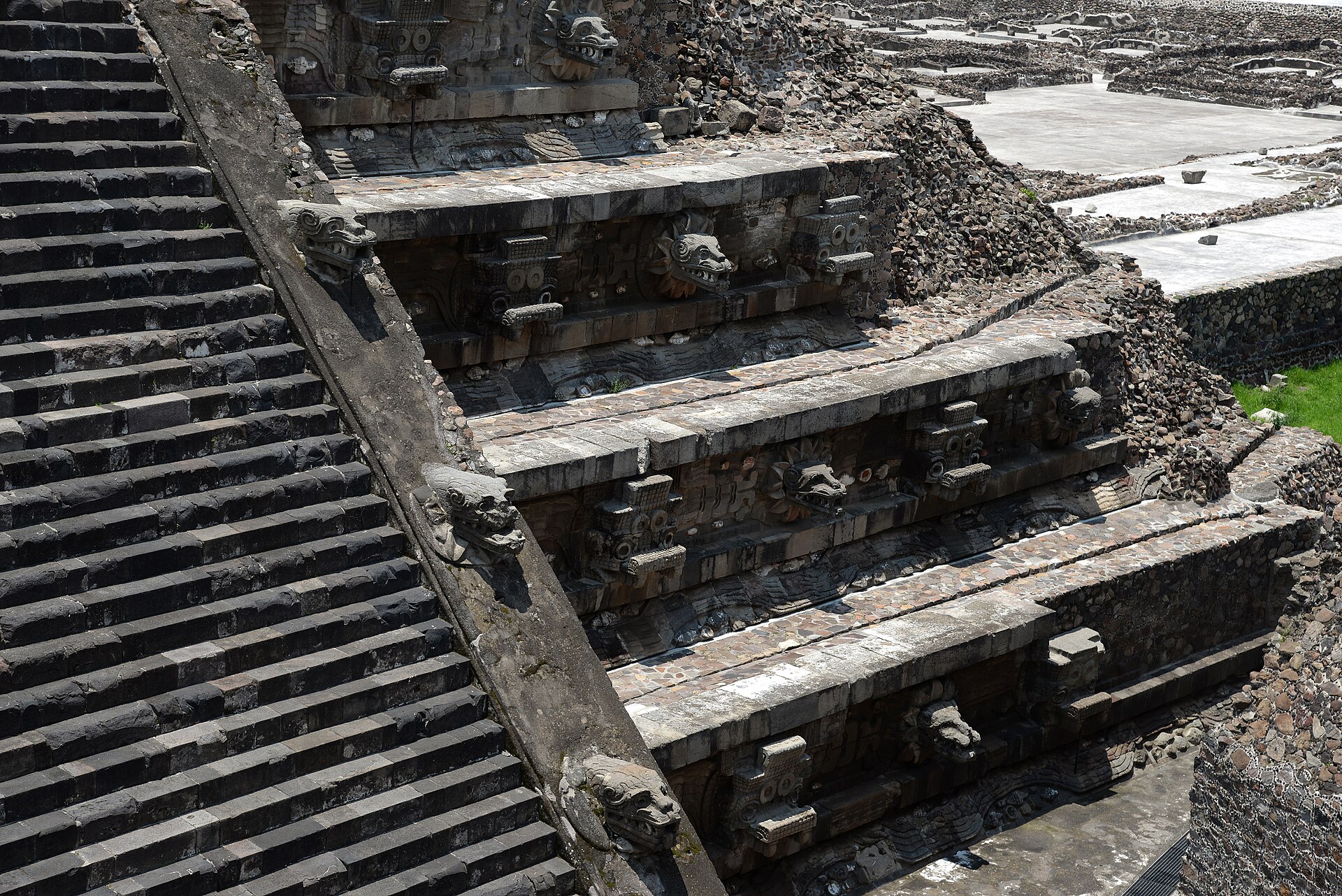
- The Ciudadela and the Templo de Quetzalcóatl. A vast sunken plaza containing the site’s best sculpture: tiers of carved feathered serpent heads alternating with goggle-eyed heads, once painted, with obsidian in the eyes. Most tour groups skip this because it is at the wrong end for a coach park. Do not.
- The Calzada de los Muertos. Two kilometres of processional avenue lined with platforms. The name is a Mexica misunderstanding: they arrived centuries after the city was abandoned, assumed the platforms were tombs, and named it accordingly.
- The Pyramid of the Sun. The third-largest pyramid in the world by volume, built over a cave that seems to have been the reason for the site’s location. You cannot climb it. You can walk its entire base, which takes longer than you expect and gives a much better sense of the mass.
- The Plaza of the Moon and the Pyramid of the Moon. Smaller but higher, because the ground rises. Standing in the plaza looking back down the avenue is the best view available to you now that the summits are closed, and it is a very good one.
- The Palacio de Quetzalpapálotl, just off the Plaza of the Moon — a reconstructed elite residence with carved pillars, painted birds, and the only roofed shade on the main axis.
- The murals. This is what people miss. Teotihuacan was a painted city, and fragments survive at Tepantitla (outside the main circuit, with the famous Tlalocan mural), Tetitla, Atetelco and La Ventilla. They are a short walk beyond the fence, almost always empty, and they are the part of the site that best conveys that people lived here.
- The site museums, which close at 16:30 — earlier than the site itself. Do them before the last hour or you will find the doors shut.
How long: three hours for the main axis at a reasonable pace. Four to five if you include the mural complexes, which you should if you have the time.
The rules, in full
Checked September 2026. These are enforced, and visitors are turned away at the gate over them.
- No climbing the Pyramid of the Sun or the Pyramid of the Moon. Stay on the plazas; do not stand on the platforms.
- No drones.
- No unauthorised commercial activity, which includes selling and, in practice, commercial photography without a permit.
- Not admitted: pets, suitcases and large bags, backpacks, braziers, chairs, speakers, megaphones, musical instruments, tents, tarpaulins, banners, placards and beach umbrellas, or any other large object.
- Tickets are sold only at the site box offices or through INAH’s official channel. Anyone selling you a ticket elsewhere is not selling you a ticket.
- Entry is through Gates 1 to 5, and which gates are open can vary on event days.
On the spring equinox, when tens of thousands of people come to the site dressed in white, INAH runs a major crowd-control operation, hours change, and climbing is still not permitted. If you want the equinox, go for the atmosphere and the crowd, not for a summit you have been promised somewhere.
Weather, sun and altitude
Teotihuacan sits slightly higher than Mexico City, at around 2,300 metres, and the site is almost entirely open ground. That combination is more demanding than the temperature suggests.
- There is essentially no shade on the main axis. The Palacio de Quetzalpapálotl and the museums are the only roofed spaces you will pass.
- The UV is strong all year, including on cool and overcast days. A hat, high-factor sun protection and sunglasses are not optional. People burn here on days that do not feel hot.
- Carry more water than you think, and refill wherever you can. Dehydration at altitude is the commonest thing that goes wrong on this excursion.
- The dry season, roughly February to May, is the hardest going — strong sun, no cloud, dusty. The rainy season from June to October is greener, cooler and much emptier, and morning visits are almost always dry because the rain comes in the late afternoon.
- Footwear matters. The surfaces are uneven volcanic stone and loose gravel, and you will cover five or six kilometres.
- Do not do this on your first day if you have just flown in from sea level. Give yourself a day to adjust first.
Access and mobility
An honest assessment. The main axis is largely flat, wide and walkable, and a determined wheelchair user with assistance can see a good deal of the Calzada de los Muertos, the Plaza of the Sun and the Ciudadela. But the surfaces are rough, there are steps at several transitions, distances are long, and there is no shade to rest in. The mural complexes involve additional walking on unmade paths.
If mobility is a concern: go with a private driver rather than the bus, enter at the gate nearest what you most want to see rather than walking the full axis, plan around the museums and the Quetzalpapálotl palace for shade, and go early while it is cool. Contact INAH’s site administration directly about current arrangements rather than relying on a tour operator’s assurance.
The balloon flights
Hot air balloons launch at dawn over the valley and are, by common agreement, spectacular. Three honest caveats before you book one.
They are weather-dependent and cancellations are routine, not exceptional — wind at dawn is the usual cause, and it can be called off at very short notice. Treat a cancellation as a likely outcome and never build a tight schedule around a flight. Check what the operator’s cancellation policy actually says: a refund is standard, a same-day rebooking is not.
They are expensive, typically costing more than the rest of the excursion combined, and they involve a departure from the city at around four in the morning.
The flight lands before the site opens. Most operators pair the balloon with a breakfast and then the site visit, which makes for an extremely long day that starts in the dark. Some people find it the highlight of their trip. Others find they have spent a fortune to be exhausted for the archaeology. Decide which you are.
What to do if the day goes wrong
| Problem | What to do |
|---|---|
| Balloon flight cancelled | Check the refund terms before you leave home. Go to the site anyway — you are already up and it will be empty at opening. |
| Arrived at midday in full sun | Do the Ciudadela and the museums first, walk the avenue when the light softens after three, and accept a shorter visit rather than a heatstroke. |
| It is raining hard | The site museums and the Quetzalpapálotl palace are the only cover. Rainy-season storms are usually late afternoon, so a morning visit is rarely affected. |
| You have no way back | Buses run back to Terminal del Norte from the gates until roughly the site closes. Do not leave it to the last twenty minutes, and do not rely on an app ride from the site — coverage is unreliable. |
| Your tour gives you ninety minutes | Walk directly from your gate to the Plaza of the Moon, then back along the avenue. Skip the museums. |
| Somebody offers you a summit climb | They cannot deliver it. Only INAH authorises an ascent and it has not done so since 2020. |
| Site closed for an event | The Basílica de Guadalupe and Tlatelolco are both on the road back and are both open and free. |
The murals, which almost nobody sees
Now that the summits are closed, the mural complexes are the best reason to give this site four hours rather than two — and they are, on any ordinary day, nearly empty.
They sit in the residential compounds outside the main fenced circuit, a short walk from the gates, and they are the only place where the painted city survives in any quantity. Signposting to them is poor and tour groups almost never include them, which is exactly why they are worth the effort.
- Tepantitla holds the best known of them — the so-called Tlalocan or Paradise of Tlaloc mural, a crowded scene of small figures playing, swimming, singing and chasing butterflies beneath a great goddess figure. It is the closest thing this civilisation left us to a picture of ordinary life, and it is extraordinary. It sits just beyond the north-east corner of the site.
- Tetitla is the largest and best preserved compound, with dozens of painted rooms around courtyards — jaguars, birds, the Great Goddess, and long panels of repeated motifs in red and green.
- Atetelco has vivid red painted porticos around a small patio, some of it reconstructed, and it gives the clearest sense of what standing inside a painted room here would have felt like.
- La Ventilla produced the glyph plaza and a great deal of what is known about the city’s residential organisation.
Practically: they are included in your site ticket, they keep the same hours, and they involve extra walking on unmade paths in full sun. Ask at the gate which are currently open, because individual compounds close for conservation without much warning. If you only have time for one, make it Tepantitla.
Five mistakes people make here
- Arriving at midday. Coach parties land around eleven and the sun is worst from then until four. Opening at nine is a different site.
- Booking a tour that promises a climb. It cannot happen. If an operator’s marketing still shows people on the summit, that is a photograph from before 2020 and it should make you doubt everything else they tell you.
- Entering at whichever gate the bus happens to stop at, then walking south. Gate 1 and the Ciudadela first, then north, is the sequence the city was built for.
- Treating it as a half-day. Three hours on site is a minimum, and the door-to-door day is five to seven. Do not put anything else in that day.
- Leaving the museums to the end. They close at 16:30, half an hour before the site, and people walk back to find the doors shut.
What to bring, and what to expect on the ground
The packing list is short and every item on it is there because people regret leaving it behind.
- A hat with a brim, sunglasses and high-factor sun protection, reapplied. Non-negotiable in any month.
- More water than you think — a litre and a half per person minimum, and refill where you can.
- Cash in small notes. The box office, the guides at the gate, the vendors, the bus and the food are all cash-first.
- Closed shoes with grip. Loose volcanic gravel, uneven stone, several kilometres.
- A light waterproof between June and October.
- A small bag, not a rucksack. Large backpacks are on the prohibited list.
Vendors. There are a great many along the avenue, selling obsidian, jaguar-whistle carvings, textiles and hats. Most are perfectly pleasant and the whistles are genuinely fun; the obsidian is frequently glass. Prices are negotiable, opening prices are high, and a polite no, gracias without breaking stride ends any exchange you do not want. Nothing here is a scam so much as a market.
Food. Options inside the fence are limited and mediocre. There is a restaurant and shop near Gate 1 and stalls near several gates. The better plan is either to eat in the town of San Juan Teotihuacán afterwards or to bring something with you — though note that large bags are restricted, so keep it small.
Toilets are at the gates and at the museums, not along the avenue. Plan accordingly; the walk from the Ciudadela to the Plaza of the Moon is two kilometres with nothing in between.
What to combine it with
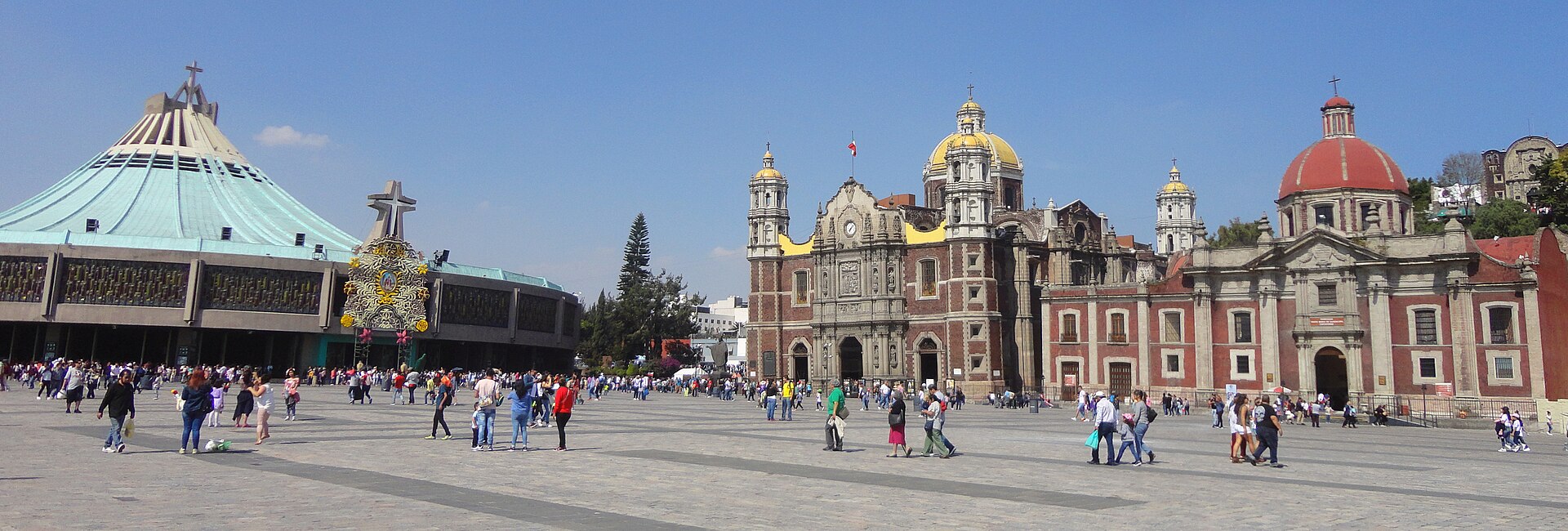
Most organised tours pair Teotihuacan with two stops on the northern edge of the city, and they are good pairings whether or not you are on a tour.
- The Basílica de Guadalupe — free, open daily from about 06:00 to 21:00, the most visited Catholic shrine in the Americas, and an extraordinary piece of 1970s architecture by Pedro Ramírez Vázquez, who also designed the Museo Nacional de Antropología. The old basilica beside it is visibly sinking.
- Tlatelolco and the Plaza de las Tres Culturas — a Mexica ceremonial site, a colonial church and a modernist housing block in one square, and the location of the 1968 student massacre. Historically it is one of the most significant places in the country.
- The town of San Juan Teotihuacán, for lunch, and the cave restaurants nearby, which are a tourist set piece but a well-executed one.
What not to combine it with: anything else in Mexico City on the same day. This is a full excursion and you will be tired.
Frequently asked questions
Can you climb the pyramids at Teotihuacan?
No. Ascent of the Pyramid of the Sun has been prohibited since 2020 and the ban was still in force through 2026; the Pyramid of the Moon is also closed to climbing. Visitors are directed to keep to the plazas and off the platforms. Only INAH can authorise an ascent, and no tour operator can promise you one.
How do I get to Teotihuacan from Mexico City?
Buses leave Terminal del Norte, on Metro Line 5, every fifteen to twenty minutes and take about an hour, dropping at the site gates. Ask for Los Pirámides rather than the town. An organised tour, a private driver or an app ride are the alternatives; the bus is easy and by far the cheapest.
How much does Teotihuacan cost?
Admission is 210 pesos for foreign visitors and 105 for Mexican nationals and documented residents, as an INAH Category I site. Add roughly 60 to 70 pesos each way for the bus and 5 pesos for the Metro to the terminal. A tour costs several times that.
Is Teotihuacan open on Mondays?
Yes, and that is exactly why Monday is the right day for it. Almost every museum in Mexico City closes on Mondays; this site does not.
How long do I need at Teotihuacan?
Three hours for the main axis, four or five if you include the mural complexes at Tepantitla, Tetitla and Atetelco. Five to seven hours door to door from the city.
What is the best time of day to visit?
Opening, at nine. The coach parties arrive around eleven, and the sun becomes punishing from mid-morning in the dry months. An early start is the difference between two quite different days.
Do I need a guide?
Not for the logistics, which are simple. Genuinely useful for the interpretation, because the site is hard to read on your own. The best value is to travel independently and hire an authorised guide at the gate, which gets you the context without the fixed schedule or the shopping stop.
Are the hot air balloons worth it?
Spectacular when they fly, and cancellations for wind are routine rather than rare. They cost more than the whole of the rest of the excursion, start around four in the morning, and land before the site opens. Read the cancellation terms before you book and do not build a tight schedule around one.
Can I buy tickets in advance?
You do not need to. Tickets are sold at the site box offices and through INAH’s official channel, and the site does not sell out in normal conditions. Do not buy from anyone else.
Is Teotihuacan safe?
The site itself is a heavily staffed national monument. Remember, though, that it is in the State of Mexico rather than Mexico City, so it falls under a different entry in every government travel advisory — check the one that applies to your passport for the state and the route, not just for the capital.
Teotihuacán is the benchmark, but it is not the only thing within reach of the capital, and the alternatives vary enormously in how far they are and which state’s travel advisory applies to them. Our guide to day trips from Mexico City compares twelve of them by state, journey time and realistic cost, and names the ones we would skip.
If you are weighing up a dawn flight, our comparison of Teotihuacan hot air balloon tours sets out what each kind of package costs and leaves out, the registration and licence checks worth making since the fatal fire of April 2023, and how to rescue the morning when the wind cancels the flight.
Getting there by public transport is easier than it looks. Our step-by-step guide to Teotihuacan by bus from Mexico City covers the Metro route to the Terminal del Norte, Sala 8 and the fare, the gate the bus uses, a timed day that beats the heat, and how to get home again, including what to do if you miss the last bus.
Related Mexico City Guides
- Mexico City Itineraries — including why Teotihuacan is the correct Monday plan.
- Best Museums in Mexico City — do the Teotihuacán hall at Antropología before you come here, not after.
- Best Time to Visit Mexico City — the seasons that make this excursion easy or punishing.
- Is Mexico City Safe for Tourists — including why day trips are assessed state by state.
- Things to Do in Mexico City — the rest of the list.
A dedicated guide to the Teotihuacán hot air balloon flights is being published to this section shortly.
Sources and verification
- Climbing prohibition: ascent of the Pyramid of the Sun suspended in 2020 as a public health measure and still prohibited through 2026; the Pyramid of the Moon likewise closed to ascent; visitors directed to the Plaza of the Sun and Plaza of the Moon and away from the platforms. Authority to permit an ascent rests with INAH alone, not with state or municipal government or tour operators. Checked September 2026.
- Entry and ticketing: access through Gates 1 to 5; tickets sold only at site box offices or through INAH’s official channel. Checked September 2026.
- Prohibited items: drones, unauthorised commercial activity, pets, luggage and large bags, backpacks, braziers, chairs, speakers, megaphones, musical instruments, tents, tarpaulins, banners, placards, beach umbrellas and other large objects. Checked September 2026.
- Admission: INAH Category I, 210 pesos for foreign visitors and 105 for Mexican nationals and documented residents, following the reform to the Ley Federal de Derechos in force from 1 January 2026. Free Sunday entry applies only to Mexican nationals and legal residents. Checked September 2026. INAH revises tariffs each January.
- Hours: daily, approximately 09:00–17:00, with site museums closing 16:30. Special-event days including the spring equinox operate their own hours and their own crowd-control arrangements. Checked September 2026.
- Transport: buses from Terminal del Norte every 15–20 minutes, journey approximately one hour; Metro Line 5 to Autobuses del Norte at 5 pesos. Checked September 2026.
- Jurisdiction: the site is in the State of Mexico, not Mexico City, and is covered by a different entry in government travel advisories. Checked September 2026.
- Basílica de Guadalupe: free, daily approximately 06:00–21:00. Checked September 2026.
What this page does not claim. Nobody from this site walked the site on the dates published, timed these routes, took a bus from Terminal del Norte on a given morning or flew in one of these balloons. Bus fares and tour prices are indicative ranges rather than quoted fares, and no operator price survey was run. Route timings are planning estimates. The climbing prohibition, the prohibited-items list and the gate arrangements are drawn from INAH’s own published rules and dated accordingly — but site rules at Teotihuacán have changed more than once in recent years, and the balloon operators’ cancellation terms differ between companies, so both should be confirmed directly before you travel. Where this page disagrees with older guides, it is because the older guides describe a site you cannot visit any more.
Photo Credits
The Avenue of the Dead and the Pyramid of the Moon: Calzada de los Muertos, fondo Pirámide de la Luna by Barbara Castro Mejia, CC BY-SA 3.0, via Wikimedia Commons.
The Temple of Quetzalcóatl: ASb147-Teotihuacan-Templo Del Quetzalcoatl by Wojciech Kocot, CC BY-SA 4.0, via Wikimedia Commons.
Basílica de Guadalupe: Atrio de las Américas – La Villa – Basílica de Guadalupe by Juan Carlos Fonseca Mata, CC BY-SA 4.0, via Wikimedia Commons.
The Pyramid of the Sun photograph is credited on its original appearance in this site’s media library.