There is a fact about day trips from mexico city that almost no listicle mentions, and it changes which ones you should take. The moment you leave the capital you enter a different state, and travel advisories in Mexico are written state by state, not country by country. Tepoztlán and Cuernavaca are in Morelos. Taxco is in Guerrero. The famous monarch butterfly sanctuaries at El Rosario are in Michoacán. Those three states carry markedly different advisory levels from the capital, from each other, and from the State of Mexico an hour north where Teotihuacán stands. Nobody tells you this while selling you the tour.
The short answer
Take Teotihuacán. It is the best day trip from Mexico City, it is the easiest to reach independently, it is in the lowest-advisory neighbouring state, and it is one of the very few major sites in the region open on Mondays. If you have a second day, take Puebla and Cholula. If you have a third, the answer depends on what you want and on how you read a Level 3 advisory — which is a judgement only you can make, with the current text in front of you.
Everything else on this page is either a long way, a compromise, or genuinely excellent with a caveat attached. We say which is which.
Check the advisory for the state, not for “Mexico”
This is the module every other guide skips, so it goes first.
The United States places Mexico at Level 2, “exercise increased caution”, at country level — but the advisory is then broken down state by state, and the spread is enormous, from Level 1 to Level 4 “Do Not Travel”. The United Kingdom’s FCDO advises against all but essential travel to parts of Mexico, again defined by area rather than nationally. Other governments publish their own, and they do not always agree.
Levels reported for the states reachable in a day from the capital, as of September 2026:
| State | US level, Sept 2026 | Day trips it contains |
|---|---|---|
| México (Estado de México) | 2 — Exercise Increased Caution | Teotihuacán, Valle de Bravo, Nevado de Toluca, Ixtapan de la Sal, Piedra Herrada and El Capulín monarch sanctuaries |
| Puebla | 2 — Exercise Increased Caution | Puebla city, Cholula |
| Tlaxcala | 2 — Exercise Increased Caution | Tlaxcala, Cacaxtla |
| Hidalgo | 2 — Exercise Increased Caution | Grutas de Tolantongo, Tula, Real del Monte |
| Morelos | 3 — Reconsider Travel | Tepoztlán, Cuernavaca, Xochicalco |
| Guerrero | 4 — Do Not Travel | Taxco |
| Michoacán | 4 — Do Not Travel | El Rosario and Sierra Chincua monarch sanctuaries |
Three caveats, all of which matter. First, these levels change, sometimes several times a year. Second, the US State Department’s own pages block automated retrieval, so the figures above come from secondary reporting and must be treated as a prompt to go and read the primary entry, not as a substitute for it. Third — and most importantly — an advisory is not a prediction about your particular day. Thousands of people visit Taxco safely every week. A Level 4 designation tells you what your own government’s assessment is, what your insurer is likely to say, and what consular assistance you can expect if something goes wrong. Those are real, checkable consequences, and they are the reason to look rather than to assume.
The practical instruction: before you book anything on this page, open your own government’s advisory, find the entry for the destination state, and read it. Our Mexico City safety guide explains how the advisories are structured and lists the verified help numbers for the capital itself.
Every day trip compared
Travel times are one way, from the relevant terminal, in normal traffic. Costs are a rough round-trip total per person for transport and admission only, in pesos, checked September 2026.
| Destination | State | One way | Transport + entry | Verdict |
|---|---|---|---|---|
| Teotihuacán | México | ~1 h | ~350–450 | Go. The benchmark. Open Mondays. |
| Puebla and Cholula | Puebla | ~2–2.5 h | ~500–900 | Go. Best second trip; two cities in one. |
| Tepoztlán | Morelos | ~1 h 20 | ~350–450 | Check the advisory. Lovely; Level 3 state. |
| Cuernavaca | Morelos | ~1 h 20 | ~350–450 | Skip unless you want the Robert Brady collection specifically. |
| Taxco | Guerrero | ~2.5–3 h | ~700–900 | Level 4 state. Beautiful. Read the advisory first. |
| Grutas de Tolantongo | Hidalgo | ~4 h | ~800–1,200 | Overnight, not a day trip. |
| Valle de Bravo | México | ~2 h | ~450–600 | Overnight. Too far for the return leg. |
| Nevado de Toluca | México | ~2.5 h | ~700–1,200 | Go if you want altitude. Needs a car or a tour. |
| Tula | Hidalgo | ~1 h 30 | ~450–550 | Go if Teotihuacán left you wanting more. |
| Tlaxcala and Cacaxtla | Tlaxcala | ~2 h | ~500–700 | Go for the murals; almost nobody does. |
| Monarch butterflies | México / Michoacán | ~2.5–4 h | ~1,200–2,500 | Seasonal. Nov–Mar only; state choice matters. |
| Ixtapan de la Sal | México | ~2 h | ~600–900 | Skip unless you want a water park. |
Which terminal, and why it decides your morning
Mexico City has four long-distance bus terminals, each facing a different direction. Arriving at the wrong one costs an hour and a taxi fare, and it is the single most common planning mistake on this page.
| Terminal | Metro | Goes to |
|---|---|---|
| Terminal del Norte | Autobuses del Norte (Line 5) | Teotihuacán, Tula, Pachuca, the north |
| TAPO (Oriente) | San Lázaro (Lines 1 and B) | Puebla, Cholula, Tlaxcala, the east |
| Terminal del Sur (Taxqueña) | Taxqueña (Line 2) | Cuernavaca, Tepoztlán, Taxco, the south |
| Terminal Poniente (Observatorio) | Observatorio (Line 1) | Toluca, Valle de Bravo, the west |
All four sit on the Metro at 5 pesos a ride, which makes the journey to the terminal trivially cheap and the journey home from the terminal, late, with a bag, rather less pleasant. Budget for a taxi at the end of the day. Our getting around Mexico City guide covers the Movilidad Integrada card you will need for the Metro leg.
Buy the outbound ticket at the window or in the operator’s app on the morning; on the main routes, departures are frequent enough that a fixed time is a liability rather than an asset. Buy the return when you arrive at the destination, not before — it is the single best way to avoid being stranded by a slow lunch.
Teotihuacán: the one to take
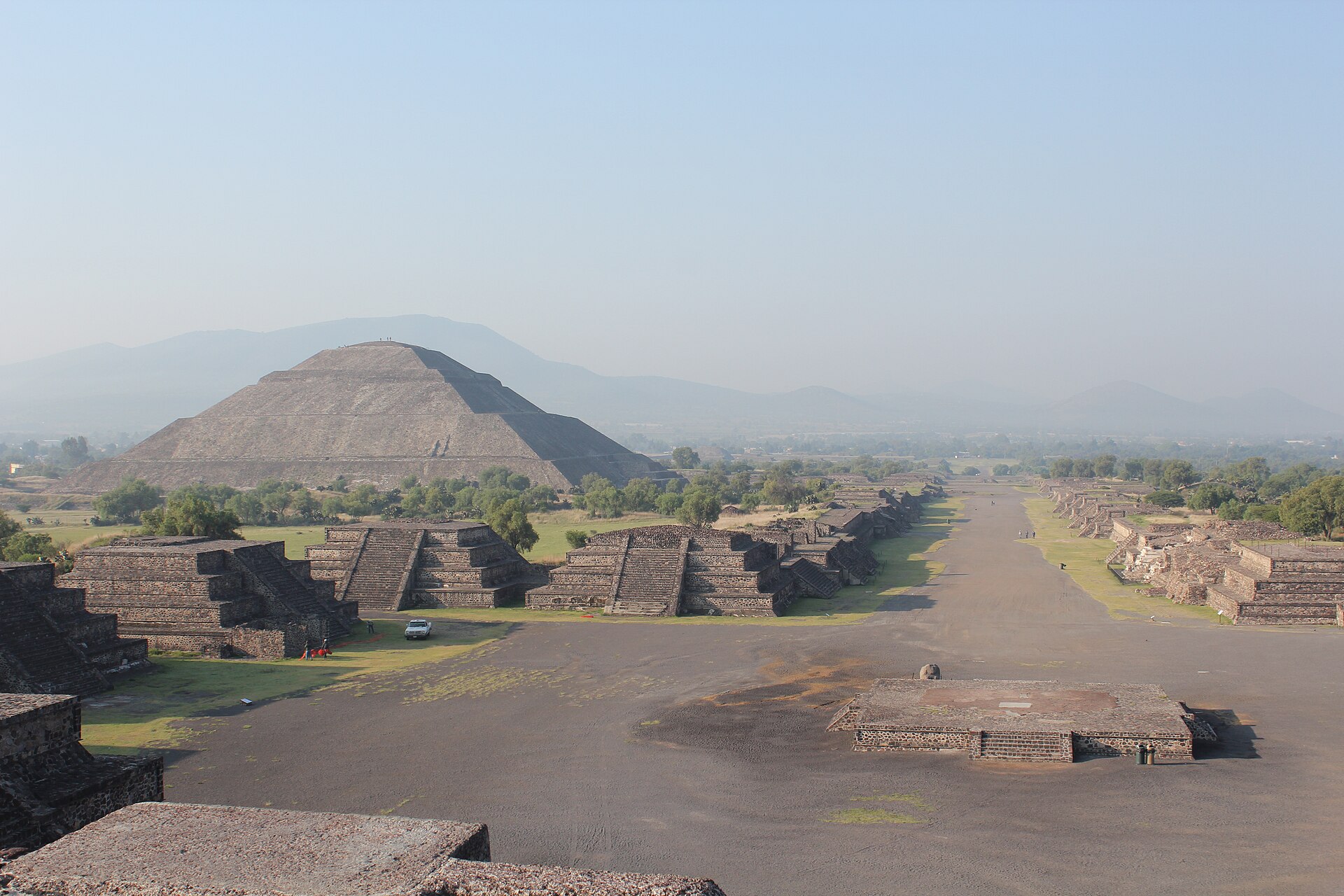
Teotihuacán is an hour north, in the State of Mexico, and it is the reason most people set an alarm in this city. The Avenue of the Dead runs two kilometres between the Pyramid of the Moon and the Ciudadela, with the Pyramid of the Sun on one side; the city that built it peaked around 100,000 people and had collapsed centuries before the Mexica arrived and named it.
Two rules, both of which are routinely published wrong elsewhere.
- You cannot climb the pyramids. Ascent of the Pyramid of the Sun has been prohibited since 2020, when it was suspended as a public-health measure and then kept in place; the Pyramid of the Moon is likewise closed to ascent. Visitors are directed to the Plaza of the Sun and the Plaza of the Moon and asked not to stand on the platforms. Only INAH can authorise an ascent — not a state government, not a municipality, and certainly not a tour operator. Most English-language guides still promise the climb. They are wrong.
- It is open on Mondays, when almost every museum in the capital is closed. That single fact makes Monday the correct day for Teotihuacán and saves you a wasted morning in the city.
Admission is 210 pesos for foreign visitors and 105 for Mexican nationals and residents, under the INAH Category I tariff that rose on 1 January 2026. Tickets are sold at the site box offices and through INAH’s own site, and at no other legitimate outlet. Gates 1 to 5 give access; the site is open daily from about 09:00, with the site museums closing at 16:30. Drones, large bags, tripods, speakers and umbrellas are all prohibited.
Buses leave Terminal del Norte every fifteen to twenty minutes and take about an hour. Go early: the site is exposed, shadeless and at altitude, and the difference between 09:00 and 13:00 is the difference between a pleasant walk and an ordeal. Our dedicated Teotihuacán guide has the gates, the timings and the current rules in full.
A timed Teotihuacán day
- 07:30 — Metro Line 5 to Autobuses del Norte.
- 08:00 — Bus from Terminal del Norte. Ask for los pirámides; buses run every 15–20 min.
- 09:05 — Arrive Gate 1. Buy the return ticket from the same operator before you walk in.
- 09:15–12:00 — Avenue of the Dead, the Ciudadela and the Temple of the Feathered Serpent, then north to the Pyramid of the Sun.
- 12:00–13:00 — Plaza of the Moon and the Palacio de Quetzalpapálotl murals.
- 13:00–14:00 — Site museum (closes 16:30), then lunch at one of the restaurants by Gate 2 or 3.
- 14:30 — Bus back from the gate you arrived at.
- 16:00 — Terminal del Norte. Metro home, or a taxi if you are carrying anything.
Puebla and Cholula: the best second trip
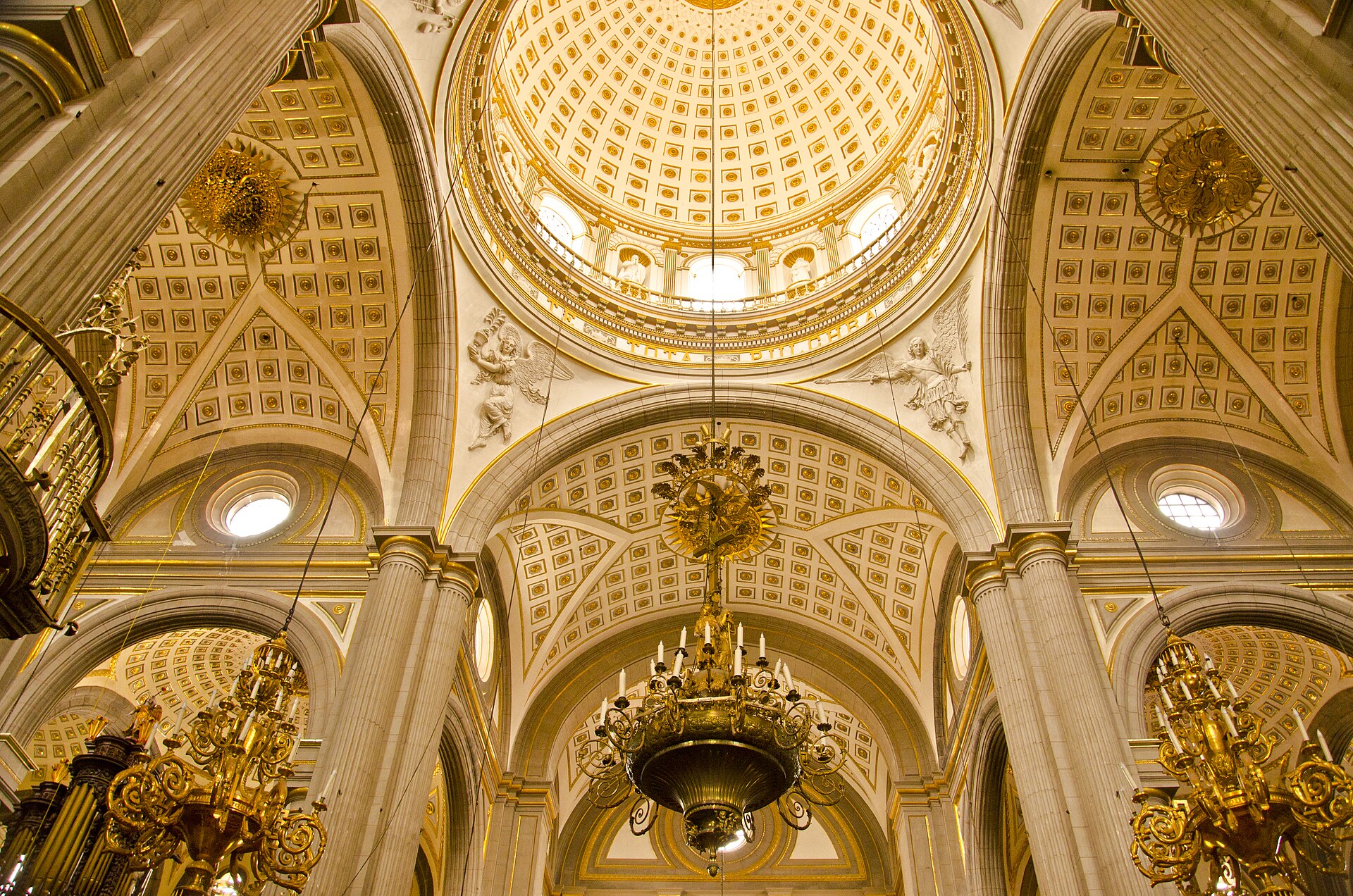
Puebla is two and a half hours east by ADO from TAPO, with departures every fifteen to twenty minutes at peak and fares running from around 229 pesos for an economy seat up to about 552 for ADO Platino. It is a genuine city rather than a village with a church, which is why it sustains a full day where several other entries here do not.
The historic centre is a UNESCO World Heritage site, dense with Talavera-tiled façades and colonial churches. The Capilla del Rosario inside the Templo de Santo Domingo is the single most overwhelming baroque interior in Mexico and takes ten minutes to see. The cathedral has the tallest towers in the country. The Biblioteca Palafoxiana is the oldest public library in the Americas. And Puebla is a food city on its own terms: mole poblano, cemitas, and chiles en nogada in season — which is genuinely seasonal, roughly July to September, tied to the pomegranate and walnut harvest. Anywhere advertising them in February is using preserves.
Cholula sits twenty minutes west by colectivo or taxi, and holds the Great Pyramid of Cholula — by volume the largest pyramid in the world, mostly unexcavated, with a church built on top of it by the Spanish. You walk through a tunnel system into the mound, then up to the church for the view toward Popocatépetl. Half a day for Cholula, half for Puebla, is the standard split, and it works.
The honest caveat: Puebla and Cholula together is a great deal for one day. Two long bus legs plus two cities makes for a fourteen-hour day. Consider staying the night; see the overnight section below.
Tepoztlán: lovely, and in a Level 3 state
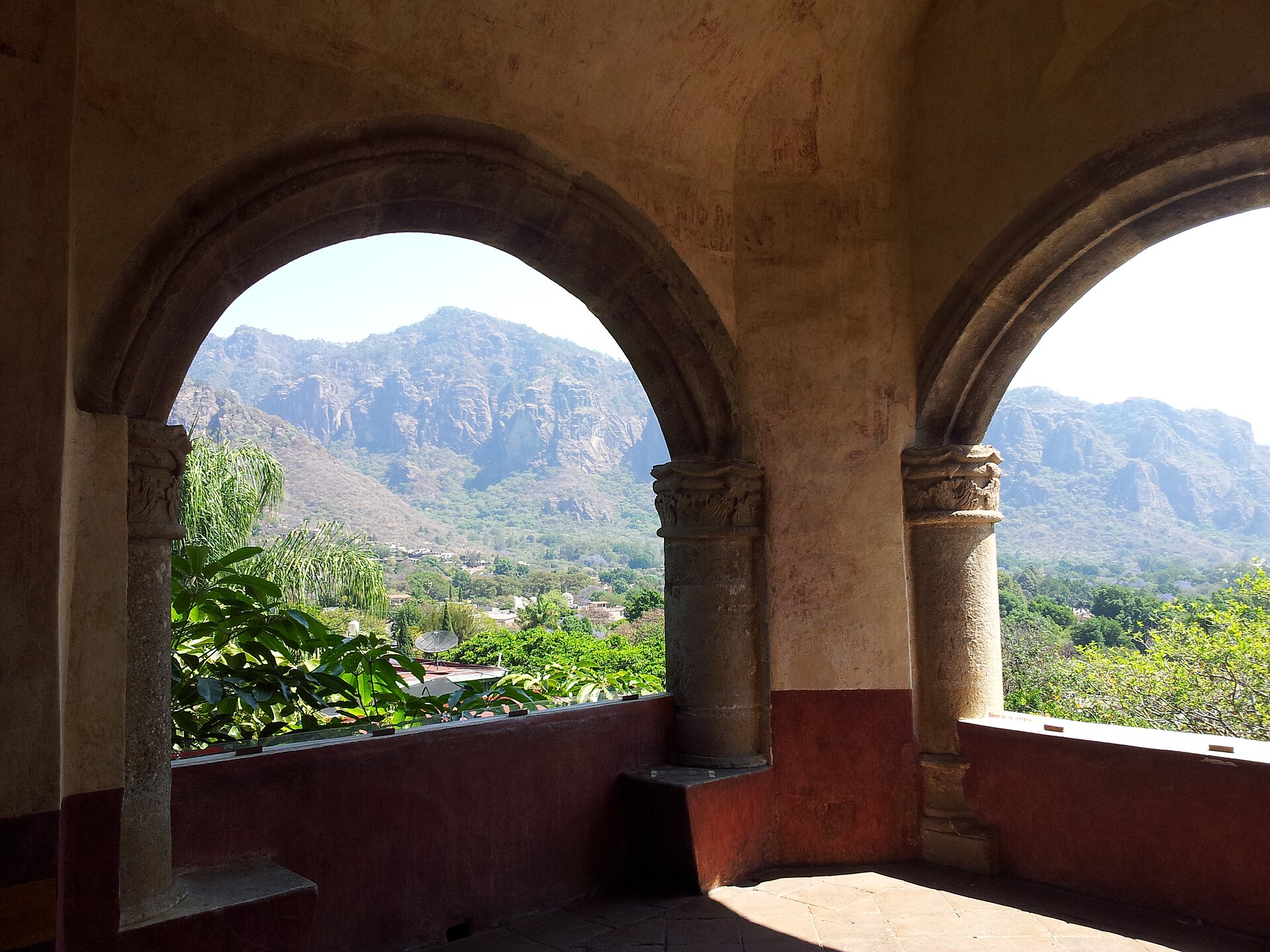
Tepoztlán is an hour and twenty minutes south, in Morelos, reached by Pullman de Morelos from Terminal del Sur at Taxqueña for roughly 140 to 172 pesos depending on class. It is a Pueblo Mágico under a wall of volcanic cliffs, with a sixteenth-century Dominican convent that forms part of a UNESCO World Heritage listing, a market that is genuinely a market rather than a souvenir arcade, and a steep two-kilometre path up to the Tepozteco pyramid on the ridge.
The climb is the main event and it is harder than it looks: about an hour up, uneven rock steps, no shade at the top, and a small separate admission at the summit site. Do not attempt it in the afternoon in the rainy season. Do not attempt it on your first day at altitude.
The caveat is the state. Morelos sits at Level 3, “Reconsider Travel”, on the US advisory as of September 2026 — a level above the capital and above the State of Mexico. Whether that changes your decision is genuinely yours to make, and it should be made after reading the current entry rather than after reading us. The practical steps if you go: travel in daylight both ways, use the first-class bus rather than driving, and do not take the Tepozteco path alone late in the day.
Cuernavaca: skip it, with one exception
Cuernavaca is the same bus, the same state, the same journey time, and a much weaker day. The “city of eternal spring” reputation dates from a time when the capital was less pleasant than it is now; the historic centre is small, the Palacio de Cortés and its Rivera mural are worth an hour, and the surrounding sprawl is not.
The exception is the Museo Robert Brady, the house of an American collector, left as he arranged it, with work by Frida Kahlo, Rufino Tamayo and a great deal of folk art in rooms that are themselves the exhibit. If that is your thing it justifies the trip. If it is not, spend the day in Puebla.
Taxco: the hardest call on this page
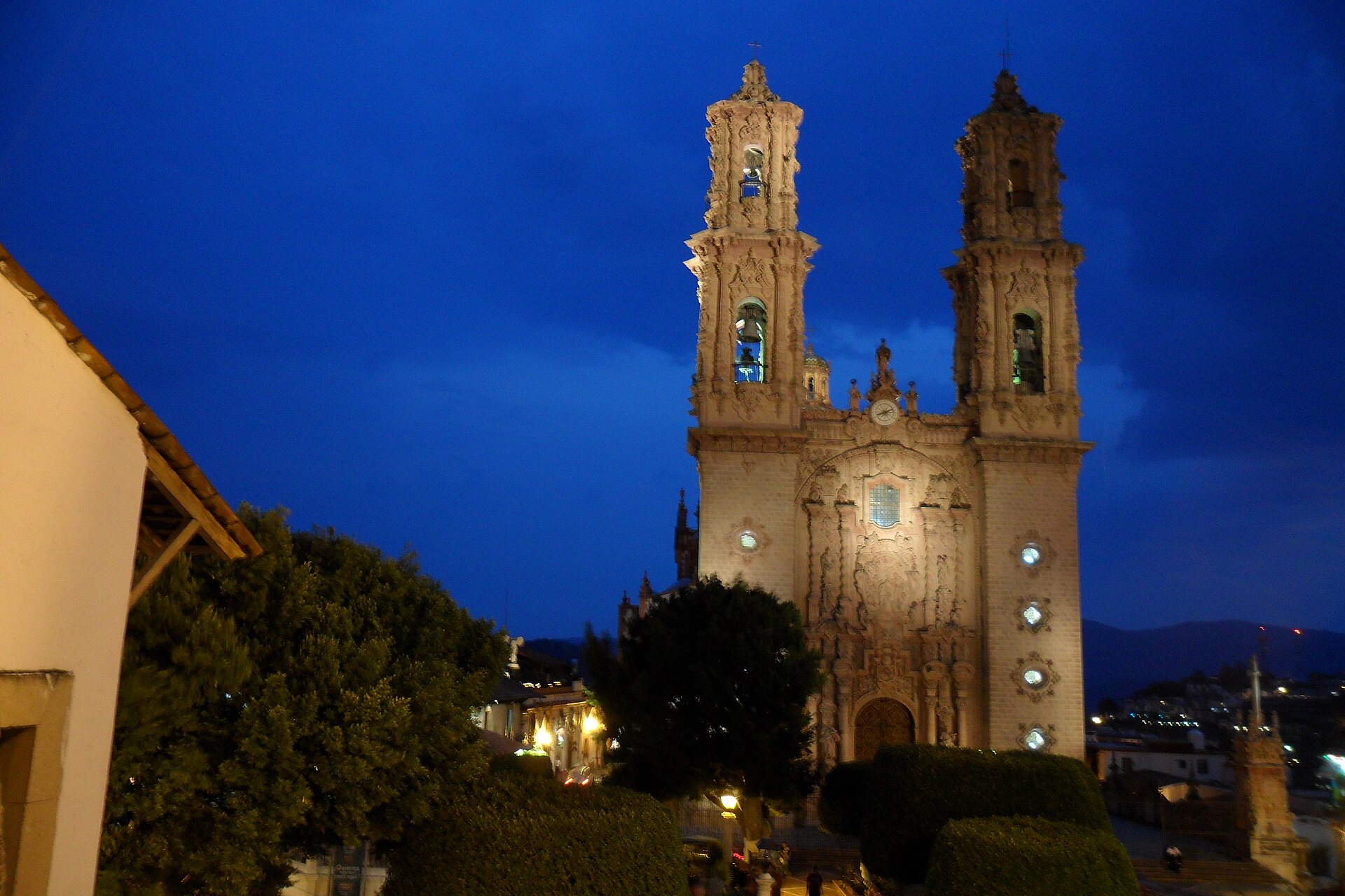
Taxco is a silver town built vertically into a hillside, with white houses, red roofs, streets too steep and narrow for normal cars, and the pink stone church of Santa Prisca at the centre — one of the finest churrigueresque façades anywhere. It is about two and a half to three hours south from Terminal del Sur.
It is also in Guerrero, which carries a Level 4 “Do Not Travel” designation on the US advisory as of September 2026. This is the most serious caveat on this page and we are not going to soften it or bury it under an enthusiasm.
What that actually means in practice: your travel insurance may not cover you in a Level 4 state, consular assistance is explicitly limited, and your government has made an assessment it expects you to weigh. It does not mean the road is closed or that visitors are routinely harmed — tour buses run daily and the town’s economy depends on them. It means the decision is yours to make with the facts, and that a tour operator selling you a seat is not the party carrying the risk.
If you decide to go: travel by first-class bus in daylight in both directions, do not drive the route yourself, do not linger on the road at either end, and check your insurance policy wording before you book rather than after. If you decide not to: Puebla, Tlaxcala and Tula all give you colonial architecture without the question.
Grutas de Tolantongo: beautiful, and not a day trip
Tolantongo is a canyon in Hidalgo with thermal pools terraced into a cliff face, a heated river, caves and a waterfall. The photographs are not exaggerated. The travel is: it is about four hours each way on a good run, which means a day trip is eight hours of bus for maybe four hours of water, arriving in the middle of the day when the pools are fullest.
Do it as an overnight. The site runs its own cabins and campsites, they cannot be booked through the usual platforms, and they fill at weekends and holidays. Entry is charged per person per day and there is very little card acceptance once you are inside the canyon — bring cash. Arriving in the evening, swimming at dawn and leaving after lunch is a completely different experience from the coach version.
If you have only one day and want thermal water, Ixtapan de la Sal is closer, but it is a resort water park rather than a canyon, and we would not spend a scarce day on it.
Tula and Tlaxcala: the ones nobody takes
Tula, in Hidalgo, an hour and a half north, is the Toltec capital, and its draw is the Atlantes — four basalt warrior columns four and a half metres tall standing on top of Pyramid B. The site is small, rarely crowded, and reads as a coda to Teotihuacán rather than a rival to it. INAH admission applies. Combine it with the Franciscan monastery in Tula town and you have a comfortable half-day with an easy return.
Tlaxcala, two hours east, is the smallest state capital in Mexico and one of the most attractive, with an arcaded main square and a former Franciscan convent on the hill above it. Nearby Cacaxtla holds some of the best-preserved pre-Hispanic murals in the country — Maya-influenced battle scenes in strong colour, under a modern shelter — and receives a tiny fraction of the visitors they deserve. If you have already done Teotihuacán and Puebla and want somewhere where you will not queue, this is it.
Monarch butterflies: season, and which state
The monarch overwintering sites are open roughly from November to March, and the reliable viewing window is January and February. The butterflies fly when it is warm, so the useful hours are late morning to early afternoon on a sunny day; arriving at 09:00 in cloud gets you a silent forest full of closed wings.
The state question matters here more than anywhere else on this page. The two most famous sanctuaries, El Rosario and Sierra Chincua, are in Michoacán, at Level 4. Two others — Piedra Herrada, near Temascaltepec and Valle de Bravo, about two and a half hours from the capital, and El Capulín, near Toluca — are in the State of Mexico, at Level 2. They are smaller and less photographed, and they show you the same phenomenon.
Practicalities: a local guide is normally required and paid separately from entry, and at some sanctuaries the final approach is on horseback or a steep walk at well over 3,000 metres. Entry fees are modest — one sanctuary was reported at around 40 pesos for an adult — but they vary by site and year, and we are not going to quote a single figure across all of them. Check with the sanctuary. This is the one trip on the page where a guided round-trip from the capital genuinely earns its price, because the logistics are awkward and the season is short.
Nevado de Toluca, Valle de Bravo and the western option
Nevado de Toluca is a dormant volcano with two crater lakes inside it, reachable in about two and a half hours west. The road goes most of the way up; the crater rim sits above 4,000 metres. That altitude is the point and the problem. If you have been in the capital at 2,240 metres for less than three days, this is not your trip — the jump is substantial and it is felt. The access road and the crater are periodically closed for conservation and weather, so verify before setting out, and go with a car or a tour, because public transport does not reach the crater.
Valle de Bravo is a lakeside town two hours west from Terminal Poniente, with direct services roughly every two hours. It is genuinely lovely — cobbles, a lake, paragliders off the hillside — and it is a weekend town for wealthy capitalinos, which means it is busiest and dearest exactly when you would want to go. Four hours of bus for six hours of lake is a poor trade. Stay a night.
What a day actually costs
Per person, in pesos, September 2026. Transport is round trip from the relevant terminal, including the Metro leg at each end. Admission is the foreign-visitor rate at INAH sites; Mexican nationals and residents pay roughly half.
| Trip | Transport | Admission | Food | Realistic total |
|---|---|---|---|---|
| Teotihuacán, independent | ~220 | 210 | 150–350 | 580–780 |
| Teotihuacán, guided from the city | All-in, varies widely by operator | 1,200–2,500 | ||
| Puebla and Cholula | ~460–1,100 | ~120 (Cholula site) | 250–600 | 830–1,820 |
| Tepoztlán | ~280–345 | ~100 (Tepozteco) | 200–450 | 580–895 |
| Taxco | ~600–800 | 0 (church is free) | 250–500 | 850–1,300 |
| Tula | ~300 | ~100 | 150–300 | 550–700 |
| Monarchs, guided | All-in, includes guide and sanctuary fees | 1,500–2,500 | ||
A guided trip costs two to three times the independent version. For Teotihuacán and Puebla that premium buys you convenience you do not need. For the monarch sanctuaries and Nevado de Toluca it buys you access you cannot easily arrange yourself. That is the whole calculation. Budget the independent figure and treat the guided premium as a purchase of convenience or of access, depending on the trip.
The return plan
This is the part of a day trip that goes wrong, and it goes wrong in the same way every time: people enjoy lunch, miss the bus they meant to take, and end up travelling an unfamiliar road after dark.
- Buy the return leg on arrival, before you start sightseeing. It takes five minutes at the terminal you have just walked out of and it fixes the shape of the day.
- Know the last departure and then plan to take one two hours earlier. On the main routes the last bus is late; on Valle de Bravo, Tolantongo and the sanctuaries it is not.
- Prefer daylight on the road, particularly to and from Morelos, Guerrero and rural Hidalgo. This is standard advice from several governments’ advisories and it is the easiest of all their recommendations to follow.
- Carry cash. Rural card acceptance is patchy, and so is mobile signal in the canyons and on the volcano.
- Have a fallback. If you are stranded, staying the night in a town with hotels is nearly always better than taking a late road. Puebla, Cuernavaca, Taxco and Valle de Bravo all have plenty of rooms.
- Arriving back late? Take an app taxi or an authorised sitio from the terminal rather than the Metro with luggage. The terminals are not places to work out a plan at 23:00.
When a day trip should be an overnight
Four of these are better as two-day trips, and saying so is more useful than pretending otherwise.
- Puebla — one night turns a fourteen-hour day into two relaxed ones and lets you eat dinner in the city rather than on a bus. Cholula in the morning, Puebla in the afternoon and evening, home after breakfast.
- Tolantongo — eight hours of road for four hours of water is not a trip. One night at the site, swimming at dawn before the coaches arrive, is one of the best things in central Mexico.
- Valle de Bravo — go midweek, stay one night, and you get a lake town instead of a bus seat.
- Monarch butterflies — an overnight near the sanctuary lets you be at the colony in the late-morning window when the butterflies actually fly, rather than arriving with the crowd.
If you are restructuring the trip around overnights, our Mexico City itineraries show where they fit in a week, and the where to stay guide covers which colonia to come back to.
The excursions that are not day trips at all
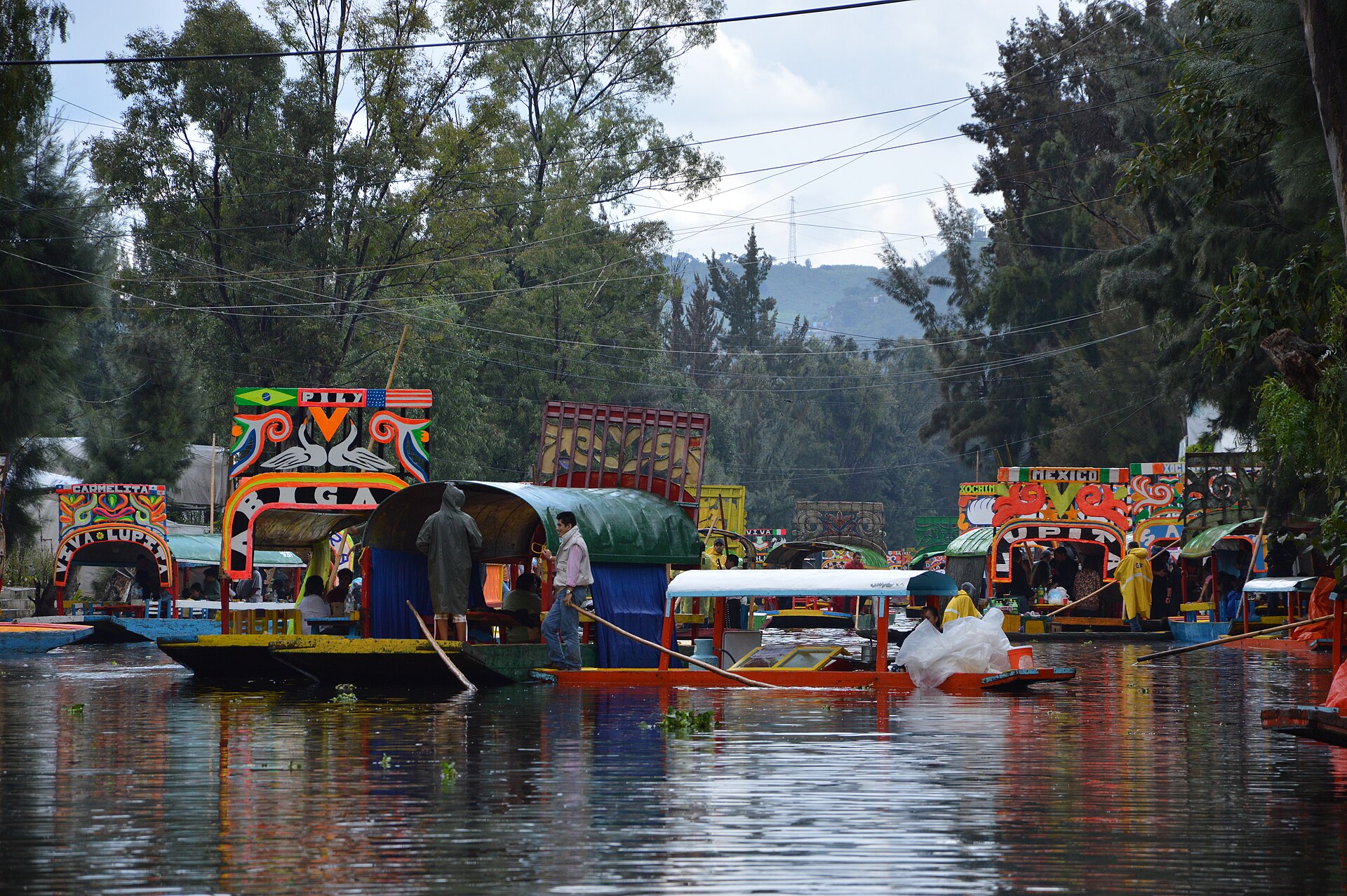
Two things are routinely sold as day trips from Mexico City and are neither out of the city nor a full day. Xochimilco is within the capital, reached by Metro and Tren Ligero, and the trajinera tariff is set per boat per hour rather than per person — a distinction that touts exploit daily. Our Xochimilco guide has the current rate and the quieter embarcaderos. Coyoacán and San Ángel are likewise inside the city and are covered in our guide to Mexico City neighborhoods to visit. Treat all three as half-days, not as excursions, and you will get more out of your week.
Frequently asked questions
What is the best day trip from Mexico City?
Teotihuacán, by a distance. It is the closest, the cheapest, the easiest to do independently, the most significant, and it is open on Mondays when the city’s museums are shut. Puebla with Cholula is the best second choice and the best single trip if you already know Teotihuacán.
Can I do Teotihuacán and something else in one day?
Realistically, no — not well. You can bolt the Basílica de Guadalupe onto the return, because it is on the same northern axis and is free and open daily, and that combination works. Pairing Teotihuacán with anything south or east means four hours of transport and two rushed visits.
Do I need a tour, or can I go independently?
Teotihuacán, Puebla, Cholula, Tepoztlán, Tula and Tlaxcala are all straightforward independently: a Metro ride, a bus from a terminal, and a ticket at the other end. Nevado de Toluca and the monarch sanctuaries are genuinely easier with a tour, because public transport does not reach them and a local guide is required at the sanctuaries. Everything else is a question of budget rather than access.
Is it safe to take day trips from Mexico City?
It depends entirely on which state you are entering, which is the whole argument of this page. The State of Mexico, Puebla, Tlaxcala and Hidalgo sit at the same advisory level as the capital. Morelos is a level higher. Guerrero and Michoacán are at the highest level your government publishes. Read the current entry for the state you are travelling to, on your own government’s site, before you book — and note that the assessment for your nationality may differ from someone else’s.
Which day trips are open on Mondays?
Teotihuacán is, which is the single most useful scheduling fact here. Tula and most other INAH archaeological sites are closed on Mondays, as are the museums in Puebla and Cuernavaca. Towns, markets, churches, the Cholula tunnels’ surrounding area and the thermal pools at Tolantongo are not affected by museum closure days, but check the specific site.
How early do I need to leave?
For Teotihuacán, on a bus by 08:00. For Puebla, by 07:30 if you want Cholula as well. For anything three hours away, 07:00 and a firm return time. The traffic leaving the city builds from about 07:00 on weekdays, and the terminals are not close to the central colonias.
What about the rainy season?
May to October brings heavy late-afternoon rain rather than all-day drizzle, which suits day trips better than it sounds: you will be at the site in the morning and back on a bus when it falls. Mountain trips are the exception — the Tepozteco path and Nevado de Toluca are both genuinely worse in wet conditions. Our best time to visit guide has the monthly rainfall figures.
Can I drive myself?
You can, and for Nevado de Toluca and Tolantongo it is the practical option. Several governments’ advisories specifically recommend using toll roads (cuotas) rather than free roads (libres) and travelling only in daylight, and those recommendations are worth following. Note that the capital’s Hoy No Circula rules apply to visiting vehicles too, and that getting back into the city in the evening is slow.
Is Taxco worth it despite the advisory?
We are not going to answer that for you, and any guide that does is overstepping. Taxco is beautiful and people visit it daily without incident. Guerrero is at Level 4 on the US advisory as of September 2026, which has concrete consequences for insurance and consular assistance. Read the entry, check your policy wording, and decide. If the answer is no, Puebla and Tlaxcala offer comparable colonial architecture in Level 2 states.
The independent-versus-guided gap on these trips is roughly two to three times, and whether that premium is worth paying depends on the destination rather than the budget. Our guide to Mexico City trip costs puts day-trip spending alongside the rest of a week, with dated 2026 fares, admissions and three full worked budgets.
Tempted by the sunrise balloons over Teotihuacán? Read our guide to Teotihuacan balloon tours first. Flights start at around 1,990 pesos a head before transport and site entry, cancellations for wind are routine rather than rare, and the questions to ask about the balloon’s registration and the pilot’s licence matter more than the price.
For the full step-by-step on the cheapest way to the pyramids, including the Metro route to the terminal, the window to buy from, the gate the bus stops at and the return, see our guide to Teotihuacan by bus from Mexico City.
Related Mexico City Guides
- Teotihuacán — the gates, the current climbing ban, tariffs and the Monday advantage.
- Xochimilco — the in-city canal trip, with the per-boat tariff.
- Mexico City Safety — how the state-by-state advisories work, and the verified helplines.
- Getting Around Mexico City — Metro, Metrobús and the card you need to reach the terminals.
- Mexico City Itineraries — where a day trip fits in three, five and seven days.
- Mexico City Neighborhoods to Visit — Coyoacán, San Ángel and the other half-days inside the city.
- Best Time to Visit Mexico City — the rainy season, and when the monarchs are there.
- Where to Stay in Mexico City — the base you return to.
- Things to Do in Mexico City — what to do on the days you stay put.
Sources and verification
- Travel advisories by state — US State Department Mexico advisory, reissued 29 May 2026, country level 2 with six states at Level 4; state-level designations reported in September 2026 as Morelos 3, Guerrero 4, Michoacán 4, and México, Puebla, Tlaxcala and Hidalgo at 2. The State Department’s own pages block automated retrieval, so these figures come from secondary reporting and should be confirmed against the primary entry before travel. UK FCDO advice for Mexico advises against all but essential travel to parts of the country, defined by area. Checked 18 September 2026.
- Teotihuacán site rules — INAH: ascent of the Pyramid of the Sun prohibited since 2020 and still in force in 2026; the Pyramid of the Moon likewise closed to ascent; access via Gates 1–5; tickets only at site box offices and the official INAH site; drones, large bags, tripods, speakers and umbrellas prohibited; open daily, site museums close 16:30. Checked 18 September 2026.
- INAH tariffs — reform to the Ley Federal de Derechos, Diario Oficial de la Federación 7 November 2025, in force 1 January 2026: Category I 210 MXN foreign, 105 MXN national and resident. INAH revises tariffs each January.
- Bus routes, terminals and fares — ADO for TAPO to Puebla CAPU, departures roughly every 15–20 minutes at peak, journey approximately 2 to 2.5 hours, fares reported from ~229 MXN economy to ~552 MXN ADO Platino; Pullman de Morelos from Terminal del Sur (Taxqueña) to Cuernavaca and Tepoztlán at approximately 140–172 MXN, journey approximately 1 hour 20 minutes; Terminal Poniente (Observatorio) to Valle de Bravo with direct services roughly every 2 hours, approximately 2 hours 5 minutes. Fares vary by class, operator and season and are quoted here as ranges. Checked 18 September 2026.
- Monarch butterfly sanctuaries — season approximately November to March, with January and February the reliable window and warm midday hours the active period; Piedra Herrada (Temascaltepec, State of Mexico, about 2.5 hours from the capital) and El Capulín (near Toluca, State of Mexico); El Rosario and Sierra Chincua in Michoacán. Hours broadly 09:00–17:00, some sites to 18:00. One sanctuary reported entry at approximately 40 MXN adult and 35 MXN child; fees vary by site and year and a local guide is normally required and paid separately. Checked 18 September 2026.
- Metro fare — 5 MXN flat, 2026 rate, via the Movilidad Integrada card.
- Chiles en nogada — a seasonal dish sold roughly July to September, tied to the pomegranate and walnut harvest.
- UNESCO — Historic Centre of Puebla; the sixteenth-century monasteries on the slopes of Popocatépetl, which include the Ex-Convento de la Natividad at Tepoztlán; Teotihuacán inscribed separately.
Compiled from published operator, government and institutional sources on the dates shown. We have not visited every destination on this page in person and do not claim to have. Prices are in Mexican pesos and will move: treat every figure here as a range to be confirmed against the operator’s own current page, and every advisory level as a prompt to read the primary entry yourself. Where sources disagree — as they do on sanctuary fees and bus fares — we give the range and say so rather than picking one number.
Photo Credits
Puebla Cathedral interior: La Básilica Catedral de Puebla de los Ángeles, Zocalo, Puebla, Mexico by Praveen, CC BY-SA 3.0, via Wikimedia Commons.
Ex-Convento de la Natividad, Tepoztlán: El mirador del convento de la Natividad by Barocount, CC BY-SA 4.0, via Wikimedia Commons.
Santa Prisca, Taxco: Parroquia de Santa Prisca y San Sebastian – Taxco de Alarcón Guerrero México by Ryuusuke Tameiki, CC BY-SA 3.0, via Wikimedia Commons.