The immigration officer at Terminal 1 will scan your passport, stamp it, and then write a number on the stamp in pen. That number is how many days you are allowed to stay, and it is not automatically 180. Reading it before you walk away from the booth is the most useful of all the mexico city travel tips for first timers, because it costs five seconds at the desk and a great deal of trouble anywhere else. Almost every guide to Mexico still tells readers they get six months as of right. They do not.
The short answer: what actually has to be done before you fly
Most of this trip can be improvised. Four things cannot. If you do nothing else on this page, do these:
- Book Casa Azul tickets. The Museo Frida Kahlo has no box office at all — online only, and it sells out days ahead in high season. This is the single most common wasted journey in Mexico City.
- Book Casa Luis Barragán if it is on your list. Advance online purchase is required and slots are limited. Minimum age 12, strictly enforced.
- Check your own government’s advisory for every state you intend to enter, not just for “Mexico”. The capital, the State of Mexico, Morelos and Guerrero carry different levels.
- Sort connectivity — an eSIM bought before departure, or a plan to buy a physical SIM on arrival if your phone cannot take one.
Everything else — museums, restaurants, day trips, transport — can be decided over breakfast. Mexico City is a remarkably forgiving city to plan badly, with two exceptions: Mondays, when almost everything closes, and the first day at altitude, when you will do less than you think.
Entry: passports, the digital FMM, and the number in pen
The paper tourist card is gone at the major airports. Arriving by air now works like this: an INM officer or an automated e-gate scans your passport, the system generates a digital Forma Migratoria Múltiple tied to it, and the officer stamps your passport and writes the number of days granted over the stamp by hand.
One hundred and eighty days is the maximum the permit allows, not an entitlement. The officer at the port of entry decides, and thirty or ninety is common. Look at the number before you leave the booth. If it is shorter than your itinerary, say so there and then — it is a two-minute conversation at the desk and a serious problem at departure.
The permit fee was reported at 983 pesos, roughly 57 US dollars, for 2026, and is included in your ticket price when you arrive by air. You do not pay it separately at the airport, and anybody asking you to is not part of the process.
Nationality caveats
Visa requirements are set by nationality and change, and we are not going to publish a list that will rot. What we will say plainly:
- Check the Instituto Nacional de Migración’s own list for your passport, not a travel blog’s summary and not a friend’s experience from three years ago.
- A valid US or Canadian passport is the standard document for those nationalities. Passports should be comfortably valid beyond your intended departure date.
- Holding a valid US visa or permanent residency exempts several nationalities that would otherwise need a Mexican visa — if that might apply to you, it is worth checking, because it changes the process completely.
- If you are transiting or connecting through the United States, that country’s own entry rules apply to you independently of Mexico’s.
What to have with you at the desk
- Passport, with the return or onward ticket accessible — it is sometimes asked for.
- The address where you are staying, written down. “An Airbnb in Roma” is not an answer.
- A sense of how long you intend to stay, because you will be asked and the answer becomes the number in pen.
The connectivity decision: eSIM, physical SIM, or roaming
This is the one setup task where the right answer depends on your device, so here is the decision rather than a recommendation.
| Option | Suits | Cost, Sept 2026 | Catch |
|---|---|---|---|
| Travel eSIM bought before departure | Anyone with a recent unlocked phone | Varies by provider and data | Needs an eSIM-capable, unlocked handset; set it up on home wifi, not at the airport |
| Telcel Amigo Sin Límite, prepaid, physical or eSIM | Longer stays, best coverage | ~300 for 5.5 GB, ~500 for 8 GB, 30 days | Buying a physical SIM in person takes time and Spanish |
| Telcel Tourist International eSIM | Trips also covering the US or Canada | Reported from ~949 (20-day unlimited) to ~1,879 (30-day LATAM) | Overkill for a week in one city |
| Home-carrier roaming | Short trips with a generous plan | Your carrier’s day rate | Usually the most expensive option by a distance |
Telcel is the network to want: roughly 99 per cent population coverage and by far the strongest signal outside the cities, which matters if you are going to Teotihuacán, Tolantongo or the monarch sanctuaries. AT&T Mexico is strong in urban areas with good 5G. Travel eSIM resellers connect to these same networks, so the question is convenience and price rather than coverage.
The device caveat, plainly: an eSIM requires a phone that is both eSIM-capable and unlocked. Check both before you buy one, because a non-refundable eSIM on a locked handset is a wasted evening. If your phone fails either test, the fallback is a physical Telcel SIM bought at an official shop or an airport counter on arrival; bring your passport, and expect the process to take longer than it should.
Do the setup at home. Install and provision the eSIM on your own wifi before you leave, with the line set not to activate until arrival if the provider allows it. Activating an eSIM in an arrivals hall on airport wifi with a queue behind you is how this goes wrong.
Money: set it up before you go
Two decisions, both made at home, both worth more than any amount of in-country haggling.
First: tell your bank you are travelling, or check that your card provider does not require it. A card frozen for suspected fraud on day one is a miserable start and difficult to resolve across time zones.
Second: understand dynamic currency conversion before you meet it. When an ATM or a card terminal in a restaurant offers to charge you in your home currency rather than pesos, that is DCC, and it costs a reported five to eight per cent. Always choose pesos. Your own bank converts at close to the interbank rate; the machine in front of you does not. This is the highest-value sentence on this page after the one about the number in pen.
Mexican ATMs also charge their own surcharge per withdrawal — reported 2026 figures run from around 58 pesos at Banorte to 130 at Scotiabank, with BBVA reported considerably higher and a typical range of 30 to 80 pesos. Because it is charged per transaction rather than per peso, the strategy is few, large withdrawals from a machine inside a bank branch. Our Mexico City trip costs guide works through the full arithmetic and three budget scenarios.
Bring a modest amount of home currency as a fallback, but withdraw pesos here rather than exchanging at an airport counter. Carry small notes and coins: street stalls, markets, bathroom attendants and tips all want cash, and nobody at a taco stand can break a five-hundred-peso note at eight in the morning.
Arrival: the airport, and the first hour
AICM — Benito Juárez, code MEX — has two terminals that are not walkable to each other. An Aerotrén monorail links them in about five minutes, daily from 05:00 to 23:00, but it requires a digital or printed boarding pass. Without one, the connection is a red public bus from Door 6 at Terminal 1 or Door 4 at Terminal 2. Most international carriers use Terminal 1; Aeroméxico is the Terminal 2 hub.
| From the airport | Cost | Suits |
|---|---|---|
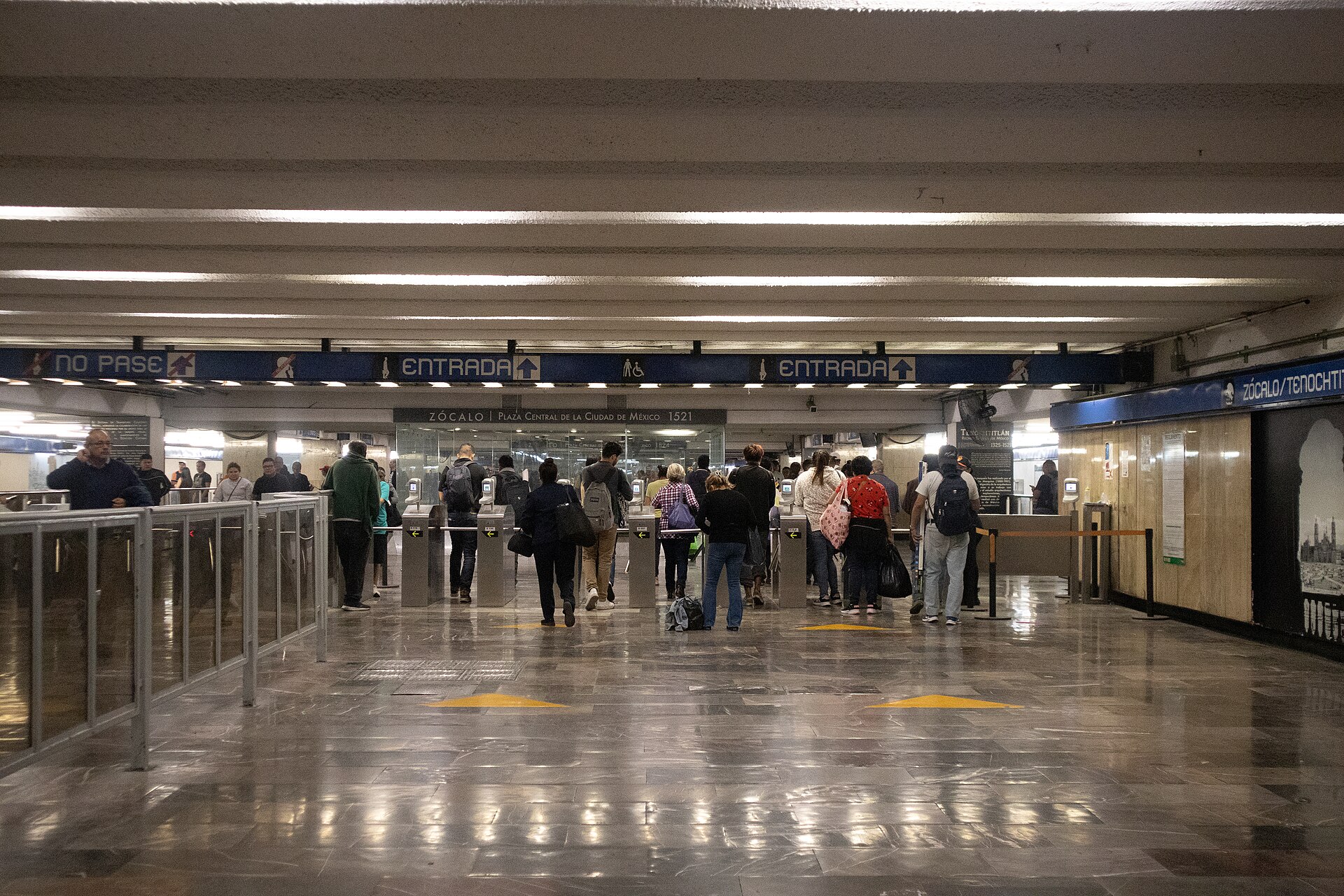
| Metrobús Line 4 | 30 MXN | Light luggage. Official guidance calls it the fastest, cheapest and safest public option. Card or digital wallet only — no cash. |
| Metro Line 5, Terminal Aérea | 5 MXN | Almost nobody. Officially not recommended for arriving visitors with heavy luggage. |
| Authorised taxi | ~220–500+ MXN by zone | Groups, late arrivals, anyone tired. Buy only at an authorised counter inside the terminal. |
| Rideshare | Variable | Contested. Pickup at AICM remains disputed between federal authorities and the platforms. |
Two honest cautions. Airport taxi tariffs vary sharply between the eleven authorised operators and the published figures genuinely disagree — Mexican press in March 2026 reported concessioned airport taxis costing up to double an app ride. Ask the price at the counter before you accept the ticket. And do not treat rideshare pickup at AICM as settled: the platforms and the transport authorities have been at odds over it, and enforcement operations have taken place. Our airports guide covers both terminals, AIFA and the new Buenavista rail link in detail.
If you land at AIFA instead
Some carriers use Felipe Ángeles (AIFA), which is not in Mexico City at all but in Zumpango, in the State of Mexico, and a long way north of anywhere you are likely to sleep. The useful development is the Tren Felipe Ángeles, the Buenavista–AIFA suburban rail link, which opened on 26 April 2026 and covers the distance in about 43 minutes, roughly every half hour. Access is by Movilidad Integrada card only, so buy one before you need it.
The fare is genuinely in flux: a promotional 45-peso end-to-end fare ran through at least June 2026, while the announced regular fare is 110 pesos. Check which is in force rather than trusting either figure, including ours. If you are booking flights and the AIFA option is meaningfully cheaper, the rail link now makes it a reasonable choice in a way it was not two years ago — but add an hour to every transfer calculation, and do not plan a tight onward connection through it.
Your first stop in the city
Buy a Movilidad Integrada card at any Metro or Metrobús station machine and load two hundred pesos. It works on the Metro at 5 pesos a ride, Metrobús at 6, Cablebús at 7, and the airport Metrobús line at 30. It is the single best purchase of the trip and it takes three minutes. See our getting around Mexico City guide for the lines and transfers.
Altitude: the thing that ruins first days
Mexico City sits at 2,240 metres, about 7,350 feet, with roughly a quarter less oxygen than at sea level. Most people adjust within one to three days. This is below the threshold at which serious altitude illness becomes likely, and it does not warrant alarm — but it reliably makes the first day slower than planned, and people who ignore it lose that day.
What actually helps: an easy first afternoon rather than a museum marathon, a great deal more water than usual, going gently on alcohol for the first evening, and not scheduling anything strenuous — the Tepozteco climb, Nevado de Toluca, a long cycle — before day three. If you have a heart or lung condition, take your own doctor’s advice before you travel rather than ours; we are not in a position to give medical guidance and will not pretend otherwise.
The related issue is air quality. The valley traps pollution, and when ozone or particulates spike the city declares a contingencia ambiental, advising reduced strenuous outdoor activity, particularly between 13:00 and 19:00. Live readings by district are published at aire.cdmx.gob.mx. If a bad-air day lands on your walking day, swap it for a museum day — there is no shortage.
When to go, and what it will be like
The seasons here are wet and dry rather than hot and cold. Mean highs vary by only about five degrees Celsius across the year. Figures below are Servicio Meteorológico Nacional normals for the Tacubaya station, 1991–2020 — most travel sites quote unattributed averages, so it is worth naming the station and the period.
| Period | Mean high | Rain | What it means |
|---|---|---|---|
| November–April | 22–27 °C | 5–24 mm/month | Dry, clear, sunniest in March. Busiest and dearest. |
| May–October | 24–27 °C | 59–176 mm/month | Rainy season. Usually a heavy late-afternoon burst, not all-day rain. |
| September | 23.7 °C | 158 mm | The cloudiest month of the year. |
The practical consequence of the rainy season is not that you should avoid it. It is that you should front-load your days: walk in the morning, be under a roof from about four in the afternoon, and carry a light waterproof rather than an umbrella. Evenings cool quickly year-round, so a layer is worth packing regardless of month. Our best time to visit Mexico City guide has the full month-by-month table.
The two calendar rules
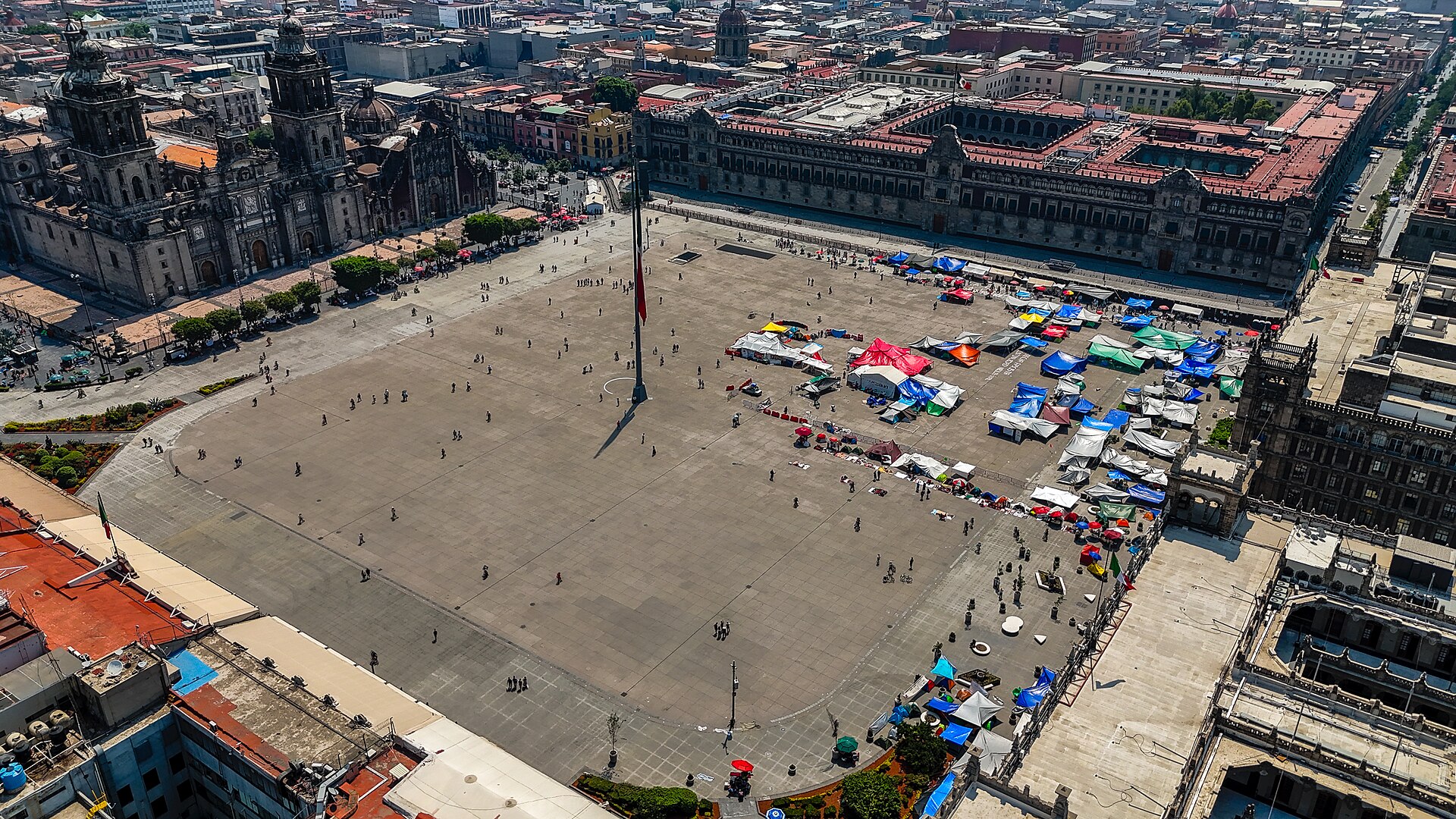
Mondays. The Museo Nacional de Antropología, Templo Mayor, Chapultepec Castle, the Casa Azul, the Palacio Nacional and the Museo del Palacio de Bellas Artes all close on Mondays, along with most smaller museums. What stays open: markets, parks, churches, the Basílica de Guadalupe, the Torre Latinoamericana deck — and Teotihuacán, which is exactly why Monday is the right day for it.
Sundays. Free entry at INAH sites now applies only to Mexican nationals and legal residents, following the reform in force since 1 January 2026. Visitors on a tourist permit pay the full 210 pesos, in a longer queue. The Museo del Palacio de Bellas Artes is run by INBAL rather than INAH and remains free to everyone on Sundays — a genuine exception worth knowing. Plan museum days for Tuesday to Friday.
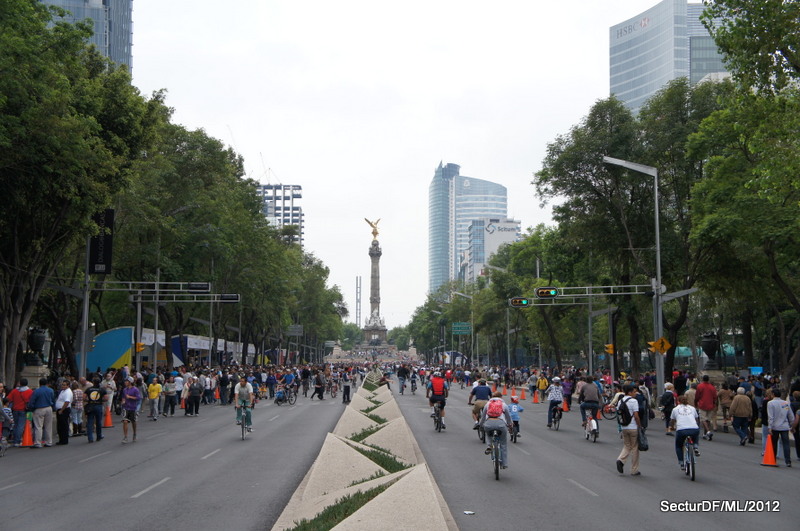
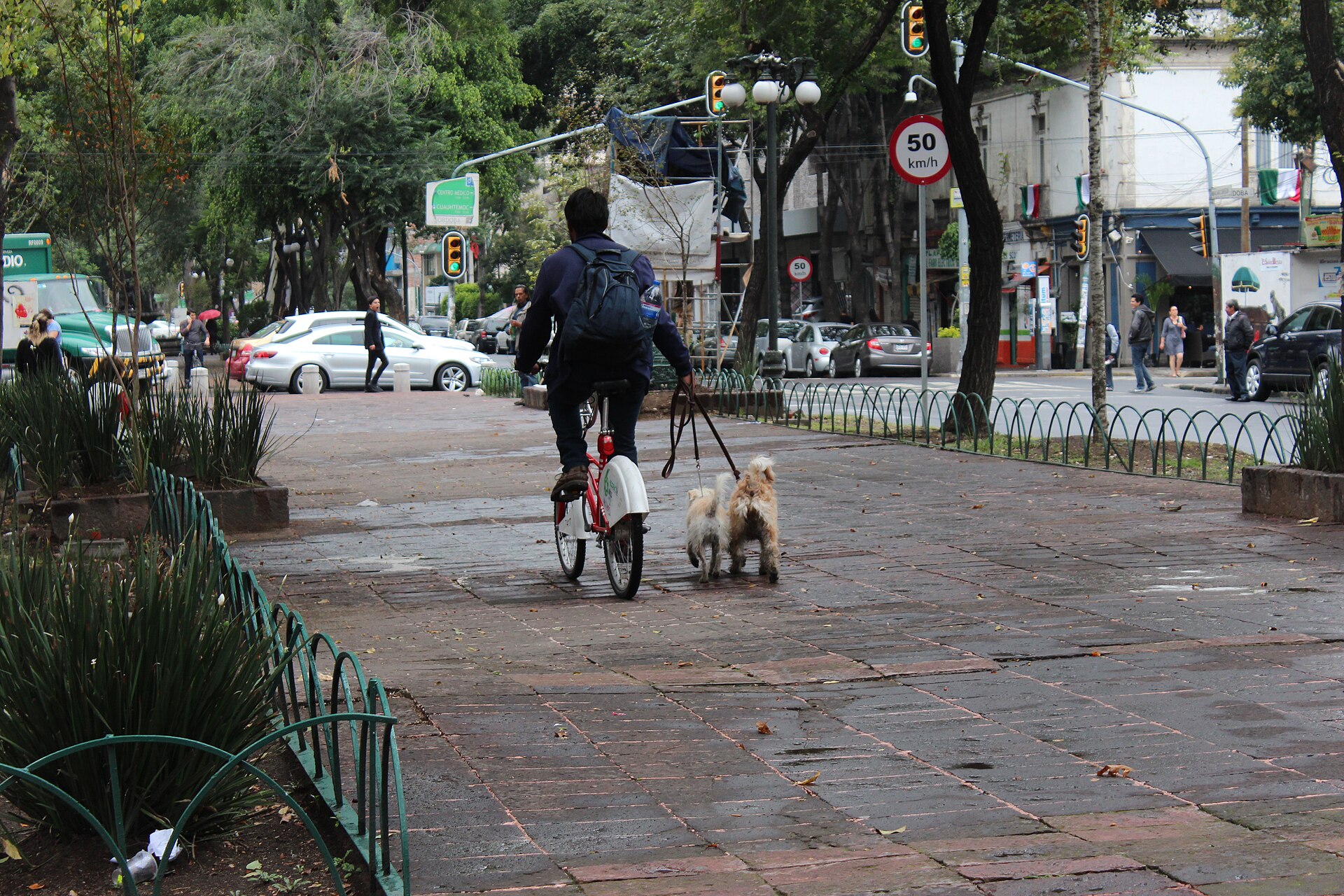
The compensation for a Sunday is that Paseo de la Reforma closes to cars most Sunday mornings until early afternoon for Muévete en Bici, with free loan bikes along the route. Walking or cycling the length of Reforma with no traffic on it is one of the best free things in the city, and it is the correct Sunday morning plan.
Packing for a city at 2,240 metres
The mistake is packing for a tropical country. Mexico City is a highland city with cool mornings, strong sun and cold evenings, and nothing about it is beach weather.
- Layers, not warm clothes. A T-shirt, a long sleeve and a light jacket covers almost every day of the year. Evenings drop sharply.
- Comfortable shoes with grip. You will walk a great deal, and the cobbles in Coyoacán, San Ángel and Chimalistac are uneven and steep. The Centro’s pavements are frequently broken.
- High-factor sun protection. The altitude means stronger UV than the temperature suggests. This catches people out constantly.
- A light waterproof, May to October. An umbrella is awkward on a crowded pavement.
- A plug adapter if you are coming from Europe, the UK or Australasia: Mexico runs 110 V, 60 Hz, with US and Canadian-style flat-pin sockets.
- A reusable water bottle and a way to fill it. Tap water is not generally drunk; hotels and rentals supply purified water, and a large garrafón from a corner shop is a fraction of the cost of small bottles.
- Photo ID for every concession you might claim. Student, teacher, over-60 and disability exemptions at INAH sites apply regardless of nationality, but only on production of the document.
- A small day bag that closes properly. Pickpocketing on crowded transport is the most consistently flagged risk here; a zip solves most of it.
- Cash in small denominations from the first ATM run.
What not to bother with: a heavy coat, beach gear, a money belt, or anything you would be upset to lose. Also leave the drone at home — they are prohibited at Teotihuacán and at most heritage sites.
Staying safe without being paranoid
Mexico City’s visitor-facing colonias are ordinary urban places with ordinary urban risks, and the advisories should be read that way. The UK’s FCDO does not advise against travel to Mexico City. The United States places Mexico at Level 2, “exercise increased caution”, at country level, with six states at Level 4 — none of them the capital.
The specific, consistent warnings worth acting on:
- Pickpocketing is common on public transport and in crowds. Nothing in a back pocket on the Metro.
- Unlicensed taxis are the single most-flagged risk. Use app rides or sitio taxis from authorised ranks, or have your hotel call one. Do not hail on the street.
- There have been reports of criminals impersonating police officers.
- Prefer daylight on unfamiliar roads, particularly leaving the city.
| Number | Service |
|---|---|
| 911 | National emergency — police, ambulance, fire |
| 55 5533 5533 | CDMX Tourist Police, 24 hours, for international visitors |
| 55 4891 1166 | Tourist Police WhatsApp |
| 55 5658 1111 | Locatel — 24-hour information, with English-speaking staff |
| 800 468 8722 | Profeco — consumer protection, for overcharging and shopping complaints |
One correction: 078, the Ángeles Verdes line, is not a city tourist helpline, despite appearing as one on a great many travel sites. It is a federal assistance service for drivers on highways and toll roads. Save Locatel instead. Our Mexico City safety guide sets the advisories out properly.
Small things that make the difference
- Learn twenty words of Spanish. Buenos días, por favor, gracias, con permiso, la cuenta, ¿cuánto cuesta?, sin picante. It changes every interaction.
- Eat your big meal at lunch. The comida corrida — a fixed multi-course lunch in an ordinary fonda, roughly 13:00 to 17:00, for 80 to 150 pesos — is how the city eats and it is better value than any dinner.
- Tip about 10 per cent, rising to 15 for good service; that is the official guidance from the city’s own tourism body. Check the bill for an included propina first. Cash, in pesos.
- Take the colonia with the address. Street names repeat across the city, and an address without its colonia can put you an hour away.
- Front carriages on many Metro lines are reserved for women and children at peak. It is signposted and it is enforced.
- Screenshot everything. Bookings, addresses, your accommodation’s location on a downloaded offline map. Signal is not universal.
- Do not drink the tap water, but do not be neurotic about ice — established venues make it from purified water.
- Book restaurants that matter. The starred Polanco rooms and Rosetta in Roma go weeks out.
A printable pre-departure checklist
Eight weeks before
- Check passport validity well beyond your return date.
- Check the INM visa requirement for your nationality — and whether a US visa or residency exempts you.
- Check your own government’s travel advisory for the capital and for every state you plan to enter.
- Book flights and accommodation; if booking an apartment, look for the registry folio number on the listing.
- Book any starred restaurant you have your heart set on.
Two weeks before
- Book Casa Azul tickets online. There is no box office.
- Book Casa Luis Barragán if you want it — advance purchase required, minimum age 12.
- Buy and install a travel eSIM, or confirm your phone can take one at all.
- Notify your bank, and check your travel insurance covers every state on your itinerary.
- Check the advisory again — it can change between booking and travelling.
The day before
- Download an offline map of the city.
- Screenshot your accommodation address including the colonia and postal code.
- Save 911, Locatel and the Tourist Police number to your phone.
- Pack layers, sun protection, comfortable shoes and a plug adapter if you need one.
- Check whether a Monday falls in your trip, and put Teotihuacán on it.
On arrival
- Read the number the officer writes on your entry stamp.
- Withdraw pesos from a bank-branch ATM. Decline the currency conversion.
- Buy a Movilidad Integrada card and load 200 pesos.
- Take the first afternoon gently. You are at 2,240 metres.
Frequently asked questions
How many days do I need in Mexico City?
Four is the minimum that feels unhurried: one for the Centro Histórico, one for Chapultepec and Antropología, one for Coyoacán, and one for Teotihuacán. Five to seven lets you add Xochimilco, a second day trip and time to simply be in a colonia. Our Mexico City itineraries set out three, five and seven-day shapes.
Do I need a visa for Mexico?
It depends entirely on your nationality, and in some cases on whether you hold a valid US visa or residency. Check the Instituto Nacional de Migración’s own list rather than a summary. Whatever the answer, the entry process at the airport is the same digital one described above.
Is Mexico City safe for first-time visitors?
The capital is not among the areas that governments advise against visiting, and the practical risks are urban and manageable: pickpocketing on transport, unlicensed taxis, and being somewhere unfamiliar late. Use app or sitio taxis, keep bags closed and in front of you on the Metro, and read the current advisory for your own nationality. Our safety guide has the detail.
Do people speak English?
In hotels, museums and restaurants aimed at visitors, usually. In markets, on buses, in fondas and in taxis, often not. Twenty words of Spanish and a translation app cover the gap comfortably, and the effort is noticed.
Can I drink the tap water?
It is not generally drunk here, including by residents. Hotels and rentals supply purified water; bottled and garrafón water is everywhere and cheap. Ice in established venues is made from purified water and is not something to avoid.
What should I not do as a first-time visitor?
Do not plan a museum day on a Monday. Do not assume Sunday is free — it no longer is, for foreign visitors. Do not hail a taxi on the street. Do not accept a card terminal’s offer to charge you in your home currency. Do not attempt a strenuous hike on day one at 2,240 metres. And do not turn up at the Casa Azul hoping to buy a ticket.
Is it worth renting a car?
Not for the city. Parking is scarce and expensive, traffic is severe, and the Hoy No Circula programme restricts which vehicles may drive on which days by emissions certification and plate — visiting vehicles included. The Metro, Metrobús, Ecobici and app taxis cover everything. A car is only worth it for specific day trips such as Nevado de Toluca or Tolantongo, covered in our day trips guide.
What is the one thing most first-timers get wrong?
Overpacking the first two days. The combination of altitude, a long flight and a city that is physically large means the ambitious opening itinerary rarely survives contact. Plan the first afternoon as a walk in one colonia and dinner nearby, and start properly on day two.
Where should I stay?
Roma Norte or Juárez for a first visit: central, well connected, comfortable to walk in the evening on the main streets. Condesa if you want quiet and green; the Centro if you want to be inside the history and do not mind the noise. Our where to stay guide compares them as bases, and Mexico City neighborhoods to visit compares them as places to spend the day.
One more thing to check before you fix dates: what is on while you are here. The Día de Muertos season, the Guadalupe pilgrimage on 12 December and the F1 weekend all move accommodation prices sharply and close central streets. Our guide to Mexico City festivals and events sets out the confirmed dates and the ones that are still only a typical season.
For travellers weighing up an autumn trip, our month guide to Mexico City in October covers the weather, the 2026 events, the week when prices peak and the bookings that cannot wait.
Decide how you are getting into town before you land. Our guide to getting from the Mexico City airport to the city center sets out which option suits which traveller, what each costs in 2026, and what to book before you leave home.
Related Mexico City Guides
- Mexico City Itineraries — three, five and seven-day sequences.
- Where to Stay in Mexico City — colonias compared as bases, plus the rental registry rules.
- Mexico City Neighborhoods to Visit — what each colonia is for, and three walking routes.
- Getting Around Mexico City — the Movilidad Integrada card, Metro, Metrobús and Cablebús.
- Mexico City Airports — AICM, AIFA and every transfer option.
- Mexico City Trip Costs — dated 2026 prices, fees and three worked budgets.
- Mexico City Safety — advisories by state and verified helplines.
- Best Time to Visit Mexico City — climate normals and crowd patterns.
- Mexico City Museums — the 2026 INAH tariffs and booking rules.
- Day Trips From Mexico City — twelve compared, with the state advisory for each.
- Things to Do in Mexico City — the sights themselves, ranked.
Sources and verification
- Entry and the digital FMM — the paper Forma Migratoria Múltiple has been replaced by a digital process at major airports: passport scanned by an INM officer or e-gate, a digital FMM generated against the passport, and the days granted written in pen over the entry stamp. 180 days is the permit maximum, not an entitlement; the officer at the port of entry decides. Fee reported at 983 MXN (~57 USD) for 2026, included in the air ticket. Visa requirements are set by nationality by the Instituto Nacional de Migración and are not reproduced here, as they change. Checked 18 September 2026.
- Mobile networks and eSIM — Telcel reported at approximately 99 per cent population coverage with the strongest rural network; AT&T Mexico strong in urban areas with 5G; Movistar third. Telcel Amigo Sin Límite prepaid reported at approximately 300 MXN for 5.5 GB and 500 MXN for 8 GB over 30 days; Telcel Tourist International eSIM plans reported from approximately 949 MXN (20-day unlimited) to 1,879 MXN (30-day LATAM), covering Mexico, the US and Canada. Travel eSIM resellers connect to the same networks. Figures come from secondary aggregators and operator marketing pages; confirm current pricing before purchase. Checked 18 September 2026.
- Official basics — mexicocity.cdmx.gob.mx, the city’s own tourism site: electricity 110 V at 60 Hz with US/Canada-style plugs; tipping approximately 10 per cent, rising to 15 per cent for exceptional service; 911 for emergencies; Profeco consumer protection on 800 468 8722. The page carries no altitude guidance, no visitor-centre addresses and no official app, so none is claimed here. Checked 18 September 2026.
- Airport — AICM: two terminals, not walkable to each other; Aerotrén links them in approximately 5 minutes, daily 05:00–23:00, and requires a digital or printed boarding pass; without one, red public buses from Door 6 at T1 and Door 4 at T2. Metrobús Line 4 serves both terminals at 30 MXN, card or digital wallet only, and is described in official guidance as the fastest, cheapest and safest public option. Metro Terminal Aérea on Line 5 costs 5 MXN but is officially not recommended for arriving visitors with heavy luggage. Eleven authorised taxi groups were on the register in 2026, charging fixed rates by zone from counters inside the terminals; reported figures for central colonias run roughly 220–500 MXN for a sedan and higher for vans, and Mexican press in March 2026 reported concessioned airport taxis at up to double an app ride. Sources disagree on the tariff and none is asserted here. Rideshare pickup at AICM remains disputed between federal transport authorities and the platforms.
- INAH tariffs and the Sunday rule — reform to the Ley Federal de Derechos, Diario Oficial de la Federación 7 November 2025, in force 1 January 2026: Category I 210 MXN foreign, 105 MXN national and resident; Sunday free entry restricted to Mexican nationals and legal residents. Museo del Palacio de Bellas Artes is run by INBAL rather than INAH and remains free to everyone on Sundays.
- Museo Frida Kahlo and Casa Luis Barragán — the institutions’ own pages: Casa Azul sells tickets online only with no box office and closes Mondays; Casa Luis Barragán requires advance online purchase, with slots strictly subject to availability and a strictly enforced minimum age of 12. Checked September 2026.
- Altitude and air quality — Mexico City sits at 2,240 m with roughly a quarter less oxygen than at sea level; most people adjust within one to three days. This is below the threshold at which serious altitude illness becomes likely. We give planning information only and no medical advice; anyone with a heart or lung condition should consult their own doctor. Air-quality readings by district are published by the city at aire.cdmx.gob.mx, with contingencia ambiental guidance to reduce strenuous outdoor activity, particularly 13:00–19:00.
- Climate — Servicio Meteorológico Nacional normals for the Ciudad de México (Tacubaya) station, 1991–2020 period.
- Transport fares — 2026 rates: Metro 5 MXN, Metrobús 6 MXN, Metrobús Line 4 airport 30 MXN, Cablebús 7 MXN, all via the Movilidad Integrada card. Paseo de la Reforma closes to cars most Sunday mornings until early afternoon for Muévete en Bici, with free loan bikes along the route.
- Safety — UK FCDO foreign travel advice for Mexico (street crime, pickpocketing on public transport, unlicensed taxis, impersonation of police); US State Department Mexico advisory reissued 29 May 2026 at Level 2 with six states at Level 4, none of them the capital. The State Department page blocks automated retrieval; readers should open the relevant entry themselves. Helplines from CDMX government emergency pages. Ángeles Verdes (078) is a federal highway assistance service, not a city tourist line.
- ATM fees and DCC — reported 2026 surcharges of approximately 58 MXN (Banorte), 79 MXN (Santander), 130 MXN (Scotiabank) and considerably higher at BBVA, within a quoted typical range of 30–80 MXN per withdrawal; dynamic currency conversion reported to cost 5–8 per cent. Secondary sources, indicative rather than guaranteed.
This checklist is compiled from government, operator and institutional sources on the dates shown. We have not tested every eSIM provider or taxi operator named here and do not claim to have. Entry rules, advisories and tariffs all change: treat every item as a prompt to check the primary source for your own nationality and travel dates, not as a substitute for doing so. Prices in Mexican pesos.
Photo Credits
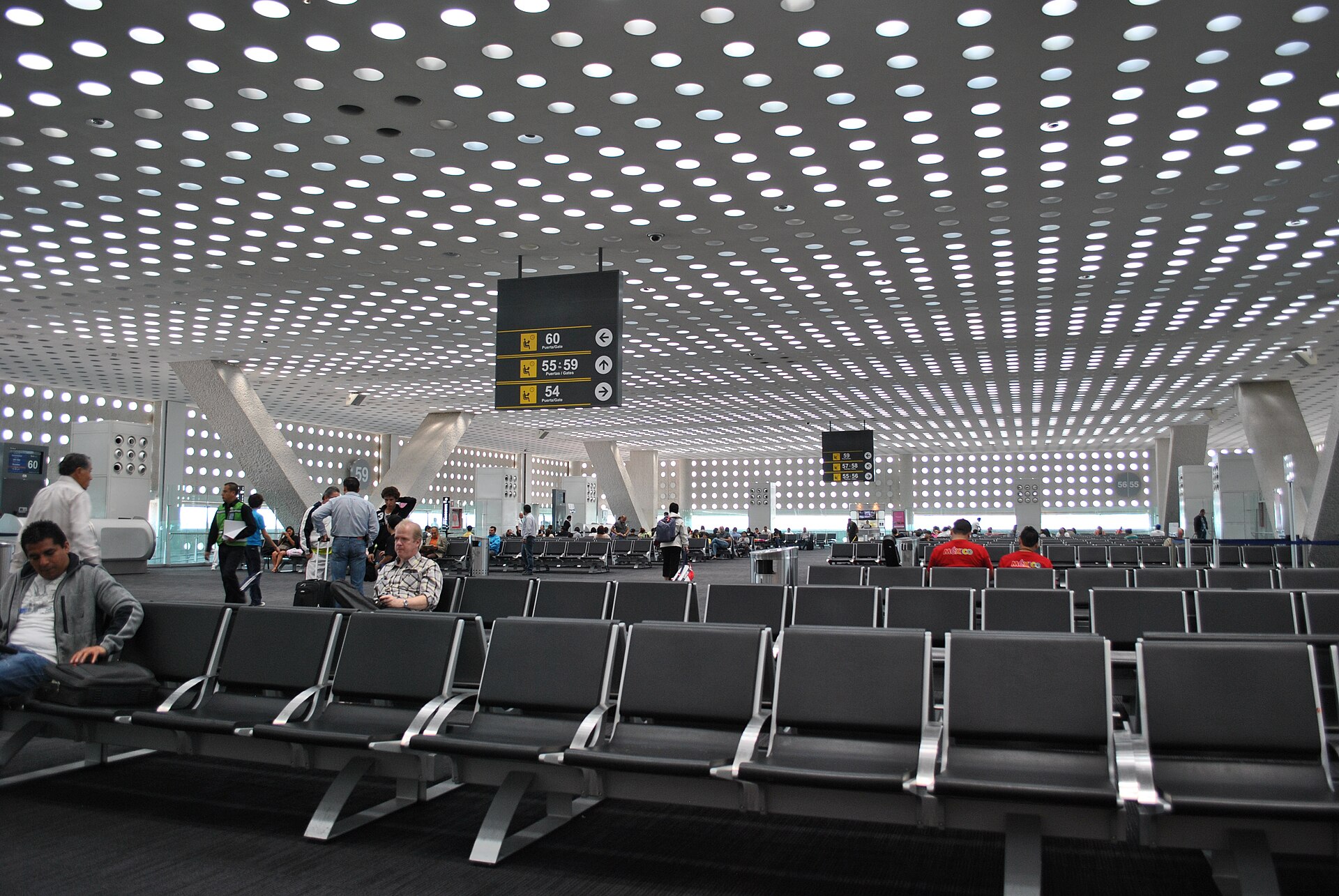
Terminal 2, Mexico City International Airport: Aeropuerto Internacional de la Ciudad de México – Terminal 2 – Área de Salidas by ProtoplasmaKid, CC BY-SA 4.0, via Wikimedia Commons.
Muévete en Bici on Paseo de la Reforma: Paseo ciclista Muévete en bici – TurismoCDMX – 1 by Marilú López, Secretaría de Turismo del Gobierno de la Ciudad de México, CC BY-SA 4.0, via Wikimedia Commons.