There is no ticket office at the Casa Azul. The museum’s own visitor page says it in capitals — no in-person ticket sales — and yet every day people walk up Calle Londres, join a queue that is not a queue, and find out at the door. Frida kahlo museum tickets are sold online, through the museum’s own booking system, and nowhere else. Turning up without one means being turned away, whatever a tout on the corner tells you.
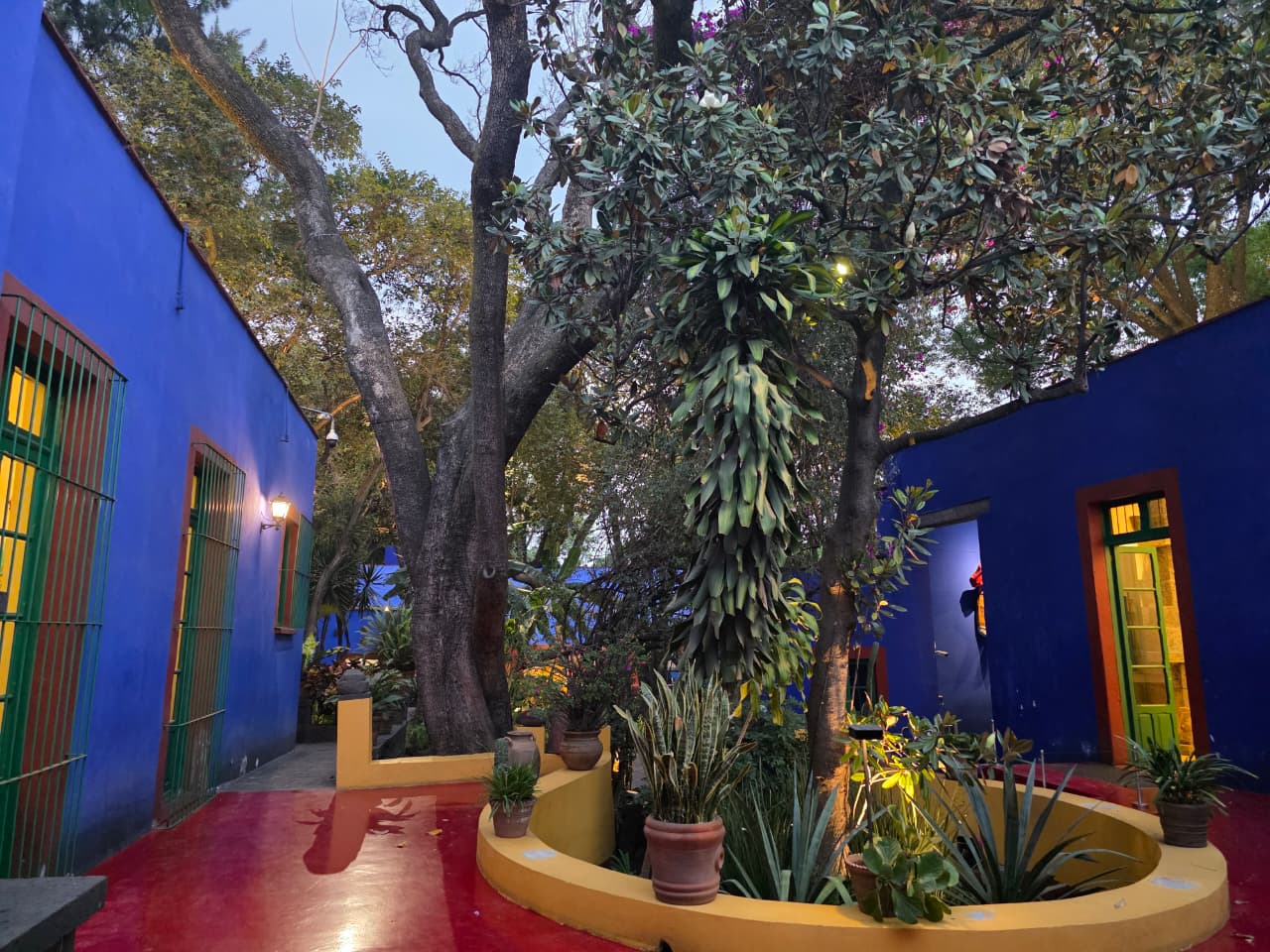
The short answer
- Book online, in advance, on the museum’s own site. There is no box office for entry.
- Closed Mondays. Wednesday opens an hour late, at 11:00. Thursday runs until 21:00.
- 320 pesos for foreign visitors, 160 for Mexican nationals with ID, 60 for students and teachers, 30 for seniors and children aged 6 to 12, free under 6 and for visitors with disabilities.
- Your ticket also admits you to the Museo Diego Rivera-Anahuacalli as a courtesy — and the reverse also works, valid for a month.
- Photography inside needs a permit bought at the booth on site. Video is prohibited throughout.
- Allow 90 minutes. It is a house, not a gallery, and it is small.
All of the above was checked against the museum’s own visitor page on 18 September 2026. Prices and hours change; check the museum’s site before you book.
Who should visit, and who should not
This is worth saying plainly, because at 320 pesos and a compulsory advance booking it is a real commitment in a city with free museums of the first rank.
Go if you care about Kahlo as a person as much as a painter; if the interest is biographical, political or domestic; if you want to stand in the room where someone actually lived and worked; or if you are already spending a day in Coyoacán.
Reconsider if you are coming primarily to see famous paintings. The Casa Azul holds a modest number of Kahlo’s works — the great canvases are dispersed across the world, and the Museo Dolores Olmedo, reopened at La Noria in Xochimilco in May 2026, holds a major concentration of both Kahlo and Rivera. Reconsider too if you have young children: this is a slow, crowded, quiet house, and under-eights are rarely rewarded by it.
Definitely reconsider if you have one day in the city. On a single day, the Museo Nacional de Antropología and the Centro Histórico give you more. Our Mexico City museums guide sets out the whole field and which collections justify their prices.
Tickets: prices, categories and the booking
| Category | Price | What you need |
|---|---|---|
| General admission (foreign visitors) | 320 MXN | — |
| Mexican nationals | 160 MXN | Valid ID |
| Students and teachers | 60 MXN | Valid ID |
| Tour guides and operators | 60 MXN | Valid ID |
| Seniors, and children aged 6–12 | 30 MXN | Valid ID |
| Children under 6 | Free | — |
| Visitors with disabilities | Free | — |
Two things to note about those categories. The concession rates apply on production of the document, at the door — the rule is applied at the entrance rather than taken on trust, so bring the student card or the ID you booked against. And this is one of the widest foreign-versus-national splits in the city, second only to the Museo Dolores Olmedo, where the gap is 432 to 162.
How the booking works
- Buy on the museum’s own site. Third-party resellers exist and charge more, sometimes a great deal more, for the same slot.
- Book several days ahead in high season — around Día de Muertos, Christmas, Semana Santa and the summer, slots go days in advance.
- Take the earliest slot you can get. The house is small, and the difference between 10:00 and 14:00 is the difference between rooms and crowds.
- The booth on site is not a box office. It sells the photography permit and runs the coat check. This is what confuses people into thinking they can buy entry there.
- Anyone selling you a ticket on the street is selling you nothing. The same applies to “skip the line” offers at the door.
Opening hours, and the two that catch people out
| Day | Hours |
|---|---|
| Monday | Closed |
| Tuesday | 10:00–18:00 |
| Wednesday | 11:00–18:00 — opens an hour later than every other day |
| Thursday | 10:00–21:00 — the long day |
| Friday | 10:00–18:00 |
| Saturday | 10:00–18:00 |
| Sunday | 10:00–18:00 |
The Wednesday trap. Every other day opens at 10:00; Wednesday opens at 11:00. People book a 10:00 Wednesday slot in their heads, arrive, and wait an hour in the street.
The Thursday advantage. Thursday runs to 21:00, which is three hours longer than any other day, and the last couple of hours are by some distance the quietest of the museum’s week. If your dates allow it, a late Thursday is the best visit available.
Special hours, 10:00 to 14:00: 15 September, 24 December, 31 December.
Closed entirely: 1 January, 1 May, 11 June, 16 September, 8 December, 25 December.
Noche de Museos: the last Wednesday of each month, 17:15 to 21:00 — a city-wide late opening the Casa Azul takes part in.
Note that the Monday closure is not an INAH rule — this is a private museum run by the Museo Frida Kahlo trust — but it lines up with the rest of the city, which is why Monday in Mexico City is a walking day rather than a museum day.
What you will actually see
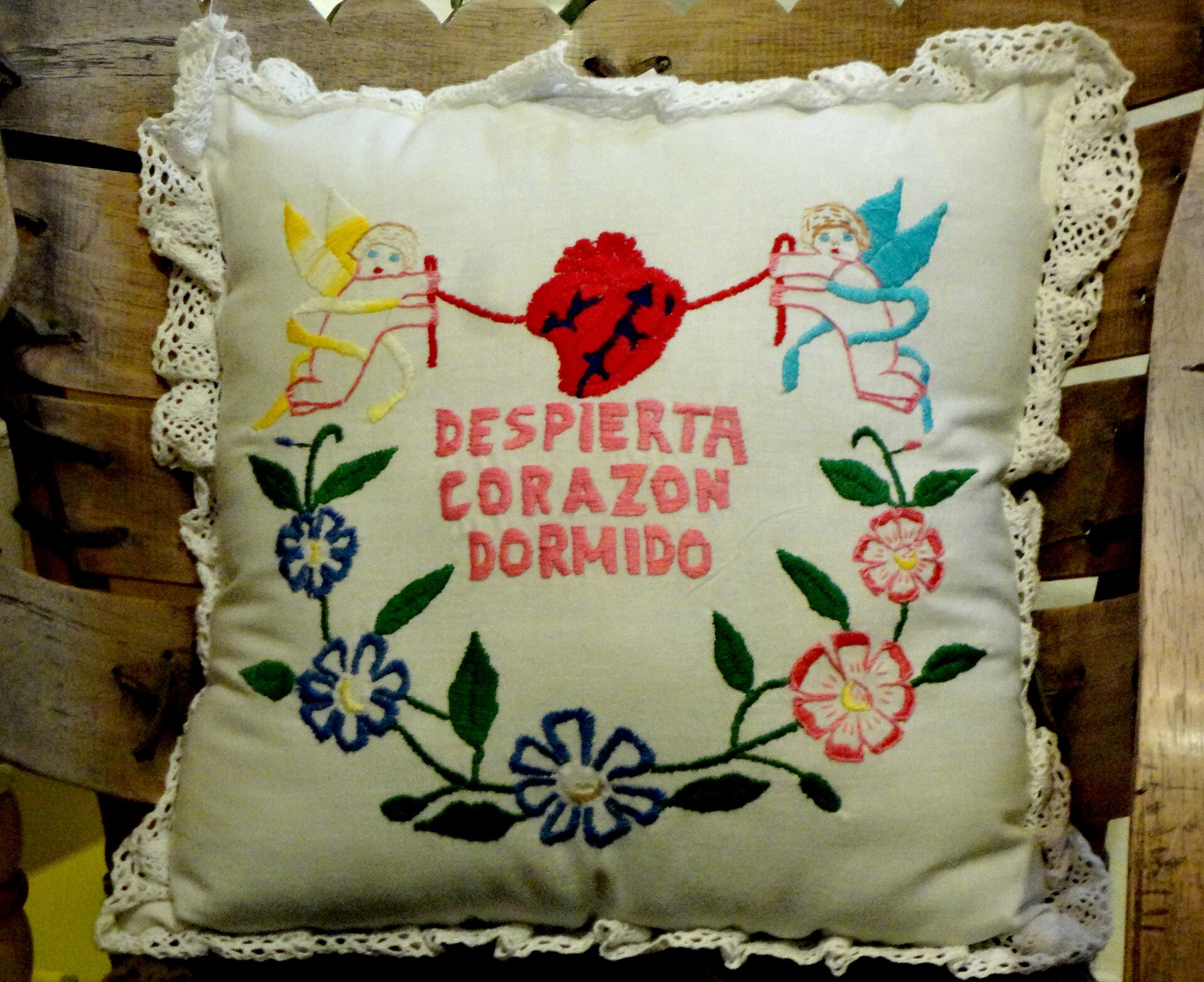
The Casa Azul was Kahlo’s family home, built by her father, and the house she was born in, lived in with Diego Rivera, and died in. It opened as a museum in 1958, four years after her death, and a great deal of it was left as it was.
The rooms: the kitchen with its painted names in tiny ceramic mugs; the dining room; Kahlo’s day bed with the mirror fixed into the canopy above it, so that she could paint herself while immobilised; her studio with the wheelchair at the easel and the brushes still in their jars; the bedroom with the death mask; the garden courtyard with its stepped pyramid holding pre-Hispanic pieces.
The collection: a modest but real group of Kahlo’s own works, Rivera works, retablos and ex-votos she collected, pre-Hispanic objects, and — since a 2004 opening of rooms sealed for fifty years — her clothing, corsets, prosthetic leg and personal effects, which form the most affecting part of the visit and are displayed in a dedicated exhibition.
The honest expectation: this is a house museum. The rooms are small, the light is low, the labelling is brief, and at a busy hour you will move through some spaces in single file. What it gives you is not a survey of the paintings but a very precise sense of one person’s daily life — the objects she reached for, the bed she was confined to, the view from her window. If that is what you want, few museums anywhere do it better. If you came for The Two Fridas, it is in the Museo de Arte Moderno, a few kilometres away in Chapultepec.
The house, and why it is the way it is
Understanding a little of the sequence makes the rooms legible, and the museum’s own labelling is brief.
The house was built in 1904 by Guillermo Kahlo, a German-born photographer, in what was then the separate town of Coyoacán. Frida Kahlo was born there in 1907 — though she later gave her birth year as 1910, the year the Mexican Revolution began, which tells you something about how she thought about herself. At eighteen she was severely injured when the bus she was travelling in collided with a tram; the injuries and the many operations that followed shaped the rest of her life and a great deal of her work. She began painting seriously while immobilised in bed, which is why the day bed with the mirror fixed into its canopy is the single most explanatory object in the building.
She married Diego Rivera in 1929, divorced him in 1939 and remarried him in 1940. They lived in the house together at various points, including after their remarriage, and Rivera’s presence is everywhere in it — in the collection, in the pre-Hispanic pieces in the garden, in the additions to the building. Leon Trotsky and Natalia Sedova stayed here in 1937 after arriving in exile in Mexico, before moving four blocks away to the house where Trotsky was killed in 1940.
Kahlo died in the house in July 1954, aged forty-seven. Rivera gave it to the nation, and it opened as a museum in 1958 — he died in 1957 and did not see it open. A group of rooms containing her clothing, corsets, medicines and personal effects was sealed on his instruction and remained closed for around fifty years; they were opened in 2004 and catalogued, and that material now forms the exhibition that most visitors find the most affecting part of the house.
The colour, incidentally, was not always there. The house was originally a plainer colour and was painted the cobalt blue it is now known for later — which is a small illustration of a larger point about this museum: it is a curated version of a house, not a frozen one, and it was arranged after Kahlo’s death by people deciding what her life had looked like.
A timed visit: 90 minutes, in order
- 0:00 — Arrive ten minutes before your slot. Show the booking on your phone. Leave anything over 35 cm at the coat check.
- 0:05 — Buy the photography permit at the booth if you want one. Decide now; it is awkward to go back.
- 0:10–0:35 — The ground floor: dining room, kitchen, the Rivera and Kahlo works, the retablos.
- 0:35–0:55 — Upstairs: the studio, the day bed with its mirror, the bedroom.
- 0:55–1:15 — The clothing and corset exhibition. Do not rush this; it is the part people remember.
- 1:15–1:30 — The garden, the pyramid and the courtyard. Photography is permitted outdoors without a permit.
- 1:30 — The shop, which is better than most museum shops, and then out onto Londres.
Ninety minutes is a full visit. Two hours if you read everything. Anyone telling you to allow half a day has not been.
Crowds: when to go, and what “busy” means here
The Casa Azul receives a very large number of visitors through a building designed as a family home, and the experience varies enormously with the hour. The timed-slot system controls the flow but does not eliminate it, because the bottleneck is the width of a corridor rather than the number of tickets.
| Slot | What it is like |
|---|---|
| Thursday 19:00–21:00 | The quietest hours of the museum’s week. Only Thursday runs this late |
| First slot of any day (10:00, or 11:00 Wednesday) | Good. Tour groups have not arrived |
| Weekday midday | Busy. Single-file in the narrower rooms |
| Weekend midday | Busiest. Avoid if you have any choice |
| Día de Muertos week, Semana Santa, late December | Sold out days ahead, and full at every hour |
| Last Wednesday of the month, 17:15–21:00 | Noche de Museos — a late opening, and a different crowd |
One thing that will not help: arriving early for a later slot. Entry is by the time on your booking, and the street outside has no shade and nowhere to sit.
The shop, and eating nearby
The museum shop is better than most — reproductions, books, and textiles that are a cut above the generic. It is also, like everything here, busiest at the end of a slot. Prices are museum prices; the same sort of thing at the Mercado de Coyoacán or at La Ciudadela costs less, though the books do not.
For food, do not eat on Londres. Walk five minutes to the Mercado de Coyoacán for tostadas at the counters in the middle, and take esquites or churros from the carts on Plaza Hidalgo afterwards. That is a better lunch than anything within sight of the museum door, and it costs a fraction as much. Our markets and shopping guide covers the market, and the food guide covers what to order.
Bags, cameras and access
What goes in the coat check
The museum requires you to leave, among other things: bags and packages over 35 centimetres, umbrellas, food, toys, liquids, selfie sticks, strollers and baby carriers. That last pair matters — if you are travelling with an infant, you will be separated from your stroller or carrier at the door, which is worth knowing before you plan the day around it.
Photography
- Outdoor patios and gardens: photography permitted, free.
- Indoors: only with a permit, bought at the ticket booth on site. No flash.
- Video is prohibited throughout the museum.
This is the one thing you cannot organise in advance, because the permit is sold on site while the entry ticket is not. Bring cash for it.
Accessibility
Better than the building’s age would suggest. The museum states that visitors with disabilities are admitted free, and lists designated parking, wheelchairs and crutches available on site, ramps, a lift, Braille labels, and staff trained in Mexican Sign Language. That is a considerably stronger provision than most house museums manage, and it is worth contacting the museum ahead if you have specific requirements so they can have what you need ready.
Be aware of the approach: Coyoacán’s streets around the museum are cobbled and uneven, which is a separate problem from the building itself.
Getting there
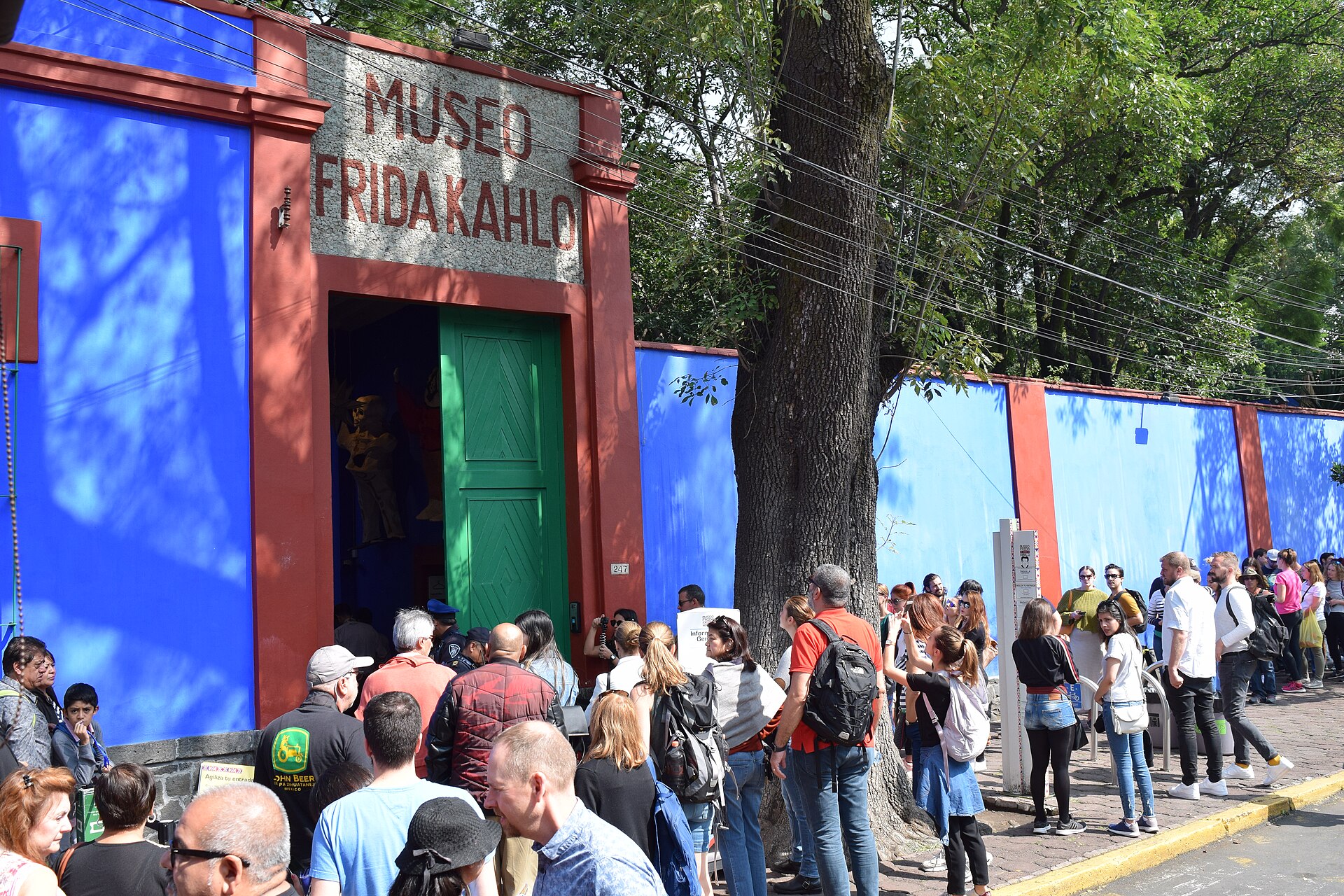
The museum is on Calle Londres in the centre of Coyoacán, a few minutes’ walk from Jardín Centenario and Plaza Hidalgo.
- Metro Line 3 to Coyoacán or Viveros/Derechos Humanos. Both stations are a twenty to twenty-five minute walk from the historic centre — the Metro does not go to the pretty part, and people are routinely caught out by this. Budget the walk or take a short taxi from the station.
- App taxi from Roma or Condesa: roughly 25 to 40 minutes depending on traffic.
- Metrobús Line 1 down Insurgentes gets you to the western side of Coyoacán, then a walk or a short ride east.
Combine it with the rest of Coyoacán rather than treating it as a single errand: the Mercado de Coyoacán for tostadas, the two plazas, and Viveros de Coyoacán a few blocks north. Our guide to Mexico City neighborhoods to visit has a southern-villages walking route that includes all of it.
The Anahuacalli: the half of your ticket nobody uses
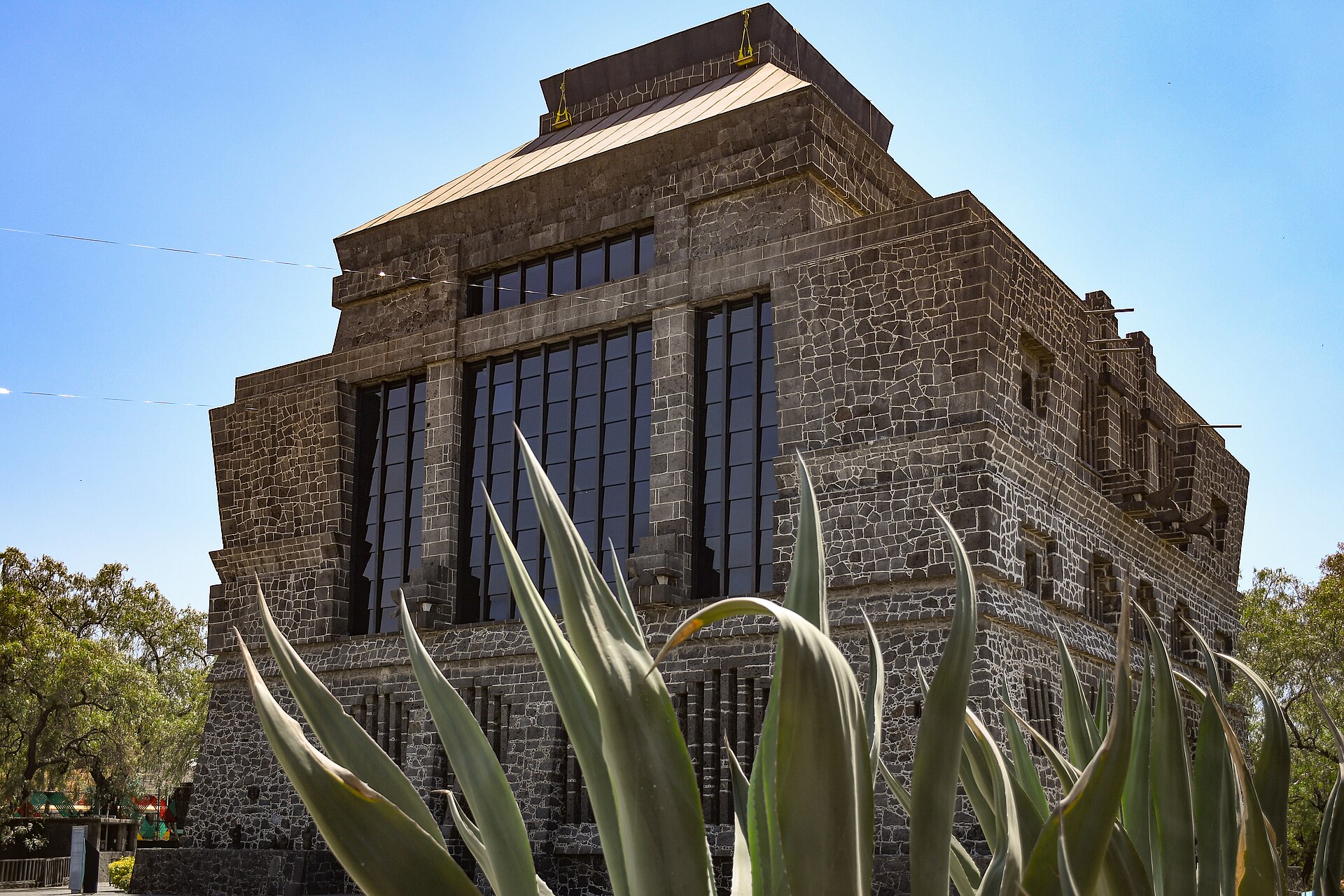
This is the most useful thing on this page after the booking rule. Admission to the Casa Azul includes a courtesy visit to the Museo Diego Rivera-Anahuacalli, and the courtesy runs in both directions — an Anahuacalli ticket includes a courtesy visit to the Casa Azul, valid for one month. Almost nobody uses it, and it is free money.
The Anahuacalli is a building Rivera designed and had built from dark volcanic stone to house his collection of some tens of thousands of pre-Hispanic objects — a stepped, temple-like mass with mosaic ceilings and a studio at the top. It is strange, cold, monumental and almost always quiet, which makes it the exact opposite experience to the Casa Azul an hour earlier.
| Detail | |
|---|---|
| Address | Museo 150, Colonia San Pablo Tepetlapa, Alcaldía Coyoacán, CP 04620 |
| Hours | Tuesday–Sunday 10:00–18:00; Wednesday 11:00–18:00. Closes 14:00 on 15 September |
| Public transport | Metro Taxqueña → Tren Ligero → Xotepingo, then a 10–15 minute walk. Buses along División del Norte toward Preparatoria 5, alight at Calle Museo |
| Free admission | Under-6s, visitors with disabilities, local residents with ID, ICOM card holders |
| Parking | On site |
The practical plan: do the Casa Azul in the morning, eat in Coyoacán, and take the Tren Ligero south to the Anahuacalli in the afternoon. Two museums, one ticket. Or keep the courtesy for another day — you have a month.
If you cannot get a ticket
Slots do sell out. These are the alternatives, in the order we would take them.
- Museo Dolores Olmedo, reopened at its original site in La Noria, Xochimilco, on 30 May 2026 after more than five years closed. It holds a major concentration of Kahlo and Rivera — arguably the better collection of paintings. Tuesday to Sunday 10:00 to 18:00; 432 pesos for foreign visitors, 162 for Mexican nationals, 70 for students, teachers, Xochimilco residents and over-60s. Almost every English-language guide still lists this museum as closed. It is not.
- Museo Casa Estudio Diego Rivera y Frida Kahlo in San Ángel — the two functionalist houses Juan O’Gorman designed for them in 1931, joined by a rooftop bridge. Closed Mondays. A different and in some ways better architectural experience, and far less crowded.
- Museo de Arte Moderno in Chapultepec, which holds The Two Fridas — the painting most people picture when they think of Kahlo, and it is not at the Casa Azul.
- Museo Casa de León Trotsky, four blocks from the Casa Azul, the fortified house where Trotsky was killed in 1940. Quieter, stranger, and rarely sold out.
- The Anahuacalli on its own ticket — which then gives you a month’s courtesy at the Casa Azul, if a slot opens up.
Frequently asked questions
Can I buy Frida Kahlo Museum tickets at the door?
No. The museum states plainly that there are no in-person ticket sales. Entry tickets are sold online only, through its own booking system. The booth on site sells the photography permit and runs the coat check; it does not sell admission.
How much are tickets?
320 pesos for foreign visitors, 160 for Mexican nationals with ID, 60 for students, teachers and accredited tour guides, 30 for seniors and children aged 6 to 12, and free for children under 6 and visitors with disabilities. Checked with the museum in September 2026.
How far in advance should I book?
Several days in high season — around Día de Muertos, Christmas, Semana Santa and the summer — and a day or two otherwise. Book as soon as your dates are fixed; it costs nothing to be early.
Is the Casa Azul open on Mondays?
No, and nor are most museums in Mexico City. If a Monday falls in your trip, put Teotihuacán on it — it is one of the few major sites open that day.
Does my ticket include the Anahuacalli?
Yes. Admission to the Casa Azul includes a courtesy visit to the Museo Diego Rivera-Anahuacalli, and an Anahuacalli ticket includes a courtesy visit to the Casa Azul valid for one month. Very few visitors use it.
Can I take photographs?
Outdoors in the patios and gardens, yes, freely. Indoors, only with a permit bought at the booth on site, and without flash. Video is prohibited throughout the museum.
How long does a visit take?
About 90 minutes, two hours if you read every label. It is a house rather than a gallery and it is genuinely small.
Is it suitable for children?
Children aged 6 to 12 pay 30 pesos and under-6s are free, so the cost is not the issue. The experience is: it is quiet, crowded, slow and largely about objects behind glass. Under-eights rarely get much from it. Note too that strollers and baby carriers must be left at the coat check. Our guide to Mexico City with kids has better options nearby.
Are the famous paintings there?
Some of Kahlo’s work is, but the great canvases are dispersed worldwide. The Two Fridas is at the Museo de Arte Moderno in Chapultepec, and the Museo Dolores Olmedo in Xochimilco holds a major Kahlo and Rivera concentration. Come to the Casa Azul for the house and the objects, not for a survey of the paintings.
Is it worth 320 pesos?
If you care about Kahlo as a person, yes, without hesitation — there is nowhere else that does this. If your interest is general, the Museo Nacional de Antropología at 210 pesos is the better museum and the Palacio Nacional’s Rivera murals are free. Both are in our Mexico City museums guide.
The Casa Azul makes the centre of a good third day in the city, with the Anahuacalli in the afternoon. Our 3 days in Mexico City itinerary includes a Coyoacán day built around your timed ticket, and the order of days that keeps it clear of a Monday.
Related Mexico City Guides
- Mexico City Museums — the parent guide: every major collection, the 2026 INAH tariffs and the closure pattern.
- Mexico City Neighborhoods to Visit — Coyoacán, and a southern-villages walking route.
- Mexico City With Kids — better Coyoacán options for younger children.
- Mexico City Trip Costs — where a 320-peso ticket sits in a week’s budget.
- Getting Around Mexico City — Metro Line 3, the Tren Ligero and the transport card.
- Mexico City Itineraries — where a Coyoacán day fits.
- Mexico City Travel Tips for First Timers — the short list of things to book before you fly.
- Things to Do in Mexico City — the whole city, ranked.
Sources and verification
- Museo Frida Kahlo — the museum’s own visitor page, museofridakahlo.org.mx/visit, checked 18 September 2026. “No in-person ticket sales”; tickets online only through the museum’s booking system. Prices: general 320 MXN, Mexican nationals with valid ID 160 MXN, students and teachers with valid ID 60 MXN, tour guides and operators with valid ID 60 MXN, seniors and children aged 6–12 30 MXN, free for children under 6 and visitors with disabilities. Hours: Monday closed, Tuesday 10:00–18:00, Wednesday 11:00–18:00, Thursday 10:00–21:00, Friday to Sunday 10:00–18:00. Special hours 10:00–14:00 on 15 September, 24 December and 31 December. Closed 1 January, 1 May, 11 June, 16 September, 8 December and 25 December. Noche de Museos on the last Wednesday of each month, 17:15–21:00. Admission includes a courtesy visit to the Museo Diego Rivera-Anahuacalli.
- Bag, photography and accessibility rules — same source: coat check required for bags and packages over 35 cm, umbrellas, food, toys, liquids, selfie sticks, strollers and baby carriers. Photography permitted in the outdoor patios and gardens; indoors only with a permit purchased at the ticket booth and without flash; video prohibited throughout. Accessibility provision listed as free admission and support, designated parking, wheelchairs, crutches, ramps, a lift, Braille labels and personnel trained in Mexican Sign Language.
- Museo Diego Rivera-Anahuacalli — Tuesday to Sunday 10:00–18:00 with Wednesday 11:00–18:00, closing at 14:00 on 15 September; Museo 150, Colonia San Pablo Tepetlapa, Alcaldía Coyoacán, CP 04620; access via Metro Taxqueña then Tren Ligero to Xotepingo and a 10–15 minute walk, or buses on División del Norte toward Preparatoria 5 alighting at Calle Museo; free admission for children under 6, visitors with disabilities, residents of nearby areas with valid ID and ICOM card holders; parking on site. An Anahuacalli ticket carries a courtesy visit to the Museo Frida Kahlo valid for one month. Checked 18 September 2026.
- Museo Dolores Olmedo — reopened at its original site in La Noria, Xochimilco, on 30 May 2026 after more than five years closed; the proposed relocation to Aztlán Parque Urbano was annulled. Tuesday to Sunday 10:00–18:00; 432 MXN for foreign visitors, 162 MXN for Mexican nationals, 70 MXN for students, teachers, Xochimilco residents and over-60s.
- INAH context — Category I admission rose to 210 MXN for foreign visitors and 105 MXN for nationals and residents on 1 January 2026, under a reform to the Ley Federal de Derechos published in the Diario Oficial on 7 November 2025; Sunday free entry is now restricted to Mexican nationals and legal residents. The Museo Frida Kahlo is a private trust museum and is not subject to INAH tariffs.
- Transport — Metro 5 MXN flat and Metrobús 6 MXN, 2026 rates, via the Movilidad Integrada card. Metro Line 3 serves Coyoacán and Viveros/Derechos Humanos, both roughly a 20–25 minute walk from the historic centre of Coyoacán.
Everything above comes from the museums’ own published visitor information on the date shown. We have not visited the Casa Azul in person and do not claim to have; the timings in the suggested visit are estimates based on the size of the house and the number of rooms. Museum prices and hours change, and the Casa Azul’s do — check museofridakahlo.org.mx before you book, and buy only there. Prices in Mexican pesos.
Photo Credits
Casa Azul courtyard: La Casa Azul (The Blue House) in Coyoacán, Mexico City by Rebeccananonof, CC0, via Wikimedia Commons.
Embroidery by Frida Kahlo: Bordado de Frida Kahlo by Juan Carlos Fonseca Mata, CC BY-SA 4.0, via Wikimedia Commons.
Museo Diego Rivera-Anahuacalli: Fachada del Anahuacalli by Nicole Valenzuela Mejía, CC BY-SA 4.0, via Wikimedia Commons.