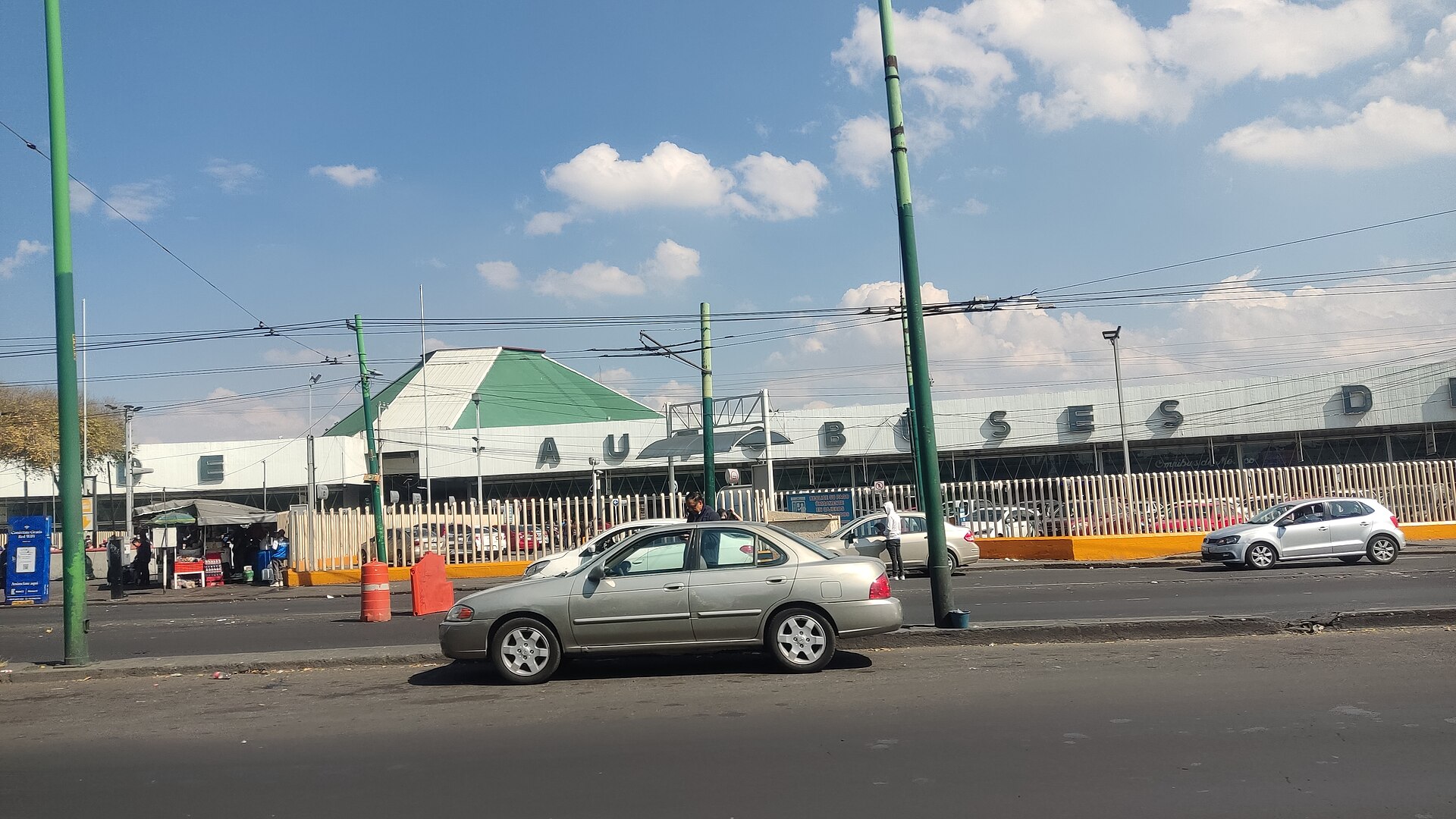
The cheapest way to one of the great ancient cities of the Americas starts in a bus station built for journeys of a thousand kilometres. At the Terminal del Norte, between ticket windows for Querétaro, Monterrey and the US border, there is a counter selling seats to the pyramids for about the price of a coffee, on buses that leave every quarter of an hour or so. Taking Teotihuacan by bus from Mexico City is easy, cheap and, for most independent travellers, the right way to go. It is also the option most often described wrongly, by guides that still promise a climb you cannot make and a free Sunday you will not get.
This page covers the whole journey, step by step: getting to the terminal by Metro, finding the right window, what the ride is like, where you get off, what the site charges and forbids, how to plan the walk around it, and how to get home again, including what to do if the day goes wrong. It also compares the bus with the alternatives, a private shuttle, an organised tour, an app ride and a hot air balloon, so you can tell whether it is the right choice for you. For the site itself in more depth, including its history, the murals and the full set of rules, see our complete guide to Teotihuacan from Mexico City.
The short answer
- Where the bus leaves from: the Central de Autobuses del Norte (the Terminal del Norte), Sala 8, reached by Metro Line 5 to Autobuses del Norte. Ask for Pirámides.
- How often and how long: roughly every 15 to 20 minutes from about 06:00, taking about an hour in normal traffic. The way back often takes longer.
- What it costs: about 60 pesos each way. Mexican press reported a 60-peso fare in late 2024, and listings checked in October 2026 showed 55 to 60. Add 5 pesos each way for the Metro.
- What the site costs: 210 pesos for foreign visitors and 105 for Mexican nationals and residents in 2026, sold at the site’s box offices and through INAH’s own channel. Foreign visitors pay on Sundays too.
- Where you get off: reporting from late 2024 and listings from 2026 both name Puerta 2 (Gate 2). Ask the driver if you want a different gate.
- When to go: on a bus around 08:00, to be at the gates when they open at 09:00. The site is open every day, including Mondays, when most of the city’s museums are shut.
- The two rules people get wrong: you cannot climb the pyramids, and backpacks and large bags are on the site’s prohibited list.
- The one thing to ask before you leave the terminal: what time the last bus back leaves the site. Online timetables disagree, and the window knows.
At a glance: what the day costs
Here is what one foreign adult spends getting to Teotihuacan and back by each method, with site entry included where it is not already part of the price. Prices in Mexican pesos, checked October 2026.
| Method | Transport, round trip | Site entry | Rough total | Notes |
|---|---|---|---|---|
| Public bus from Terminal del Norte | About 120, plus 10 for the Metro | 210 | About 340 | Every 15–20 min, about an hour each way. Buy at the Sala 8 window. |
| BlueBus private shuttle from the Ángel de la Independencia | 1,099 | 210 | About 1,309 | One departure listed, 09:30. Its own page still quoted an out-of-date entry fee; confirm before paying. |
| Organised day tour | Several hundred to over a thousand | Check: often extra | Varies widely | Usually adds the Basílica de Guadalupe and a shopping stop. Long day, fixed schedule. |
| App ride or private driver | High one way; agree the return in advance | 210 | Best split between three or four | 60–75 min each way. App coverage at the site is unreliable. |
| Hot air balloon package with transport | 3,300 to 3,400 including the flight | Usually extra | About 3,500 and up | Pickup in the small hours. See our balloon tour comparison. |
The bus is not just the cheapest option by a margin: the shuttle costs nearly four times as much, and most tours more than double it. For a couple, the difference between the bus and a mid-priced tour is enough for a very good dinner. What you give up is someone else doing the thinking, and the rest of this page exists so that you do not need them to.
Your options, and who each one suits
The public bus from Terminal del Norte
This is the route this page is built around. A local line, usually signed as Autobuses Teotihuacán, runs from Sala 8 of the Terminal del Norte to the archaeological zone throughout the day. The buses are ordinary intercity coaches with reclining seats, not city buses, and the ride is mostly toll road. You buy a ticket at the window, sit down, and an hour later you are at the gate.
Suits: independent travellers who are comfortable on the Metro, budget travellers, couples and friends, and families with children old enough to manage a long walk. It is the best option for anyone who wants to arrive at opening time and leave when they choose.
Does not suit: anyone who wants a guide to explain the site, travellers with limited mobility, and anyone starting from Polanco, Santa Fe or the far south, for whom the trip across the city to the terminal adds a lot of time.
A private shuttle from Paseo de la Reforma
BlueBus advertises a round trip from the Ángel de la Independencia on Paseo de la Reforma for 1,099 pesos per person, with one departure shown at 09:30, payment online by PayPal or in cash on boarding, and entry to the site paid separately. It removes the Metro and the terminal from the day, which some people will happily pay for.
One warning, and it is the kind of thing this site exists to point out. When we checked in October 2026, the shuttle’s own page was still giving the entry fee for the archaeological zone as 100 pesos and its hours as 09:00 to 16:00. Entry for foreign visitors has been 210 pesos since January 2026, and the site is open until 17:00. That does not make the shuttle a bad service, but it does tell you its page is not being kept up to date, so confirm the departure time, pickup point and return before you pay. A 09:30 departure also means arriving well after opening, into the late-morning heat.
Suits: people staying around Reforma, Juárez or Roma who want a fixed, simple day and are happy to arrive later.
An organised tour
Tours pick you up from your hotel or a central point, usually combine the pyramids with the Basílica de Guadalupe and the Plaza de las Tres Culturas at Tlatelolco, and often include a stop at a workshop selling obsidian and silver, sometimes with a tasting of pulque or mezcal. The value is a guide who knows the site, transport you never have to think about, and two or three other sights in one day. The cost is a fixed schedule and less time at the pyramids than you might want. Check whether site entry is included, and if a tour description promises a climb, it is years out of date.
Suits: first-time visitors on a very short trip, people who want the history explained, and anyone who would rather not deal with the Metro.
An app ride or private driver
Door to door in 60 to 75 minutes each way, which is the fastest option and, split between three or four people, not outrageous. The weakness is the return: app coverage around the site is unreliable, so either agree a return pickup in advance or book a driver who waits. If you hire a driver for the day, agree the price, the waiting time and the stops before you set off.
Suits: groups, families with small children, travellers with limited mobility, and anyone combining the site with somewhere the bus does not go.
Driving yourself
The site is an easy drive on the toll road north-east of the city, and there is parking at the gates. The hard part is the city itself. If you are renting a car, ask the rental company how Mexico City’s Hoy No Circula driving restrictions apply to it, and leave early to avoid the traffic leaving the city in the morning and returning in the evening.
Which one should you choose?
| If you are… | Best option | Why |
|---|---|---|
| On a budget, or travelling independently | Public bus | About 340 pesos all in, and you control the timing |
| Staying in the Centro, Roma or Condesa | Public bus | The Metro gets you to the terminal in around half an hour to 45 minutes |
| Staying in Polanco or Santa Fe | App ride to the terminal, then the bus; or a driver | The Metro route across the city is long |
| A family of four with young children | Private driver | Door to door, and you leave when the children are done |
| A first-timer with one day and no Spanish | Organised tour, or the bus with this page in your pocket | A tour removes all the decisions; the bus is very manageable |
| Using a wheelchair or walking with difficulty | Private driver | The bus has steps, and a car can use whichever gate suits you |
| After the sunrise and the view from above | Balloon package | Expensive and weather-dependent; read the comparison first |
Step by step: from your hotel to the gate
1. Get to the Terminal del Norte
The terminal is on Eje Central Lázaro Cárdenas in the north of the city, and the Metro station that serves it is Autobuses del Norte on Line 5. Every Metro ride costs 5 pesos, paid with the rechargeable Movilidad Integrada card sold and topped up at station machines.
- From the Centro Histórico: Line 2 to Hidalgo, Line 3 north towards Indios Verdes as far as La Raza, then Line 5 towards Politécnico for one stop to Autobuses del Norte. The change at La Raza is a long walk through a corridor lined with science exhibits, the Túnel de la Ciencia, so allow for it.
- From Roma or Condesa: make your way to Line 3 (Balderas, or Centro Médico from the south of Roma), ride north to La Raza and change to Line 5 as above.
- From Polanco, Santa Fe or the south: an app ride or taxi to the terminal early in the morning is usually quicker and less tiring than crossing the city by Metro. Ask for the Central de Autobuses del Norte.
Three timing points catch people out. First, the Metro opens later at weekends: on the system’s long-standing timetable it starts at 05:00 on weekdays, 06:00 on Saturdays and 07:00 on Sundays and public holidays, so a Sunday plan that needs you at the terminal for seven will not work by Metro. Second, Line 3 is due for integral works, which would affect the La Raza route; the dates have shifted repeatedly in reporting, so check the Metro’s own service notices in the week you travel. Third, at peak times the front carriages on many lines are reserved for women and children, which is signposted and enforced.
2. Find Sala 8 and buy a ticket
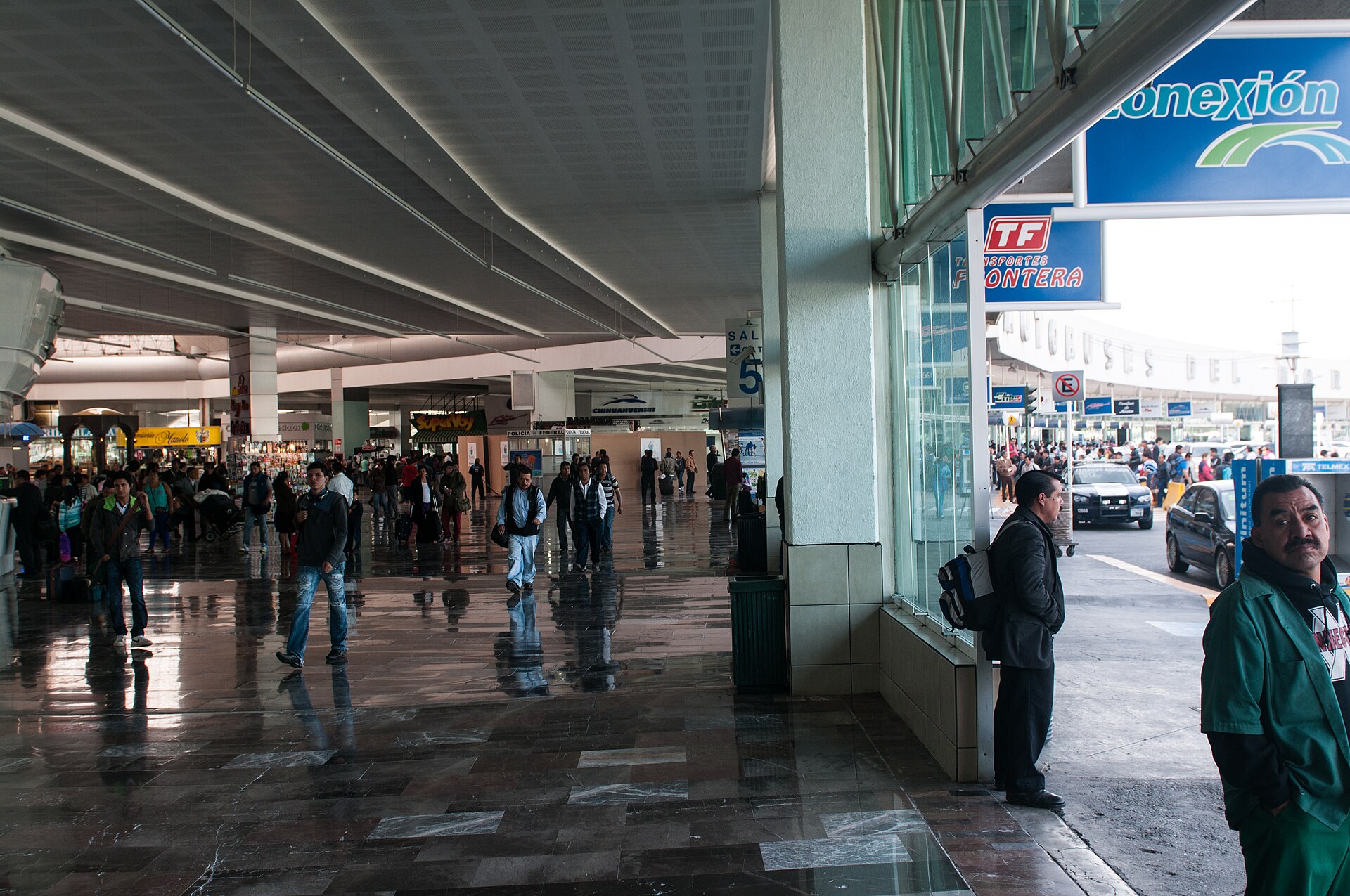
The Terminal del Norte is one long curved hall, with numbered salas (waiting areas) along it, each served by different bus companies. The Teotihuacan buses go from Sala 8. Follow the numbers; you may also see signs for Pirámides or Teotihuacán.
Buy your ticket at the window. Say Pirámides clearly, or a las pirámides, por favor, and check that the sign on the bus says the same. The town of San Juan Teotihuacán is a separate destination a few kilometres from the gates, and it is not where you want to end up. We could not find a way to buy this short route online, so assume you are buying in person, and bring cash in small notes in case the card terminal is not working.
While you are at the window, ask two questions. Can you buy a return now (viaje redondo), and if so, does it work on any bus back? And what time does the last bus leave the site to come back? The answer to the second question is the most important thing you will learn all day.
Keep a few coins for the terminal toilets, which usually charge. If you are passing through with luggage, perhaps on your way north to Querétaro, ask at the terminal about left-luggage (guarda equipaje) before you set off, because large bags are not allowed at the site.
3. The ride
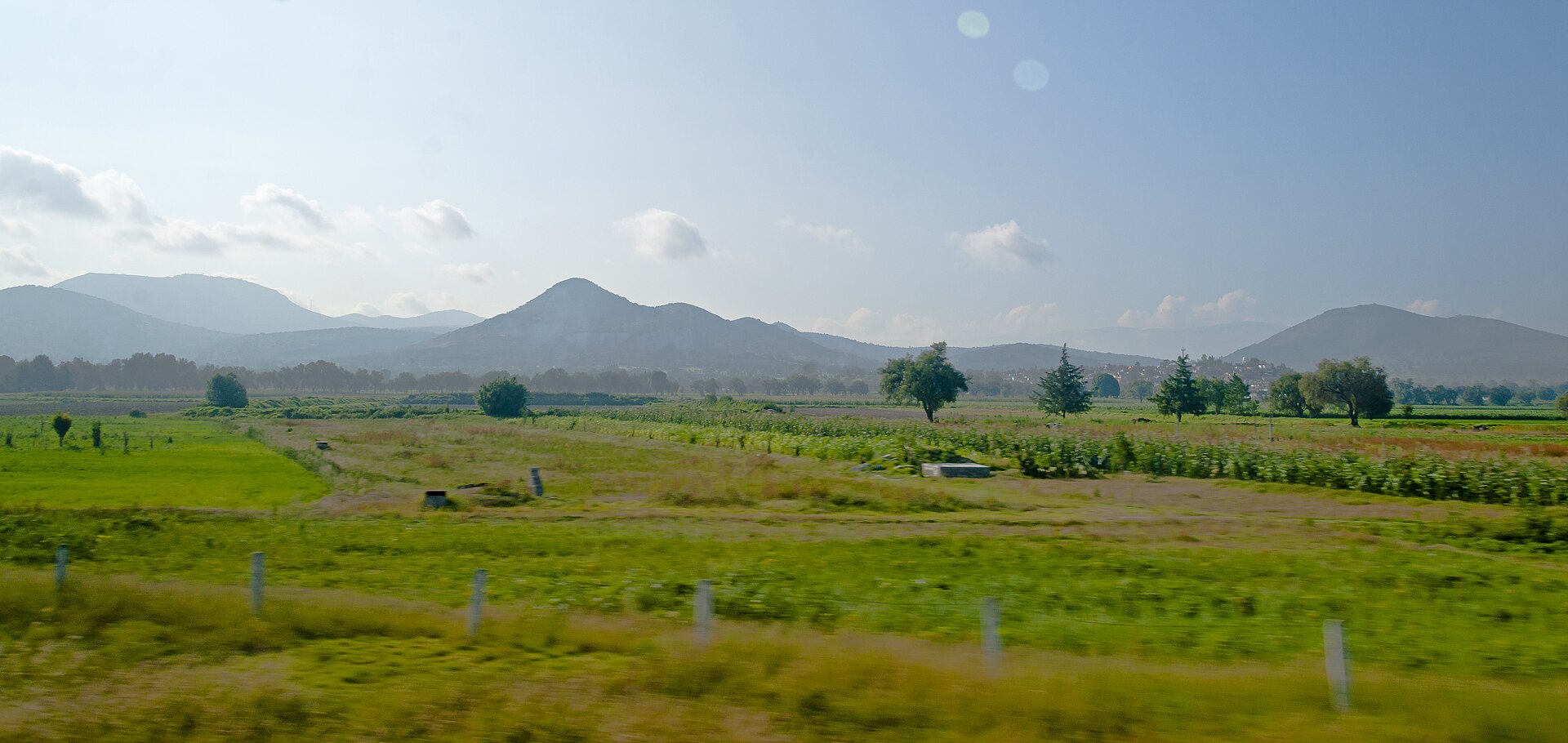
The bus pulls out of the terminal, works its way through the northern edge of the city and then runs north-east on the toll road, past the last of the sprawl into farmland, low hills and the scattered towns of the Teotihuacan valley. Allow about an hour. Sit back; there is nothing to do.
One thing that surprises people: on some departures, a uniformed security guard boards before the bus leaves and films the passengers. It is an anti-robbery measure that has been used on this route for years. If it happens on yours, it is routine, not a sign that anything is wrong.
4. Getting off
Late-2024 reporting and 2026 listings both name Puerta 2 as the stop for the archaeological zone. The site has five gates spread around a long perimeter, so if you want to start somewhere else, at Puerta 1 for the Ciudadela at the southern end, for example, tell the driver when you get on. If you are unsure, follow the other visitors: on most mornings a good share of the bus is going to the same place you are.
A timed day that works
This is a weekday plan from the Centro or Roma, built around arriving at opening time and leaving before the worst of the afternoon heat. On a Saturday, shift the start by a few minutes; on a Sunday or a public holiday, the Metro does not open until 07:00, so either take an app ride to the terminal or accept a later start.
- 07:15 — Leave your hotel with water, a hat, sunscreen, ID and cash, in a small bag.
- 07:30 — Metro towards La Raza, then Line 5 to Autobuses del Norte.
- 08:00 — Ticket at Sala 8, ask about the last return bus, and board.
- 09:00 — Arrive at the gate as it opens. Buy your entry ticket at the box office.
- 09:15–12:30 — The Avenue of the Dead, the Ciudadela, the Pyramid of the Sun and the Plaza of the Moon, with time in a site museum if you have the energy.
- 12:30 — Lunch or a cold drink outside the gates.
- 13:30 — Bus back from the gate.
- 14:45 — Terminal del Norte, then the Metro home, in time for a late lunch in the city or a rest.
If you want to see more, the site museums close at 16:30 and the zone at 17:00, so a longer day is entirely possible. Just make sure you know when the last bus leaves, and remember that in the rainy season the afternoon is when the storms arrive.
The rules at the gate
Teotihuacan is an INAH site, and it is one of the places where outdated guides cause the most disappointment. These are the rules as they stood when this page was checked.
- Admission: 210 pesos for foreign visitors and 105 for Mexican nationals and residents with documentation, under the Category I tariff in force since 1 January 2026.
- Sundays are not free for tourists. Free Sunday entry now applies only to Mexican nationals and legal residents. If you are visiting on a tourist permit, you pay full price on Sundays.
- Free entry with valid ID: children under 13, and students and teachers, regardless of nationality.
- Where to buy: at the site’s box offices or through INAH’s own official channel, and nowhere else. Ignore anyone selling tickets outside the gates.
- Hours: daily, roughly 09:00 to 17:00, with the site museums closing at 16:30. Special-event days such as the spring equinox run their own hours.
- Open on Mondays. This is the single most useful fact about Teotihuacan for planning, because almost every museum in Mexico City is closed on Mondays.
- No climbing. The Pyramid of the Sun has been closed to ascent since 2020, and the Pyramid of the Moon is closed too. Visitors keep to the plazas and off the platforms. Only INAH can authorise an ascent; no tour, guide or vendor can.
- Prohibited items: drones, pets, luggage and large bags, backpacks, chairs, speakers and megaphones, musical instruments, tents, tarpaulins, banners and beach umbrellas, among others. Travel with a small shoulder bag or a bum bag rather than a daypack.
The route once you are inside
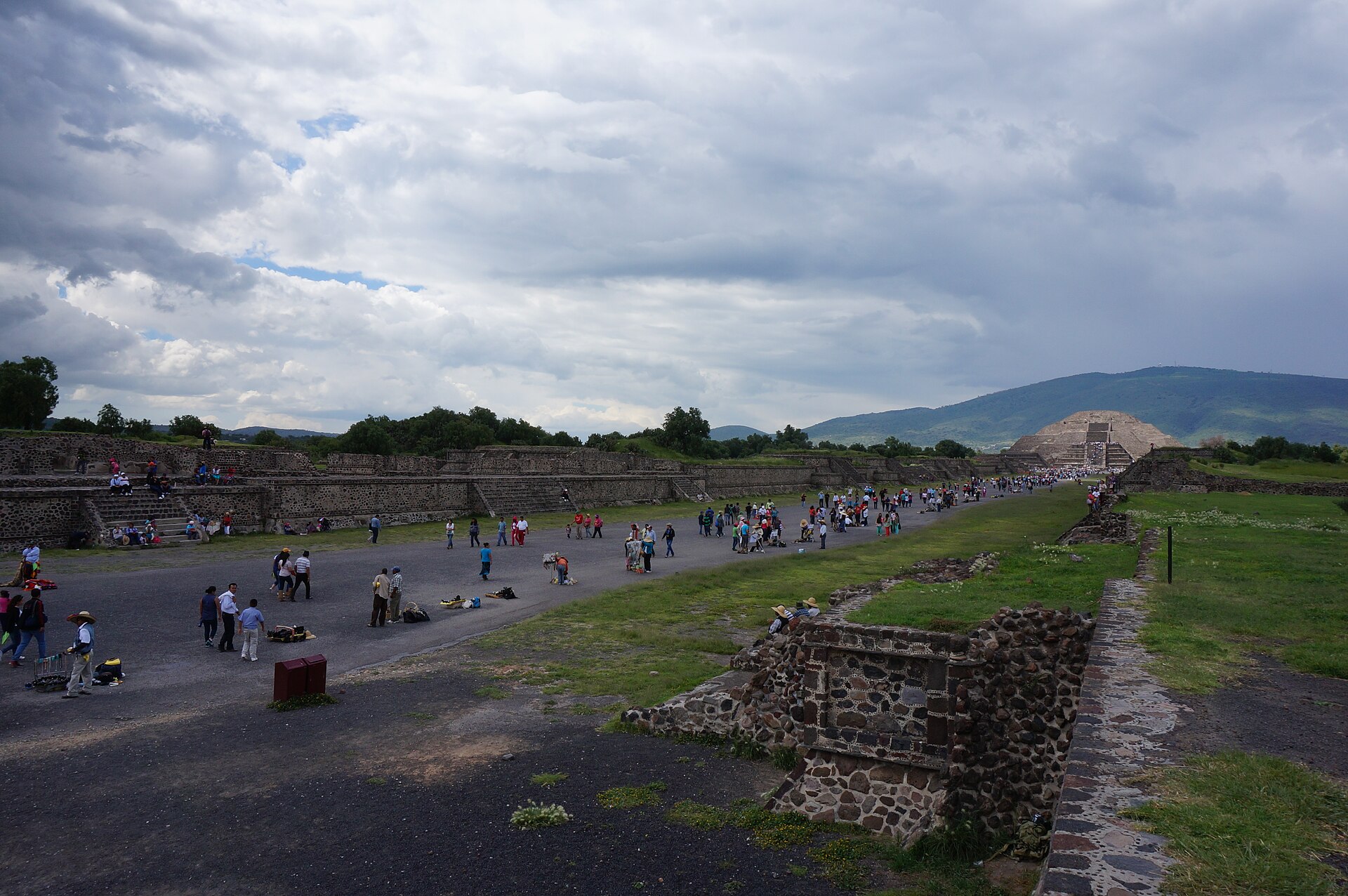
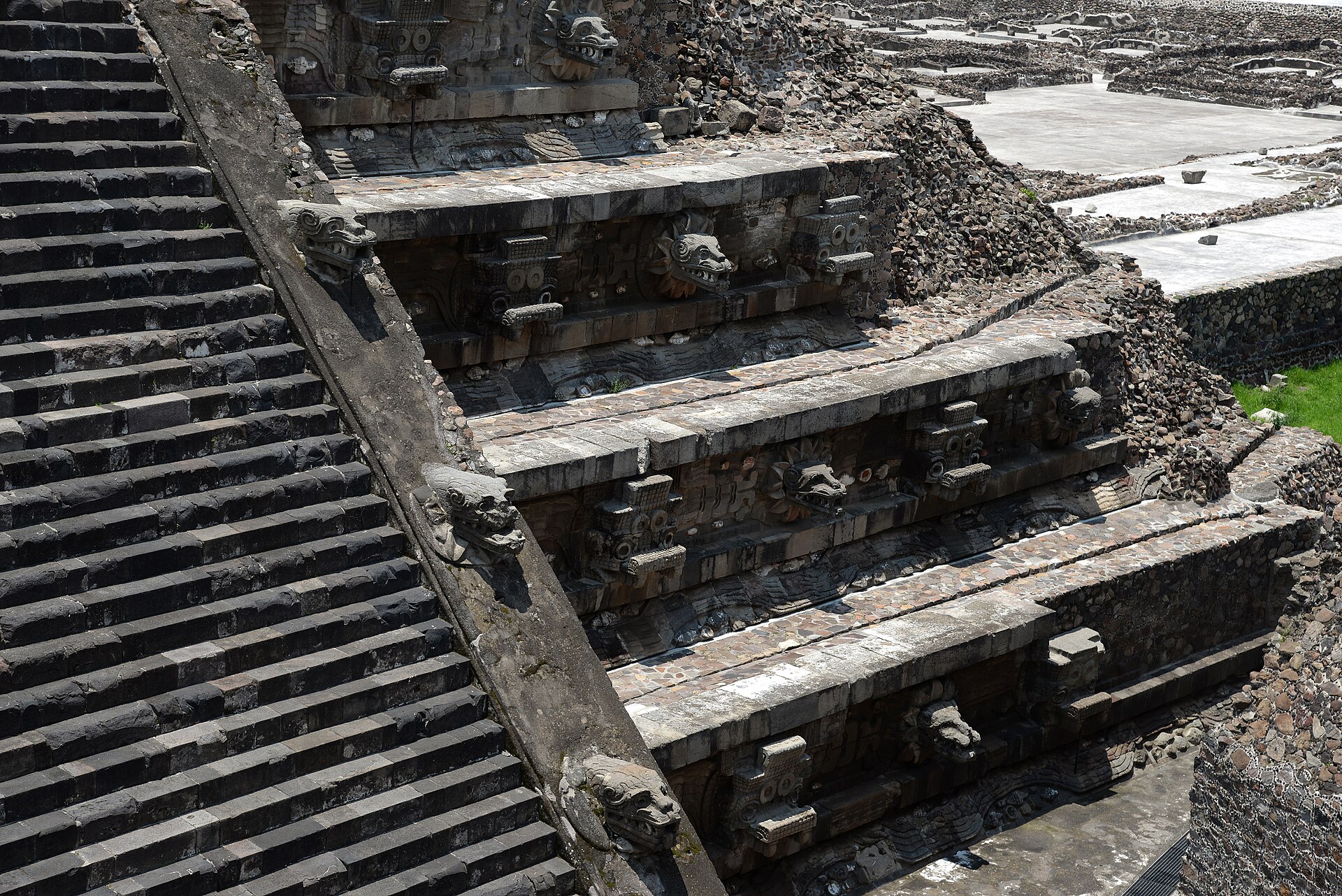
The site is laid out along one great axis, the Avenue of the Dead, which runs roughly north to south for about two kilometres. At the southern end is the Ciudadela, a vast sunken enclosure holding the Temple of the Feathered Serpent, whose carved heads are the finest sculpture on the site. Halfway along, on the eastern side, is the Pyramid of the Sun. At the northern end, the Plaza of the Moon sits in front of the Pyramid of the Moon, and from there you get the classic view back down the avenue.
Whichever gate you enter by, a good plan is to walk the whole avenue once, end to end, and then decide what deserves a second look. Including the walk from and back to your gate, expect to cover five or six kilometres on uneven ground. Three hours is enough to see the main monuments without rushing; four lets you add a site museum and the painted murals that most visitors walk straight past. Our Teotihuacan guide covers the murals, the museums and the history in detail.
You will hear the vendors before you see them: the clay whistles they sell make a sound like a jaguar’s roar, and on a busy morning the avenue echoes with them. Vendors also sell water, hats and souvenirs. A polite “no, gracias” is all that is needed.
Weather, sun and the time of day
The weather around Teotihuacan follows the same pattern as the city: a dry season from November to April and a rainy season from about May or June to October, when storms tend to build in the afternoon rather than raining all day. Using the long-term averages for Mexico City’s Tacubaya station, rainfall runs from about 5 to 24 millimetres a month in the dry season to 132 to 176 millimetres a month from June to September, with October in between at about 71.
- The sun is the real hazard. The site is high, open and almost shadeless. In the dry months, especially from February to May, late morning is genuinely hard going. Arriving at nine is not fussiness; it is the difference between a pleasant walk and an ordeal.
- The rainy season makes the site greener, cooler and quieter in the morning, and a morning visit usually stays dry. Plan to be on the bus back before the afternoon storms, and do not linger on the open plazas if thunder starts.
- Winter mornings are cold. In December and January the average overnight low in the city is 8.5 °C, and the valley can feel colder first thing. Wear a layer you can take off; you will want it at the terminal and not at noon.
- Bring: more water than you think, a wide-brimmed hat, sunscreen, comfortable shoes with grip and a light rain layer from May to October.
A note on altitude: Mexico City sits at about 2,240 metres, and the valley is at a similar height. Most visitors adjust within a day or three, but a long walk in strong sun on your first day in the city is harder than it would be at sea level. If you can, do Teotihuacan on your second or third day rather than your first, and drink plenty.
Access and mobility
Be realistic about this. The bus has steps at the door, the terminal involves a long walk along the concourse, and the Metro route involves stairs and a long transfer at La Raza. At the site, distances are large and the ground is uneven, with gravel, steps up to the platforms and very little shade or seating. We could not find current information from INAH on step-free routes around the zone, so if you use a wheelchair or walk with difficulty, ask at the box office about the most accessible route, and consider a private driver who can drop you at whichever gate suits you and wait nearby. Visitors with disabilities enter INAH sites free with documentation.
For families, the walk is the main issue. Children under 13 enter free, and the open space is wonderful for them, but five kilometres in the sun is a lot for small legs. A light pushchair with sturdy wheels will cope with much of the avenue but not the steps, and a carrier is better for toddlers.
Safety on the route
The journey itself is routine for the thousands of people who make it every week, but it crosses from Mexico City into the State of Mexico, and that matters when you read travel advice. Government advisories are written state by state: the US State Department, for example, rated the State of Mexico at Level 2 (Exercise Increased Caution) in its 2026 advisory. Read your own government’s entry for the State of Mexico, not a summary of “Mexico”, and decide for yourself.
- At the terminal and on the Metro, pickpocketing is the realistic risk. Keep your phone and wallet in a front pocket or a bag worn in front, especially on crowded trains and in the concourse.
- On the bus, keep valuables on you rather than in the overhead rack.
- At the gates, buy tickets only at the box office, and decline unofficial “guides” who attach themselves to you. If you want a guide, ask at the box office.
- In an emergency, call 911, which works in both the city and the State of Mexico.
Our Mexico City safety guide covers the advisories, help numbers and precautions in more detail, and our day trips guide sets out the advisory level for every state you might visit from the city.
Getting back, and what to do if the day goes wrong
The return bus picks up near the gates. Confirm where with the staff when you leave, and remember the answer you got that morning about the last departure. On Sunday and holiday afternoons the buses back to the city are fuller and the traffic into the city is heavier, so allow extra time and do not plan anything tight for the evening.
If you miss the last bus
Do not rely on an app ride from the site; coverage is unreliable. Ask the staff at the gate or at a restaurant outside it to call a local taxi, and be clear about where you are going and what it will cost before you get in. The taxi can take you either all the way back to the city, which is expensive, or to the nearest place with onward buses, which the driver will know. The simplest prevention is to treat the last bus as leaving an hour earlier than it actually does.
If the bus is full
Wait for the next one. At normal frequencies it is rarely far behind.
If it rains
Afternoon storms in the rainy season can be heavy and sudden. Shelter in a site museum or under a covered area by the gates, wait for the worst to pass, and catch the bus once it eases. This is another reason to start early: by the time the storm arrives, you should be done.
If the site is closed or busier than you expected
The zone occasionally closes or changes its hours for special events and at short notice, and on the spring equinox, around 20 and 21 March, it is extremely crowded, with its own hours and crowd control, and climbing is still not allowed. Check INAH’s channels the day before if you are travelling on a holiday or an event date.
Combining Teotihuacan with something else
The obvious pairing is the Basílica de Guadalupe, which the organised tours combine with the pyramids. On your own it is possible but makes for a long day: back at the Terminal del Norte, take Line 5 one stop to Instituto del Petróleo and change to Line 6 for La Villa-Basílica. The Basílica is free and open daily from about 06:00 to 21:00. Most people find the pyramids are enough for one day and do the Basílica separately.
Another good choice is simply to rest. You will have been up early, walked several kilometres at altitude in the sun, and spent two hours on buses and trains. An evening in Roma or Condesa with a good dinner is a perfectly good second half of the day. If you have the following morning free and want to see the valley at dawn from the air, our guide to Teotihuacan balloon tours explains the options, costs and checks.
Frequently asked questions
How do I get to Teotihuacan by bus from Mexico City?
Take Metro Line 5 to Autobuses del Norte, walk into the Central de Autobuses del Norte and go to Sala 8. Buy a ticket to Pirámides at the window. Buses leave roughly every 15 to 20 minutes from about 06:00 and take about an hour to the archaeological zone.
How much is the bus to Teotihuacan?
About 60 pesos each way. Mexican press reported a 60-peso fare in late 2024, and listings checked in October 2026 showed 55 to 60. Fares change, so bring a little more than you need.
What time is the last bus back from Teotihuacan?
Online timetables disagree, and the times change. Ask at the Sala 8 window in the morning, confirm at the gate when you leave, and aim to be on a bus well before the site closes at 17:00.
Do I need to book the bus in advance?
No. Buy your ticket at the window on the day. The buses are frequent, so if one is full, the next is not far behind.
Is the bus to Teotihuacan safe?
It is a busy, routine route used by thousands of visitors and local people. The usual precautions apply: watch for pickpockets at the terminal and on the Metro, keep valuables on you, and read your government’s advisory for the State of Mexico, which is where the site is.
Can I go on a Monday?
Yes. Teotihuacan is open every day, including Mondays, when most museums in Mexico City are closed. That makes Monday one of the best days to go.
Is Teotihuacan free on Sundays?
Only for Mexican nationals and legal residents. Since January 2026, foreign visitors on a tourist permit pay the full 210 pesos on Sundays, and Sundays tend to be busier because of the free entry for nationals.
Can I climb the pyramids?
No. The Pyramid of the Sun has been closed to climbing since 2020, and the Pyramid of the Moon is closed too. Any guide or tour that says otherwise is out of date.
Can I take a backpack?
Backpacks and large bags are on the site’s list of prohibited items. Bring a small shoulder bag or a bum bag, and leave the daypack at your hotel.
Which gate does the bus stop at?
Reporting from late 2024 and listings from 2026 both name Puerta 2. If you want to start at a different gate, such as Puerta 1 for the Ciudadela, ask the driver when you get on.
Related Mexico City Guides
- Teotihuacan from Mexico City: the complete guide to the site, with its history, the full rules, a walking route and the murals.
- Teotihuacan balloon tours compared: prices, safety checks and what to do when the wind cancels the flight.
- Getting around Mexico City: the Metro, Metrobús and Cablebús, fares, the Movilidad Integrada card and how to use them.
- Day trips from Mexico City: every realistic day out, the terminal each one leaves from, and the advisory level for each state.
- Mexico City itineraries: where Teotihuacan fits into a three-, five- or seven-day trip.
- Mexico City costs: dated prices for transport, food and admissions.
- When to visit Mexico City: the climate month by month and what the rainy season really means.
Sources and verification
- Bus fare, frequency and drop-off: Eje Central (Mexican press), 26 October 2024: one-way fare of 60 pesos from the Central de Autobuses del Norte to Puerta 2 of the archaeological zone, departures from 06:00 to 21:00 about every 15 minutes. Bus timetable and travel listings checked October 2026: Sala 8, fares of 55 to 60 pesos one way, departures every 15 to 20 minutes, about one hour’s journey, tickets sold at the window. Return timetables online were inconsistent and are not quoted here.
- Private shuttle: BlueBus’s own website, checked 3 October 2026: round trip 1,099 pesos from the Ángel de la Independencia, departure 09:30, online payment by PayPal or cash on boarding, entry not included. The same page gave entry and hours that are no longer current.
- Admission and rules: INAH Category I tariff of 210 pesos for foreign visitors and 105 for nationals and residents from 1 January 2026; free Sunday entry limited to Mexican nationals and legal residents; free entry with ID for under-13s, students and teachers, and visitors with disabilities; hours approximately 09:00–17:00 daily with site museums closing 16:30; climbing prohibited since 2020; prohibited items including drones, backpacks, luggage and large bags. Checked September 2026. INAH revises tariffs each January.
- Metro: flat fare of 5 pesos (2026, no increase); Movilidad Integrada card; women-and-children carriages at peak; announced integral works on Line 3 with shifting dates. Checked September 2026. Service hours are from the system’s long-standing published timetable and were not re-checked for this page; confirm on the Metro’s own site before an early start.
- Climate: Servicio Meteorológico Nacional normals for Ciudad de México (Tacubaya), 1991–2020.
- Advisory: US State Department 2026 level for the State of Mexico as reported in secondary sources; the State Department’s pages block automated retrieval, so read the state entry yourself.
- Basílica de Guadalupe: free, open daily approximately 06:00–21:00. Checked September 2026.
What this page does not claim. Nobody from this site rode the bus, timed the Metro route or walked the site on the dates published, and the timings in the sample day are planning estimates rather than measured journeys. The bus fare is quoted as a range from press reporting and listings, not from the operator, which publishes no tariff that we could find. We could not confirm the last return departure, whether return tickets are valid on any bus, the payment methods accepted at the window, or step-free routes at the site, which is why this page tells you to ask rather than quoting a figure. The organised tour and app ride costs are broad indications, not a survey.
Photo Credits
The Central de Autobuses del Norte from Eje Central: Central de Autobuses del Norte (2023) by Tbhotch, CC BY-SA 4.0, via Wikimedia Commons.
The concourse of the Terminal del Norte: 15-07-13-Mexico-D-F-del-Norte-a-Teotihuacan-RalfR-N3S 9096 by Ralf Roletschek, GFDL 1.2, via Wikimedia Commons.
Farmland north-east of Mexico City from the bus: Mexican landscape from bus north of Mexico City by Daniel Case, CC BY-SA 3.0, via Wikimedia Commons.
The Avenue of the Dead and the Pyramid of the Moon: Calzada de los Muertos, fondo Pirámide de la Luna by Barbara Castro Mejia, CC BY-SA 3.0, via Wikimedia Commons.