Here is the thing nobody tells you about the best time to visit Mexico City: the temperature barely changes. The average daily high moves by about five degrees across the entire year, from 22.4 °C in January to 27.5 °C in April. There is no cold season and no hot season. What changes is rain, light and crowds — and because of that, picking your dates here is less a weather decision than a decision about what you want to be in the middle of.
The honest summary is that this city has no bad month. It has months that are drier, months that are cheaper, and two weeks in late October and early November that are unlike anywhere else on earth and priced accordingly. This page gives you the actual climate normals with the station and period they came from, an honest read on crowds and prices, the events worth planning around, and what to do with an afternoon when it rains.
The verdict, by traveller
- First visit, want it easy: November to March. Dry, bright, comfortable, and the shoulder weeks in November, January and February are cheaper and quieter than the December–January holidays.
- Best single month overall: March. The sunniest month in the record, still almost entirely dry, warm without being hot — and the jacarandas come out, which is the city’s one genuinely spectacular natural event.
- Best value: June, early September, or late January and February. Rain in the first two, post-holiday quiet in the last, and noticeably lower rates in all of them.
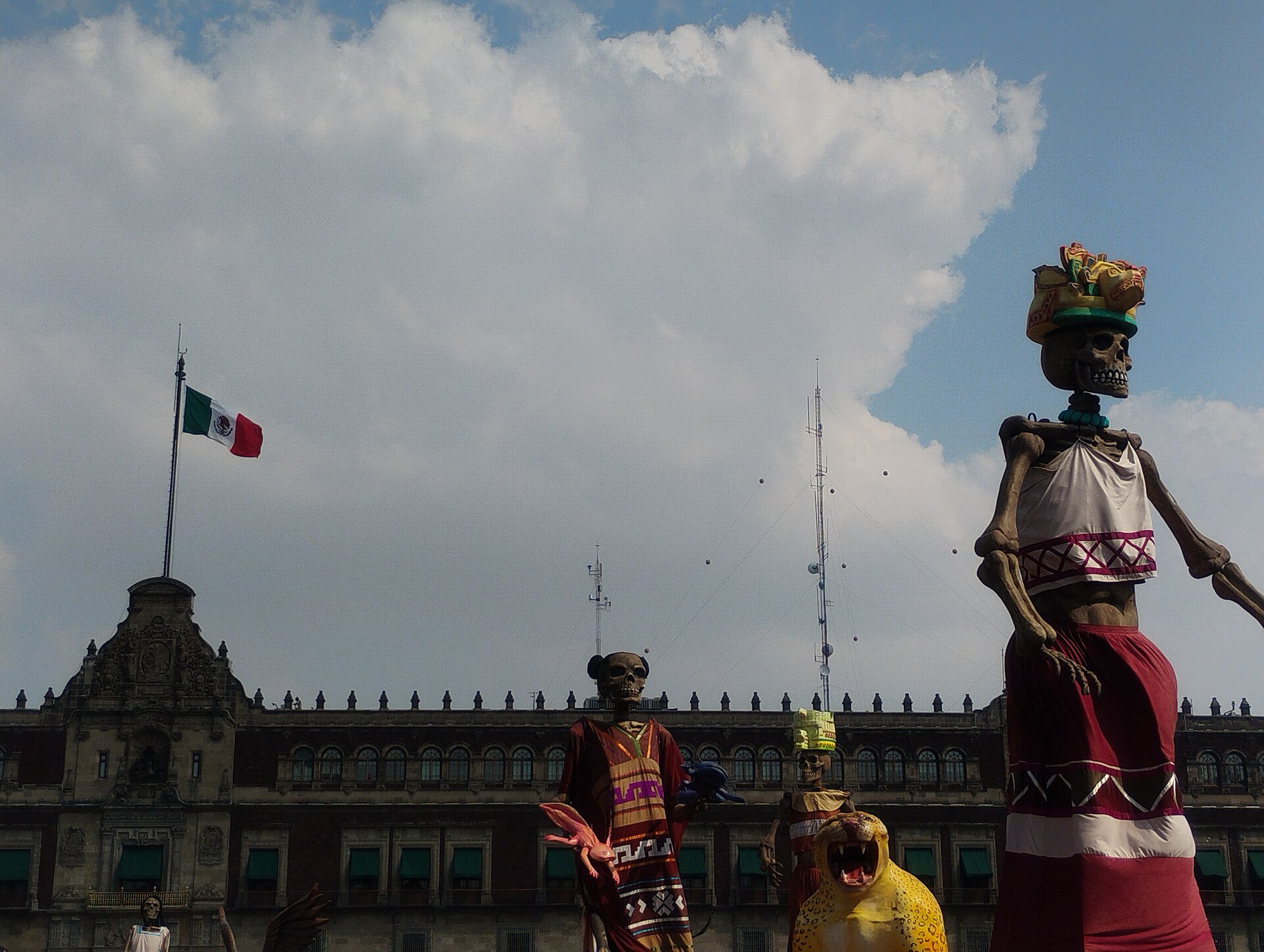
- Here for Día de Muertos: late October to 2 November. Book accommodation by July and accept that you are paying peak rates for peak experience.
- Photographers and walkers: February and March for light; July and August if you want dramatic afternoon skies and are willing to work around a daily storm.
- Avoiding crowds above all: June, early September, early December — genuinely quiet, and the rain in the first two is far less disruptive than its reputation suggests.
- Travelling with small children or anyone with a respiratory condition: lean towards the rainy season. Rain scrubs the air, and the worst air-quality episodes cluster in the dry, still months from February to May.
If you want one sentence: come in March if you can, in November if March does not work, and in June if the budget is the constraint.
Climate normals: the actual numbers
Most travel pages quote unattributed averages. These come from the Servicio Meteorológico Nacional for the Ciudad de México (Tacubaya) station, normals period 1991–2020, with sunshine hours from the World Meteorological Organization for 1981–2010. Station and period matter: Mexico City spans a range of altitudes and microclimates, and a reading from Tacubaya is not a reading from Xochimilco or the Ajusco foothills.
| Month | Mean high °C | Mean low °C | Rainfall mm | Sunshine hours |
|---|---|---|---|---|
| January | 22.4 | 8.5 | 11.9 | 233 |
| February | 24.3 | 9.5 | 5.7 | 233 |
| March | 26.1 | 11.1 | 11.8 | 262 |
| April | 27.5 | 13.1 | 24.2 | 239 |
| May | 27.2 | 13.7 | 59.4 | 232 |
| June | 25.8 | 13.8 | 132.5 | 181 |
| July | 24.7 | 13.0 | 174.0 | 179 |
| August | 24.6 | 13.2 | 175.6 | 177 |
| September | 23.7 | 13.1 | 158.1 | 148 |
| October | 23.5 | 11.8 | 71.3 | 191 |
| November | 22.8 | 9.9 | 17.4 | 224 |
| December | 22.4 | 8.5 | 5.0 | 227 |
| Year | 24.6 | 11.6 | 846.9 | 2,526 |
Three things worth pulling out of that table.
The rain is concentrated, not spread. June through September account for well over half the annual total. December and February get almost none — five and six millimetres respectively, which is essentially nothing.
September is the cloudiest month by a wide margin, at 148 sunshine hours against March’s 262. That is a bigger practical difference than any temperature swing in the table, and it is the reason a September trip feels different from a March one even though the thermometer barely moves.
The nights are cool all year. Mean lows sit between 8.5 and 13.8 °C every single month. At altitude, once the sun goes down the temperature drops fast. Everybody underpacks for this, every time.
Season by season
The dry season: November to April
Six months of near-guaranteed dry days, bright mornings and cool nights. This is high season for good reason and it is the right answer for most first visits.
November opens with Día de Muertos and then drops into one of the nicest quiet stretches of the year: dry, clear, warm afternoons, cold evenings, and rates that fall back the moment the first week is over. The second half of November is, arguably, the single best-value good-weather window in the calendar.
December is the driest month on record — five millimetres — and also the most Catholic. The Guadalupe pilgrimage on 12 December brings enormous crowds to the Basílica; posadas run from the 16th to the 24th; the Zócalo is decorated and, in most recent years, has hosted a large free ice rink and light installations, though this is a mayoral decision rather than a fixture, so check before you promise a child anything. Prices rise for the holidays and much of the city shuts down between Christmas and New Year.
January starts with Rosca de Reyes on the 6th and then goes very quiet. It is the coldest month by mean low — 8.5 °C — which in practice means genuinely chilly evenings and mornings, and many buildings here have no heating at all. Bring a warm layer. Late January is cheap and calm.
February is underrated: almost no rain, strong sun, and Día de la Candelaria on the 2nd, when the city eats tamales in industrial quantities. Crowds are low.
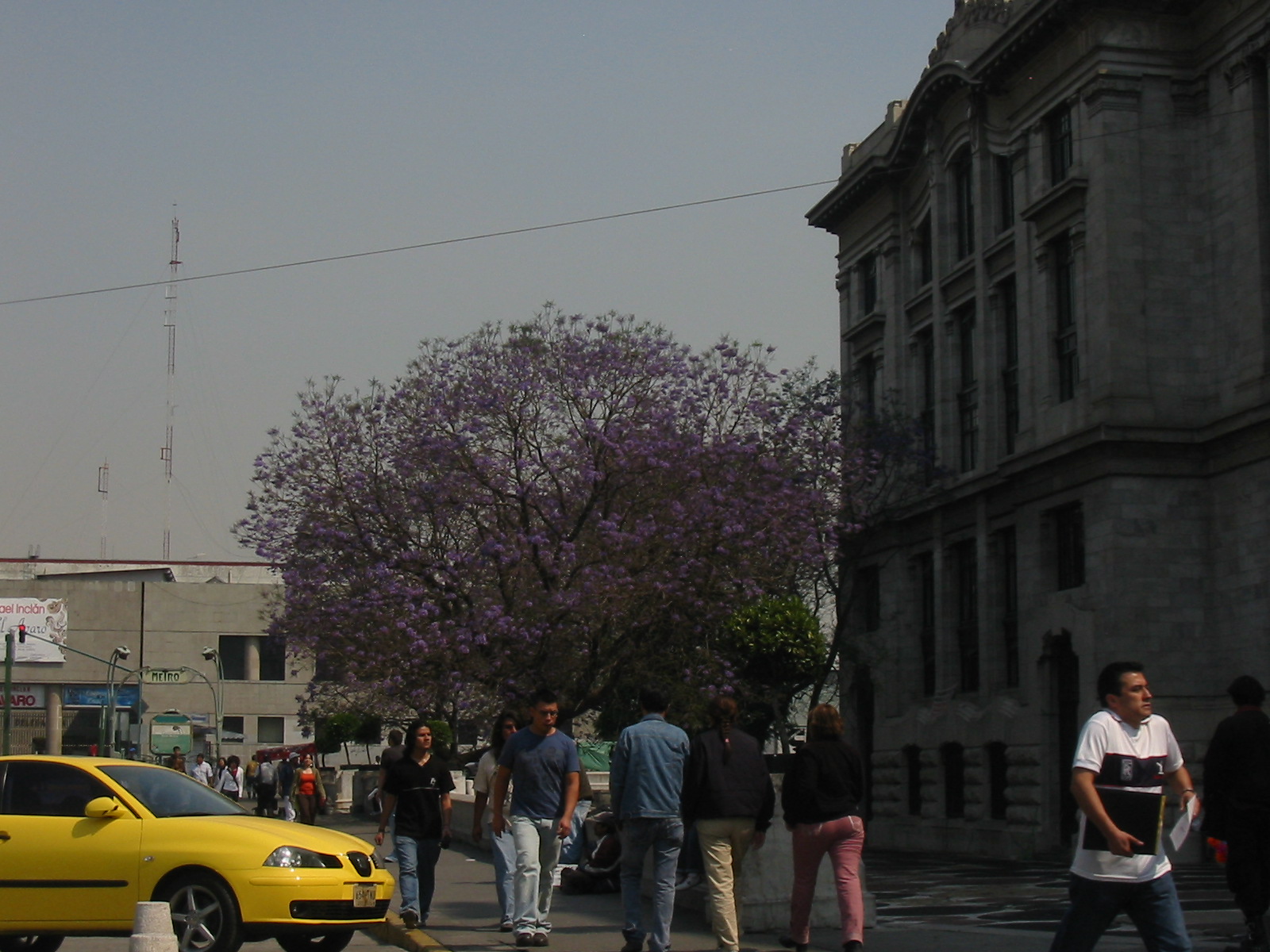
March is the best month, and it is not close. The most sunshine hours in the record, a mean high of 26 °C, essentially no rain, and the jacarandas — tens of thousands of trees across Roma, Condesa, Reforma, Coyoacán and San Ángel turning the city purple for a few weeks. The exact timing shifts by a fortnight or so from year to year with the warmth of the preceding weeks, so it cannot be diarised precisely, but late March into early April is the usual window. Semana Santa, which moves with Easter, falls in March or April and empties the city of residents while filling the tourist sites.
April is the warmest month on paper and the last dry one. It is also, along with March and May, the period when air quality is most likely to be poor: the air is still, the sun is strong, ozone builds, and contingencia ambiental declarations are most common. If that matters to you medically, this is the season to watch the readings.
The rainy season: May to October
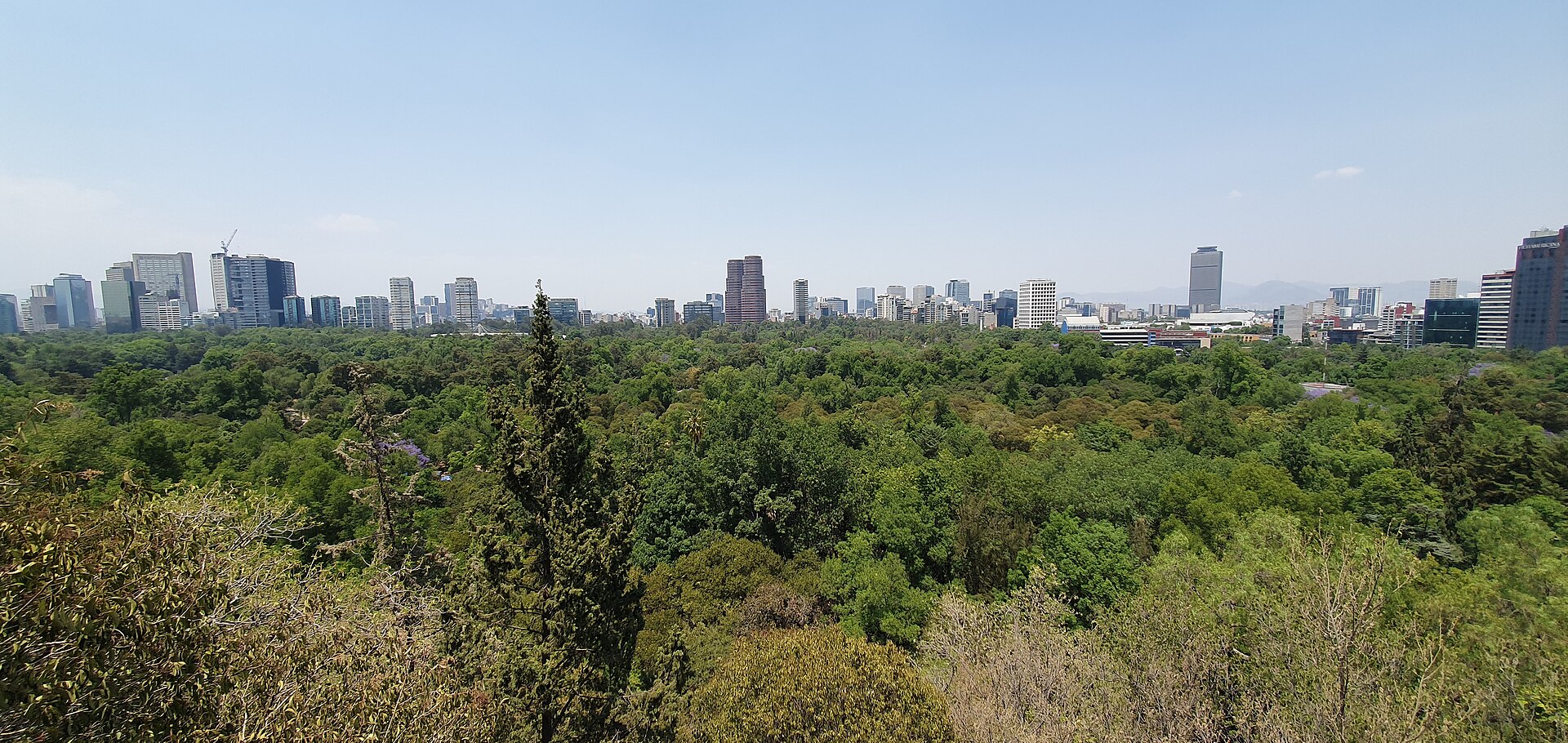
Here is the correction this page most wants to make: the rainy season in Mexico City is not a washout, and avoiding it costs you more than it saves you.
The pattern is remarkably consistent. Mornings are clear and bright. Cloud builds through the early afternoon. Somewhere between about four and seven in the evening it rains hard for an hour or two, sometimes with real drama — thunder rolling around the valley, streets briefly running like rivers. Then it stops, the air is clean, the light is extraordinary, and everyone goes out to dinner.
Plan around that and you lose almost nothing. Do your walking and your outdoor sites in the morning, put a museum or a long lunch in the late afternoon, carry a light waterproof, and wear shoes you do not mind soaking. What you get in exchange: a green city, dramatic skies, cleaner air, fewer people, and lower prices.
May is the transition, and the hottest-feeling month — high sun, rising humidity, the first proper storms towards the end. June brings the rain properly and is one of the best-value months of the year. July and August are the wettest, and are also the northern-hemisphere holiday season, so Mexican domestic tourism partly offsets the lower international demand. September is the cloudiest and one of the wettest, and it carries the Independence holidays on the 15th and 16th — the Grito fills the Zócalo on the night of the 15th and the military parade follows the next morning, with street closures across the centre. October dries out fast and turns, in its last week, into the busiest fortnight of the year.
The late-October spike
Two of the biggest events in the city’s calendar land within days of each other, which is why the fortnight around the end of October is the most expensive and most crowded of the year by a clear margin: Día de Muertos, on and around 1–2 November, and the Formula 1 Mexico City Grand Prix, held in late October at the Autódromo Hermanos Rodríguez.
If you want Día de Muertos, book accommodation by July. Central colonias sell out months ahead and rates double or worse. Note also that the large Día de Muertos parade through the centre — a relatively recent addition to the calendar, introduced in 2016 — is scheduled afresh each year and does not always fall on the same date as the observance itself, so check the announced date rather than assuming.
Four questions that settle your dates
Most people arrive at this decision with too many variables. These four, answered in order, resolve it in about a minute.
1. Is there an event you actually want to be at? If the answer is Día de Muertos, the Grand Prix, the Grito or the Guadalupe pilgrimage, the decision is made and everything else is consequence — book early, pay more, and accept crowds. If the answer is no, you have the whole year to play with, and you should choose on weather and price rather than on the calendar.
2. Do you mind an hour of rain in the afternoon? If no, June to September opens up and you will save real money. If yes — because you have limited days, or a photography plan, or small children who do not do well wet — restrict yourself to November through April and stop considering the rest.
3. Does anyone in the party have a respiratory condition? If so, weight towards the rainy season, when the air is cleanest, and away from February to May, when still, sunny, high-pressure days let ozone build. Check aire.cdmx.gob.mx for a sense of the pattern before you commit.
4. How flexible is the budget? If it is tight, the answer is June, early September, or the second half of January. Those three windows are meaningfully cheaper than everything else on the calendar and none of them is a bad trip.
Notice what is not on that list: temperature. It is the first thing everybody asks about and, in this city, very nearly the last thing that matters.
What the weather does to your day
The seasons here change the shape of a day rather than its comfort, and knowing the shape is what lets you plan.
In the dry season, mornings start cold — genuinely cold, eight or nine degrees in January — and warm quickly once the sun is properly up. By eleven you are in shirtsleeves. The afternoon is bright and dry and the light goes hard and flat in the middle of the day, which is why photographers here work early and late. Then the sun drops behind the western ridge and the temperature falls off a cliff. The practical consequence is that you dress in layers you can actually carry, and that a rooftop dinner in February needs a coat even though the afternoon was 24 degrees.
In the rainy season, mornings are the best part of the day and they are reliably clear — often clearer than dry-season mornings, because the previous evening’s rain has taken the haze out of the air. This is when the volcanoes are visible from high ground and when you should be walking. Cloud builds from about one o’clock. The storm arrives somewhere between four and seven, is genuinely heavy for an hour, and then stops. Evenings afterwards are clean, cool and, to a lot of people who know the city well, the nicest it ever is.
The altitude runs through all of it. At 2,240 metres the sun is stronger than the air temperature implies and the shade is colder than the sun suggests, so you can burn and shiver in the same hour. The diurnal swing — often fifteen degrees between the afternoon high and the night low — is larger than the swing between January and July. Dress for the hour, not the month.
Seasons and day trips
The day trips are more season-sensitive than the city itself, and this is where the month you choose earns or costs you something real.
Teotihuacán is a vast open site at altitude with very little shade. In the dry season from February to May, an eleven o’clock arrival is genuinely punishing — go for opening at 09:00 in any month, and especially those. In the rainy season the site is green, cooler and much emptier, and a morning visit is almost always dry. Balloon flights over the site operate at dawn and are weather-dependent in any season, so treat a cancellation as likely rather than exceptional and do not build a tight schedule around one.
Xochimilco is a party on the water and it works better in company than in sunshine. A trajinera has a roof, so rain is survivable; wind and cold are what actually spoil it, which makes the winter evenings less appealing than the listings suggest. Weekends beat weekdays in every month.
The volcanoes. Popocatépetl and Iztaccíhuatl are visible from high points in the city on clear days, and the clearest mornings are in the rainy season and in the winter after a cold front — not, counter-intuitively, in the hazy spring. Popocatépetl is an active volcano with a published alert level and an exclusion zone that changes; any trip into that area is governed by the current CENAPRED status, so check it rather than a tour operator’s marketing.
Puebla, Tepoztlán and Cuernavaca all sit lower and warmer than the capital, so they are pleasant year-round and are genuinely better in the rainy season, when the surrounding country is green rather than brown. Remember that each is in a different state with its own travel advisory entry.
Crowds and prices, month by month
| Period | Crowds | Accommodation prices | Verdict |
|---|---|---|---|
| Late Oct – 2 Nov | Extreme | Peak, often double | Worth it if the festival is the point; book by July |
| Mid-Nov – early Dec | Low | Low | The best value in the dry season |
| Mid-Dec – 6 Jan | High | High; some business hotels cheaper | Festive, but much of the city is on holiday |
| Mid-Jan – Feb | Low | Low | Quiet, dry, cold at night. Very good value. |
| March | Moderate | Moderate | The best weather of the year |
| Semana Santa (Mar/Apr) | High at sites, low in the city | Mixed | Residents leave, visitors arrive |
| April – May | Moderate | Moderate | Warm, dry, worst for air quality |
| June – early Sep | Low | Lowest | Rain in the afternoons, and the best value in the year |
| 15–16 Sep | High in the Centro | High near the Zócalo | Spectacular if you want it; avoid the centre if you do not |
One more factor that will shape pricing comparisons for a while: Mexico City co-hosted the 2026 FIFA World Cup in June and July 2026, with the opening match at the Estadio Azteca — sponsor-named Estadio Banorte — on 11 June. Historical rate data from that period is not representative of a normal June, so if you are comparing prices against last year’s figures, adjust for it.
Events worth planning around
Dated where the date is fixed, flagged where it is not. Anything marked as moving should be confirmed against the organiser before you book flights.
| Event | When | Notes |
|---|---|---|
| Día de Reyes | 6 January | Rosca de Reyes everywhere; a family day rather than a spectacle |
| Día de la Candelaria | 2 February | Tamales. Whoever found the figurine in the rosca pays. |
| Jacaranda bloom | Late March – early April, moves | Not an event, and the best thing that happens here. Roma, Condesa, Reforma, San Ángel. |
| Semana Santa | Moves with Easter, March or April | Residents leave; sites and day trips get busy; Iztapalapa’s Passion play draws very large crowds |
| Independence: the Grito | Night of 15 September | Zócalo packed, centre closed to traffic |
| Independence parade | 16 September | Military parade through the centre; many museums close or run short hours |
| Formula 1 Grand Prix | Late October, date set annually | City-wide accommodation squeeze |
| Día de Muertos | 1–2 November | The observance itself. Ofrendas in the Zócalo, cemeteries across the south. |
| Día de Muertos parade | Late October or early November, scheduled annually | Introduced 2016; date announced each year and not tied to 1–2 November |
| Virgen de Guadalupe | 12 December | Millions of pilgrims to the Basílica. Extraordinary, and not a day for a casual visit. |
| Posadas | 16–24 December | Neighbourhood processions and parties |
Two recurring music festivals fill hotels when they run — Vive Latino in the spring and Corona Capital in the autumn, both at the Autódromo or Foro Sol. Dates are announced annually. And the Ballet Folklórico de México at Bellas Artes runs year-round, typically Wednesday and Sunday evenings plus a Sunday matinée, with tickets from roughly 300 pesos in the upper gallery to around 1,000 on the main floor. Lucha libre at Arena México runs Friday at 20:30, Sunday at 17:00 and Tuesday at 19:30.
The Cinco de Mayo correction
Do not plan a trip to Mexico City around 5 May. The date commemorates the Battle of Puebla and is observed principally in Puebla; in the capital it is a minor occasion, and it is a considerably bigger deal in the United States than it is here. Visitors arrive expecting a festival and find a normal Tuesday.
What to book, and when
| If you are coming for | Book accommodation by | Also book ahead |
|---|---|---|
| Día de Muertos or the Grand Prix | July, and earlier for central colonias | Everything. Restaurants, the Casa Azul, any performance. |
| Christmas and New Year | September | Restaurant tables for the 24th and 31st |
| Semana Santa | 2 months | Day trips, which fill first |
| March or November | 6–8 weeks | Museo Frida Kahlo, which is online-only with no box office |
| June to early September | 2–4 weeks | Very little. This is the walk-up season. |
Whatever month you choose, one thing is non-negotiable: the Museo Frida Kahlo sells tickets online only and has no box office, and it is closed on Mondays. People are turned away at the Casa Azul every day of the year. Book it as soon as your dates are fixed. The fallback, if you leave it too late, is that the ticket you could not get also covers the Museo Diego Rivera-Anahuacalli — so go there instead and keep the Coyoacán day.
The dates that close things
Seasonal planning is not only about weather. Several dates in the Mexican calendar shut museums or shorten their hours, and they catch visitors out because they are not the holidays most foreigners know.
The clearest published example is the Museo Frida Kahlo, which closes entirely on 1 May, 16 September, 8 and 25 December and 1 January, and runs shortened hours of 10:00 to 14:00 on 15 September, 24 December and 31 December. Most major institutions maintain some version of that list, and they do not all publish it prominently.
The dates worth checking individually if your trip includes them:
- 1 January and the days either side of it — widespread closures.
- Semana Santa, especially Good Friday, when the city is quiet and hours are unpredictable.
- 1 May, Labour Day, which also brings large marches through the centre and along Reforma.
- 15 and 16 September, when the Zócalo is closed off for the Grito and the parade, and access to the Palacio Nacional and Templo Mayor is disrupted for more than just the day itself.
- 2 November, which is a day of observance rather than a normal working day.
- 12 December, when the Basílica and the roads around it are effectively unapproachable except on foot and in an enormous crowd.
- 24, 25 and 31 December, with reduced hours across the board.
The Palacio Nacional deserves a specific warning of its own: it is a working seat of government and closes on national holidays and occasionally at short notice, with no advance warning to visitors. Never make it the only thing on a morning. Keep San Ildefonso or the Secretaría de Educación Pública murals — both within a ten-minute walk and both mural-rich — as the standing substitute.
Packing, by season
The mistake almost everyone makes is packing for the daytime temperature and forgetting the altitude.
- All year: comfortable shoes with grip, because pavements are uneven and get slippery when wet. A warm layer for the evening — a proper jumper or light jacket, not a cardigan. High-factor sun protection: at 2,240 metres the UV is stronger than the mild air temperature suggests, and people burn here on days that do not feel hot. A refillable bottle, and lip balm, because the air is dry outside the rainy season.
- November to February: add a warmer jacket and something for your neck. Mean lows of 8.5 °C plus buildings with no heating is a combination people underestimate every winter.
- March to May: the lightest packing of the year — but the most sun protection, and a hat.
- June to October: a light packable waterproof, shoes that survive being soaked, and a dry bag or case for your phone. Leave the umbrella; the rain comes in sideways and the streets are too crowded for one.
- Any month: earplugs. Mexico City is loud at night in a way that has nothing to do with the season.
What to do when it rains
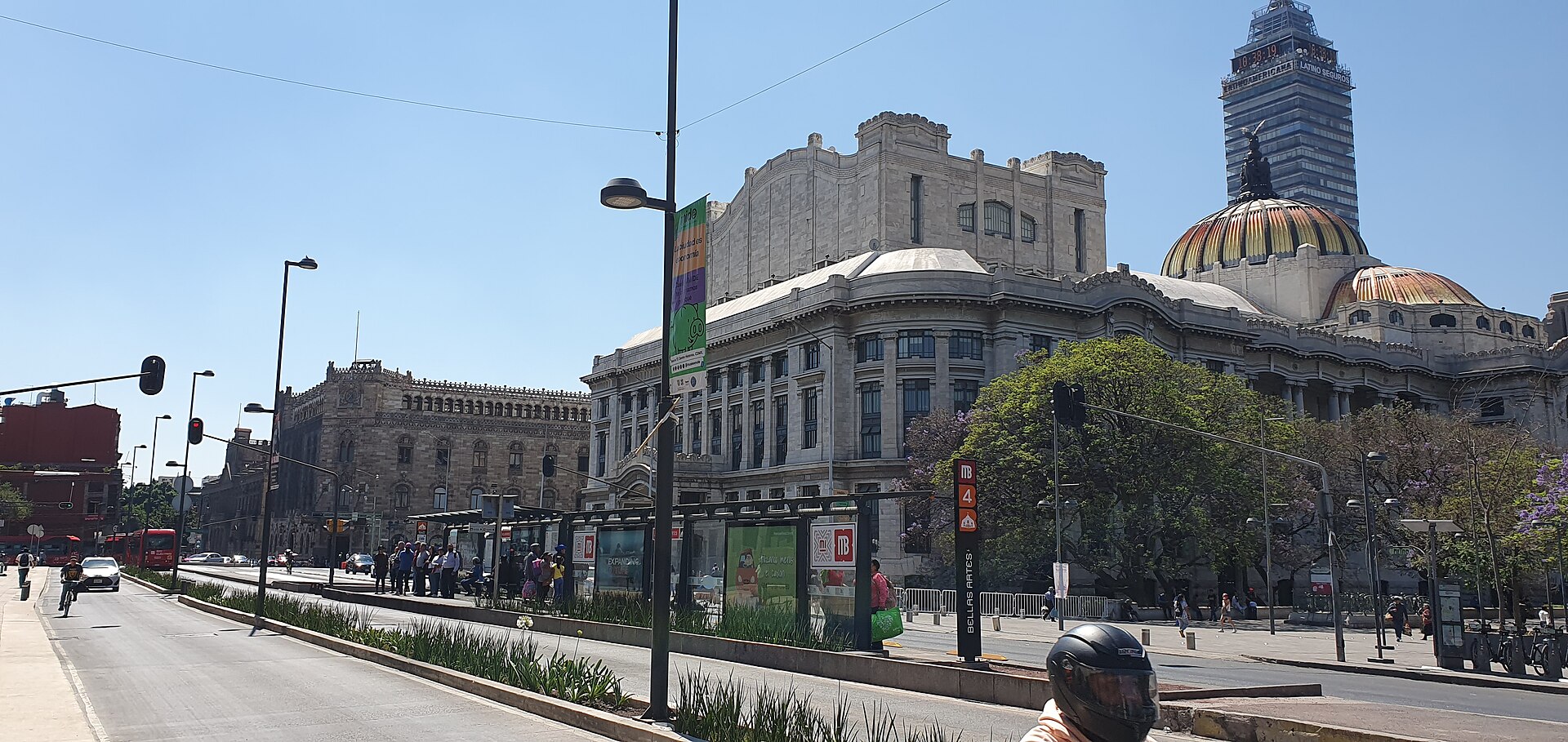
This city is exceptionally well equipped for a wet afternoon, which is the real reason the rainy season is over-feared.
- The Museo Nacional de Antropología absorbs an entire day and most of it is under cover.
- The Museo del Palacio de Bellas Artes — seventeen murals, free to everyone on Sundays because it is run by INBAL rather than INAH, around 90 pesos otherwise.
- The Palacio Nacional, free, for the Rivera staircase. Bring photo ID.
- The Museo Soumaya, free with no ticket, and the Museo Jumex across the plaza, free on Tuesdays. An entire wet afternoon in Polanco for nothing.
- The Torre Latinoamericana deck, open daily until 22:00 — and often at its best just after a storm, when the valley air is scrubbed clean and you can see the volcanoes.
- Markets under roof: Mercado de San Juan, Mercado de la Ciudadela for crafts, La Merced for scale.
- A long comida. The main meal runs from about 14:00 to 16:30 and is meant to take hours. Rain is the correct excuse.
Frequently asked questions
What is the best month to visit Mexico City?
March. It has the most sunshine hours in the climate record, a mean high of 26 °C, essentially no rain, and the jacaranda bloom. November is a close second and is cheaper once the first week is past.
What is the worst month?
There isn’t really one, which is unusual. September is the cloudiest and among the wettest, so it is the least reliable for photographs and long walks — but it is also cheap, green and quiet, and the Independence celebrations are in it. If you are forced to rank them, September is last and it is still a good trip.
Is the rainy season a bad time to visit?
No, and this is the most useful thing on this page. From roughly June to October the rain generally arrives as a heavy burst in the late afternoon rather than all day. Plan outdoor things for the morning, indoor things for four o’clock, and you will barely lose an hour — in exchange for lower prices, fewer people, cleaner air and a much greener city.
How cold does Mexico City get?
Mean lows sit between 8.5 and 13.8 °C all year, with January and December at the bottom. It does not snow and hard frost is rare in the city itself. What catches people out is that heating is uncommon, so an 8 °C night can feel cold indoors as well as out.
When do the jacarandas bloom?
Usually from late March into April, though the window shifts by a couple of weeks from year to year depending on the preceding warmth. It lasts a few weeks. If it is the reason you are coming, build in flexibility and do not book non-refundable flights around a precise week.
When is Día de Muertos and how far ahead should I book?
The observance is 1–2 November. Book accommodation by July for the central colonias, and note that the big parade is scheduled separately each year and does not necessarily fall on the same days as the observance — check the announced date before you fix your flights.
Is Cinco de Mayo a big deal in Mexico City?
No. It marks the Battle of Puebla and is mainly observed in Puebla; in the capital it is a minor date, and it is celebrated far more in the United States than in Mexico. Do not plan a trip around it.
When is Mexico City cheapest?
June, early September, and the second half of January into February. The first two are rainy-season value; the last is the post-holiday lull with excellent dry weather and cold nights.
What about air pollution — which months are worst?
Broadly the dry, still, sunny months from February to May, when ozone builds most readily. The city declares a contingencia ambiental when readings spike and advises cutting back strenuous outdoor activity, particularly between 13:00 and 19:00; live readings by district are published at aire.cdmx.gob.mx. The rainy season generally has cleaner air, which is worth knowing if anyone in your party has a respiratory condition.
How many days should I allow, whatever month I come?
Three as a minimum, five for a comfortable first visit. The month you choose changes the atmosphere far more than it changes what you can actually do.
One consequence of the calendar deserves spelling out: since January 2026 free Sunday entry at INAH sites applies only to Mexican nationals and residents, which changes how a weekend is best used. Our guide to the best museums in Mexico City works through that rule, the Monday closures, and the institutions — Bellas Artes on Sundays, Jumex on Tuesdays, the Soumaya always — that are still free to everyone.
The weather is only half of when to come. The other half is the events calendar, and in 2026 it has an unusual pinch point: the Día de Muertos parade on 31 October, the Formula 1 Grand Prix on 1 November and Día de Muertos itself on 2 November all fall in the same seventy-two hours. Our guide to Mexico City festivals and events has the confirmed dates, the parade route and the quiet weeks between the set pieces.
The season matters for the balloons as much as for the site: the dry months from November to April give the most reliable dawn flying, while the rainy months lose more mornings to cloud. Our Teotihuacan balloon tour guide explains how the weather, the cancellation policies and the cost fit together.
If you are timing a trip around Día de Muertos, our guide to Day of the Dead in Mexico City has the 2026 dates, the museum closures that land on Monday 2 November, and the week-early alternative that avoids the Formula 1 prices.
October is the month that changes most from start to finish, from the green, showery tail of the rainy season to the marigolds and parades of the Day of the Dead. Our guide to Mexico City in October sets the climate numbers against the 2026 event dates, explains which half of the month suits which traveller, and lists what to book before you go.
November is the month most visitors overlook. Once the first weekend is over, the city is dry, bright and moderately priced, with cold evenings the only real drawback. Our guide to Mexico City in November has the climate figures, the 2026 dates from Día de Muertos to Corona Capital, and the Mondays to plan around.
Related Mexico City Guides
- Mexico City Itineraries — how many days you need, and how to build them around the Monday closures whatever season you arrive in.
- Where to Stay in Mexico City — which colonia suits which kind of trip, and how far ahead to book for each season.
- Is Mexico City Safe for Tourists — including altitude, air quality and the practical health notes that matter more in some months than others.
- Things to Do in Mexico City — the sites themselves, with opening rules and admission prices.
Dedicated month-by-month guides for all twelve months are being published to this section over the coming weeks.
Sources and verification
- Climate normals: Servicio Meteorológico Nacional (SMN/CONAGUA), station Ciudad de México (Tacubaya), normals period 1991–2020; extremes 1877–2024. Sunshine hours from the World Meteorological Organization, 1981–2010. Checked September 2026. Figures are for Tacubaya specifically and do not describe the whole valley.
- Air quality: the city declares a contingencia ambiental when ozone or particulates spike, advising reduced strenuous outdoor activity especially 13:00–19:00; live readings by district at aire.cdmx.gob.mx. Checked September 2026.
- Altitude: 2,240 m, approximately 7,350 ft. Checked September 2026.
- Museo Frida Kahlo: online sales only with no box office; closed Mondays; ticket includes the Museo Diego Rivera-Anahuacalli; 320 pesos general. Special shortened hours on 15 September, 24 and 31 December; closed 1 May, 16 September, 8 and 25 December, 1 January. Checked September 2026.
- Museo del Palacio de Bellas Artes: INBAL rather than INAH, free to all on Sundays, around 90 pesos otherwise, Tuesday to Sunday 10:00–18:00. Checked September 2026.
- Torre Latinoamericana: daily 09:00–22:00, 220 pesos adult. Museo Soumaya: free. Museo Jumex: free on Tuesdays. Basílica de Guadalupe: free, daily. Checked September 2026.
- Ballet Folklórico de México de Amalia Hernández: typically Wednesday and Sunday evenings plus a Sunday matinée, roughly 300 to 1,000 pesos. Lucha libre, Arena México (CMLL): Friday 20:30, Sunday 17:00, Tuesday 19:30. Schedules shift — check current listings. Checked September 2026.
- 2026 FIFA World Cup: Mexico City co-hosted in June and July 2026, with the opening match at the Estadio Azteca (Estadio Banorte) on 11 June 2026. Relevant only as context for price comparisons. Checked September 2026.
What this page does not claim. The climate figures are official normals for one named station over a stated period, not forecasts and not a promise about your particular week — a normal is an average, and any given April can be wet. Crowd and price descriptions are qualitative patterns, not measured occupancy or rate data; no rate survey was run for this page. Event dates are given as fixed only where they genuinely are fixed: the Formula 1 weekend, the Día de Muertos parade, Semana Santa and the music festivals all move, and this page flags each of them rather than printing a date that will be wrong next year. The jacaranda window is inherently approximate and is described as such.
Photo Credits
Día de Muertos figures in the Zócalo: Zocalo en Dia de Muertos (26) by Ferfive, CC BY 4.0, via Wikimedia Commons.
Jacaranda beside the Palacio de Bellas Artes: JacarandaBellasArtes by Thelmadatter, public domain, via Wikimedia Commons.
The Chapultepec Castle terrace and Palacio de Bellas Artes photographs are credited on their original appearance in this site’s media library.