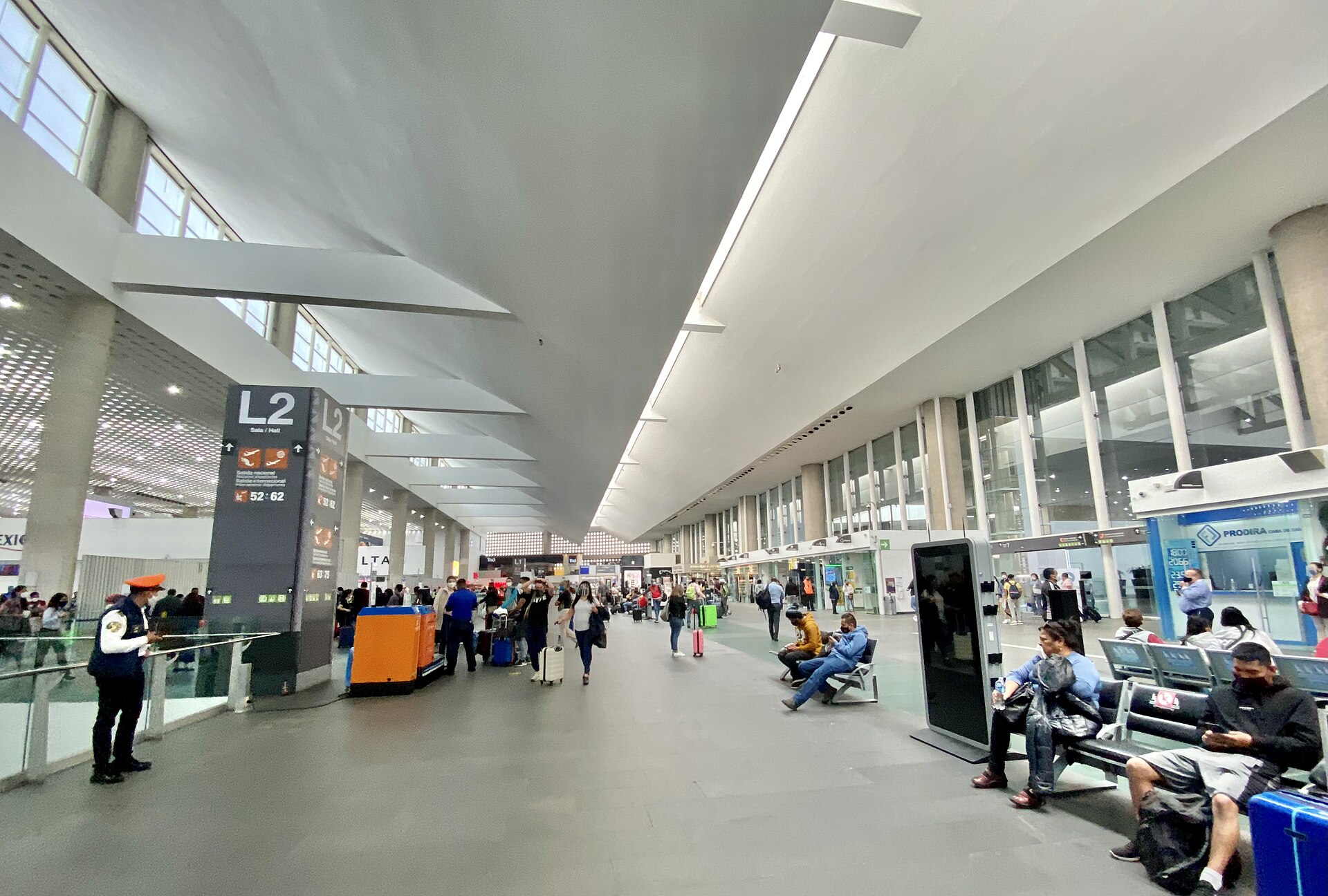
Mexico City’s main airport is one of the few big-city airports in the world that sits inside the city it serves. The Zócalo is roughly five kilometres from the runways as the crow flies, and on a clear approach you can pick out the Centro’s towers from your window seat. That closeness is the good news. The bad news is that the five kilometres can take twenty minutes or well over an hour, cost 5 pesos or 500, and come with more contradictory advice than any other journey in the city. This guide covers the trip from Mexico City airport to city center hotels and homes: which option suits you, what each one costs, the order in which to do things after you land, and what to do when the plan falls apart.
It concentrates on the main airport, the Aeropuerto Internacional de la Ciudad de México (AICM, code MEX), where nearly all international visitors arrive. If your ticket says NLU, you are flying into the newer Felipe Ángeles airport north of the city, which has its own section below. For everything else about the airports, from the terminals to departures and the first hour after you land, see our Mexico City airports guide.
The short answer
- Cheapest sensible option: Metrobús Line 4, 30 pesos, from both terminals into the Centro Histórico. Card or digital wallet only, no cash. About 45 to 60 minutes.
- Easiest option: an authorised taxi, bought at a counter inside the terminal before you walk out. Reported fares to the central neighbourhoods run roughly 220 to 500 pesos for a sedan, depending on the operator; ask before you pay. About 20 to 35 minutes outside rush hour.
- Cheapest of all: the Metro from Terminal Aérea station, 5 pesos, but the official guidance tells arriving visitors with heavy luggage not to use it.
- App rides: usually cheaper than the taxi, but their pickups at the airport are disputed between the federal authorities and the platforms. If you use one, follow the app’s own pickup instructions to the letter.
- Arriving late at night: take an authorised taxi. The Metro and Metrobús stop at midnight.
- The rule that matters most: never accept a ride from anyone who approaches you inside the terminal.
First, which airport and which terminal?
Three airports serve Mexico City, and getting this wrong costs hours.
- MEX, the Aeropuerto Internacional de la Ciudad de México (also called Benito Juárez), in the east of the city. Almost all international flights. This page is mostly about MEX.
- NLU, the Aeropuerto Internacional Felipe Ángeles (AIFA), about 45 kilometres north in the State of Mexico. Mostly domestic and low-cost flights, now linked to the city by train.
- TLC, Toluca, about 60 kilometres west. A small number of domestic flights. Our airports guide covers it.
MEX has two terminals that are not walkable from each other. Terminal 1 handles most international airlines. Terminal 2 is the hub of Aeroméxico. They are linked by the Aerotrén, a small automated train that runs every day from 05:00 to 23:00 and takes about five minutes, but it is only for passengers with a boarding pass. Without one, red public buses link the terminals from Door 6 at Terminal 1 and Door 4 at Terminal 2, at a minimal fare. Check your terminal before you land, because several of the options below start from different places in each terminal.
The options compared
Fares checked September and October 2026. The journey times are planning estimates for the Centro Histórico outside the worst rush hours; traffic in this city can double them.
| Option | Fare | Time to the Centro | Payment | Best for |
|---|---|---|---|---|
| Metrobús Line 4 | 30 pesos | 45–60 min | Movilidad Integrada card, contactless card or digital wallet; no cash | Solo travellers and couples with manageable luggage, by day |
| Authorised taxi | Roughly 220–500 for a sedan, reported; more for a van | 20–35 min | At the counter inside the terminal | Night arrivals, first-timers, families, heavy luggage |
| App ride | Variable; usually below the taxi | 20–35 min | In the app | Travellers comfortable following the app’s pickup rules |
| Metro, Terminal Aérea (Line 5) | 5 pesos | 45–70 min with changes | Movilidad Integrada card | Backpackers with one small bag, by day |
| Hotel car or pre-booked driver | Set by the hotel or company | 20–35 min | As agreed | Late arrivals, people who want certainty after a long flight |
Which option suits you
- Arriving after about 22:00, or very early in the morning: an authorised taxi or a pre-booked car. Public transport stops at midnight and restarts later at weekends.
- First time in Mexico, tired, and not a Spanish speaker: an authorised taxi. The counters are straightforward, the price is fixed before you get in, and the driver comes from a regulated rank.
- Travelling light on a budget, by day: Metrobús Line 4, with a contactless card or digital wallet ready.
- A family or group of three or four: an authorised taxi or van, split between you, which often costs little more per person than the Metrobús.
- Heavy luggage, a pushchair or limited mobility: a taxi or a pre-booked car. Avoid the Metro.
- Staying in Roma, Condesa, Juárez or Polanco: a taxi or app ride, because the Metrobús airport route is built around the Centro and you would need to change.
- Backpacking with one bag and plenty of time: the Metro, at 5 pesos, if you are comfortable with stairs, transfers and crowds.
Which part of the “centre” are you going to?
“The city centre” means different things to different visitors, and the right choice from the airport changes with it.
| Destination | Best option on arrival | Why |
|---|---|---|
| Centro Histórico (Zócalo, Alameda, Bellas Artes) | Metrobús Line 4 by day; taxi at night | The airport service runs straight into the historic centre |
| Juárez and Paseo de la Reforma | Taxi or app ride; Metrobús if your stop is on its current route | 2026 reports describe the airport service continuing towards Reforma; check the map |
| Roma and Condesa | Taxi or app ride | No direct public transport from the airport; a change with luggage is hard work |
| Polanco | Taxi, app ride or hotel car | Furthest of the central neighbourhoods from the airport; reported taxi fares are higher |
| Coyoacán and the south | Taxi, app ride or hotel car | A long cross-city drive; allow for traffic on the main ring roads |
Our neighbourhoods guide explains what each area is like if you have not yet decided where to stay.
Arriving on a busy weekend
Some dates make the airport run slower and dearer. The Formula 1 Grand Prix, on 30 October to 1 November in 2026, takes place at the Autódromo Hermanos Rodríguez, only a few kilometres from the airport, and loads the roads and transport in the east of the city all weekend. The Día de Muertos weekend that follows, the December holidays, and the long weekends around Mexican public holidays all bring more passengers through the terminals and longer queues at immigration and the taxi counters. On those dates, allow extra time, consider pre-booking a car, and if you are taking the Metrobús, have your card or phone wallet ready before you reach the stop.
Rain matters too. In the rainy season, roughly May to October, heavy late-afternoon storms can flood underpasses and bring traffic to a crawl, so an evening arrival from June to September can take much longer by road than the estimates on this page. The Metrobús, which runs in its own lanes for much of its route, is less affected than a taxi.
Step by step: from the plane to the kerb
- Before you land, decide how you are getting into town, and download what you need: the app for your ride, a map, and your accommodation address in Spanish, written out. If you plan to take the Metrobús, make sure you have a contactless card or a phone wallet set up.
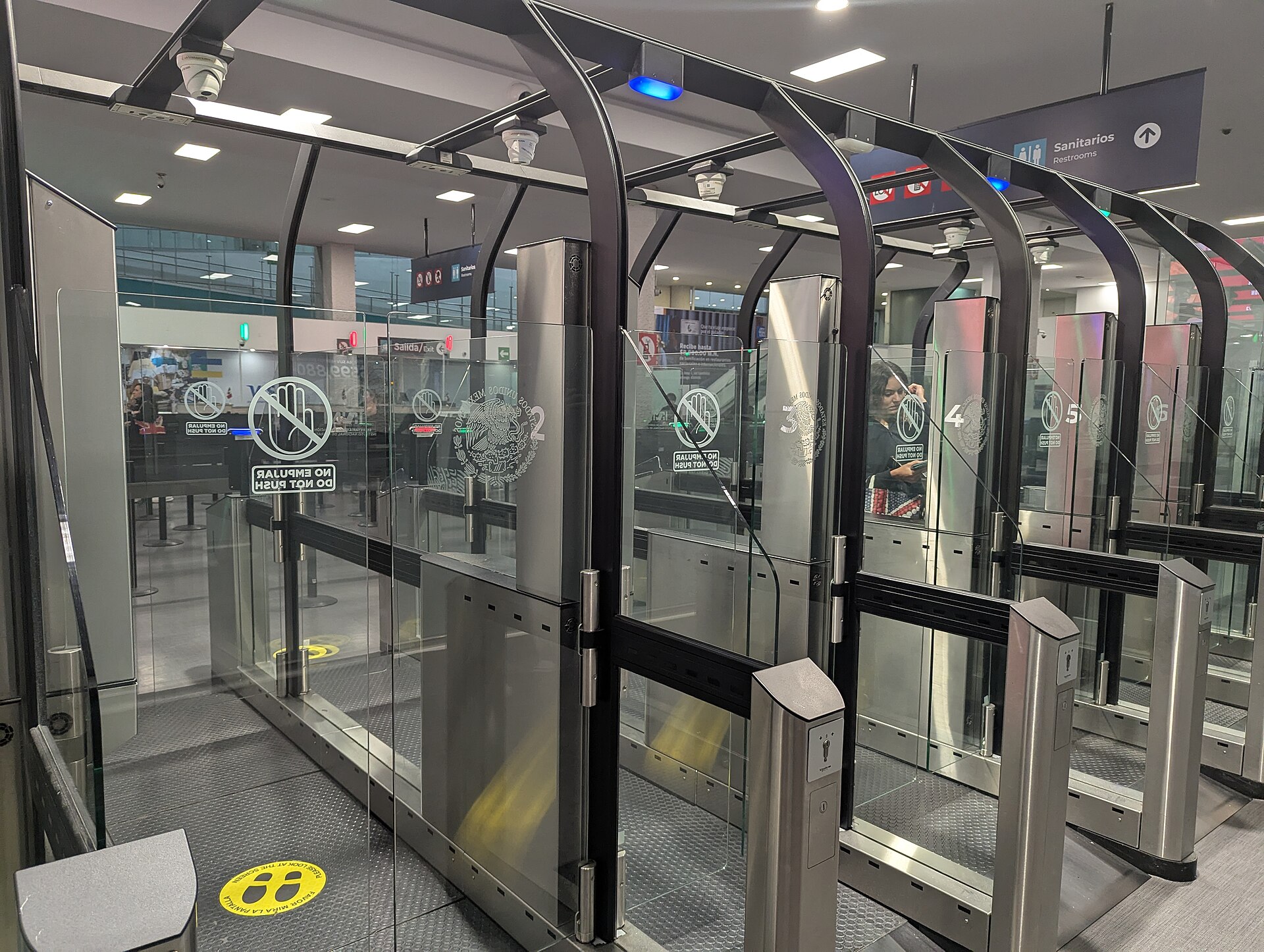
- Immigration. Terminal 1 now has automated passport gates alongside the staffed desks. Queues can be long when several long-haul flights land together. Mexico has moved to a digital entry process at major airports: the officer or the gate scans your passport and records the number of days you are allowed to stay. 180 days is a maximum, not an entitlement. Check the number you are given before you leave the desk; it is easy to fix there and expensive to fix later.
- Baggage and customs. After reclaim, customs uses a random selection system: you press a button, and green means walk through while red means your bag is inspected. It is quick and routine.
- Money. Use a bank ATM inside the terminal if you need pesos, and always choose to be charged in pesos: if an ATM or card terminal offers to charge you in your home currency, decline, because that conversion typically costs 5 to 8 per cent. Mexican banks charge a fixed fee per withdrawal, so take out a larger sum once rather than several small ones.
- Phone. If you have not set up an eSIM, Telcel, AT&T and Movistar all sell prepaid SIMs; Telcel has the widest coverage. An eSIM needs an unlocked, eSIM-capable phone.
- Before you walk into the public arrivals hall, know where you are going next. The moment you emerge, people will offer you taxis, hotels and help. Walk past them politely. Legitimate transport is not sold by people walking up to you.
- Then follow the option you chose, as set out below.
Metrobús Line 4: the good-value option
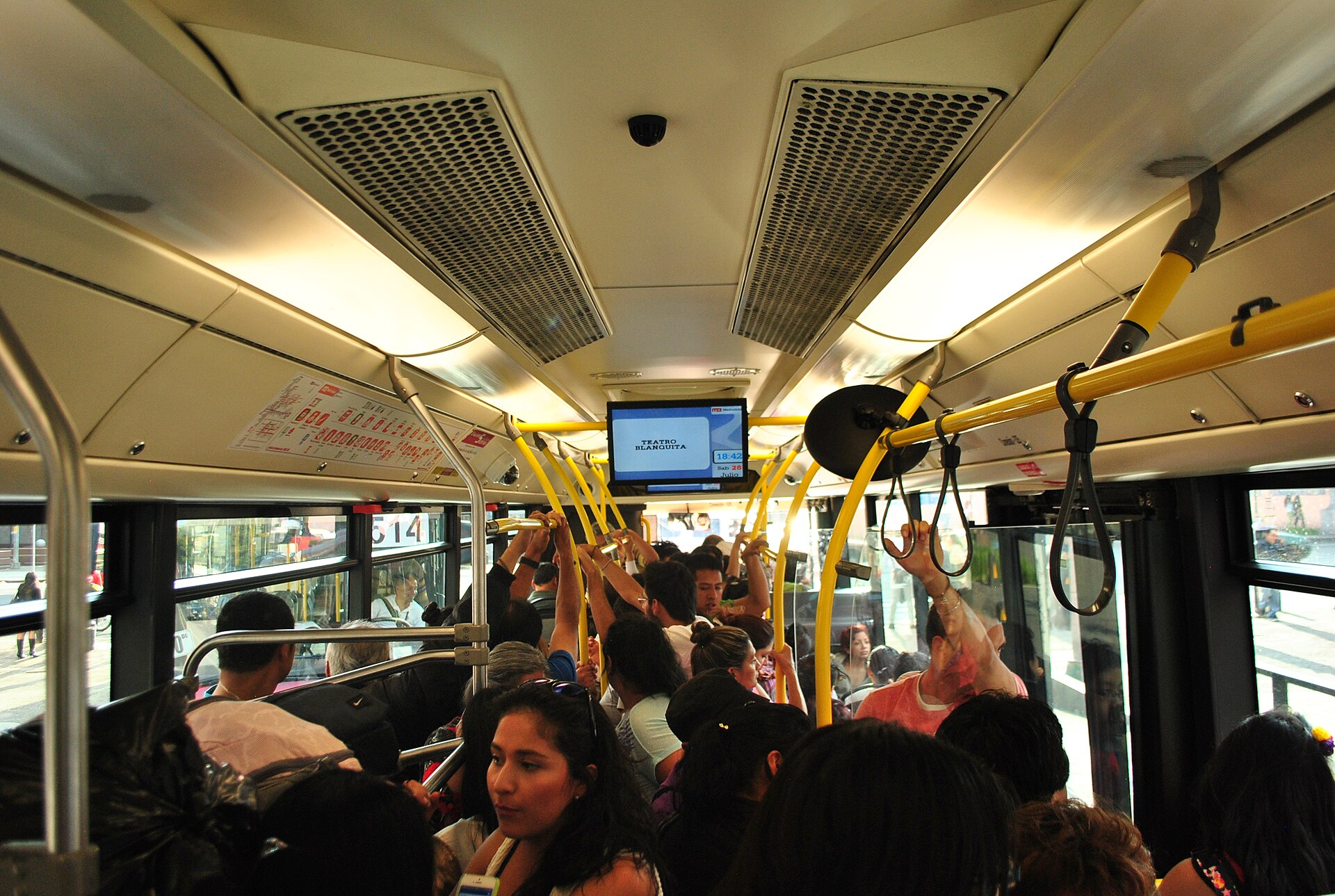
Line 4 is Mexico City’s bus rapid transit link to both airport terminals, and the city’s official guidance describes it as the fastest, cheapest and safest public option. The airport service costs 30 pesos, instead of the standard 6 pesos charged on the rest of the Metrobús network.
- How to pay: the rechargeable Movilidad Integrada card, a contactless bank card or a digital wallet on your phone. Cash is not accepted. The Movilidad Integrada card is sold and topped up at station machines and works on the Metro, Metrobús, Cablebús and more, so it is worth having from day one.
- Where to find it: follow the Metrobús signs. Reporting in 2026 placed the Terminal 1 stop near Door 7, and the Terminal 2 stop at the terminal’s bus bay; follow the signs on the day rather than relying on a door number.
- When it runs: reported in 2026 as every day from 04:30 to midnight, with buses roughly every 12 minutes.
- Where it goes: reporting in mid-2026 described the airport service running into the Centro Histórico, with stops including Eje Central and Pino Suárez, and on towards Paseo de la Reforma. Check the current route on the Metrobús website, metrobus.cdmx.gob.mx, and choose the stop nearest your accommodation.
The honest limitation is that it is a bus in traffic, and the route through the historic centre is slow. It is also genuinely awkward with two large suitcases: there is no luggage area to speak of, and at busy times you will be standing. With a backpack or a carry-on it is excellent; with a family’s luggage it is not.
Authorised taxis: the easy option, and the price question
Authorised airport taxis charge fixed fares set by geographic zone, and their tickets are sold only at authorised counters inside the terminals. That is official and simple, and it is the right choice for most first-time visitors and for anyone arriving late at night.
The prices are less simple. There were eleven authorised taxi groups on the airport’s register in 2026, and they do not all charge the same. Published and reported fares for the central neighbourhoods run roughly 220 to 500 pesos for a sedan, with vans priced higher and at least one operator reported near 950 pesos for Polanco. Mexican press reporting in March 2026 found concessioned airport taxis costing up to double an app ride or a street taxi for the same trip. Because the sources genuinely disagree, this page does not print a single zone tariff.
How to use them
- Find the authorised taxi counters in the arrivals area, inside the terminal.
- Ask the price for your destination before you pay, and compare it with another counter if there is more than one nearby.
- The price should be for the car, not per person. Choose a van if you have a lot of luggage or a group.
- Pay at the counter and keep your ticket.
- Walk to the authorised taxi rank and hand the ticket to the driver or dispatcher.
- Give the driver your address, written down, with the neighbourhood (colonia) and a nearby street.
Tipping is not expected on a fixed-fare taxi, although rounding up for help with heavy bags is appreciated.
App rides: cheaper, and disputed
App rides are usually cheaper than authorised taxis, and many visitors use them. But pickups at the airport have been the subject of a long-running dispute. In 2026 Mexican press reported that Uber, DiDi and InDrive did not hold authorisation from the federal transport ministry (SICT) to operate in the federal zone of the terminals, that the airport had designated pickup points outside the federal zone, one for each terminal, and that enforcement operations with the National Guard had taken place. Uber said in May 2026 that it would maintain its service, and a court ruling was reported to have contradicted the airport’s position. In short, the situation is contested, and it has changed more than once.
This page does not tell you that any particular pickup is lawful, because the honest answer is that it is disputed and could change at any time. What to do instead:
- Open the app before you leave the baggage hall and read its own airport pickup instructions.
- Follow them exactly, including the pickup point, which may be a walk from the terminal door.
- Check the car and driver match the app before you get in.
- If the app does not offer airport pickup, or you cannot find the point, take an authorised taxi rather than negotiating with strangers in the car park.
The Metro: 5 pesos, with conditions
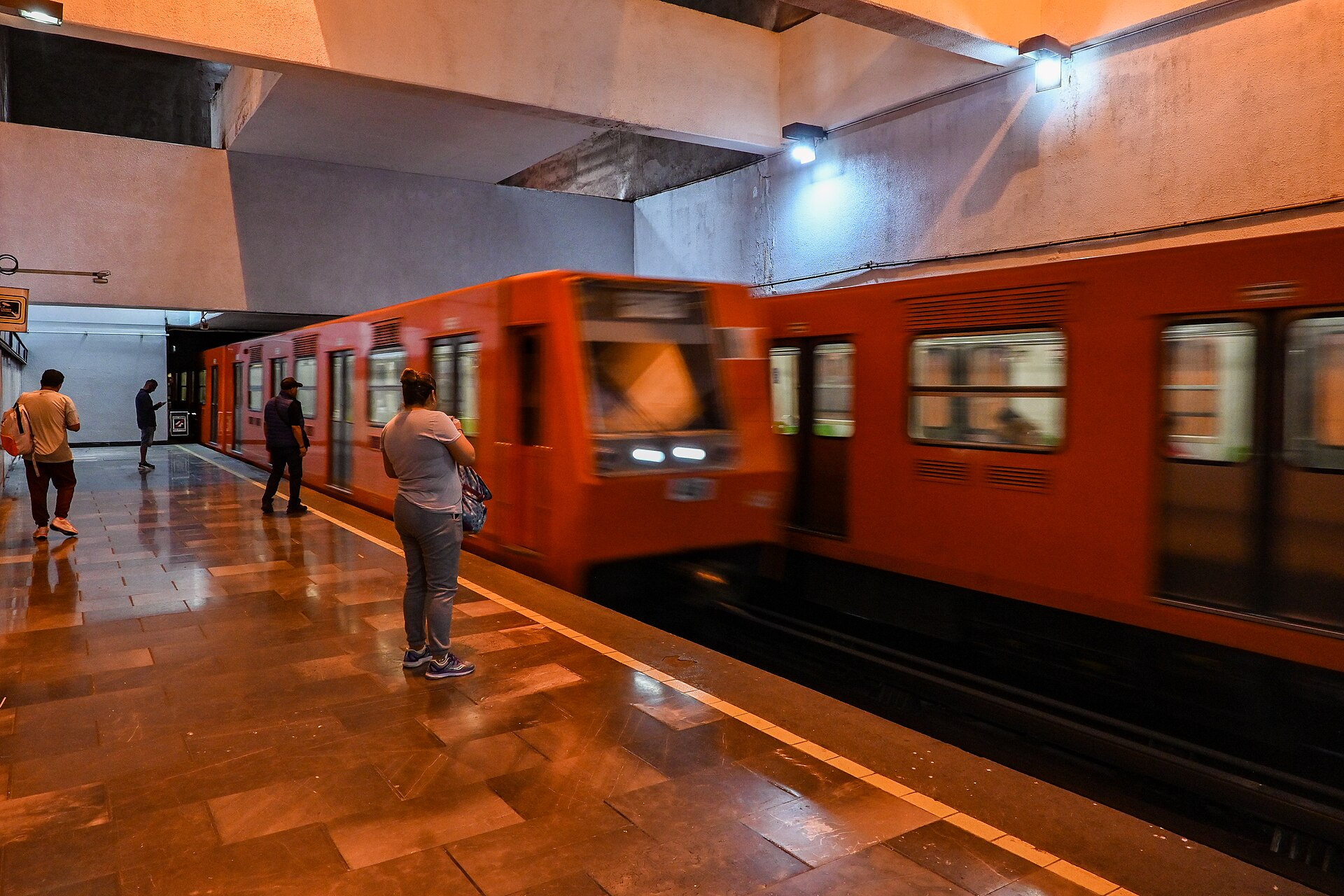
Terminal Aérea station on Line 5 is close to Terminal 1, and a ride anywhere on the network costs a flat 5 pesos. It is the cheapest way into the city by far, and on the way back to the airport with light luggage it is excellent.
On arrival it is a different matter. The city’s own guidance says the Metro is not recommended for arriving visitors with heavy luggage: access is narrow, stations involve long staircases, and reaching most central destinations means one or more transfers. At peak times the trains are extremely crowded, and the front carriages on many lines are reserved for women and children. The Metro opens at 05:00 on weekdays, 06:00 on Saturdays and 07:00 on Sundays and holidays, and closes at midnight.
If you do use it: buy a Movilidad Integrada card at the station machines, keep your phone and wallet in front pockets, and allow plenty of time.
A pre-booked car or hotel pickup
Many hotels will arrange a car, and private transfer companies will meet you in the arrivals hall with a name board. It usually costs more than an authorised taxi, but it removes every decision at the end of a long flight. Two rules: confirm the booking in writing, with the driver’s name and a phone number; and only go with someone holding a sign with your name who can tell you the name of your hotel, never with someone who simply offers you a car.
Luggage, children and accessibility
- Heavy luggage: take a taxi, a van or a pre-booked car. The Metrobús is possible but uncomfortable; the Metro is not recommended.
- Children: a taxi or pre-booked car is simplest. Do not assume a taxi will have a child seat; if you need one, bring a travel seat or book a car that confirms it provides one.
- Pushchairs: possible on the Metrobús outside peak hours; very hard on the Metro.
- Limited mobility or wheelchair users: arrange assistance with your airline in advance, which covers you through the airport. For the journey into the city, a pre-booked accessible vehicle or a taxi is the realistic choice. Ask the transfer company or hotel about accessible vehicles before you travel.
Arriving at Felipe Ángeles (NLU) instead
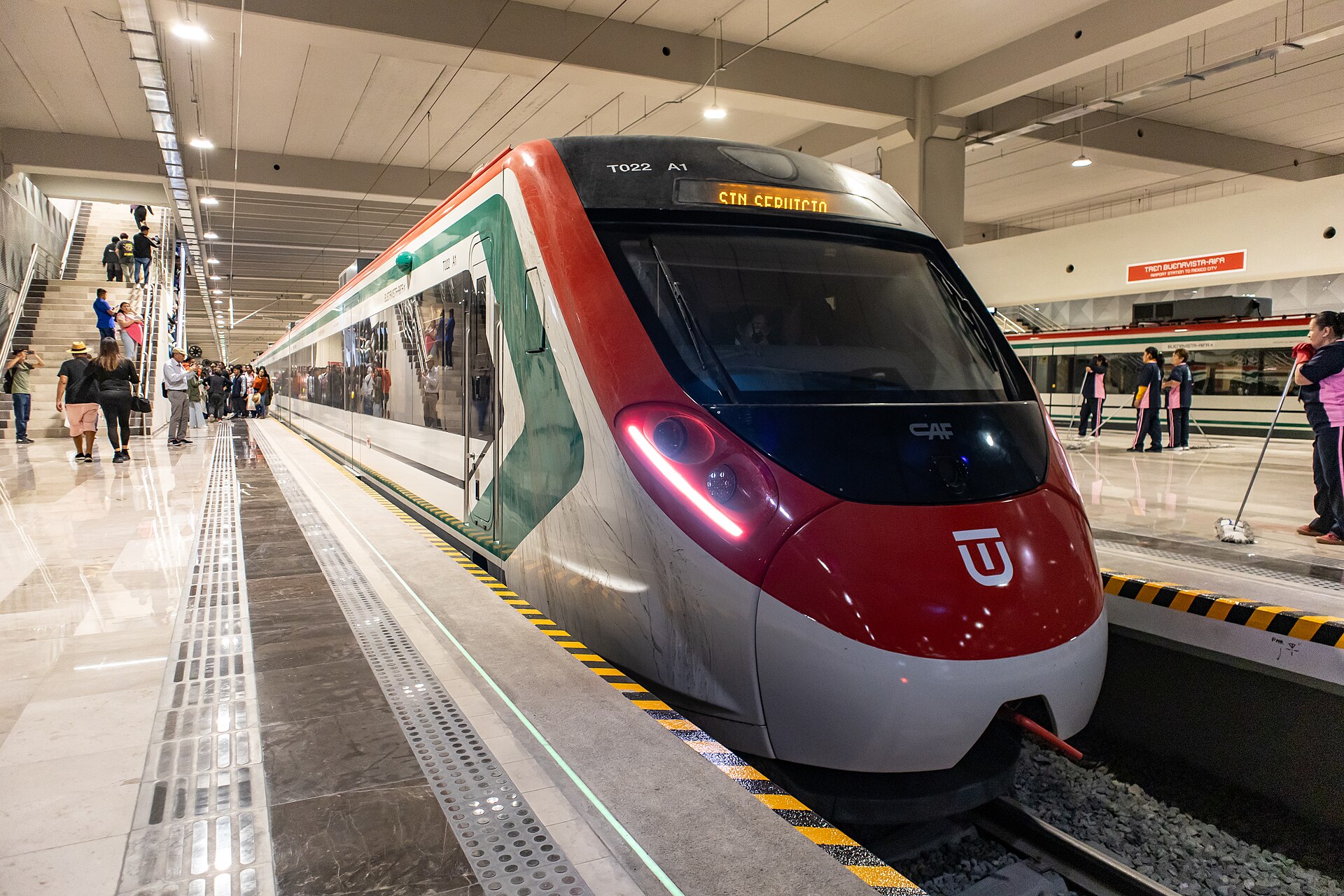
If you are flying into the Aeropuerto Internacional Felipe Ángeles, about 45 kilometres north of the city in the State of Mexico, the game-changer is the Tren Felipe Ángeles, the suburban railway that opened on 26 April 2026. It runs from the airport to Buenavista, in the centre of the city, in about 43 minutes, roughly every 30 minutes.
- The fare: a promotional fare of 45 pesos for the full journey ran from opening, and in 2026 Mexican press reported that the operator had extended it indefinitely. The announced regular fare is 110 pesos, and intermediate stations on the airport section cost 11.50. Check which applies when you travel.
- How to pay: Movilidad Integrada card only. If you do not have one, buy and load it at the station before you board.
- From Buenavista: Buenavista is a hub, with Metro Line B and the Metrobús, and taxis outside. Most central neighbourhoods are a short taxi or Metro ride away.
- Check the timetable against your flight, especially for early departures and late arrivals, which may fall outside the train’s operating hours.
What to book or verify before you leave home
- Your terminal, from your airline. It decides where the Metrobús stop and taxi counters are.
- Your accommodation address, written in Spanish with the colonia and a nearby cross street, on paper as well as on your phone.
- A payment method for the Metrobús: a contactless card or phone wallet, since cash is not accepted.
- A pre-booked car if you land late at night, travel with small children, or simply want certainty.
- Your app’s airport pickup instructions, if you plan to use an app ride, checked on the day.
- For NLU: the train timetable against your flight, and a Movilidad Integrada card.
- Your entry rules: passport validity and whether your nationality needs a visa, from Mexico’s immigration authority or your government’s travel advice.
When the plan goes wrong
- Your flight lands after midnight: public transport has stopped. Take an authorised taxi from the counter, or use the car you pre-booked.
- The Metrobús will not take your card: try another contactless card or your phone wallet, or buy a Movilidad Integrada card at a machine. If none of that works, take a taxi.
- You landed at the wrong terminal for your pickup: the Aerotrén needs a boarding pass, so after arrival use the red inter-terminal buses from Door 6 at Terminal 1 or Door 4 at Terminal 2.
- The taxi price seems wrong: ask another authorised counter. Prices should be fixed by zone and for the whole car.
- The app ride cannot find you or will not come: cancel and take an authorised taxi. Do not accept offers from drivers who approach you in the car park.
- You feel unwell after the flight or from the altitude: Mexico City is at 2,240 metres. Most people adjust within a day or three; rest, drink water and go easy on alcohol. If you have a heart or lung condition, follow your own doctor’s advice.
- Something goes seriously wrong: call 911 for emergencies. The CDMX tourist police are on 55 5533 5533, 24 hours a day, and Locatel, the city’s 24-hour information line, is on 55 5658 1111.
Going back to the airport
The return trip is easier, because you are not arriving tired into an unfamiliar airport. With light luggage, the Metrobús and even the Metro are excellent; with heavy bags, a taxi or app ride from your accommodation is the simple choice. Two points: allow generous time, because traffic towards the airport at rush hour can be very slow; and check which terminal your airline uses, because the two are not walkable from each other. Our airports guide covers departures in detail.
Frequently asked questions
How do I get from Mexico City airport to the city centre?
The best-value option is Metrobús Line 4, which costs 30 pesos and runs from both terminals into the Centro Histórico, paid by card or phone only. The easiest option is an authorised taxi, bought at a counter inside the terminal for roughly 220 to 500 pesos to the central neighbourhoods, depending on the operator.
How much is a taxi from Mexico City airport to the centre?
Authorised taxis charge fixed fares by zone, but the eleven authorised operators do not all charge the same. Reported fares for a sedan to the central neighbourhoods run roughly 220 to 500 pesos, with vans more. Ask at the counter before you pay.
Can I pay cash on the Metrobús from the airport?
No. The airport service costs 30 pesos and accepts only the Movilidad Integrada card, a contactless bank card or a digital wallet.
Can I take an Uber from Mexico City airport?
Many visitors do, but pickups at the airport are disputed between the federal authorities and the platforms, and the airport has run enforcement operations. If you use an app, follow its own airport pickup instructions exactly. If in doubt, take an authorised taxi.
Is the Metro a good way to get from the airport?
Only with light luggage. The Metro costs 5 pesos, but the official guidance does not recommend it for arriving visitors with heavy luggage, because of narrow access, stairs and transfers.
How long does it take to get from the airport to the city centre?
About 20 to 35 minutes by taxi outside rush hour, and 45 to 60 minutes by Metrobús. At peak times, traffic can make both much slower.
Is it safe to get a taxi at Mexico City airport?
Yes, if you use an authorised taxi bought at a counter inside the terminal. Never accept a ride from someone who approaches you in the terminal or car park.
How do I get from Felipe Ángeles airport (NLU) to the city?
Take the Tren Felipe Ángeles to Buenavista, about 43 minutes. The promotional full-journey fare was 45 pesos in 2026, against an announced regular fare of 110; pay with a Movilidad Integrada card.
What if I arrive late at night?
The Metro and Metrobús stop at midnight, so take an authorised taxi from the counter inside the terminal, or a car you have booked in advance.
Related Mexico City Guides
- Mexico City airports guide: the three airports, the terminals, arrivals, departures and the first hour after you land.
- Getting around Mexico City: the Metro, Metrobús, Cablebús, fares and the Movilidad Integrada card.
- Where to stay in Mexico City: the neighbourhoods compared, and what to look for in a booking.
- Plan your trip to Mexico City: entry rules, money, SIM cards and the practical setup.
- Mexico City safety: the advisories, help numbers and taxi precautions.
- Mexico City costs: dated prices, ATMs, card fees and budgets.
- Mexico City Grand Prix travel guide: if you are flying in for the race, the circuit is only a few kilometres from the airport.
Sources and verification
- Terminals and inter-terminal transport: AICM Terminals 1 and 2, not walkable; Aerotrén daily 05:00–23:00 for passengers with a boarding pass; red public buses from Door 6 (T1) and Door 4 (T2). Checked September 2026.
- Metrobús Line 4: special airport fare of 30 pesos, card or digital wallet only, no cash; official guidance describing it as the fastest, cheapest and safest public option. Checked September 2026. Hours 04:30 to midnight daily, frequency about 12 minutes, stops near Door 7 (T1) and at the T2 bus bay, and the Centro Histórico route (Eje Central, Pino Suárez) towards Reforma: Crónica, 4 August 2026; Infobae, 29 July 2026; El Universal. Checked 3 October 2026.
- Metro: Terminal Aérea station, Line 5, 5 pesos flat; official guidance not to use it on arrival with heavy luggage; hours 05:00 weekdays, 06:00 Saturdays, 07:00 Sundays and holidays, to midnight (Formula 1 transport guidance, 2024). Checked September and October 2026.
- Authorised taxis: fixed zone fares sold only at counters inside the terminals; eleven authorised groups on the register in 2026; reported sedan fares of roughly 220–500 pesos to the central neighbourhoods, more for vans; March 2026 press reporting of fares up to double an app ride. Checked September 2026.
- App rides: Crónica, 14 May 2026, on the designated external pickup points; El Financiero, 28 May 2026, on Uber maintaining service; Xataka on the court ruling; reporting of enforcement operations with the National Guard. Checked 3 October 2026. The legal position is disputed and this page does not assert it.
- Tren Felipe Ángeles: opened 26 April 2026; Buenavista to AIFA about 43 minutes, roughly every 30 minutes; Movilidad Integrada card only; promotional fare of 45 pesos extended indefinitely by the operator (El Universal; Milenio); announced regular fare of 110 pesos (UnoTV; El Imparcial, 26 April 2026); 11.50 pesos for intermediate stations. Checked 3 October 2026.
- Entry, money and phones: digital entry process and days granted; ATM fees and dynamic currency conversion; SIM and eSIM options. Checked September 2026.
- Help numbers: 911; CDMX tourist police 55 5533 5533; Locatel 55 5658 1111. Checked September 2026.
What this page does not claim. Nobody from this site made these journeys on the dates published, and the journey times are planning estimates, not measurements. Taxi fares are a range drawn from reported figures, not a tariff, because the authorised operators charge different amounts and the sources disagree. The legal position of app-ride pickups at the airport is disputed and changes; this page tells you how to find the current arrangement rather than asserting it. The Metrobús stop locations and route were checked against 2026 press reporting rather than on the ground, and the Tren Felipe Ángeles fare may change.
Photo Credits
Terminal 2 at Mexico City’s international airport: Mexico City International Airport, Feb 2021 by Sharon Hahn Darlin, CC BY 2.0, via Wikimedia Commons.
Inside a Metrobús Line 4 bus: Metrobús de la Línea 4 (interior) by ProtoplasmaKid, CC BY-SA 4.0, via Wikimedia Commons.
The immigration gates in Terminal 1, the Metro train and the Tren Felipe Ángeles at Buenavista are credited on their original appearance in this site’s media library.